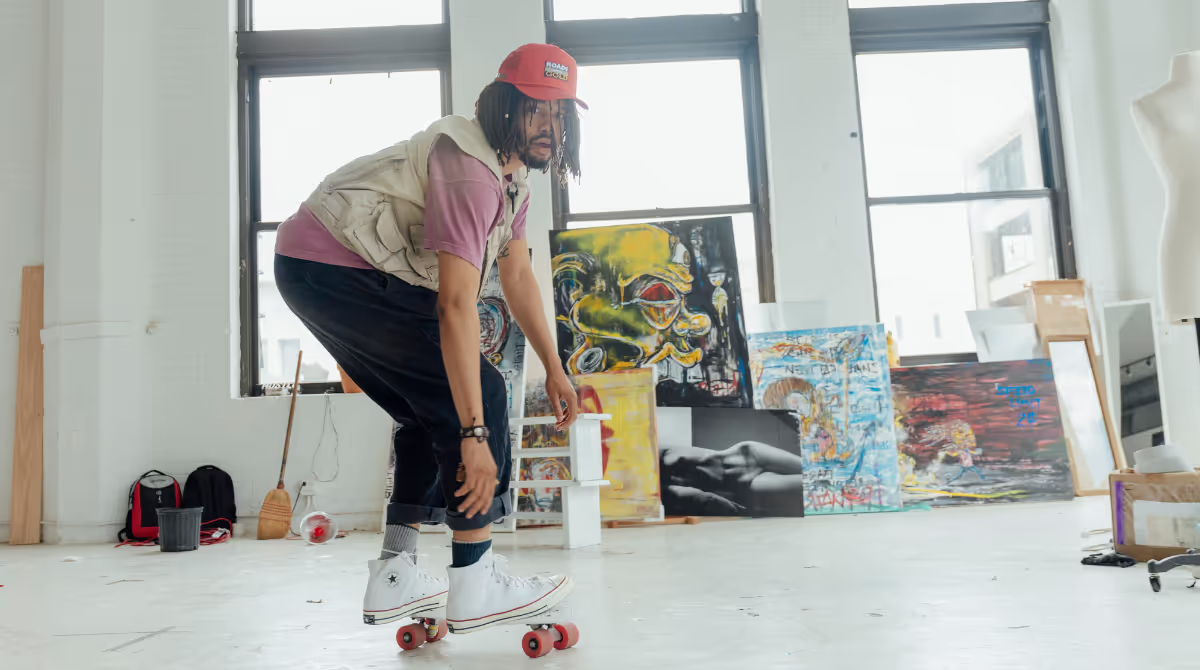
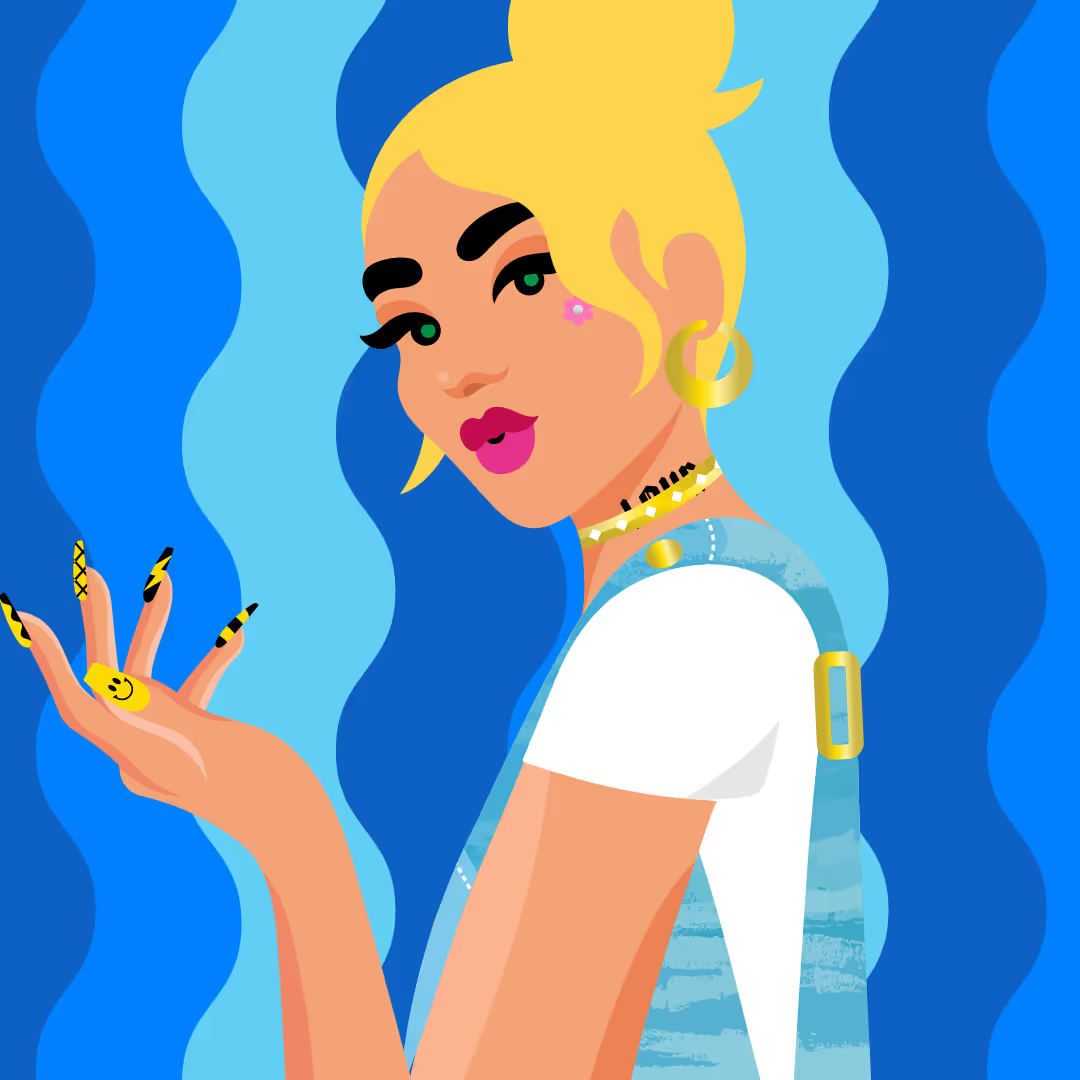
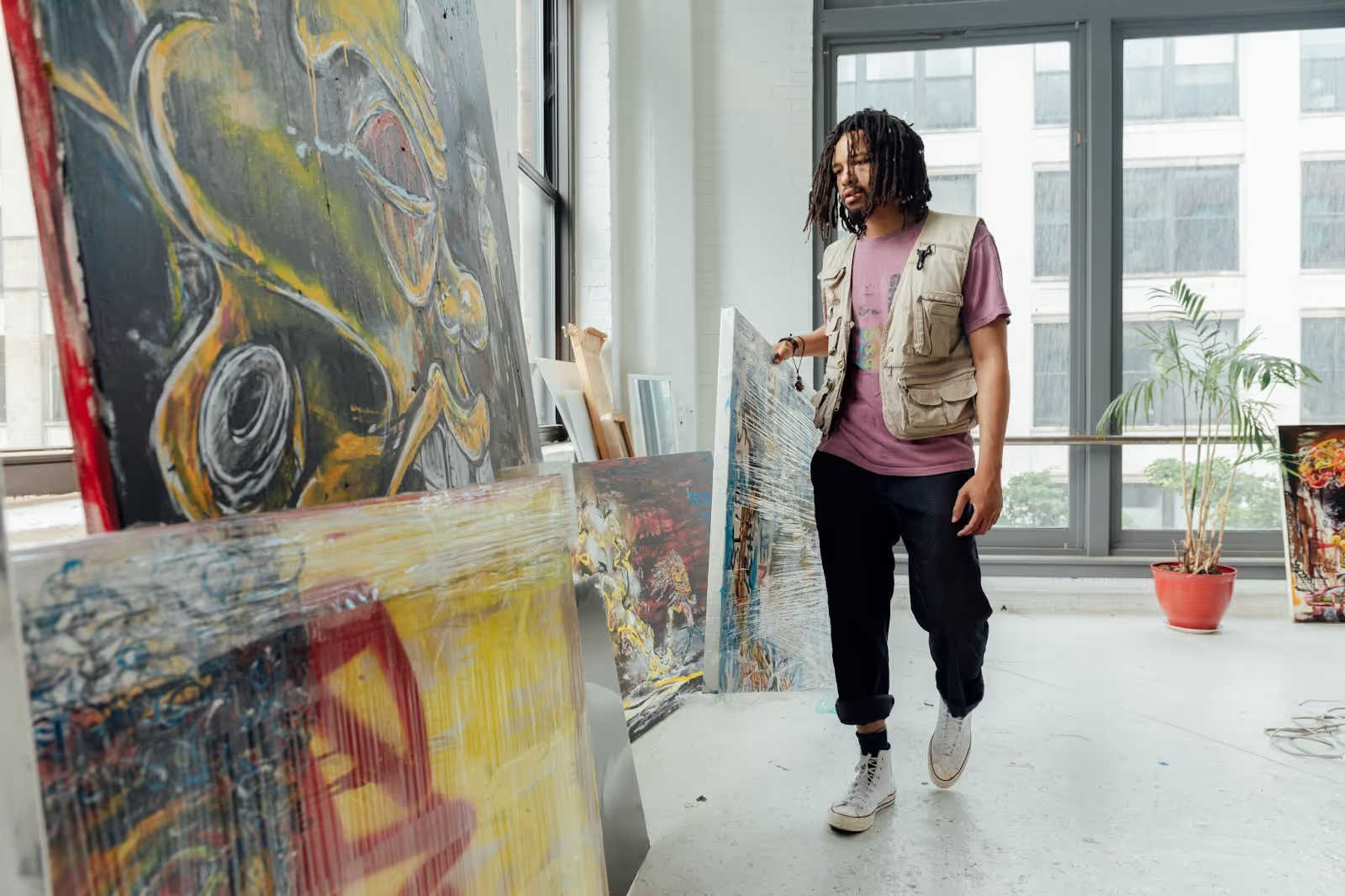
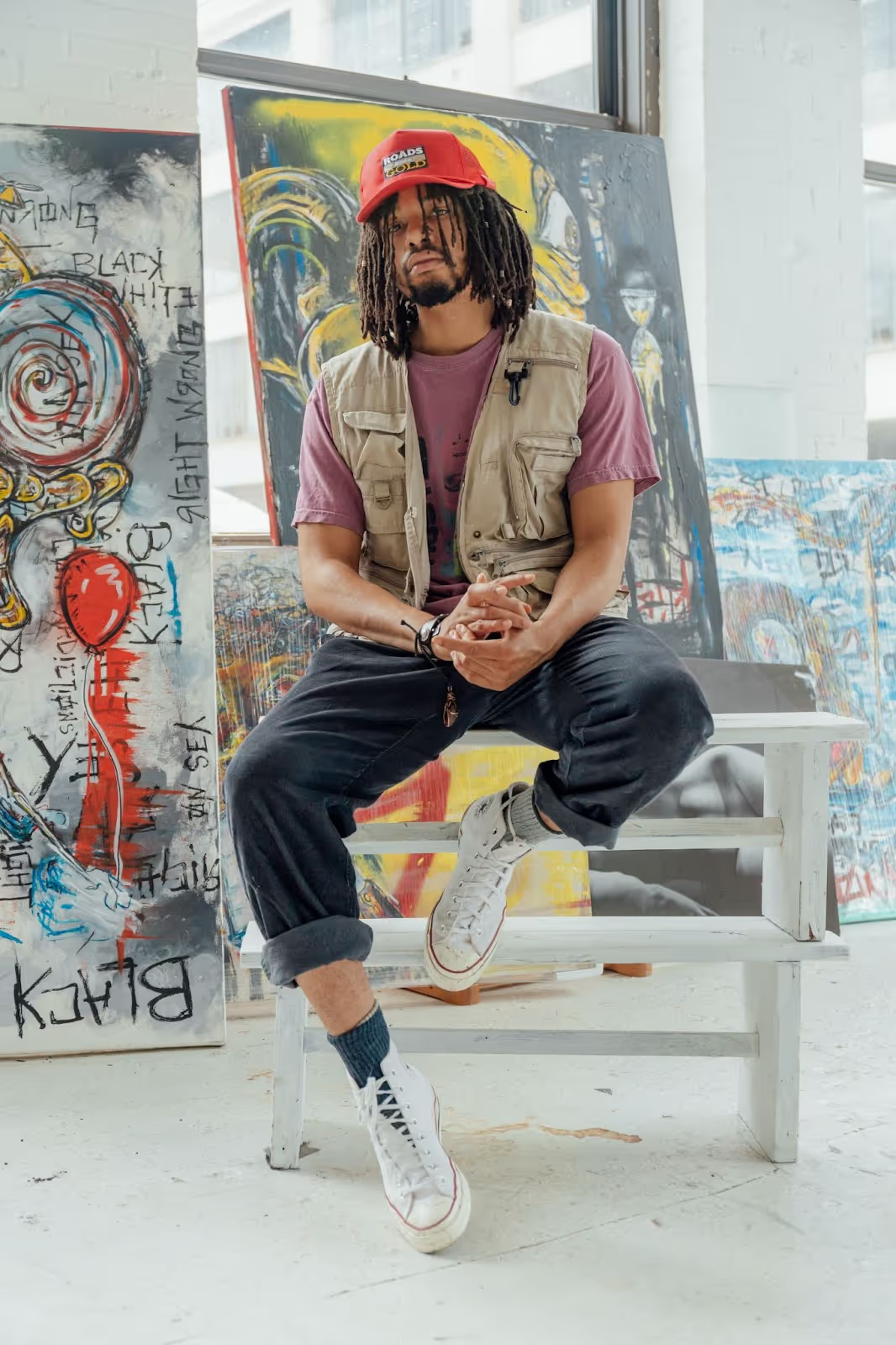
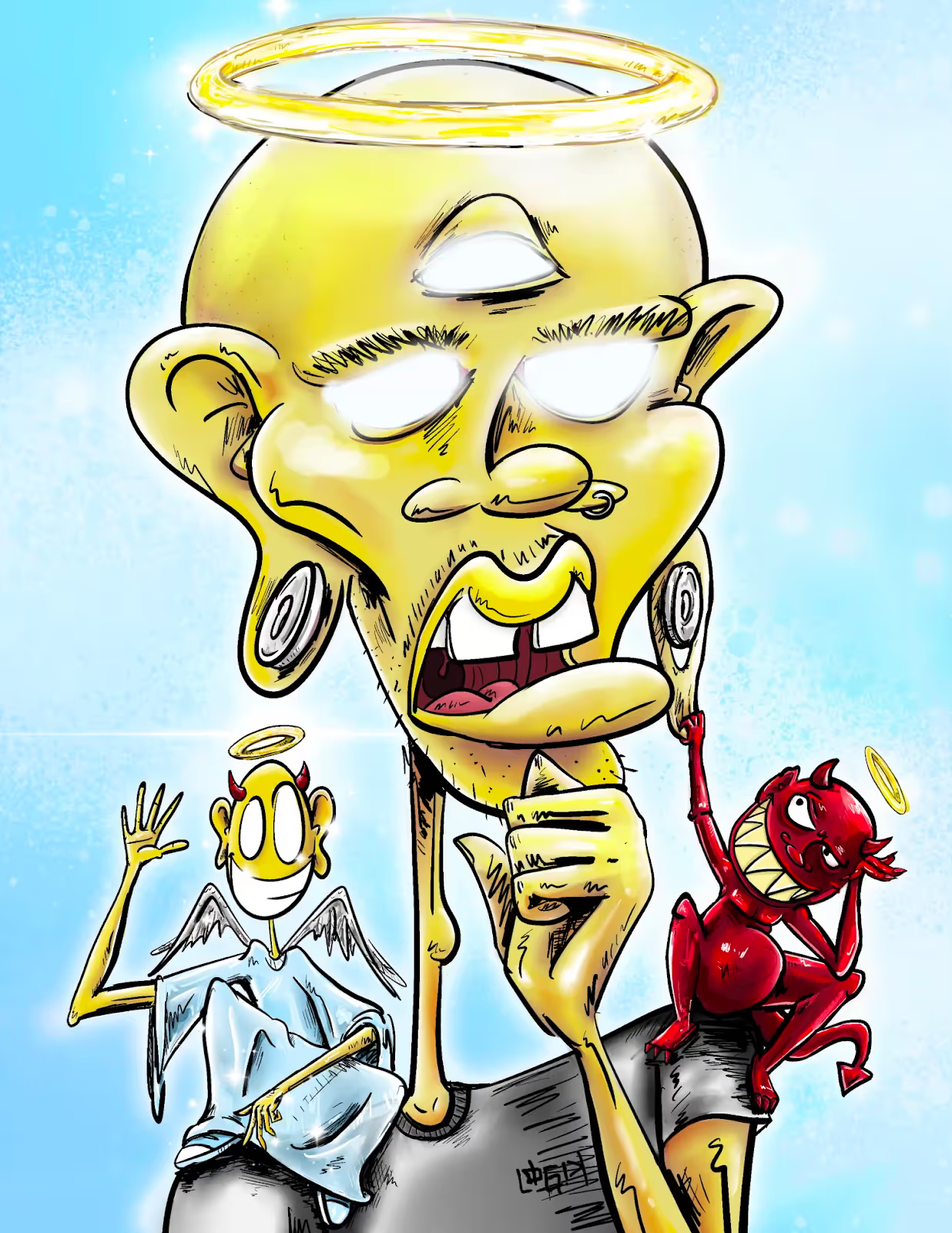
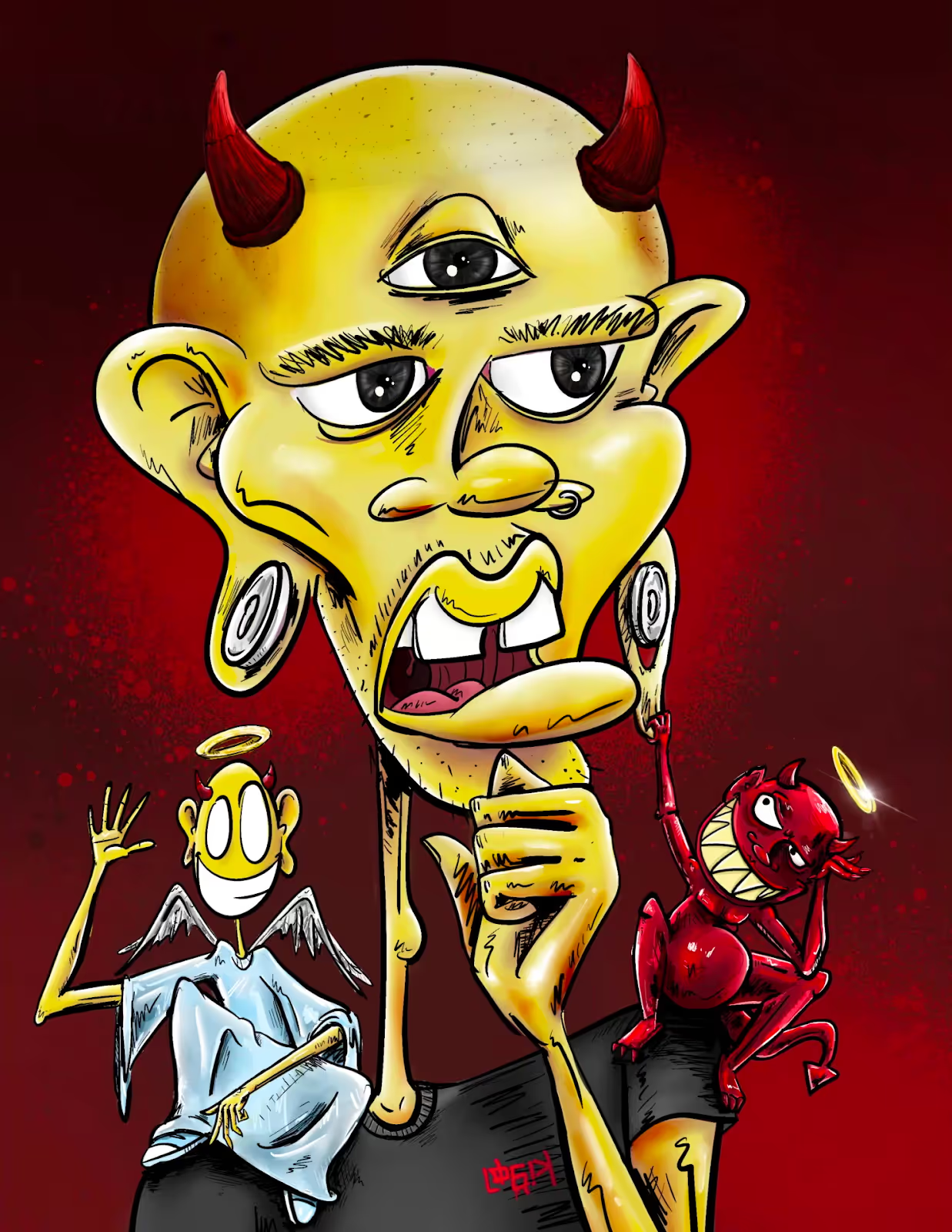
Julian Gilliam, who goes by the moniker LOGIK, is a celebrated artist from St. Louis Missouri who currently resides in Chicago, Illinois. An ex-Creative Director at Google, LOGIK has since released multiple NFT collections, collaborated with publications such as Time Magazine, and founded Studio LOGIK, a web3 agency that aims to create a new world at the intersection of art, culture, and tech. Most recently, on October 13th, LOGIK dropped two companion collections on OpenSea, presented by AudioGalleries: GUD and EVOL.
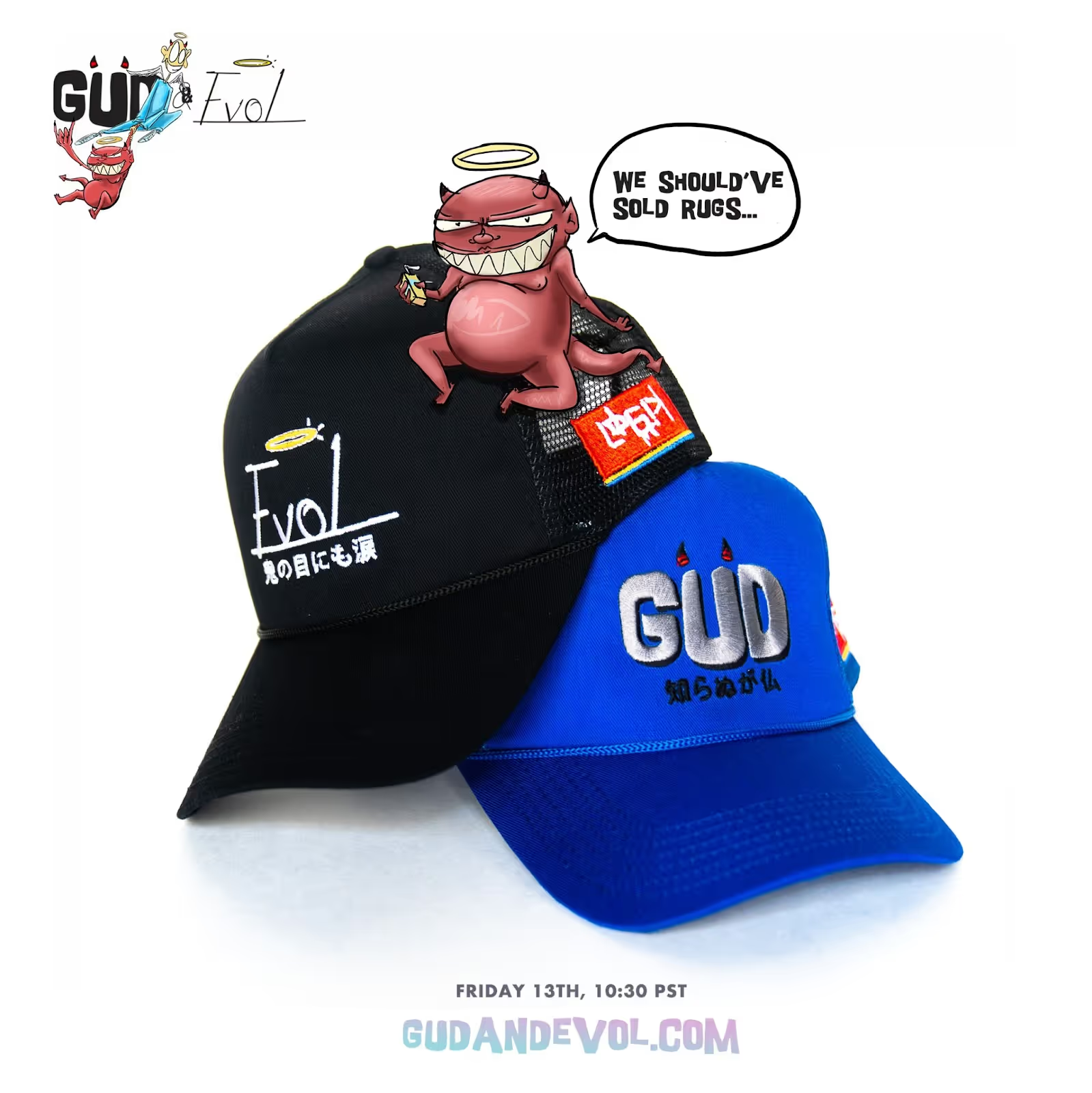
In his own words, "Best buds, Gud & Evol, were created with the halo and horn, even though one represents a heaven angel and the other a demon from down under. This illustrates that good and bad are ultimately subjective. Whether an action is good or evil can depend on a variety of factors, including the intentions of the person performing the action, the consequences of the action, the cultural or societal context in which the action is performed, and the values and beliefs of the individual or group making the judgment. GUD and EVOL were created to inspire us to be the best version of ourselves despite the status quo of what should be. We have one life to live, live it proper."
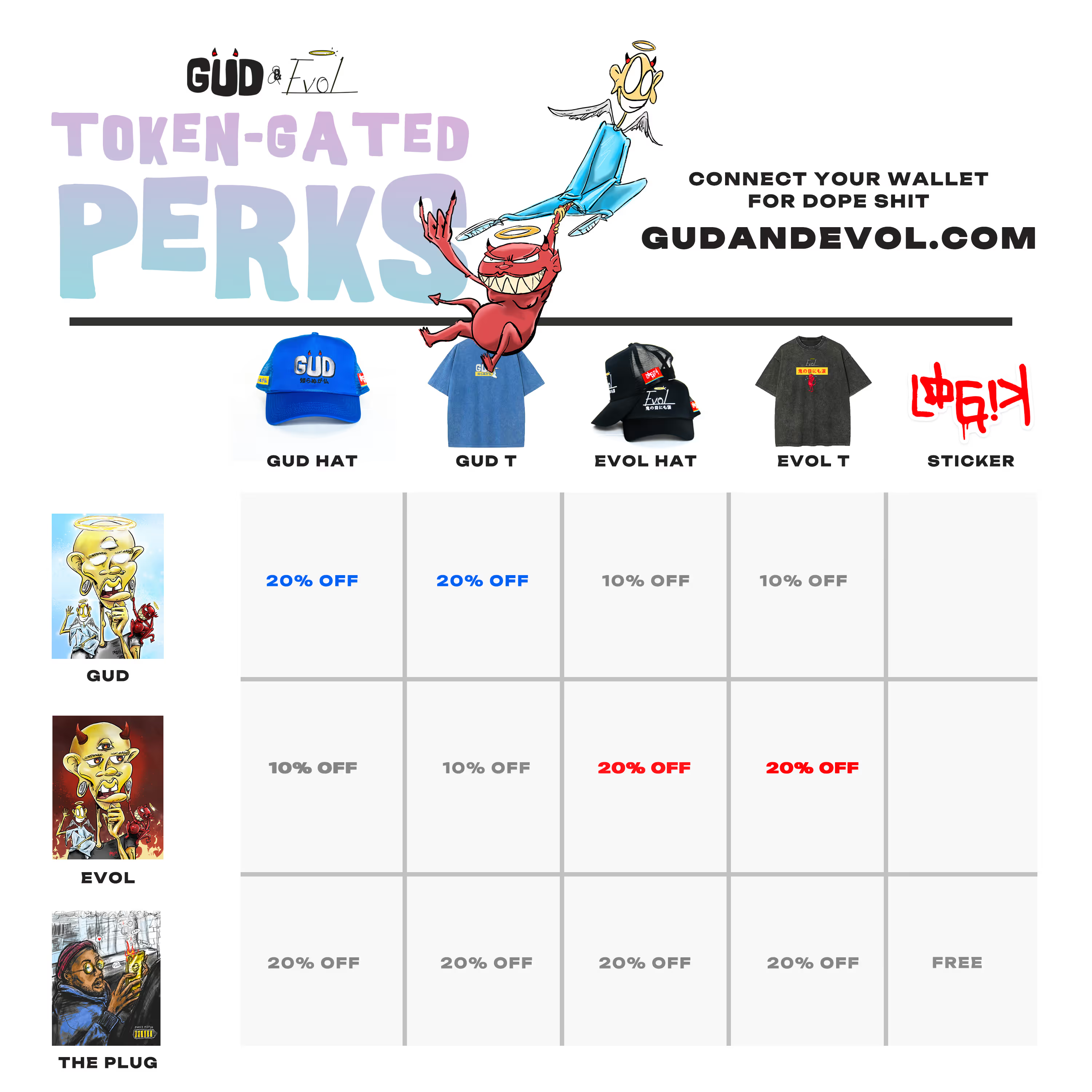
Those who mint either the GUD or EVOL NFT will be able to purchase limited token-gated fashion pieces created exclusively for this drop. Go to: https://gudandevol.com/
OpenSea: Who or what are your biggest inspirations and influences when creating?
LOGIK: When I think about my biggest inspiration, it's my community — the people that I've been around since I moved from St. Louis to Chicago. I was influenced by a lot of artists who showcase what it means to go after what you want in regard to your passion. They show how long it actually takes to become the person or entity that you dream about. And that's really making a sacrifice. A lot of my friends who are very successful now, essentially I watched them all sleep on couches to go from place to place and become really resourceful. And watching these things from the ground up — it's not the most glamorous situation in which you're cultivating your craft — but on the other end, you get to see the masses appreciate the work that your friends have done behind closed doors.
Seeing Blue The Great, No Shirt, or my homie, Nathan Salter go from zero to a hundred… it’s been amazing to watch them go from essentially nothing to something. So I think it's just my very, very close circle of art friends from Chicago and Los Angeles that have really influenced me. They helped me realize patience, both in the corporate and underground art scene.
OpenSea: How has your work developed and evolved over time?
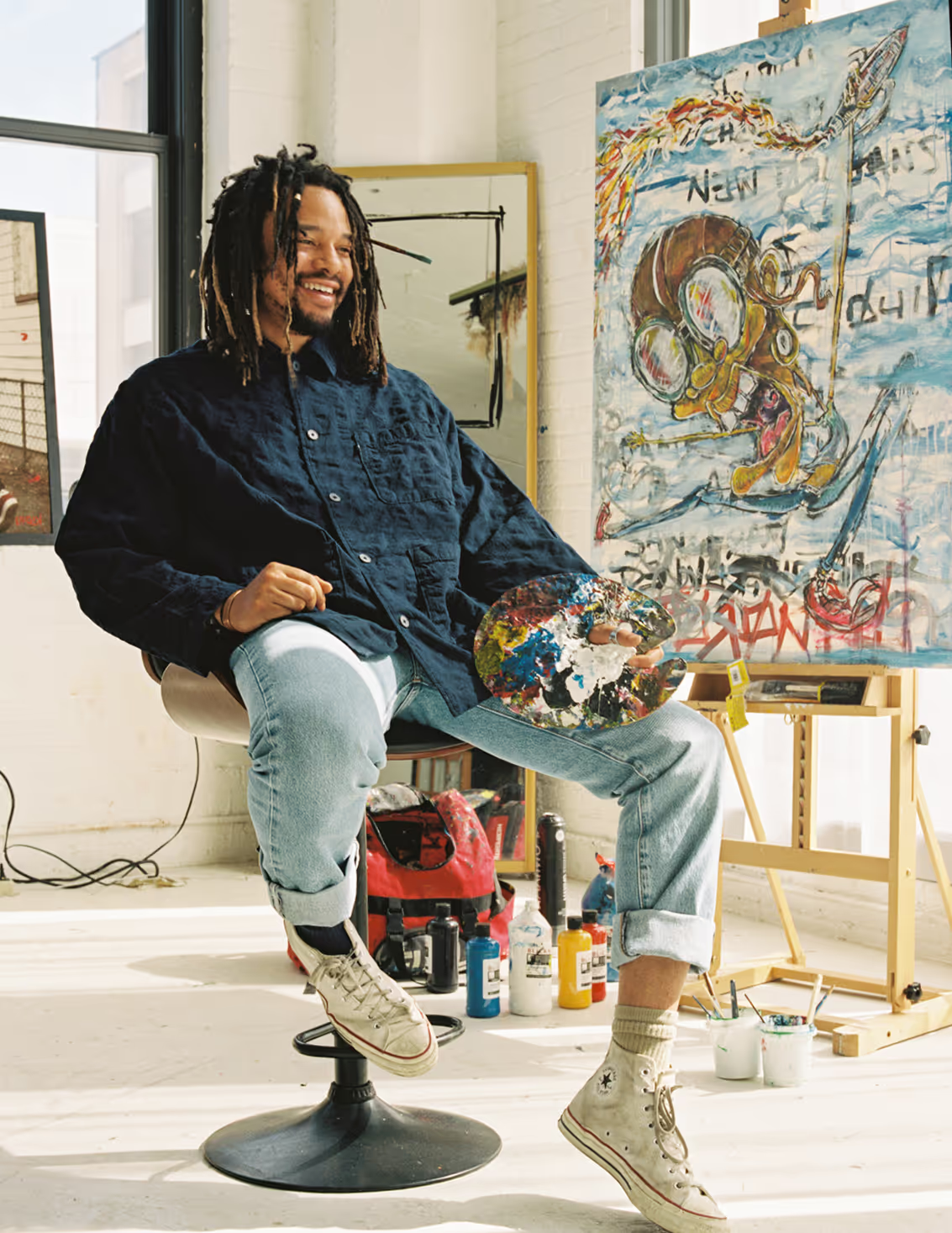
LOGIK: I think the baseline is confidence. Back then I would take forever to do artwork. I would realize that it would take me six months to a year to complete something and then I realized that I didn't have that time to pump out pieces so slowly because I was overthinking. So as my work has developed, one part of that is confidence because I trust the lines that I'm putting down.
I started off as a traditional artist as a kid, and then I started picking up film. I used to do short stories with my cousins and my family members and friends. And then taking a terrible camera, I would edit on two VHS tapes, on two VCRs stacked on top of each other, stop and record. So I've always been curious and focused on doing outlandish projects. Then I went super digital, and I got my degree in animation.
I've always explored various creative mediums, like photography, animation, and film. Over time, my work has evolved and become more pristine. It's like adding a bow. With the growth of web3, I've been incorporating more technology into my art.
I've been collaborating with developers since 2005, making my own products to leverage the internet. Today, with blockchain technology, I can build a more robust ecosystem for my art. I've always drawn inspiration from Disney, aiming to create interconnected environments. So, it's not just about blockchain; I've even integrated fashion pieces, which is just the beginning of the world I'm crafting.
OpenSea: What was your journey into web3 and NFTs?
LOGIK: So my journey into NFTs and web3 was pretty much a no-brainer back in 2020 and the beginning of 2021. We were all on Clubhouse. And for those who know LADY PHEØNIX, she introduced me to the world of NFTs and web3 on Clubhouse. That was the era where you actually had to spell out OpenSea.
When I got introduced to web3 and NFTs on Clubhouse, I was introduced to the ideas of ownership, the blockchain, and being able to track provenance. I was hooked because, as I said, I had already been working with developers since 2005 flipping domains, which helped me understand digital ownership from a domain perspective. At that time, I was selling web hosting. My prowess in regards to communicating from a creative standpoint to a developer was already kind of baked in. And then during the pandemic, I just had more time to do it.
I was so early that even though I didn't mint my ape, but I got my ape at .08 ETH. I was super into the community. And then how did I start creating them? Before I jumped into just minting pictures, I did a lot of research because I was like, these things are much more than pretty pictures. I did research on the NFT Bible, which OpenSea published back in the day. When I started learning about CryptoKitties and the fact that they can reproduce, I was hooked. I knew that I could do much more than just put my pictures on NFTs, which is why I created my most robust project, which was called The Plug, which has an implicit staking mechanic within it. The longer holders have my NFT, the more juice or more power it gains, and the more influence that NFT has. And it's all on-chain. My first drop was with Nifty Gateway, during Juneteenth, I believe.
That was just my dev and I getting our foot in the water. I have an NFT called “Breffis Day n' Night.” The NFT goes between day and nighttime 24/7 every 12 hours. I've always been trying to push the smart contract for my art so I can make more immersive experiences, utilizing the blockchain.
OpenSea: Can you tell us a little about the forthcoming GUD and EVOL collections?
LOGIK: GUD and EVOL are out right now. They're the catalyst for a much bigger picture. GUD and EVOL are essentially our consciousness. We’re trying to express that good and evil both have halos and horns because no one is only one thing. EVOL's name is “love” backward. We can get regimented in our thinking that we're supposed to be one thing, based on the status quo. The decisions we make are good or bad, depending on who's judging them.
OpenSea: What was the process of creating these collections like?
LOGIK: The pieces were mostly done because I had already worked on GUD and EVOL with Time Magazine, but I had been developing the GUD and EVOL IP even before that dropped eight months ago.
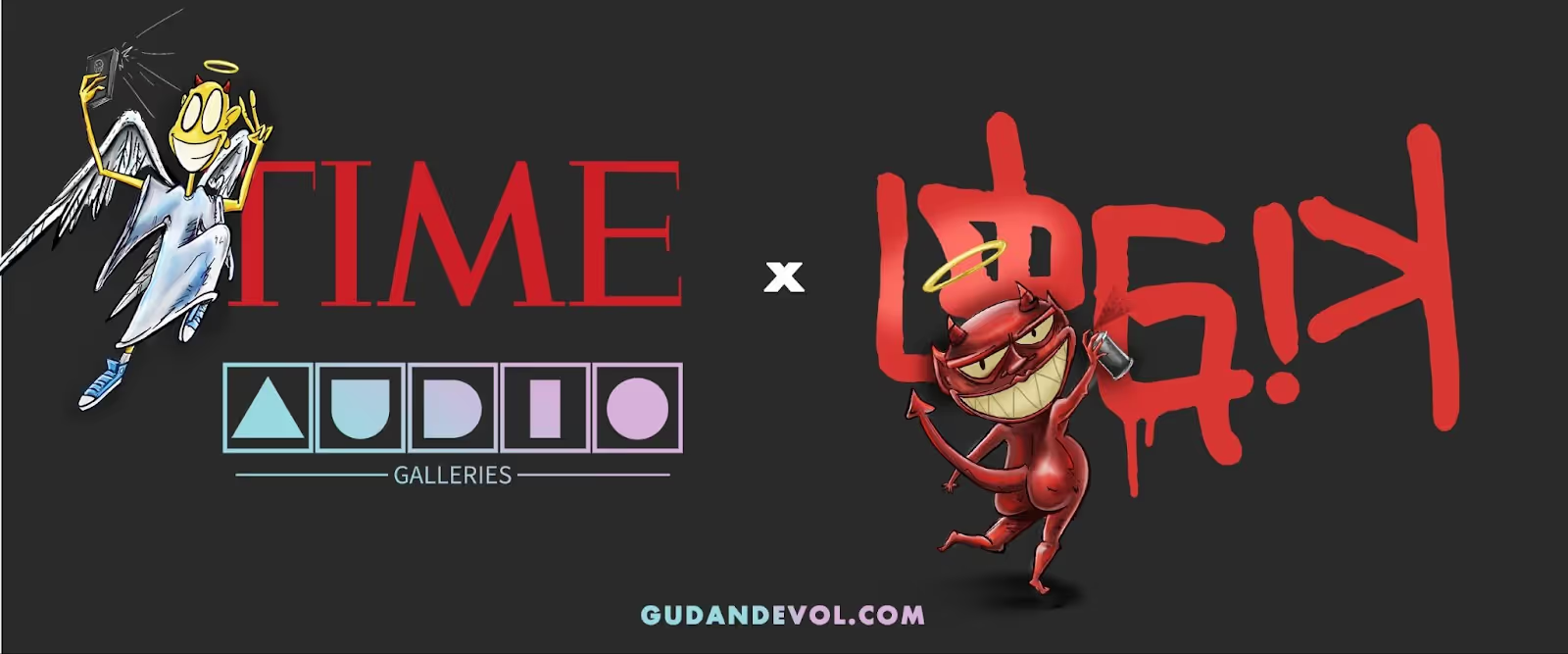
This collaboration felt like presented itself. I thought this was the proper time to set up GUD and EVOL as our new favorite duo. I really wanted people to resonate with the personalities of GUD and EVOL. I think timing is everything. I stay ready to get ready. Creating is a forever thing for me so the process has been continuous.
OpenSea: If you had to use one phrase to describe GUD and EVOL what would it be?
LOGIK: Universal truths. I think no matter what religion, whether you're atheist or if you believe in something, no matter what background you come from, everyone can identify with the ideas of good and evil.
OpenSea: Who or what else excites you in the web3 and NFT space right now?
LOGIK: To be honest, I love anybody that's creating and taking the time to do things. And I think we don't give the space enough grace. We like to make everything so devastating when people do projects that don't succeed. I appreciate all the enthusiasm. I appreciate the enthusiasm and people taking chances, regardless of whether they made money or not.
I also want to give a shout-out to Terrell Jones. He has been a light for a lot of artists, especially during this bear market. He had an amazing year. LATASHA's dope. She’s continued to push the narrative. Clone X is doing something amazing. That community's going in. ProfitsOverWages.eth (Shanice Best) and ScottFooMusic have been holding down Twitter spaces like clockwork during a bear market. Plus Leap and ThreadGuy. Shout out to Crypto Oracle and Lou Kerner.
OpenSea: What do you hope the future of NFTs looks like?
LOGIK: Essentially it's gonna have to be like ATMs. You just want your money out, but you don’t care what operating system the ATM is using. I think we’ve gotta separate web3 culture from web3 technology and that's essential because I think once we started attaching technology to the culture, we got into echo chambers thinking that everyone in the world knows about how to use web3. That’s not scalable. Because of that, my team is working on creating a frictionless experience that allows people to use the platform whether or not they care about web3 or know how it works.
I thought what Rolling Loud did with their tickets was great. They've been around for years and they've turned their VIP experiences into NFTs. Once people realize that they can buy an NFT and keep it year in and year out and not have to repurchase it in order to use it for specific events, I think we'll start seeing more adoption.
I'm most excited for frictionless experiences whether it's gaming, music, or something else. And I think we gotta change the name for NFTs. “Digital collectibles” is still a mouthful. It has to become like an everyday use case on our phones and in everyday practice where we won’t think twice about using the blockchain. Yes, we should educate people on what it is, but it should be on a need-to-know basis, for those who want to learn. I'm excited for the future.


.avif)
.png)
.png)
.png)
.png)
.png)