.png)

James Merrill creates algorithmic drawings that bridge code and craft. Working with custom-built drawing robots, he transforms generative algorithms into physical works that balance precision and imperfection. His art celebrates the unpredictable beauty of analog materials while exploring how technology can give digital creations a lasting physical presence.
This interview took place at the Hotel Saint George Hall during Marfa Art Blocks Weekend, where James Merrill discussed the role of emotion in his creative process, the value of imperfection, and how Marfa continues to inspire experimentation and community among generative artists.
Note: This interview has been edited for length and clarity.
OpenSea: Let’s start off with a quick introduction. Can you tell us about yourself?
James Merrill: I’m James Merrill, an algorithmic visual artist. I’m here in Marfa, having traveled from Vermont. The work I specialize in involves taking generative algorithms and using them to power drawing robots. These robots create unique artworks from code, allowing me to work in both digital and physical spaces.
OpenSea: When you start a new piece, what usually comes first: the code, the image in your head, or the feeling or emotion you’re trying to capture?
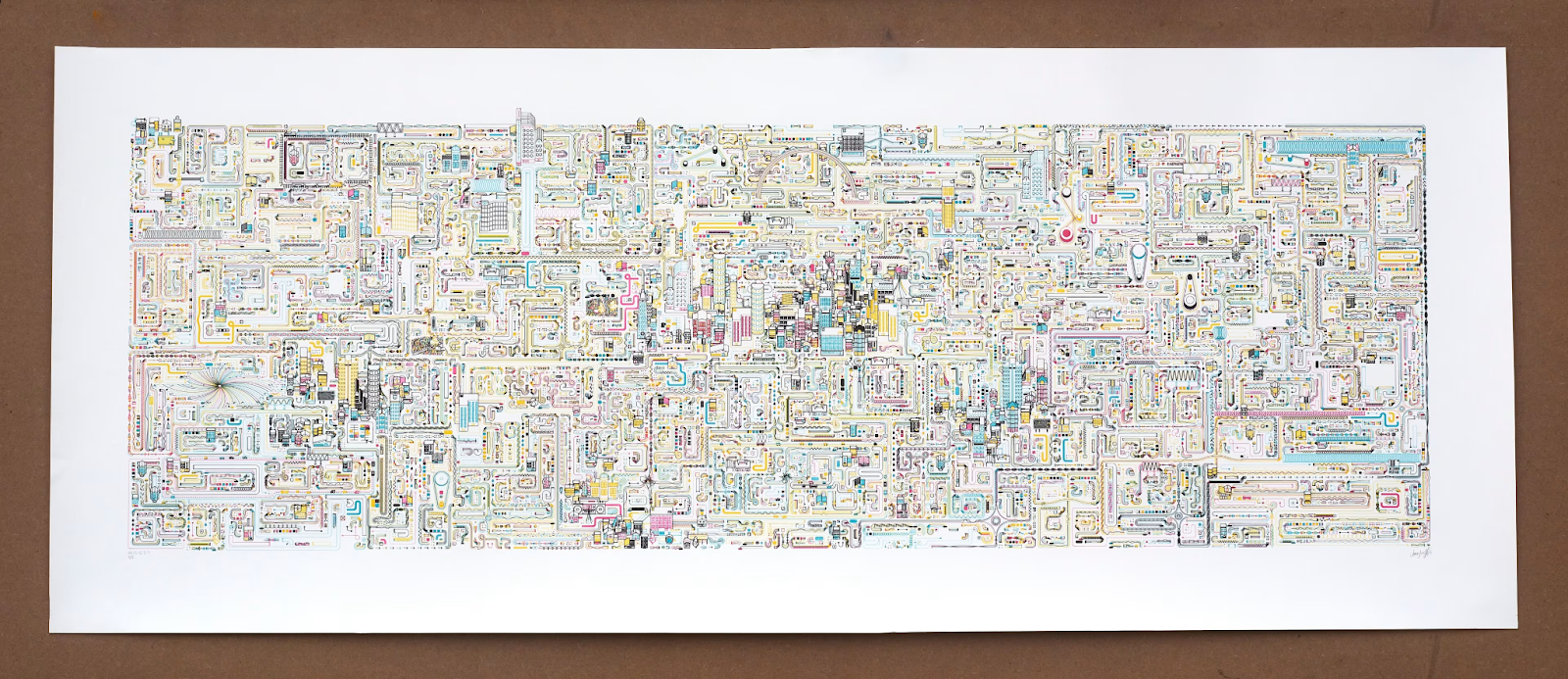
James Merrill: The feeling is what really starts the process. I’m usually trying to solve a problem. I might have an idea in my head, and I need to go back to the fundamentals of how to achieve that algorithmically. With traditional drawing, you hold the pen and make what you want, but with robots, there are new considerations like perspective, depth, or varying pressures as things are drawn. I spend time solving these fundamental issues, and then I use those solutions in my artworks over the next year.
OpenSea: Your art mixes precision with emotion. There’s a tension between control and letting go. What about this tension makes generative art feel alive to you?
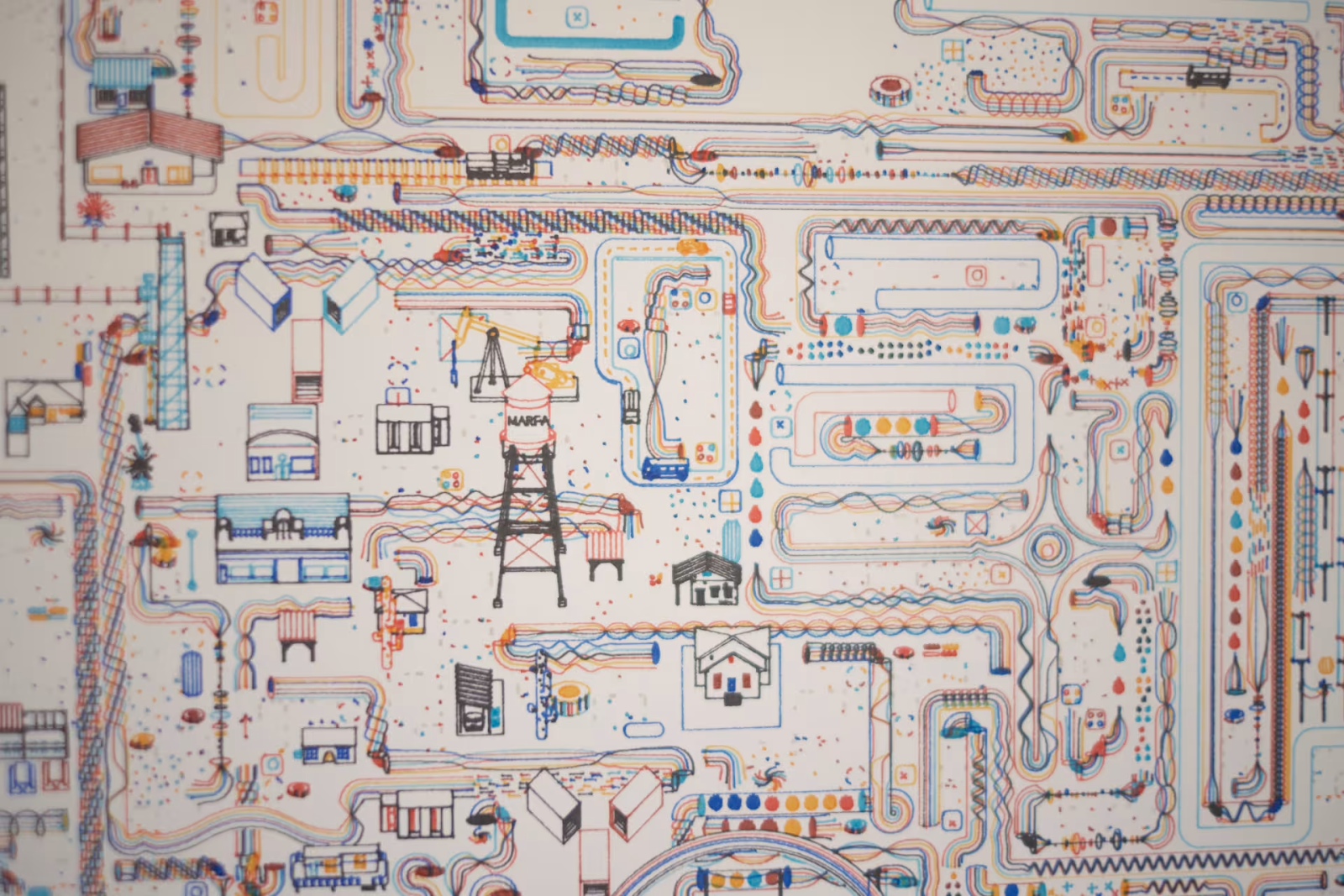
James Merrill: In computational artwork, perfection is easy. Computers are great at calculations and can do them thousands or millions of times quickly. So, perfection on screen is simple. The role of a generative artist is often to add imperfection digitally. But when you bring art into the physical world, imperfection is everywhere. The flow of ink, the texture of the paper, even the humidity in the room. These variables are out of your control and add character to the work. I love being able to add a bit of patina when making things physically. As a digital artist, all you need is a screen, keyboard, and mouse, but once I realized I could write code to make physical drawings, I started to care about the papers and inks I use. Their qualities became important, and I began blending aspects of fine art and digital art to create interesting results.
OpenSea: How do you think about how people experience your work digitally versus in person?
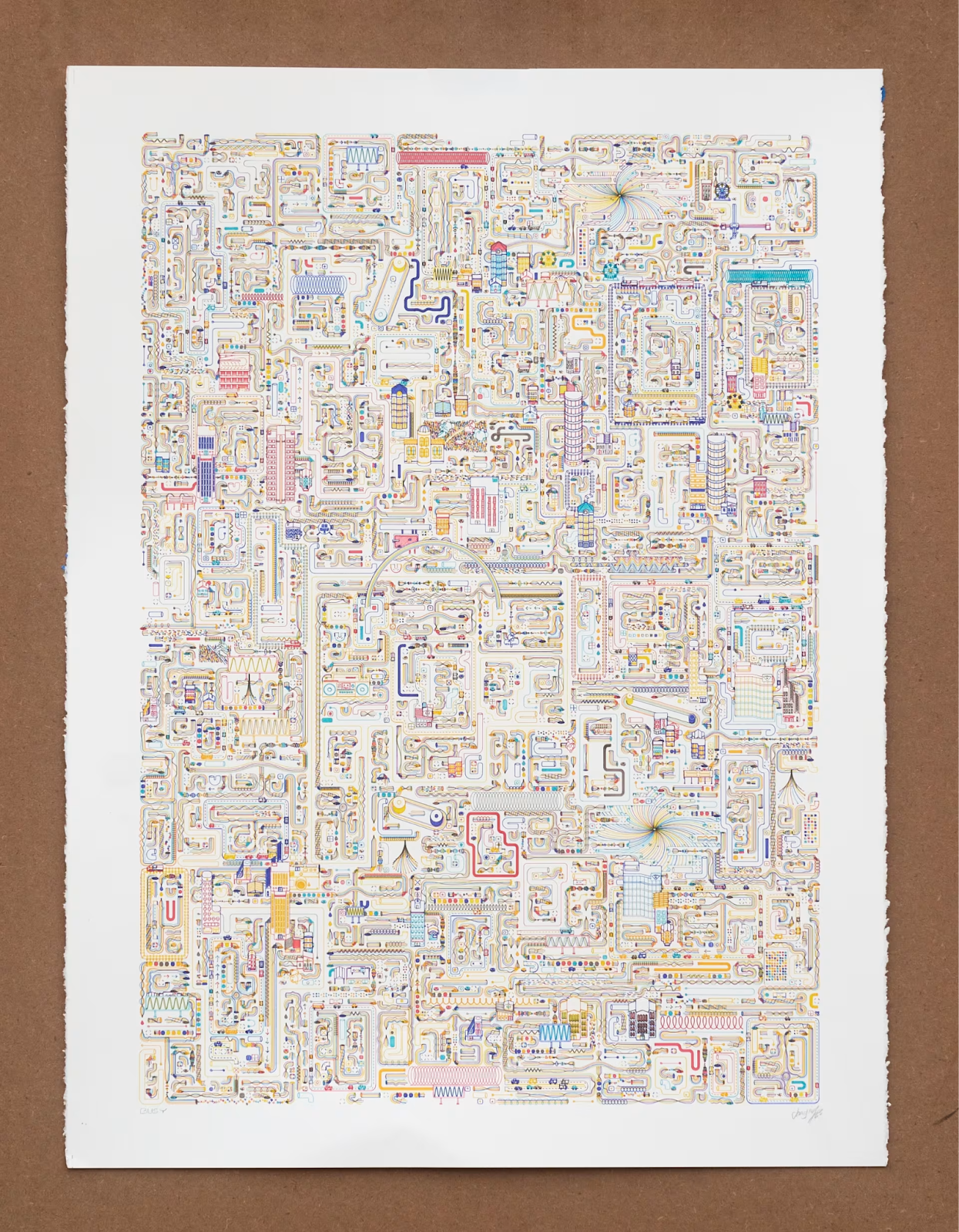
James Merrill: Often, the digital version of the artwork is just a set of instructions, and the viewer may never see it. In projects like my Art Blocks Curated drop BUSY, the digital component had to match the physical side. That’s tricky because the way inks react in real life is hard for computers to render. I had to make sure the digital looked as close as possible to the physical. Scale is also important. I like to go as big as possible at times, and recently, as small as possible. For Marfa, I created a book of 35 very small drawings, all derivatives of the algorithm that powers BUSY. It’s a way to look at BUSY recontextualized. The drawings are on a small notebook, while BUSY is a huge piece of paper. I enjoy playing with scale, and there’s a lot to explore with small, algorithmically driven works.
OpenSea: Do you have any stories about how imperfections or surprises have changed a final piece in a way that pleased you?
James Merrill: There are definitely happy accidents. Once, I was working on a plotter drawing that was going to take six or eight hours. In the middle, a thunderstorm caused a power outage, and the drawing stopped. It was unrecoverable, but I actually liked where it stopped more than what I thought the finished piece would be. Sometimes, I intentionally bring that unpredictability into the art. I’ve done drawings that take hours with the finest tip nib, then splattered ink over them to create a mix of perfection and chaos. It’s always a bit strange to “ruin” something ideal, but it often makes it better. It’s a way for me, as a digitally native artist, to get my hands dirty and add a direct, physical touch to computer-generated work.
OpenSea: You’ve talked about wanting your work to last. How do you think about permanence when technology keeps evolving?
James Merrill: By default, there’s an extreme lack of permanence in generative art. Every time you run a generative algorithm, it creates something different. When you refresh the program, you get a new result, and what you saw before is gone. We’ve solved that digitally by putting code on the blockchain, so we can recreate renditions of a generative algorithm. To add more permanence, I use pen plotters to make physical pieces. The digital artwork is preserved on the blockchain, and the physical piece can be hung on a wall and, with the right archival materials, last for decades.
OpenSea: You mentioned building a bigger plotter and evolving your process. Are there new things you can do now that you couldn’t before?
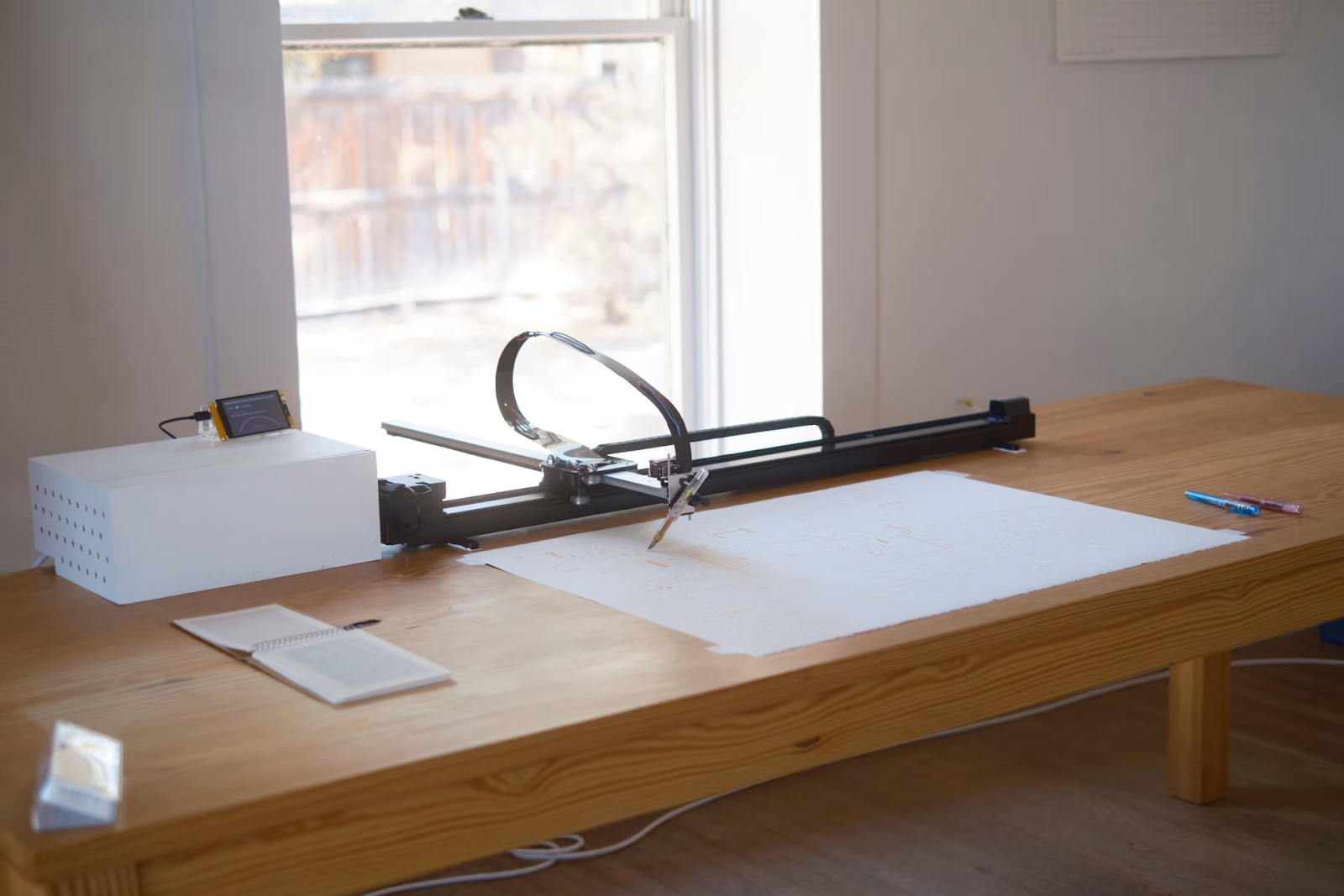
James Merrill: Yes, I have a couple of new machines. I work closely with a company that builds drawing robots. One is a large-format pen plotter with variable pressure control called the Art Frame Panorama. It allowed me to do five large drawings for BUSIEST, a subset of my release. These were 60 by 24 inches, a format that was impossible before. Working at that scale brings new challenges—prototyping uses a lot of paper and time, so the stakes are higher with each attempt. I also recently got the Egg Bot, which can do spherical plotter drawings on objects like golf balls or baseballs. It’s a throwback to one of the first machines they made, and I have it here in Marfa to experiment with. Now I can create artwork that wraps around spherical objects, which is a lot of fun.
OpenSea: What does it mean to you to be here in Marfa this weekend, especially given the unique landscape and community?
James Merrill: Marfa is not easy to get to, and it’s so different from where I’m from in Vermont. Being in the high desert, where it takes hours to arrive, you quickly notice the dedication people have to be here. Some travel from across the world. This year is the five-year anniversary of Art Blocks, and it’s a can’t-miss event with an amazing lineup of artists. For me, Marfa is all about the people. The one-on-one conversations are what matter most, and they supercharge my art practice. Every year, I leave with notes and ideas that become my homework for the next year. It creates an evolutionary chain in my work. Last year, I didn’t use 3D printing or laser engraving, but after talking to other artists, I started incorporating those techniques. I always learn something new here, and I hope to share what I’m doing and inspire others as well.
OpenSea: That’s wonderful. Being here really does create amazing connections, especially in the digital art world where people are often spread out or anonymous. To be in a physical space and share your process and tools is a real unlock.
James Merrill: Absolutely. As a generative artist with a software engineering background, I’m used to working on a team and having people to bounce ideas off. As an artist, it can be isolating, since you’re often working alone. Meeting other artists and having those conversations is refreshing. They bring new ideas and help with roadblocks. That’s huge for me.
OpenSea: Thank you so much for your time and for sharing your process with us.
James Merrill: Thank you. I appreciate the opportunity.
Disclaimer: This content is for informational purposes only and should not be construed as financial or trading advice. References to specific projects, products, services, or tokens do not constitute an endorsement, sponsorship, or recommendation by OpenSea. OpenSea does not guarantee the accuracy or completeness of the information presented, and readers should independently verify any claims made herein before acting on them. Readers are solely responsible for conducting their own due diligence before making any decisions.


.png)
.png)
.png)