
Benjamin White is the host and co-founder of Audio Galleries, an art-and design-focused web3 initiative that redefines art curation through immersive discussions, collections, and collaborations with artists from around the globe.
Since its launch in January 2023, Audio Galleries has dropped 15 collections on OpenSea with artists like LOGIK, Jimena Buena Vida and Amber Vittoria. White, who lives in Somerset, England, also does consulting work for artists, media, and web3 brands and stays dedicated, above all else, to showcasing creative talents on-chain.
Notably, Ben has worked with Philip Colbert to launch and build out The Lobstars and currently is a consultant for the NFT gallery SuperRare and decentralized media initiative Rug Radio on their content strategies. He is also the Head of Community for the 10,000-item PFP collection, Dour Darcels.

OpenSea: You came into web3 after exiting an e-commerce business. What, in your opinion, is the mainstream value proposition of web3 for individuals who are not deeply entrenched in the crypto world?
Benjamin White: I believe the next stage in this evolution is businesses, specifically bigger ones. Just think of Spotify's annual tradition where they reveal your top 10 most-listened-to artists of the year. Imagine if these top artists offered token-gated access to early album releases or priority concert tickets to their top listeners. Suddenly you are able to transact on the things you’ve earned through participation. For example, let’s say Beyonce has an album coming out in two months that you can listen to first on pre-release, and there's only 100,000 fans listening to it. Maybe you get the first go on purchasing tickets. But then you turn around and decide you’re not into Beyonce anymore, but another one of your friends is. Well, then they can buy that token off you. This approach represents the next phase in the growth of web3, as it offers people customized experiences that align with their interests and desired way of living.
OpenSea: How do you see this transition taking place?
Benjamin White: I believe the transition will occur in stages. First, it starts with the evangelists — you, me, and the artists and creators who grasp the potential of web3. They begin to understand the freedom and control it provides over their work and audience. Then, the next stage is businesses adapting to web3. They'll need to reimagine their models to leverage the benefits of blockchain technology. For instance, companies could use tokens to reward customers, offering unique experiences and products. As web3 adapts to different lifestyles, it will naturally evangelize itself by offering meaningful advantages to users.
OpenSea: Could you give an example of how existing businesses could benefit from integrating web3 into their models?
Benjamin White: Take the example of a company like Peloton, which offers fitness services and equipment. In a web3 context, they could reward users for hitting milestones during workouts with digital tokens. These tokens could grant access to exclusive events, personalized merchandise, or discounts. It transforms mundane achievements like badges into valuable assets that users can trade or sell. This approach adds value to customers' experiences and brings new dimensions to traditional businesses. It could also extend to instructors and their personal brands. They could consider offering exclusive merchandise, like baseball caps, only to those who have these tokens. And if, for any reason, you decide to part with your privileges, someone else who desires them could offer compensation for your tokens, creating a marketplace for these earned benefits.
OpenSea: Tell us about your experience in collaborating with artists, particularly with Audio Galleries.
Benjamin White: Audio Galleries began with an initiative called the Gallery Pass. This was initially offered for free via Manifold. The motivation behind this was to build an engaged web3 audience and to experiment with changing rules to see who was willing to follow along. I firmly believe that having some "skin in the game" via a token tends to focus people's attention, and it allows me to refine the audience along the way.
We minted 20,000 Gallery Passes, and each person was allowed to mint up to five of them. As a result, around 4,000 people participated. After a few days, I introduced a requirement for participants to burn three of their passes to create the mint pass. This led to approximately 10,000 passes being burned, leaving us with 3,500 mint passes and 10,000 Gallery Passes.
We always mentioned that down the line, we would do something with these passes. So now, I've created another collection where we collaborate with emerging artists. I commission their work and pay them upfront for it. Once the work is available, people can burn their Gallery Passes to obtain it.
OpenSea: What's the difference between the Gallery Pass and Mint Pass?
Benjamin White: The Gallery Pass was introduced initially to bring in the audience. Now, the Mint Pass serves as a reward for holders who also mint the open editions who receive an airdropped second artwork from each artist following a wallet snapshot.
OpenSea: How do you involve artists in the Audio Galleries?
Benjamin White: Artists are integral to the project. They provide a piece of artwork that we mint alongside the content, generating revenue. This revenue is then split between the artist and the content creators. Essentially, the artists participate in the creation of their episodes and share in the success of the project.
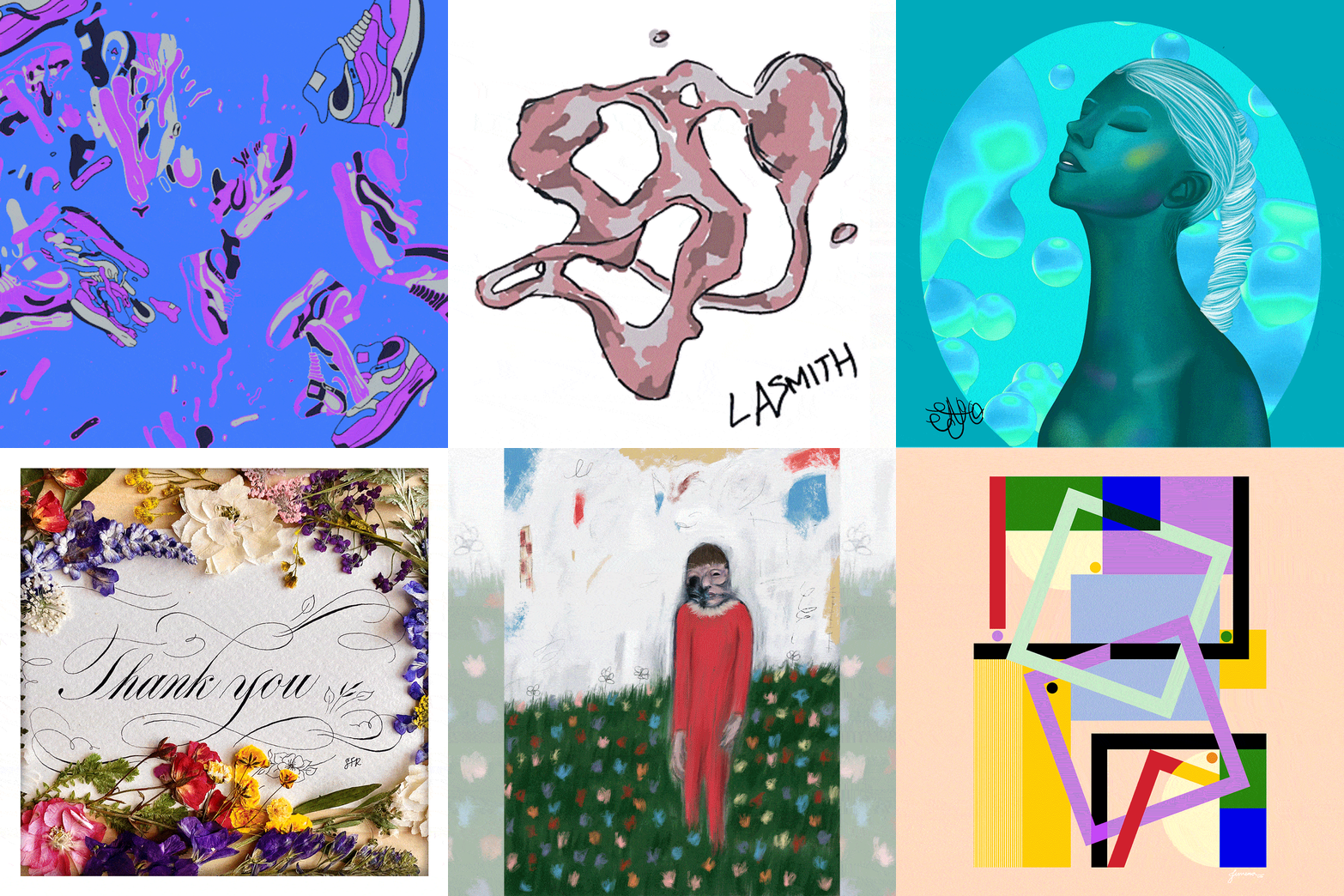
OpenSea: You recently hit a milestone of achieving over $300,000 in shared revenue supporting artists. Can you share some details about the specifics behind your revenue-sharing model and how it works when you collaborate with an artist?
Benjamin White: Absolutely. Our revenue-sharing model doesn’t operate through smart contract functionality, so there is an element of trust involved. I've become fully doxxed over the course of 25 episodes. I believe people now trust the process, especially since 23 others have confirmed receiving their shares. We have an Audio Galleries wallet connected to an OpenSea account. OpenSea assists us in creating NFTs that run for 72 hours, starting during the interview and closing after that period. The revenue generated is then distributed. Of the total revenue, 65% goes to the artist, 10% goes to OpenSea for facilitating, and the remaining 35% is split between Audio Galleries and myself, along with Sigrid, who is my co-founder responsible for graphics and social scheduling.
We maintain a healthy balance in the Audio Galleries wallet, which covers our subscriptions and various expenses, including travel. For instance, I'm heading to Amsterdam next week to moderate a panel discussion, and the funds from this wallet will cover all the associated costs.
OpenSea: Could you share which artists currently inspire you?
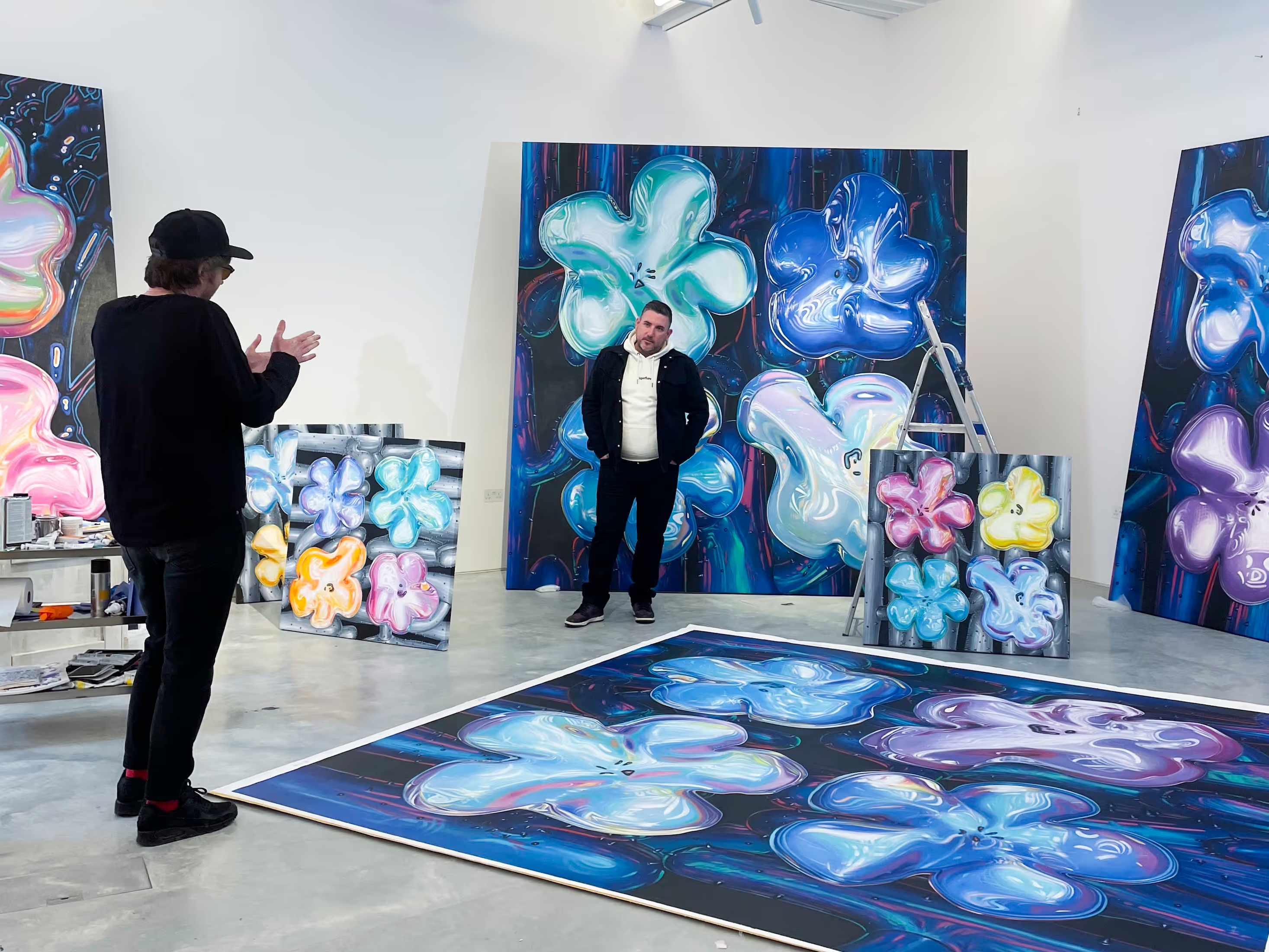
Benjamin White: I remain hugely inspired every day by so many different artists. I love the fact that I’m able to see new artwork because of the way I've positioned myself in the space. That said, I do appreciate Philip Colbert. He’s a genius in my opinion and a wonderful artist. I love the simplicity of what Craig Redman created with Dour Darcel Disappoints. I really, really love Vinnie Hager and his work. I’m a Letters holder and I remain really passionate about that. And then, in a couple of weeks — this is a total coup for me and I'm so overjoyed about it — the final episode of Series One is with Dirty Robot, or Daniel Isles, who is the founder and main artist behind Renga. His work in this space for me is mind-blowing. I absolutely love the earthy colors that sometimes mix with really, really vibrant colors, and the really intrinsic detail in some spaces, but then areas where he just goes, like blacked out space. And I think what he's created is amazing.
OpenSea: Thank you, Ben, for sharing your insights and experiences in the web3 space. It's been a pleasure talking with you.
Benjamin White: This has been really lovely. Thank you so much for taking the time to listen to me.
Editor’s note: This conversation has been edited for brevity and clarity.



.avif)
.png)
.png)
.png)
.png)
.png)