.png)

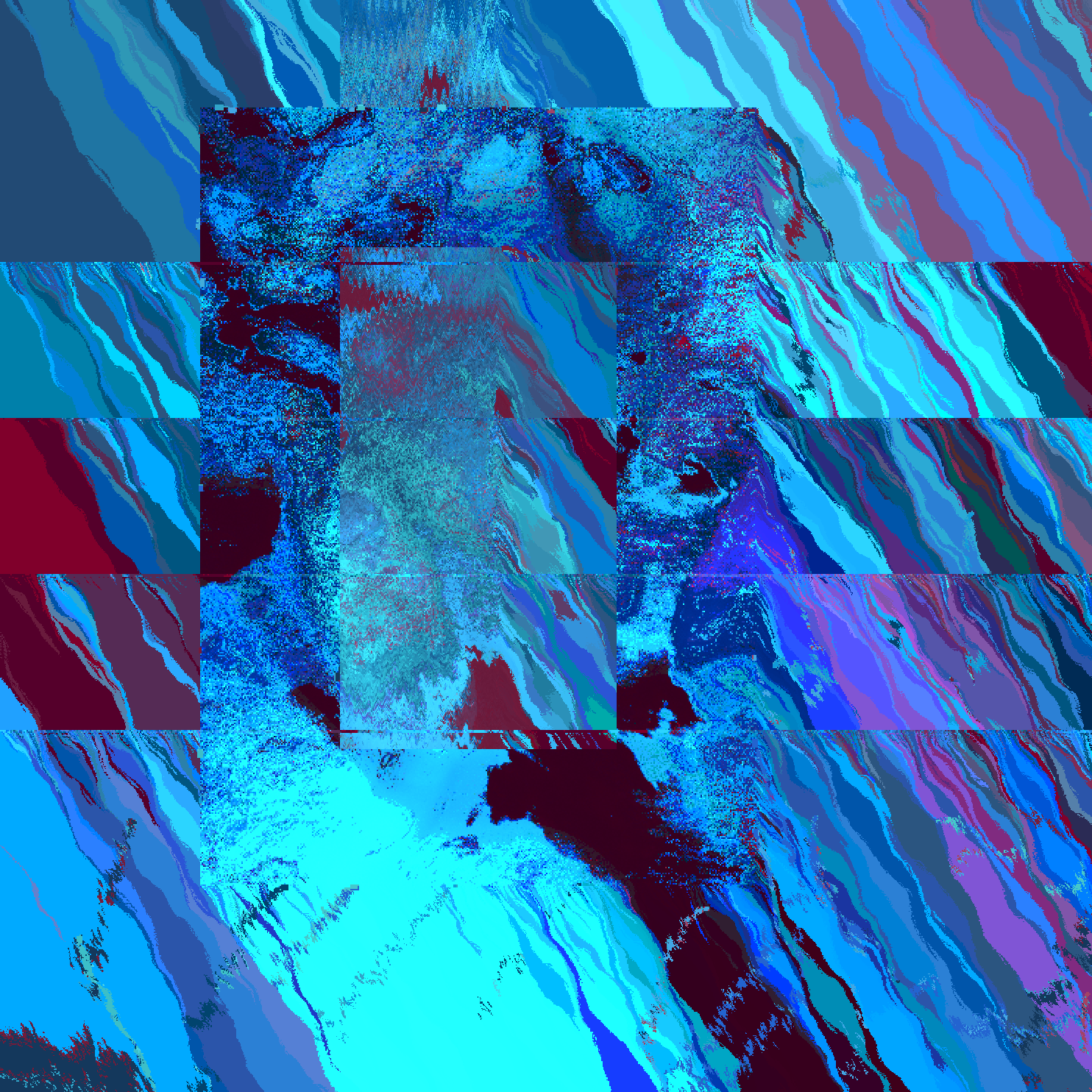
Jiwa is a Berlin-based artist who works with code to create moving, expressive digital works that center the human experience within technology. Blending programming with drawing and painting, Jiwa explores how emotion, imperfection, and accessibility shape the evolving relationship between art and the digital world.
This interview took place at the Hotel Saint George Hall during Marfa Art Blocks Weekend, where Jiwa shared insights on generative art’s unpredictability, the meaning of permanence, and how portraiture has become a way to connect technology, community, and human presence.
Note: This interview has been transcribed for length and clarity.
OpenSea: We’d love to start with an introduction. Can you tell us about yourself and your work?
Jiwa: I'm Jiwa, an artist working with code. I live in Berlin and I like to make pixels move. I see my practice as an effort to ensure that humanity isn't lost in technology. I work from the human side of things, using technology to tell those stories.
OpenSea: You've been creating art for years across digital and physical mediums. How did your journey into generative art begin, and how has it evolved with recent technological changes?
Jiwa: I'm part of a later wave of generative artists, and I have a lot of gratitude for Art Blocks and the generative artists who were releasing in 2021. I've been coding for 20 years, also drawing, making music, and doing spray paint art. But it wasn't until 2021 that I saw how people were using code to create art. That was the moment for me, and I haven't looked back since. Before that, I was making creative websites that didn't have as much utility as normal websites, but seeing the explosion in 2021 showed me what was possible — combining code to create fine art in the digital realm.
OpenSea: Generative art introduces unpredictability into the creative process. What draws you to the tension between control and lack of control?
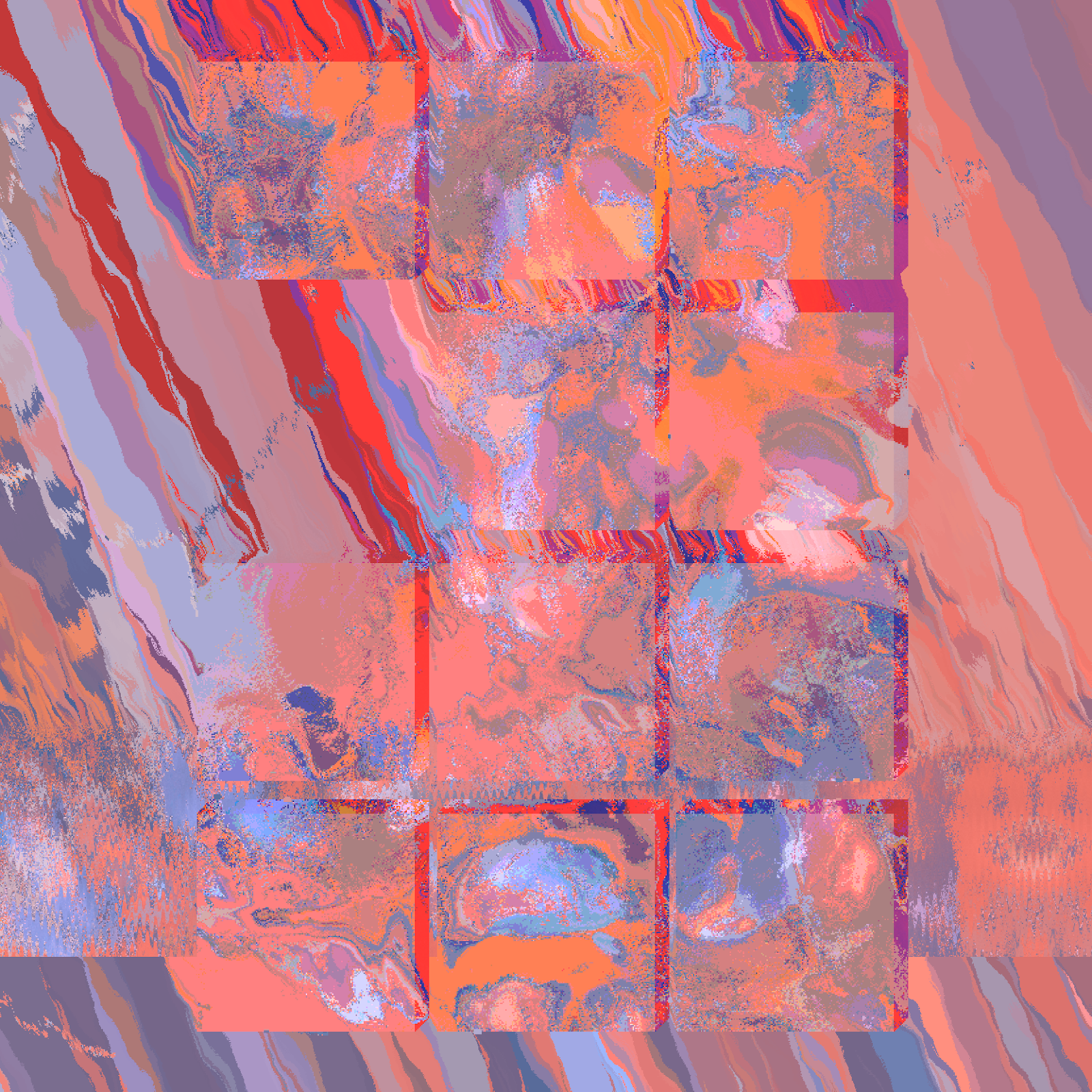
Jiwa: One of the most exciting things in art making is emergence, not knowing exactly what's going to happen. As an artist working with code, I am coding for a specific outcome, to create a visual aesthetic in line with my concept. But it's amazing to be surprised. Every time you create a new piece, you can be surprised by what happens. There are two aspects: including randomness in the algorithm so each time you refresh or mint a new piece, you get a different outcome, and also the surprises that come from the process itself. Sometimes I write something that creates a visual outcome I didn't expect, but I love it. Letting go and following the thread of ideas allows for magic and excitement in the work.
OpenSea: When creating generative art, it can be hard to know when a piece is finished. What tells you that a piece is done?
Jiwa: Many times, it's a deadline, depending on the medium. But if I don't have a deadline, I love to work that way and just see where it goes. It's a feeling, and it takes time. The last 20% of the work can take 80% of the effort. Fine-tuning takes a lot of energy, but when I go through all the outcomes and I'm excited and happy with what I see, I know I'm close. I try not to overwork it, because you can take away from something beautiful by doing too much. Creating a generative algorithm is a huge challenge, you have to balance wild outliers with limiting outcomes you don't like. Once I like what I'm seeing across the board, it's usually time to stop. You want the algorithm to have a bit of chaos so you and others can be surprised by the work. Sometimes there are things that aren't my favorite, but someone else might love them. Knowing when to stop is tricky, but for me, it's a feeling and an energy that rises up when it's time to share the work with the world.
OpenSea: Sometimes the things that are your favorite aren't the favorites of people interested in your work. Is that surprising to you?
Jiwa: It's always a little surprising when someone else really likes something that isn't my favorite. Over the last few years, I've gotten better at knowing when something is subjective and when it needs to be changed. There are two aspects: sometimes a color palette or combination isn't my favorite, but if I limited those, it might throw off the whole piece and someone else could love it. If something doesn't look clean or finished, then it needs to be addressed. It's a trick of the trade that comes with experience.
OpenSea: A concept that comes up a lot is permanence, especially with the blockchain. How does permanence play into your practice?
Jiwa: For me, part of permanence is accessibility. If something is going to be permanent, many different people will access and see it over the years. It's important to me that the work functions well across all devices. As technology expands, I want the work to be accessible to others. As an artist, I try not to get too caught up in the idea that something will live forever. Each piece captures where I am in my practice at a given time. Artists often look back at previous works and may not like them anymore, but I focus on where I am now. Another aspect of permanence is putting work onchain, which gives a level of permanence as long as the blockchain exists. Traditionally, artists don't worry much about permanence; it's the collectors and institutions that preserve and archive the work. If the work is meant to last, people will find a way to make that happen.

OpenSea: Will you talk about your portrait project and how it fits into your practice right now?
Jiwa: I've done fully onchain projects and will continue to explore those, but I wanted to be a bit more free and combine drawing and painting techniques with code. It helps me break out of the rigidity of having an algorithm do everything. I can make my own rules for my art practice. The portrait project comes from a year and a half to two-year journey of figuring out how to combine drawing by hand with coding. I've released works along the way that explore this path, but this project is something I'm really excited about. Coming to Marfa weekend is all about the people and community. Sitting down with someone and sharing an intimate moment is special. In portraiture, you get to study someone's face and mannerisms and talk with them. Creating that connection is important, and in the spirit of Marfa and what Art Blocks has done, I wanted to capture the community. The inspiration behind the portraiture is combining my personal, authentic expression by hand with code in an interesting way.
OpenSea: What does it mean for you to come back to Marfa after doing the residency here, especially with your family?
Jiwa: We love traveling together as a family. It's important for us to stick together, and with events happening all over the world, I don't want to miss precious moments with them. Being back in Marfa is amazing. It's like a family reunion every time we come here, but Marfa is different because it's the one time of year you can count on. People come from all over the world to be here for a few days in the desert. Marfa is special. Being here for six weeks during the artist residency allowed us to become familiar with the town and meet many people. We feel like we have some roots here. My two-and-a-half-year-old gets excited when we say we're going to Marfa. I wouldn't call it a second home, but we feel at home here. We made memories living in the casita behind the Art Blocks gallery, and that was our home for six weeks. It's special, and we'll try to make it back every year.
OpenSea: What a nice note to end on. Thank you so much.
Jiwa: Thank you.
For more than a decade, Save the Children has been exploring how emerging technology can strengthen its mission to support families in crisis. What began as an early move to accept bitcoin donations in 2013 has grown into a broader effort to understand how blockchain can improve the speed, transparency, and impact of humanitarian aid. At the center of this work is Antonia Roupell, who brings years of experience in global emergencies and a deep belief that peer-to-peer technology can expand financial access for communities facing the greatest barriers.
In this conversation, Antonia shares how Save the Children is building on its legacy of innovation through initiatives like the new Bitcoin Fund and its participation in the Bitcoin Humanitarian Alliance. Most importantly, she explains how these advancements can help deliver critical support to kids faster and more efficiently, even in the hardest to reach places.
OpenSea: Let’s start with your story. How did your background lead you to Save the Children and what drew you to exploring blockchain and crypto in the humanitarian space?
Antonia Roupell: I’ve been working in the humanitarian sector for almost two decades. Prior to that, I worked in global newsrooms, usually focused on conflict and emergencies. I went down the proverbial rabbithole on peer-to-peer technologies in my free time and in 2020, the penny dropped for me on how transformative this evolution of money could be for financial inclusion.
Witnessing first hand the extreme challenges families face living in the harshest environments around the world has been the driving force for the blockchain innovation work we’re leading at Save the Children.
OpenSea: Save the Children was one of the first global NGOs to accept Bitcoin donations back in 2013. What motivated that early move, and how has your crypto journey evolved since then?
Antonia Roupell: Back in 2013, one of our donors saw our emergency relief efforts during Typhoon Haiyan in the Philippines and wanted to give Bitcoin to support. Prompted by this demand, Save the Children became the first global humanitarian organization to accept Bitcoin donations, opening the door to new funding sources. Today, most major charities accept crypto donations but hardly any will hold them in Bitcoin and fewer still are looking at how peer-to-peer technology supports humanitarian efforts in getting funds to families more quickly and transparently. We’ve got a long way to go but we’re proud to have pioneered this trailblazing journey.
OpenSea: You recently launched the Save the Children Bitcoin Fund. What inspired this initiative, and how does it build on Save the Children’s broader commitment to innovation and transparency in giving?
Antonia Roupell: Save the Children’s Bitcoin Fund was launched last month, inspired by the desire to hold and use Bitcoin donations to increase financial flexibility and the speed of humanitarian aid distribution. The fund was also motivated by Bitcoin donors who have shared with us that they feel strongly their donations should be held in Bitcoin, not auto-converted to fiat. When donors told us their Bitcoin was their “digital gold” and a ‘hedge against inflation,’ we listened. Our Bitcoin Fund enables us to unlock donations we otherwise would not receive to maximise our reach and impact for children.
Given the major foreign aid cuts that have impacted our sector this year, the timing to further diversify from institutional funding and embrace disruptive solutions has never been more urgent. Save the Children’s Bitcoin Fund builds on our commitment to creating cutting-edge solutions, enabling multi-year humanitarian programming with greater efficiency, transparency, and reduced reliance on traditional financial intermediaries. Ultimately, it means we can continue to be there for kids when and where they need us the most — every day and in times of crisis.
OpenSea: Can you share an example of how crypto donations have already made an impact on the ground? Whether through speed of aid delivery, donor engagement, or community empowerment. What have you seen firsthand?
Antonia Roupell: In countries like Bhutan, we’ve tested how crypto donations have enabled families to receive cash assistance via mobile wallets within minutes. In the Philippines, we ran a pilot that paid youth in Bitcoin for microwork tasks completed on their mobile phones. The feedback was really positive and we proved how useful Bitcoin and stablecoins can be in sending small amounts to wallets cross-border.
OpenSea: Save the Children also joined the Bitcoin Humanitarian Alliance with The Human Rights Foundation this year. What does being part of that coalition mean, and how does collaboration strengthen your mission to reach children in crisis?
Antonia Roupell: Being part of the Bitcoin Humanitarian Alliance means joining a global network of organizations and individuals leveraging Bitcoin to protect human rights by democratizing access to financial services — something we take for granted in many countries. This collaboration allows Save the Children to share best practices, expand our youth-led advocacy work, and innovate collectively.
OpenSea: How do you approach education and trust-building with supporters and donors who are new to this space?
Antonia Roupell: By providing clear, accessible information and addressing concerns about safety and compliance, Save the Children builds trust with supporters new to crypto — helping them feel confident their donations will have a meaningful impact for kids. For example, not enough people know that they could reduce their U.S. capital gains by donating crypto to charity.
The response to our innovation work has been incredibly positive among crypto natives and Bitcoin maxis, but also among people outside the crypto space, who are compelled by our commitment to using technology to innovate effective humanitarian solutions and deliver greater impact for children around the world.
OpenSea: From a technology perspective, what excites you most about bringing blockchain into a global nonprofit framework like Save the Children’s? Are there any recent innovations that have made this work especially promising?
Antonia Roupell: The potential to reduce transaction times and enable remote financial access while increasing our transparency and accountability are among the areas that excite us the most. As well as offering an instant financial inclusion tool, innovations such as Lightning network payments, global stablecoin adoption and mobile wallet integration have made blockchain relevant for humanitarian aid delivery.
Save the Children has over a century of expertise, and we’re unwavering in our commitment to continue innovating to reach millions of children every year. We believe that disruptive innovation can happen from within large organizations and when so much is at stake, we know it’s our duty to try. The progress and solutions being built in blockchain are moving fast and we’re thrilled to be working with incredible partners — such as the Bitcoin super-app builders, Fedi, and our custody solution to holding cryptocurrency, Fortris — who offer us invaluable expertise and advice.
OpenSea: Finally, on a personal note, what keeps you inspired at the intersection of technology, innovation, and global impact?
Antonia Roupell: The real difference technology can make when used for good inspires me the most. Save the Children's mission is to protect children's access to health, education, and safety, wherever these basic rights are threatened. The reality is bleak when considering that this year alone, conflict plunged 63 million children into hunger.
Seeing the eyes of youth widen when testing a digital wallet for the first time has been a highlight for me. Watching their faces light up when they receive cross-border funds to their phones in seconds at almost zero cost signals that this technology is not waiting for anyone. To be sure, it’s not Save the Children’s role to bring crypto adoption to people but rather to support the education and use of blockchain technologies, like Bitcoin, to deliver maximum value and real solutions to those who need them most.
Learn more about Save the Children’s Bitcoin journey here.
Donate crypto to Save the Children in just a few simple steps here.
To engage with Save the Children’s Bitcoin Fund please contact: bitcoin@savechildren.org
Disclaimer: This content is for informational purposes only and should not be construed as financial or trading advice. References to specific projects, products, services, or tokens do not constitute an endorsement, sponsorship, or recommendation by OpenSea. OpenSea does not guarantee the accuracy or completeness of the information presented, and readers should independently verify any claims made herein before acting on them. Readers are solely responsible for conducting their own due diligence before making any decisions.


.avif)
.png)
.png)
.png)
.png)