.avif)
You have probably seen a Tyler Hobbs generative art piece, even if you didn’t realize it. Since introducing the world to his noteworthy "Fidenza" collection in 2021, Hobbs' name and the generative art NFT scene seem to go hand in hand. Beyond the NFT world, his work has been featured in everything from Forbes to murals in Marfa, Texas.
Hobbs' contributions to the world of computer art have been significant, combining technology and creativity in innovative ways. His work is so ubiquitous that Erick Calderon — fellow generative artist and founder of Art Blocks — even chimed in on Hobbs’ style and success to Artnet: “His art has a formality and simplicity that is instantly recognizable and understandable, something that I think is insanely difficult to achieve.”
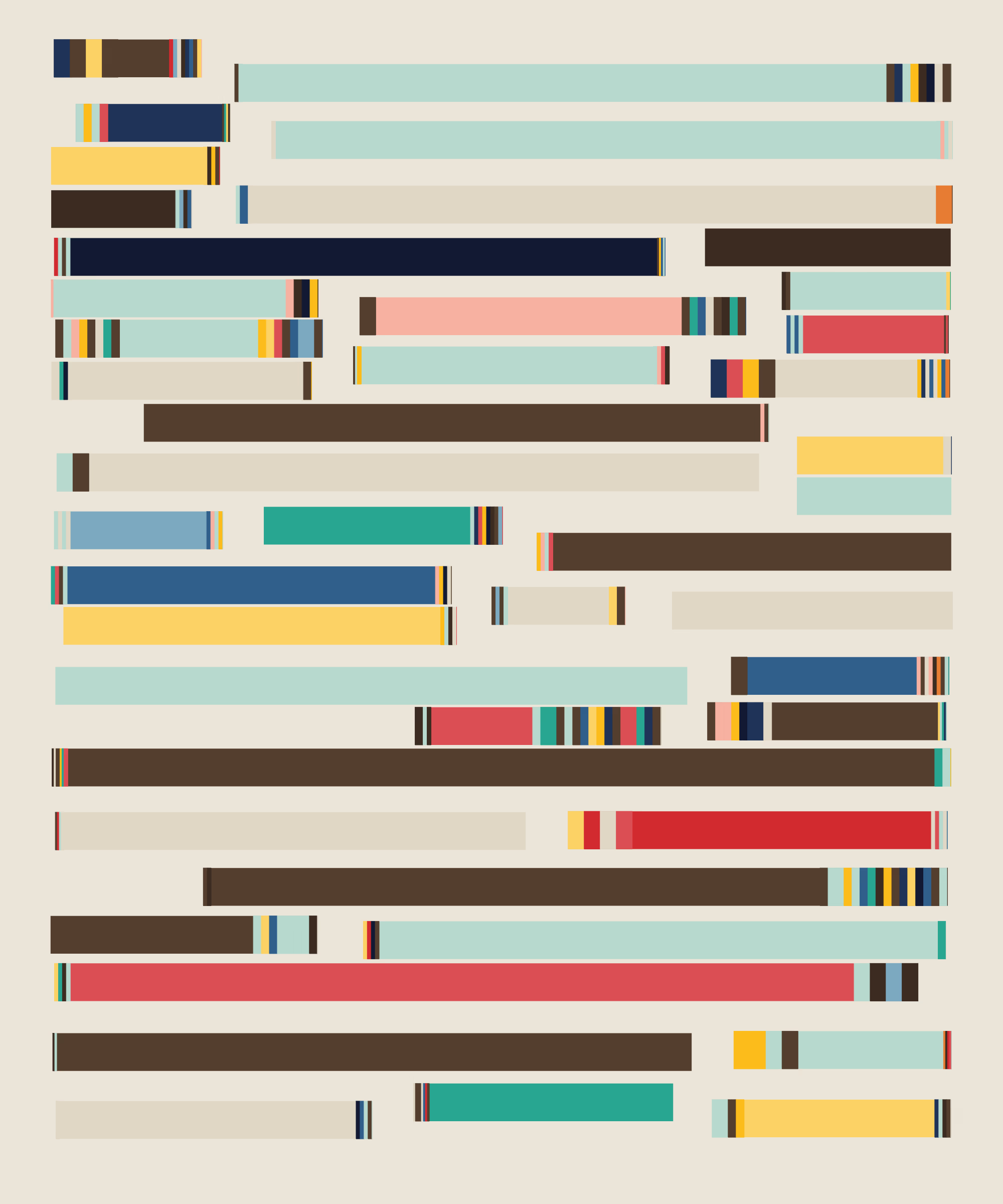
An artist, coder, and Austin native, Hobbs is known for creations that look colorful and simple to the human eye but are actually a result of his own complex and unique coding algorithms, a hallmark of algorithmic art. Here are seven more things to know about the generative artist.
He is a software engineer turned generative artist
Hobbs worked as a software engineer at an Austin-based startup when he was inspired to create art. What started as a side hustle that merged his passion with his skillset — imagining art and creating code — turned into a second career as a visual artist and the head of a five-person studio in Austin. Hobbs uses algorithms to create generative art, leveraging his technical background to produce innovative and novel works. Now, he tells Artnet, that even if he never sold a piece of art again, he could finance his career and studio for decades on what his second career has provided him thus far.
He studied computer science at the University of Texas at Austin
Hobbs has been immersed in the world of generative art for over a decade. His background is in computer science, which has been instrumental in his artistic journey. His fascination with generative art began in his teenage years when he started experimenting with algorithms and computer programs to create original pieces. Hobbs draws inspiration from a diverse array of sources, including the ambient and techno music that fuels his creative process, as well as science fiction classics like Blade Runner and Metropolis. Additionally, the works of other generative artists have profoundly influenced his style, helping him to refine his unique approach to creating art.
His creative style has shifted over the years, but his artistic approach is the same
Scrolling through his personal website, you’ll find pieces from 2015 onwards. A staple of his work is creating complex codes that register to the human eye as lively, enthralling, and symbolic of the world around them. This process of creating artwork often involves a level of randomness and pre-defined patterns, allowing for unique outputs that differ from traditional methods of art creation.
He explains his style as, “a balance between the cold, hard structure that computers excel at, and the messy, organic chaos we can observe in the natural world around us.”
Hobbs' exploration of generative artwork allows him to experiment with algorithmic processes, fostering an experimental and exploratory approach to art-making.
Looking at his works throughout the years, anyone can see how Hobbs found his own style — from black and white art pieces that feel chaotic and overpowering to works like his 2021 Fidenza collection that feel like colors and shapes are dancing before you.
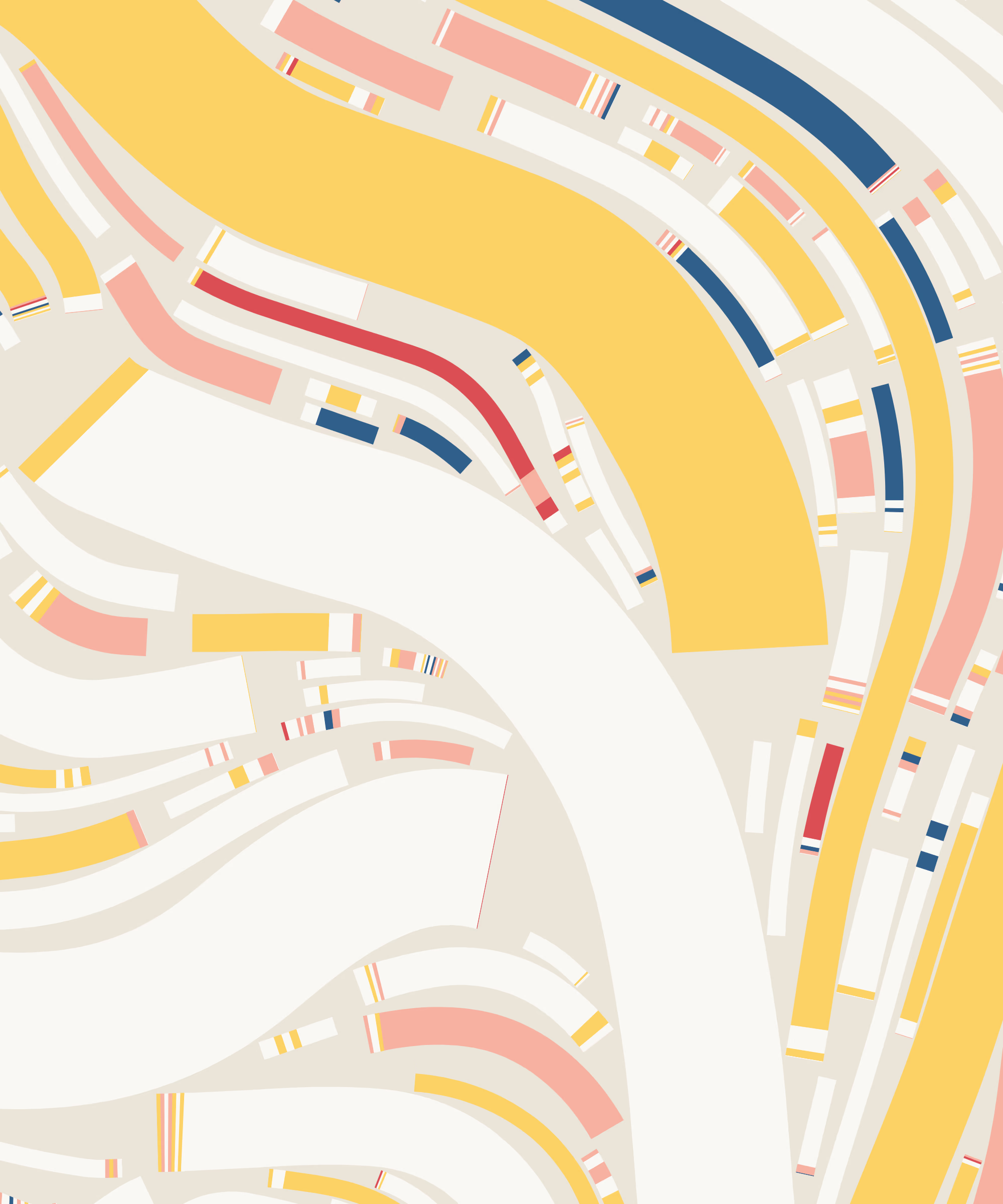
He is most known for his generative art NFT collection, Fidenza
His fall 2021 "Fidenza" collection earned Hobbs his noteworthiness and permanence in the generative art space. "Fidenza" is a collection of 999 NFTs created by Hobbs’ most complex algorithm to date. Previously he shared with art auction house, Christie’s, that his most complex algorithm only had 32 outputs. Specifically, "Fidenza" uses a flow field algorithm, which, according to Hobbs, brings each NFT’s iconic, never-overlapping curves and shapes to life. Other unique attributes include each NFT’s color, scale, and structure. Hobbs coded 14 different probabilistic color palettes that can be tied to each NFT. For example, in describing his collection, he explains that the “Luxe” color palette is the most common and has 16 colors.
Hobbs' contributions to generative computer art are significant, building on the pioneering work of Frieder Nake and others in the field.
He broke through the noise of crypto speculation
Hobbs has made a name for himself with his innovative approach to digital art. One of his Fidenza NFTs even sold for an astonishing $3.3 million worth of ETH, underscoring the high regard in which his work is held. Hobbs has managed to separate artistic value from crypto speculation, emerging from the crypto bear market with his reputation not only intact but flourishing. He is widely considered the first credible, breakout star of generative art, a testament to his unique vision and technical prowess.
The art world has embraced him, from Christie’s to web3
Hobbs is also loved by the more traditional art gallery world, particularly for his innovative use of computer graphics. In early 2023, Christie’s auctioned Fidenza #724, and in April, Pace Gallery curated a new Hobbs exhibit, QQL: Analogs. The exhibit was the first of its kind for Pace, who had not collaborated with an NFT generative artist until then. Hobbs' interest in elaborate architectural patterns is evident in his work, showcasing the potential for endless creativity in architectural design. The collection included large-scale paintings based on a new algorithm, which according to Pace, Hobbs developed in partnership with generative artist Dandelion Wist.
He is a writer, too
Hobbs’ approach to creativity and artistic point of view isn’t limited to the visual art world either. Fans of his work and perspective can also find a collection of essays on his website that explore topics like the staying power of generative art, social media in the art world, and the life cycle of an idea. His book, Order/Disorder, explores Hobbs’ approach to art-making and the creative relationship between man and machine.
How generative art plays a crucial role in Hobbs' work is evident through his exploration of methods and processes involved in creating art through programming.
Whether you enjoy reading Hobbs’ words or taking in his colorful, shape-filled artistic point of view, it’s hard to deny that Tyler Hobbs is everywhere the arts are.



.avif)
.png)
.png)
.png)
.png)
.png)