.png)
In 2020, Erick Calderon — better known as Snowfro — launched Art Blocks, a platform that would go on to fundamentally reshape the way people think about generative art on the blockchain. What began as a simple visual demonstration of his ideas, the now-iconic Chromie Squiggle, quickly became the creative spark behind a movement — bringing permanence, interactivity, and broader visibility to code-based art.
Five years and nearly 500 projects later, Snowfro is preparing to close the first chapter of Art Blocks history: sealing the platform’s initial run of curated and community-driven releases inside a “glass case.” Ahead of that milestone, we sat down with him to reflect on the origins of Art Blocks, the evolution of the generative art space, and how new tools like PostParams are opening doors for the next generation of artists, platforms, and collectors.
OpenSea: Let’s start at the beginning. What inspired you to launch Art Blocks in 2020, and how did Chromie Squiggle become both a technical experiment and the creative spark for everything that followed?
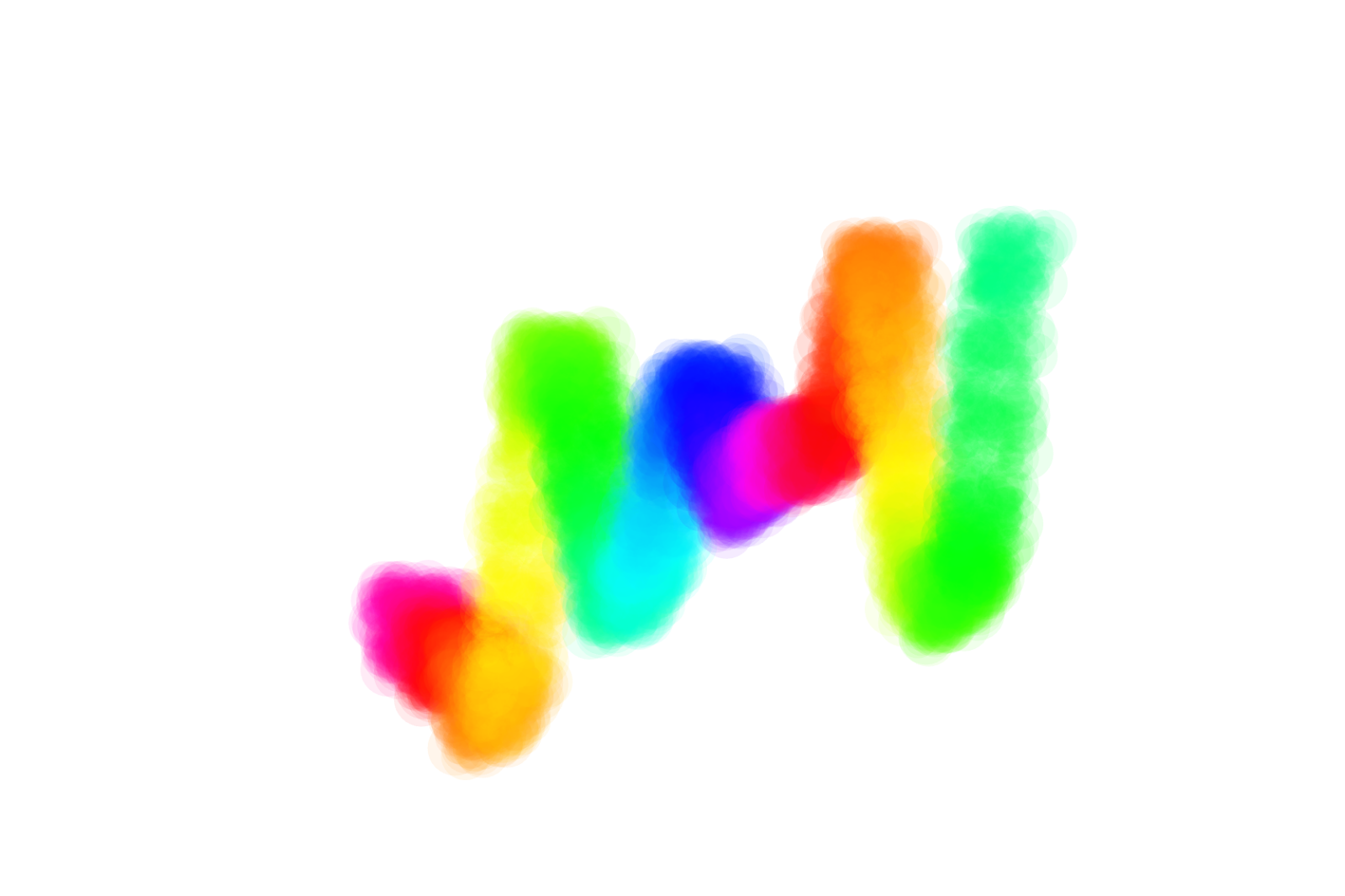
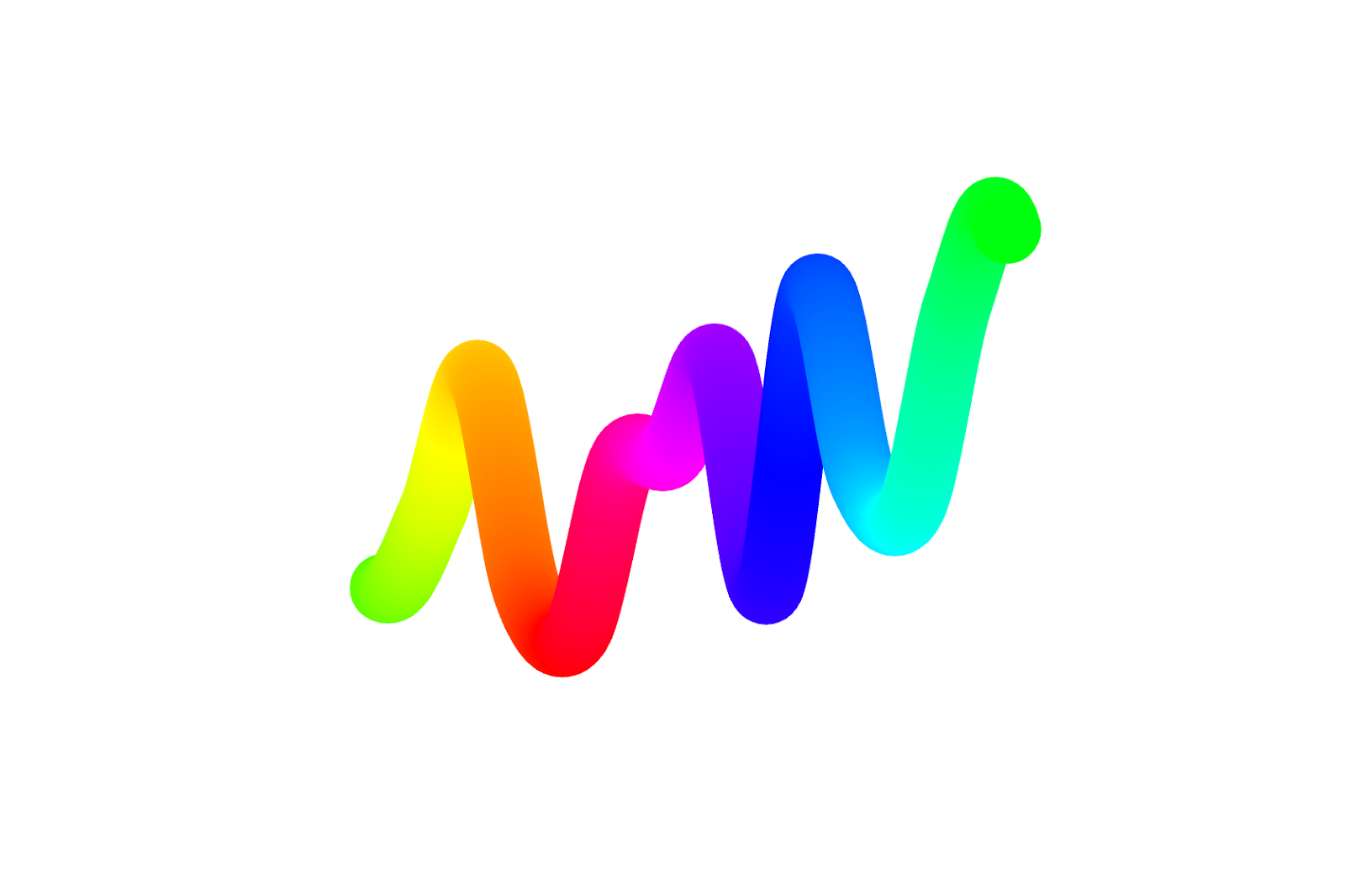
Snowfro: While I had been tinkering with generative and code based art for about a while, everything clicked in my head for the potential that blockchain technology had to create synergies with the generative medium as I claimed my Cryptopunks in June 2017. The Squiggle was initially a way I demonstrated the tech and ideas around Art Blocks using something I had created, but eventually became an official release on Art Blocks after users helping me test the platform on testnet requested that it become available on mainnet.
OpenSea: Chromie Squiggle might look simple at first glance, but it represents a lot of what makes on-chain generative art powerful. What were some of the technical or creative decisions you made early on that helped shape both the project and Art Blocks as a whole?
Snowfro: I was really excited about the potential for interactivity that is made possible with on chain software running in a browser. And I also wanted to curate constrained optionality into the display experience. So while the default state of a Chromie Squiggle is static on a white background, I set it up so that when it is viewed in live mode the user can click the squiggle to have it start its animation, press the left/right keys to speed up and slow down the animation, and press the space bar to change the background color to accommodate their taste within a pre-specified range of grayscale colors.
OpenSea: Generative art was still niche at the time. What gave you the conviction to build a platform for it on-chain — and at what point did you realize it was going to be something bigger than you imagined?
Snowfro: Lots of things gave me conviction to build Art Blocks, however that conviction was not based on an assumption that anyone would actually care other than maybe a handful of generative artists and collectors. But my main motivation was giving permanence to what otherwise felt like a very ephemeral art form in the way that it was generally shared (and how I was mostly consuming it) on social media. But yeah, soon after launch as both artists and collectors started expressing a lot of interest in what I was building I realized this might be something much bigger than I would have ever dreamed.
OpenSea: You just announced that Art Blocks will reach its 500th project in November 2025. What does this milestone represent — both personally and for the generative art movement?
Snowfro: I view Art Blocks as a platform and the aggregate of projects released by Art Blocks across all of the different verticals (Curated, Factory, Playground, Presents, Collaborations, and Explorations) as what might possibly be my greatest achievement, made even more meaningful by the fact it was not intentional and created purely for a love of the arts and the medium. And for the movement? Well there’s plenty of incredible generative art and artists passionate for the medium that laid the groundwork for Art Blocks so if what I created helped support these artists and the medium and get some eyes on it then that’s a milestone in and of itself too I guess.
OpenSea: You’re wrapping these 500 projects in what you call a “glass case” — formalizing them as a complete, foundational era. How are you thinking about preserving this body of work for the long-term?
Snowfro: There’s two parts here. Preservation, which Art Blocks has dedicated resources to making sure the artwork is available without the need of the platform to exist. This is ongoing work that will require a lot of critical thinking and resources to push forward. Then there’s elevating the artists and artworks in the collection to a broader audience. Having this collection represent a finite set of artworks and artists makes the entire thing more inviting for people to want to explore and hopefully lose themselves in curiosity around all the gems found inside.
OpenSea: With the Curated program winding down, where is Art Blocks headed next — and what kinds of experimentation are you most excited about?
Snowfro: So all that’s winding down is Art Blocks as a publisher. This is nuanced but important. Everything in that set was selected/curated by Art Blocks (and in some cases a curatorial board) to release as an Art Blocks release. I believe the world is changing quickly, and the role of a platform is also going to change at the same pace. So we want to focus on supporting artists and other platforms’ releases but as independent releases not selected and presented by Art Blocks. This will mostly happen within the Art Blocks Studio where selected artists have free reign to release work on their own contract at their discretion and Art Blocks Engine where partners and galleries can organize releases on our technology. Both inherit the same durability of anything else released at Art Blocks sharing a standardized protocol for releasing and preserving generative art. This is really interesting to me knowing that any preservation efforts made towards preserving a single Art Blocks artwork can automatically be inherited by any fully onchain artworks across the ecosystem.
OpenSea: You recently debuted PostParams with Jiwa’s DDUST collection — the first project to use this new on-chain feature. How do you see PostParams expanding what’s possible for artists working on-chain, and what kinds of creative experimentation do you hope it inspires?
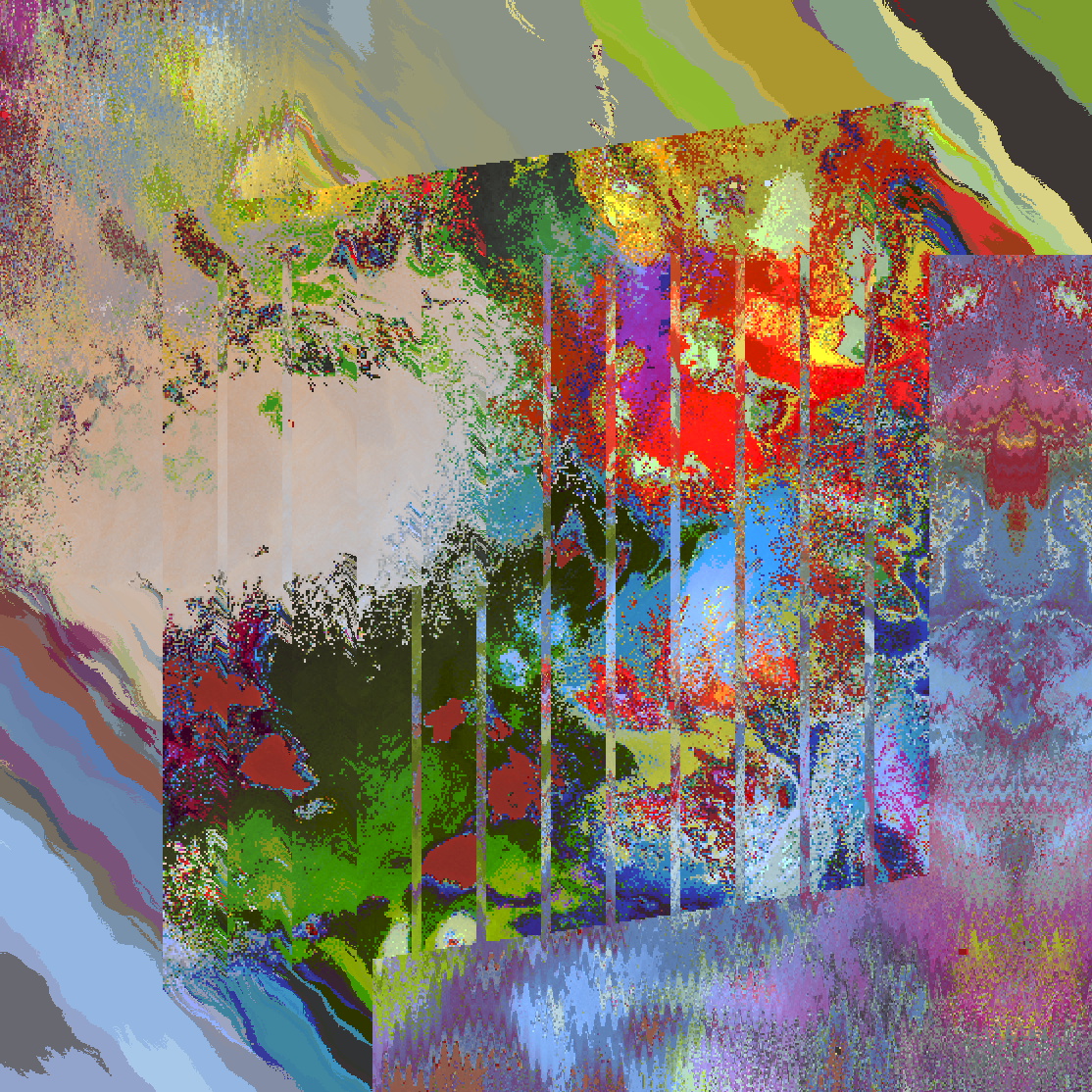
Snowfro: The idea that tokens can interact with each other as well as interact with other smart contracts and simultaneously allow both artists and collectors to have an impact on the functionality of the artwork is REALLY interesting to me. Jiwa was brave enough to be the first to implement this tech into DDUST allowing him to create storms that pass through the artworks in the collection as well as let the collector choose from a set of artist defined color palettes. The possibilities are truly endless and we are excited to demonstrate the lego brick nature of our ecosystem with PostParams plus the vast creativity of the creators in this space.
OpenSea: Over the past five years, you’ve worked with hundreds of artists. What have they taught you about the possibilities of generative art?
Snowfro: I think what’s most amazing to me is just how prolific generative artists can be. Feels like innovation in libraries like p5js and others have really facilitated creators to design stunning generative artworks faster and faster every year, enhanced even more now with assistance from AI.
Community has always been core to Art Blocks. How has the collector-creator relationship shaped the platform — and how do you see the role of curation evolving from here? From the very start of my journey in web3 I identified that one of the coolest parts, still often true today too, is the availability of dialogue between the creator and the collector. From Marfa weekend to artist focused channels in our early discord we’ve always prioritized facilitating conversation across the board. Sometimes its harder than others, and sometimes there’s more people to enter into the dialogue than others, but we still enjoy being able to facilitate connections between all the folks in our community as it’s a core part of what makes 23b4 so special.
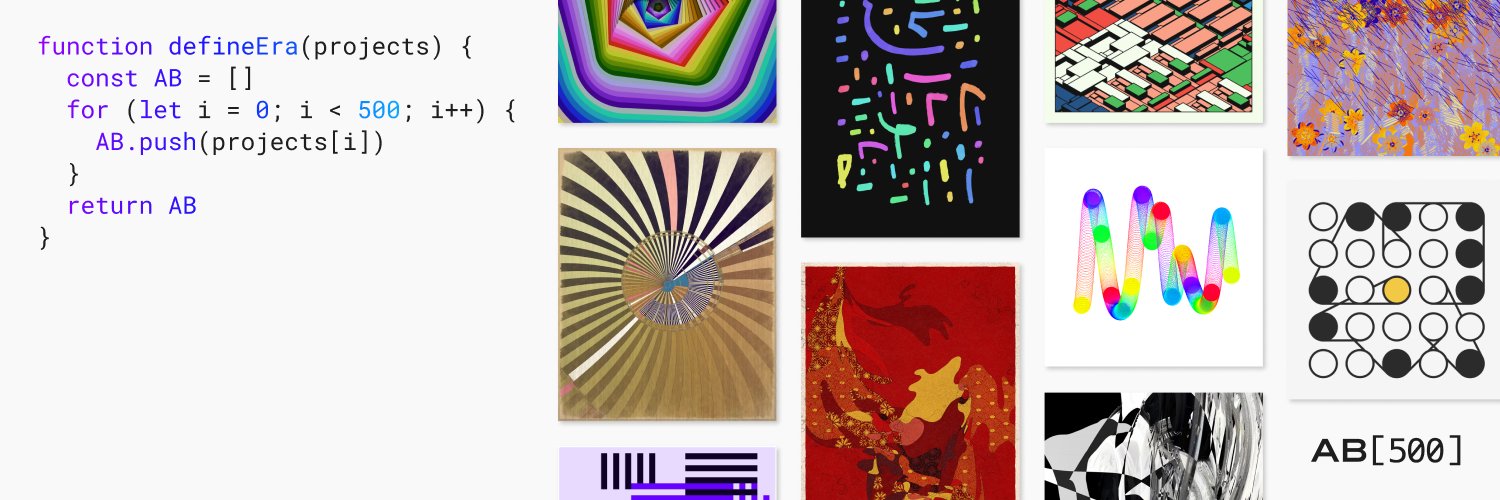
OpenSea: What do you hope future generations of artists and collectors take away from the Art Blocks 500 — and how do you envision the next five years of Art Blocks?
Snowfro: Look, I’m going through some weird exercises processing the rate at which tech and humanity is evolving and it’s really hard to know what next year looks like, much less five years. Especially when it comes to what it means to be a tech platform, a brand and steward for the arts and culture, and also an artist, especially in the generative medium, in the face of AI. What I will say is that I think having this finite set of work to consume in parallel with our technology becoming more ubiquitous across a broader audience and supported by institutional acquisitions and support feels like everything in the Art Blocks 500 will feel super accessible to newcomers over the years and I’m proud that it’s all packaged in one clean package where everything shares the same standards of decentralization/permanence and ethos for why it exists. And while we’ll be pushing close to 300k artworks in the collection by the time we seal the 500, I genuinely believe that this will prove to be scarce in a future where the barriers to entry for making cool stuff are reduced dramatically by this beautiful technology that is just going to change everything around us (AI).
OpenSea: If you could give a message to your 2020 self just starting Art Blocks, what would you say?
Snowfro: Hold on tight it’s going to be a wild ride!


.avif)
.png)
.png)
.png)
.png)
.png)