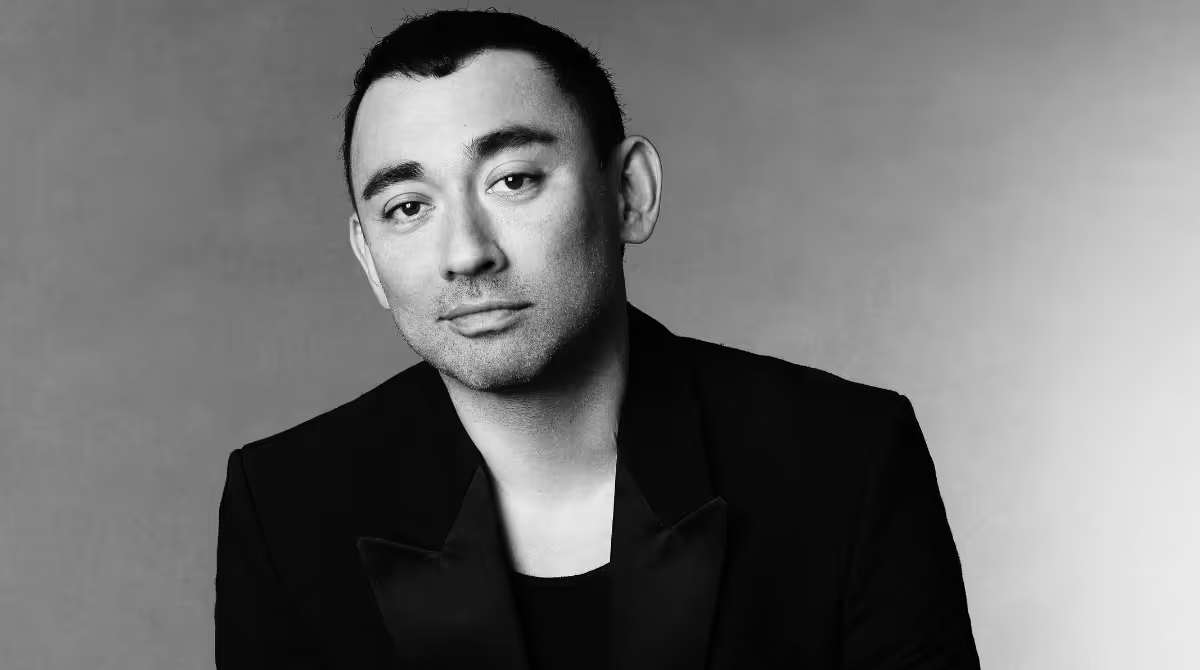

You might know Nicola Formichetti as the mastermind behind Lady Gaga's infamous meat dress or as the creative visionary who brought Diesel’s campaigns to life, but his latest chapter began as a question — "What’s next?" — sparked by the fashion industry’s pandemic-era standstill and his drive to reinvent.
Now, he’s taking his avant-garde approach into the digital realm as artistic director of SYKY, the luxury digital fashion platform founded by longtime industry whiz and CEO Alice Delahunt. With a clear mission to fuse technology with high fashion, Formichetti is planting his flag firmly in the future of design — while bringing some emerging designers along with him.
On January 2, SYKY launched a new digital magazine and editorial series aimed to change how people engage with fashion. The first issue features the Frankfurt-born Parisian artist Yasmin Gross, who used AI to reinterpret New York-based designer Kate Barton’s signature metallic and water-inspired themes. The issue also highlights Barton’s Pierced Leather Bag, now available as both a physical accessory and a digital collectible on SYKY. Limited to 20 pieces, the bag is priced at $495 and sold exclusively on syky.com through Jan. 9, 2025.
In this Q&A, Formichetti shares his thoughts on the creative possibilities of digital fashion, the evolution of luxury in the digital age, and the significance of SYKY’s bold new projects.
Note: This transcript has been edited for length and clarity.
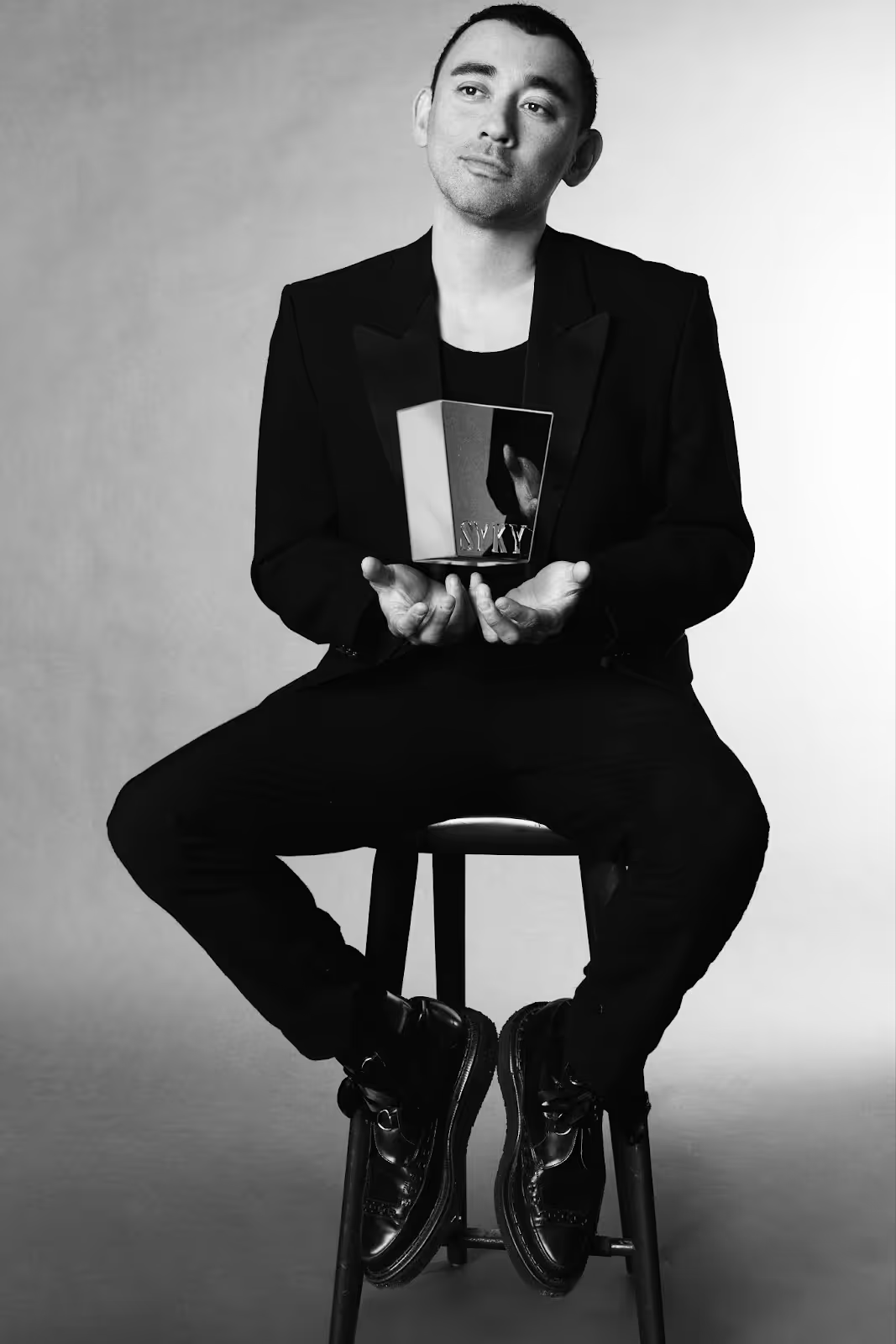
OpenSea: To kick us off, how did you get into web3 from the world of fashion?
Nicola Formichetti: I’ve always been fascinated by the future, especially the future of fashion. I grew up in Tokyo and Rome. Japan is very futuristic but also traditional. I loved manga, computer games, and sci-fi as a kid.
Throughout my career, I’ve always tried to mimic digital aesthetics in the physical world. Then COVID forced me to sit in front of a screen and explore the digital realm. It made me an expert in some ways. The world was also collapsing; my friends in fashion were losing jobs, and I asked myself, “How can I help? How can I be of service to the industry?”
Digital was the answer. I Googled “digital fashion” and “blockchain.” I researched everything and reached out to people doing big things. It felt like starting from scratch, learning everything from nothing. I started getting into everything, and created my own NFTs — the usual stuff. I started collaborating with digital artists, and eventually, I wanted to be part of a platform. That’s when I connected with Alice at SYKY. Her vision resonated with me. Everything clicked. SYKY was the project that I associated most with my sensibility, because at that time, a couple of years ago, all the stuff I’d seen in the digital world had its own obviously “digital” aesthetic. And what Alice was creating was more human, you know? It had this, like, nature, and it was a beautiful world. So, like, technology and nature, living together, you know, in a beautiful way.
And I was like, that's the future, right? So we started talking, and I was like, let's do something together. So I joined the company. It's almost like a year now, which is crazy, and we haven't stopped. Alice wanted to create a place where the most exciting things were happening in digital, that felt like the future.
OpenSea: You once said that working with Lady Gaga helped you shift from print to 3D design. How has that creative transition evolved now that you're working in the virtual world?
Nicola Formichetti: I love evolving and trying new things. Gaga made fashion come alive for me. She turned static editorials into 360-degree experiences that were always performing, living, and transforming on stage. That excitement carried over into my work in digital fashion.
Digital spaces are like entering a new dimension. You can merge 2D, 3D, virtual reality, and multisensory experiences. For example, with the Apple Vision Pro, we created a fashion app that brings a show to your living room. It’s incredible.
OpenSea: I have an embarrassing confession: I haven’t tried the Apple Vision Pro yet. But after seeing the amazing SYKY projects on Apple Vision Pro, I want to.
Nicola Formichetti: You have to! The first time I used it, a baby dinosaur appeared in front of me. It was so close I felt like I could touch it and feel it. Then the mother dinosaur came out screaming. It was incredible! I thought, “We need to create a fashion show experience like this.”
So, we collaborated with a Japanese designer, Anrealage. He created a pyramid dress. In the app, the dress comes alive — you can touch it, feel it, and change its colors and materials. We also incorporated robotic arms and sound effects, so it is a fully immersive front-row fashion show experience.
What’s even better than a physical show is that you can click afterward to see interviews with the designer, sketches, inspirations, and backstage moments. It’s a 360-degree, all-encompassing interaction.
Technology is pushing boundaries in ways we couldn’t have imagined. At SYKY, we’re evolving constantly, and I feel like we’re in an amazing spot right now.
OpenSea: That sounds incredible.
Nicola Formichetti: It is. SYKY has become a platform where exciting creators and designers collaborate, mint, and create unique pieces for people to collect and buy.
We’ve launched SYKY Presents, a curated section on our platform showcasing fashion from the next wave of talented designers. This is where we introduce incredible designers we love and want to highlight. We also have the SYKY Collective, where we mentor artists. Like one of the last things we did was the JUSTUS x FVCKRENDER collab. It’s FVCKRENDER’s amazing digital art mixed with Calvyn Justus’ sharp, futuristic streetwear style, and they made the FVYN// Pants. They’re super stylish, high-performance, and it’s their first step into physical fashion.
Then six months ago, we started SYKY Drops, which features limited-edition capsules from leading digital designers, personally curated by me as artistic director. We started with digital-first designers, like XTENDED iDENTiTY and Marc Tudisco, who weren’t doing physical items at first, and then moved into collaborations with a physical element. We worked with KWK, whose experimental, 3D-printed pieces commemorate pivotal moments in pop culture and fashion history. Right now, we’re featuring Sammy Does’ fun digital nails and gearing up for a drop with Kate Barton — one of my favorite New York designers.
OpenSea: Yes! Her Pierced Leather Bag is so bold and futuristic, but at the same time has this unexpected muted blue coloring. It’s so lovely, a strong statement piece. What drew you to Kate’s designs for SYKY, and how do you see her style pushing boundaries in digital fashion?
Nicola Formichetti: She already had a futuristic aesthetic. But surprisingly, when I touched her clothes, I was amazed — they were so soft and beautiful, and the models felt so comfortable in them. She’s blurring the line between what looks like metal but is actually treated wearable material.
OpenSea: What’s the process like for bringing designers from the physical world into immersive digital spaces?
Nicola Formichetti: Yeah, I’m somewhere in between. I’m not super tech-savvy, but I understand it enough, and I speak the language of fashion. So I act as a translator, helping designers see the possibilities of what we can do together.
With Kate, she already had an incredible aesthetic but hadn’t done anything digital. Her website features videos that look AI-generated but are not — they were created with real models. So she’s already exploring the surreal. Her visual preferences are always futuristic. But this was her first time creating digital items.
We’re supporting her and introducing her to different ideas — not just aesthetically, but also for business reasons, production, and other practicalities. It’s actually very useful, not just creatively but also for production, which is incredible. It’s an amazing tool we can provide.
With digital, it’s much easier to create samples, test different colors visually, and sketch in a realistic way. Customers can even see digital designs before physical production, so you know which items get orders before committing to production. It’s sustainable and helpful for young designers who face challenges with budgets and business constraints. This technology helps them maneuver in a much smoother way.
OpenSea: Are you noticing new aesthetic frontiers or style preferences in virtual spaces compared to physical ones?
Nicola Formichetti: Definitely. People are becoming more daring and experimental. Mistakes create magic. With AI, you can input data and see what happens. I do this physically with mood boards—sometimes putting two photos together that don’t fit, which creates something magical.
AI is great for that — it produces weird, unexpected things that become attractions. Designers can go fantastical in the digital realm while keeping things wearable in the physical world. Sometimes, though, I love creating real-looking items for the digital world. Not everyone wants to look like a futuristic gaming character. SYKY embraces all identities and styles, offering a mix of creators and aesthetics.
OpenSea: Virtual spaces allow for so much exploration of identity. Do you think avatars represent idealized versions of ourselves, or are they tools for experimenting with different identities?
Nicola Formichetti: I haven’t found one answer — it depends on the context. Sometimes, you want to be a better version of yourself, a digital twin. Other times, you might want to transform completely — be a frog, for example. That’s the beauty of it. It’s about exploring possibilities in different spaces, whether it’s gaming or digital fashion. SYKY is very focused on digital fashion, but we’re also exploring gaming and other areas.
OpenSea: That’s fascinating. Online representation is definitely evolving. Terms like “catfishing” were invented to describe misrepresentation, but we’re still figuring out how to talk about ways to acceptably represent ourselves differently across contexts.
Nicola Formichetti: Exactly. It’s all about context.
OpenSea: Yeah, like LinkedIn profiles are polished, while Instagram might be more casual. Did you ever have a MySpace?
Nicola Formichetti: I did! A designer once told me we connected on MySpace, and I ended up using their work. I had completely forgotten about it. MySpace had a vibe we’re missing now.
OpenSea: Fashion is influenced by luxury and aspiration. How do you preserve that “gotta have it” factor in digital designs, which is an inherently more accessible and less scarce medium?
Nicola Formichetti: The term "luxury" has evolved. Back in the early days of fashion, especially high fashion, it was all about scarcity — creating buzz around something rare and hard to get. People would see a bag and think, "Oh my god, I need that."
Today, luxury means something unique and special, but it’s not about exclusivity in the same way. Digital fashion shifts this dynamic. These incredible, unique items are now accessible to everyone. We’ve opened the door, and that’s why we at SYKY focus on being a luxury platform — not in an elitist way, but as a curated space for unique pieces that carry our stamp of quality.
It’s about creating a place that feels like home, where you find items thoughtfully designed and curated for you. This makes navigating the digital world easier and more enjoyable. It’s not about overwhelming you or moving too fast; we take care of the curation so you can simply explore and enjoy. Ultimately, it’s all about taste and curation.
OpenSea: I’m so jazzed by this conversation! Any final thoughts as we prepare for this amazing upcoming collection from Kate Barton?
Nicola Formichetti: We’re so proud of collaborating with incredible artists. SYKY brings together the best of the digital and physical worlds. I hope people enjoy it as much as we’ve enjoyed creating it.
OpenSea: Thank you so much for your time today, Nicola.
Nicola Formichetti: Thank you, Megan. Have a wonderful afternoon.


.png)
.png)
.png)