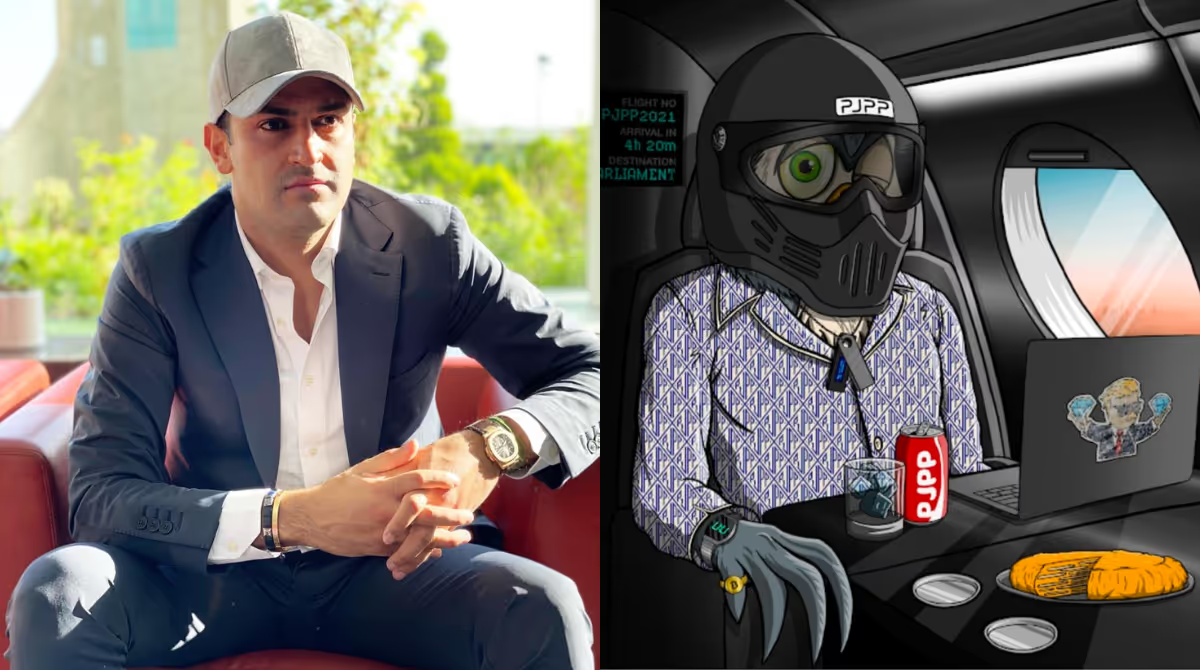
Mo Abrishamchi is the owner of Private Jet Pyjama Party which is a digital membership club that leverages blockchain innovation to bring a global community together through a shared passion for the finer things in life. He's an entrepreneur, investor, and art collector who is also the Co-President of Abrishamchi & Co, based in London. Abrishamchi bought Private Jet Pyjama Party in January of 2023 after first becoming a fan and then later an owner of some the PFP NFTs from the original collection. We sat down to discuss his fascination with digital art, in-person community experiences, and his plans for the future of the project.
OpenSea: I would love to start by talking about your personal journey into web3 and NFTs. Did it start with Private Jet Pajama Party or before that?
Mo Abrishamchi: My journey into NFTs started very randomly. I was buying and mining Bitcoin and Ethereum, but I wasn't really into NFTs until one day I got invited to a Nifty Gateway Gemini event in London, which was curated by a friend of mine, Kami Malik. I ended up sitting between Duncan and Griffin Cock Foster from Nifty Gateway. They asked me, "Do you have NFTs?" I'm like, no, I don't have any NFTs. I've heard of them, but I'm not really into it. And they said you should really start. We started talking about art in a traditional sense and then digital arts. My family collects art, so I was fascinated to learn about digital art at the time. They allocated a relationship manager from Nifty Gateway and we started buying a lot of Daniel Arsham’s art and other artists who were active in a traditional kind of art space and had also entered the digital space.
OpenSea: And what year was that?
Mo Abrishamchi: That was early 2021.
OpenSea: And then what was the impetus for you becoming the owner of this project?
Mo Abrishamchi: So, I was just part of the community. One day I opened my Instagram and I saw so many of my friends who are European — people who grew up with me in Switzerland and who were at university in London with me — they were all posting about this NFT project. So I was like, okay, what is this? So I started calling my friends, asking, what is this NFT project that you're posting about? The feedback I got from most of those people was very positive. Somehow venture capitalists from Switzerland have been able to put together a very European-centric community, super elevated.
I remember the first PJPP NFT I bought; it was around four and a half ETH. And the day after, I became the biggest holder of that project. I started really diving into it, and getting to know the rest of the community.
And even though I was part of a lot of other blue chip communities or projects, I was never engaged or I was never involved on Discord. This project was the only project that I wanted to be on Discord. And I wanted to get to know the rest of the community members. Fast forward to January of this year, I got the chance to buy the project from the founders.
It was quite tricky because the project was sold to a third party, a company based in Dubai. Within 48 hours, the new owners sold the company to me. In a way, the community had a revolution. It was a community-driven takeover.
The community didn't like what they heard from the new owners and they really liked the vision I had. The community knew me well and they knew I was one of the biggest holders; they liked what they heard. I think the most important part was that our interest was aligned because when I took over the company, we only took over the IP and there was no treasury.
The treasury was at zero, so they knew that there was no money that I could take away from the community, and the only way I could make money was to actually try and build this project so we could all benefit from the floor price or the partnerships. 48 hours later, I was announced as the new owner of PJPP. We started taking meetings, setting the strategy and goals, and deploying a vision that I had for the company.
OpenSea: That's a perfect segue into my next question, which is: what is your future vision for the company?
Mo Abrishamchi: The first thing we did at the time was change PJPP's category on OpenSea from PFP to membership. I saw the true value of PJPP being the community of people who were in it.
The people who are a part of PJPP are not your typical NFT holders. These are people who have achieved what they were looking for in life in terms of money and financial goals. The most fascinating thing is that 40 to 45 percent of our community bought PJPP as their first and only NFT.
If you ask them if they know how to buy more NFTs, they would probably say, no, I don't know how to do it. I would say it’s positive, but at the same time handling communications in Discord is quite difficult because they don't have it. So we always have to find alternative ways to keep them engaged in the community.
OpenSea: Do you have a vision for where the project is going that’s different from where it's been?
Mo Abrishamchi: As for my personal background, I'm a venture capitalist and I run a family office with my brother based in London. We started investing in startups back in 2014 and that's when we set up our first fund. So far we have invested in over 430 different companies and deployed around 200 million. Our vision is long term. We invest in startups with a horizon of seven to ten years return. PJPP is exactly the same thing. We are not really looking to make money tomorrow, but I understand that I can make so much money from the community, with the community.
So as I mentioned, we changed from being a PFP collection to a membership collection to showcase to the community that this is the vision that we have. We are a digital members club, we value blockchain technology and we want to bring a very unique community together. We partnered with a company called Onda — a company where you can pay a yearly subscription fee of a thousand dollars and you get access to over 300 different members clubs and 250 co-working spaces around the world. I'm talking about Soho Houses, arts clubs, and very elevated member clubs around the world.
I need to partner with brands where I can leverage the community so I can give them a tangible benefit. The partner can have access to our community and they can benefit from this group of people. At the same time, the company can start generating money from this partnership. So in a way, I really needed to find three winners in one partnership. It took some time, but we ended up making a deal where Onda gave an 80 percent discount from their subscription fee, which brought it down to 200 a year for the PJPP community. We started doing a lot of other partnerships, but realized that to be able to bring partners on board, you need to show that you have a very engaged community.
In order to have a valuable community, you need to keep them engaged, so we created our own golf tournaments, which happen throughout the year. It's usually four tournaments a year. One was in Cannes, which was beautiful and had wonderful golf courses. The second one was in Switzerland at a PGA standard golf course. The third one was three weeks ago in Marbella.
During these two-day events, in the evenings we have beautiful dinners which are mainly covered by PJPP Ltd. We usually subsidize the fees that people need to pay to attend these events. I understand that they have paid for PJPP NFTs, and even though they haven't paid that money to me, they have paid for it. I want to give them some value back. It's taking a lot of investment from us to make sure that we accommodate this for our 2,700 active members that we have. I know the value of community and I know how that is going to pay off in the future. So for me, I'm not looking to make money today.
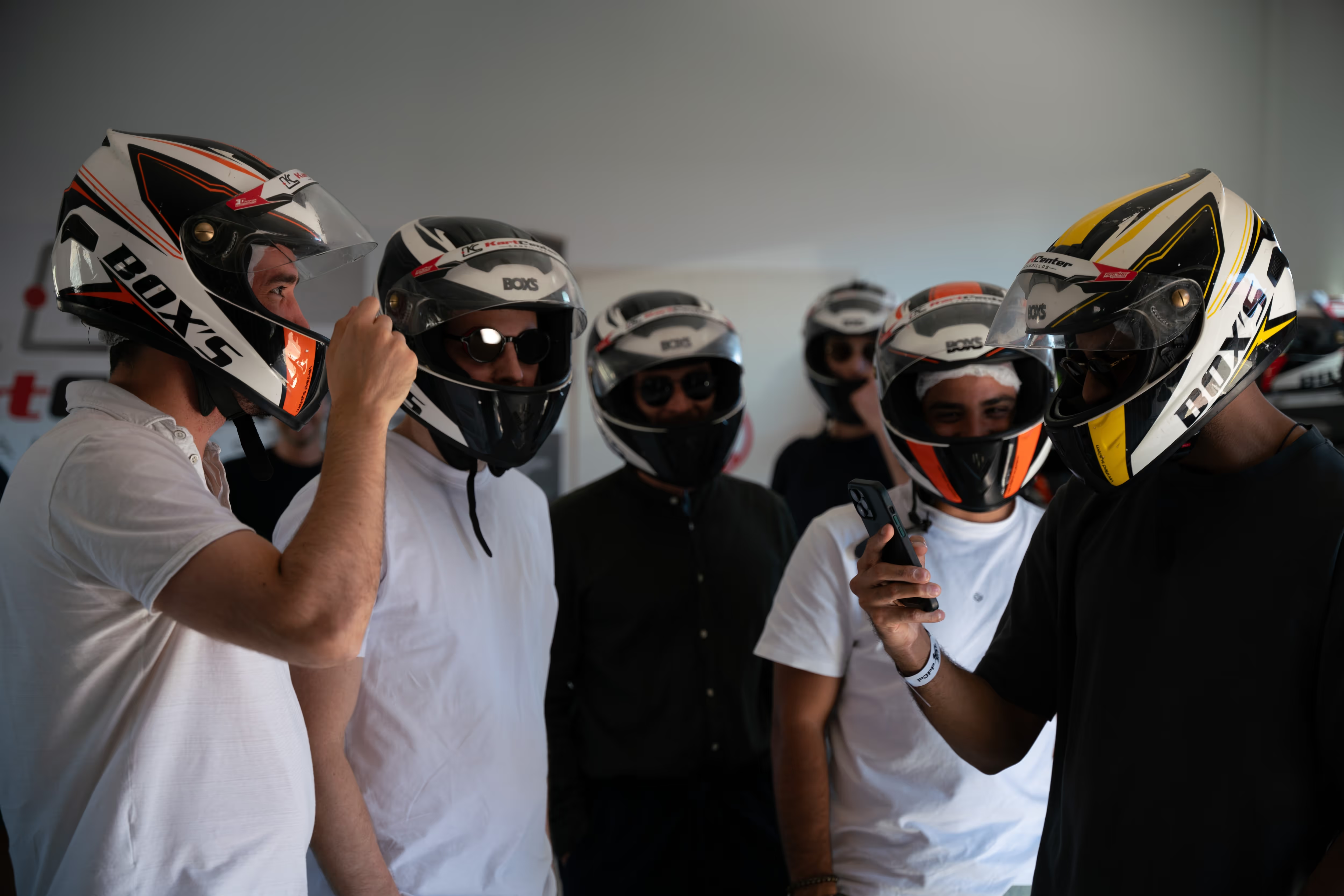
And then we have our own go-kart championship, which is where we get together just to race. We've done three races this year, but next year is going to be four races. The community’s niche interests are in sports, golfing, racing, and watches. There are a lot of watch collectors and watch traders within the community. The community of holders is mostly European and they love to travel. We cannot create a product or bring a partner on board that can accommodate the whole community, so we have to separate the community based on their interest and then find a suitable partner for those specific niches.
We do this by creating sports events and bringing in specific partners for those. We brought a partner, Watch Hype, on board to accommodate the watch collectors. Watch Hype is a blockchain-based company from Switzerland. They sponsor almost all of our golfing events. The aim is to start bringing sponsors on, so all of these activities can be financially sustainable in the future.
A lot of people ask me what's the future. And, I see the future of PJPP eventually utilizing the IP, but first we need to build that and now we are in the building phase. So now we are trying to build the value, we're trying to build the brand. Unlike most of NFT projects, we haven't dropped any merchandise yet and that’s not our plan. Instead we partner with very well-known brands like Sease, which was founded by the Loro Piana Brothers. We do capsule drops with these partners. Next year we are planning to do our own clothing: a PJPP lifestyle brand. Hopefully, we will be able to turn around a collection twice a year. Very ambitious and exciting.
OpenSea: Can you tell me a bit more about your upcoming event in Tuscany?
Mo Abrishamchi: Yes, an initiative we started right after I took over the company was to try and make sure the community met each other very frequently. We started promoting weekly meetups around the world. I can tell you that nearly every week or every other week, there is something happening fully curated by the community itself. If there is enough interest from the community, then we pay for it, but we don't get involved in curation of it. This could be dinner in New York, lunch in Amsterdam or hiking in Switzerland. There is so much that does happen. The community creates the idea and we push it on discord. If there is interest, we create their own specific channel where they can communicate and set up details and then we’ll cover the cost of it. We just want the community to get together and start getting to know each other 'cause that's how I can get value out and leverage that to partners.
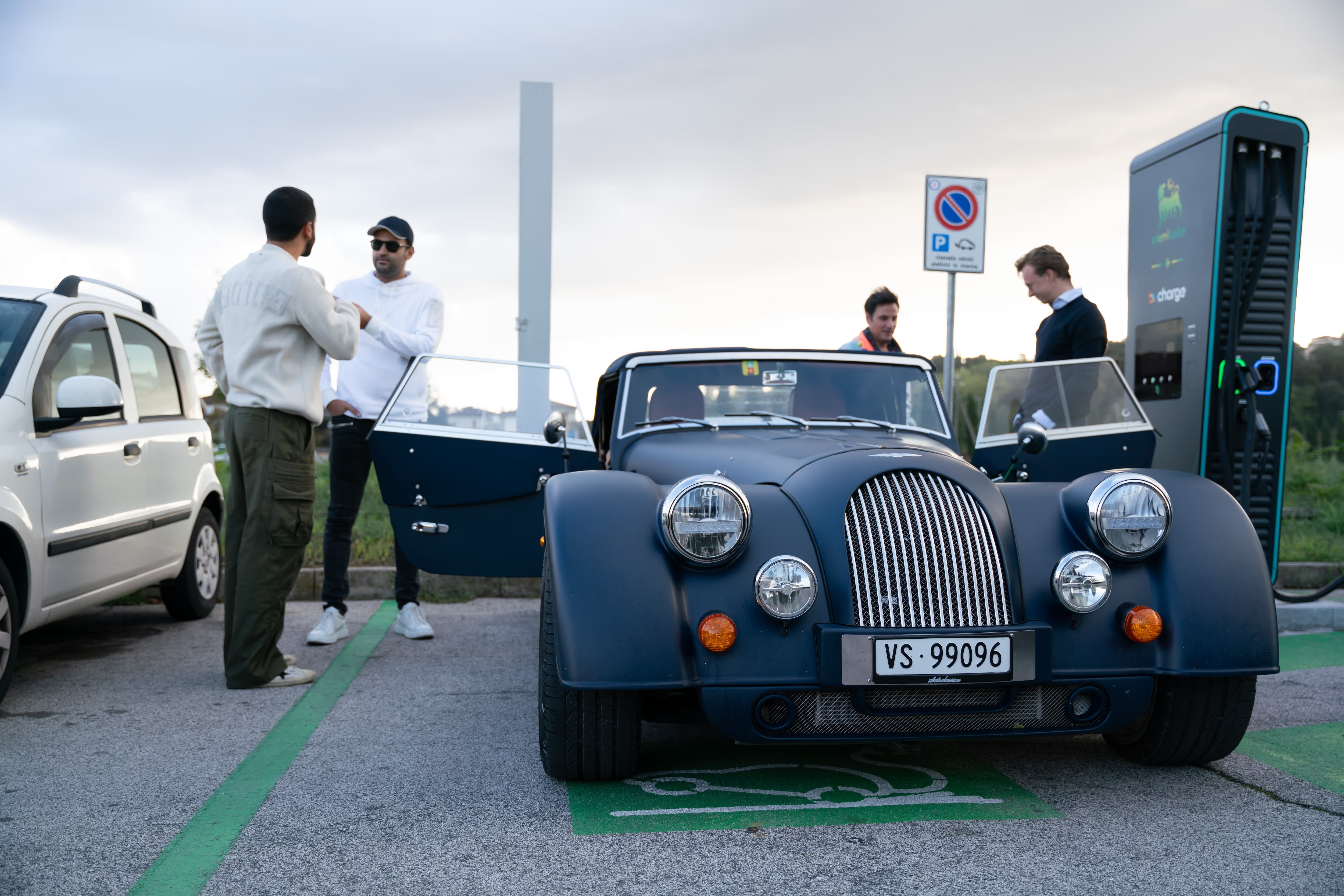
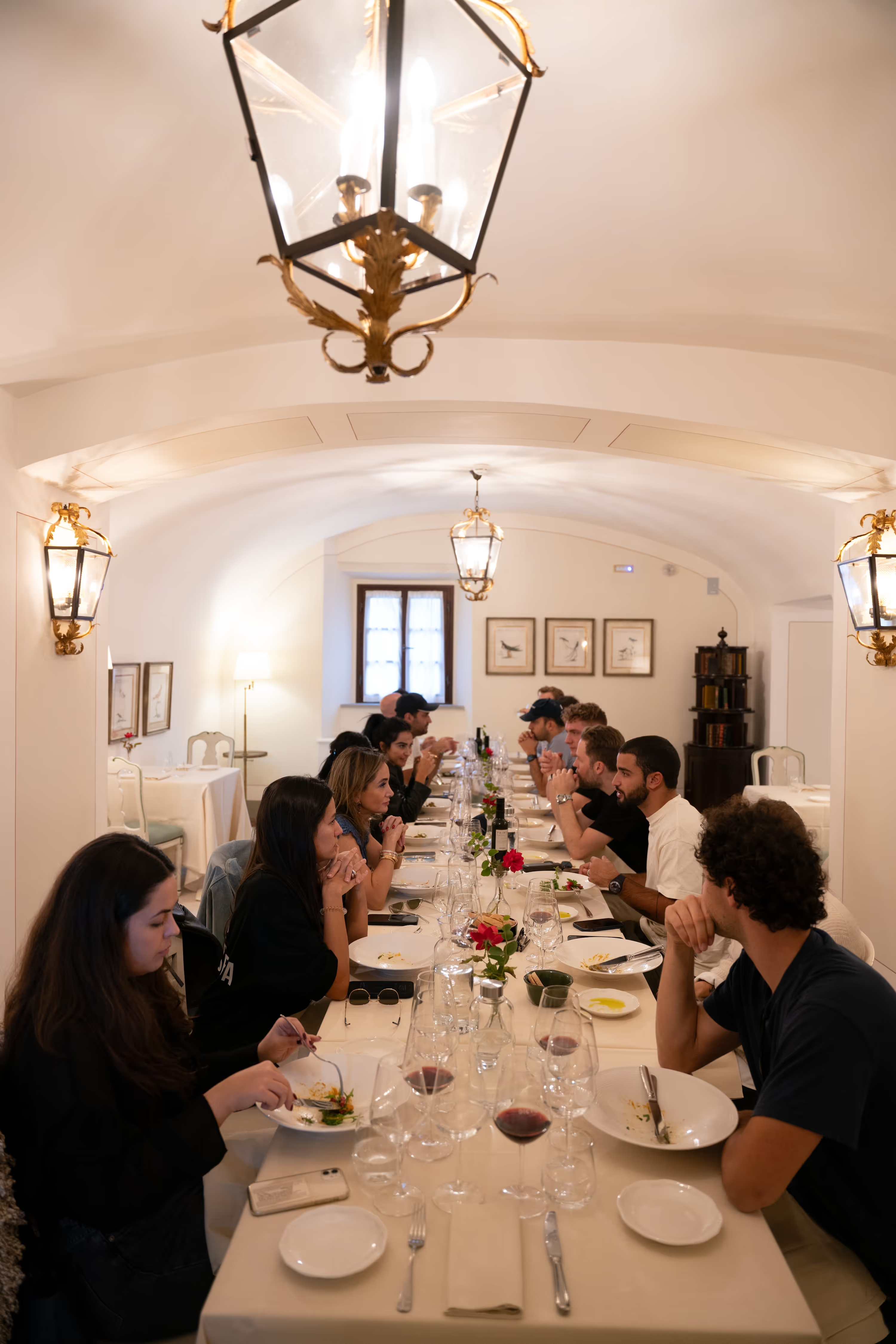
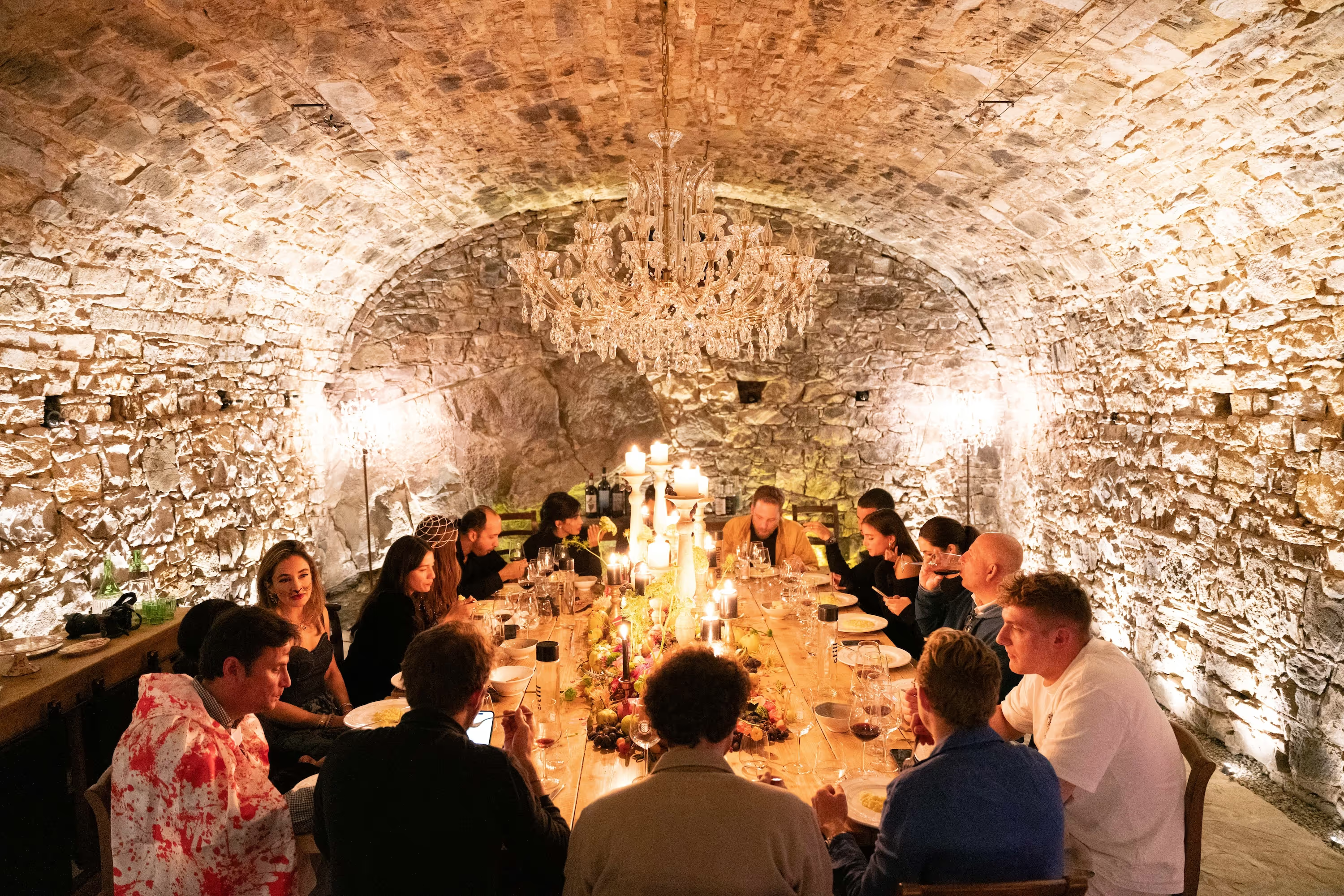
We have a road trip coming up on the 28th of October. We have about 12 beautiful, mostly classic cars being shipped from around Europe to Pisa, Italy. We're going to be driving from Pisa to a beautiful vineyard in Tuscany, check into a hotel, and start driving around Tuscany's beautiful roads.
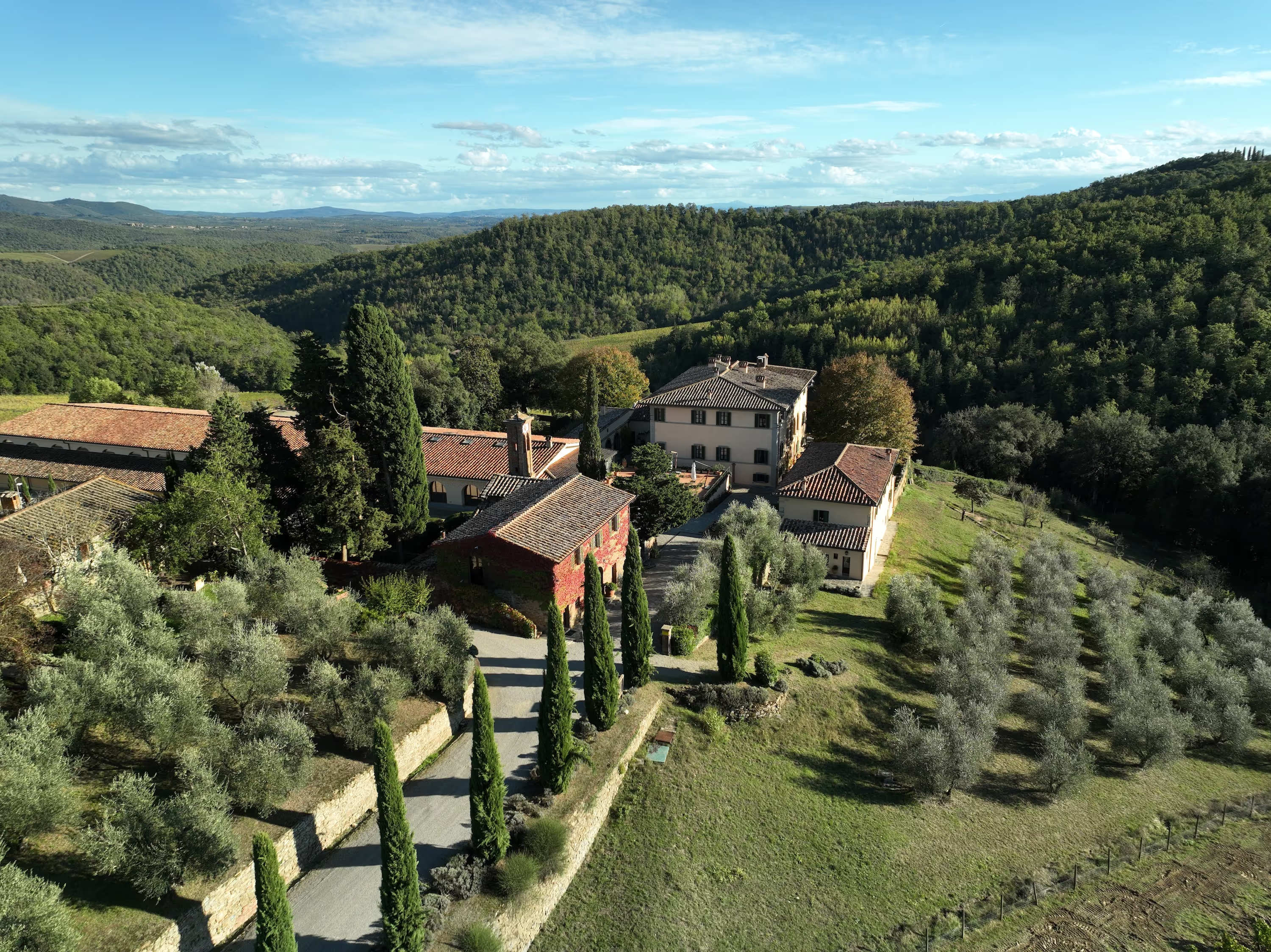
We subsidize massively on these events mainly because we want to showcase what PJPP can do in terms of events and what we can put together. Our aim is not to get this money further down the line from the community, but to bring sponsors on board for the next one. These are all proof of concept to show what PJPP can do and bring to a brand.
OpenSea: I see you guys also have digital events. There's one coming up in November. What does the mix look like right now between in-person and digital events?
Mo Abrishamchi: Most of our events are 99.9% physical and we meet up face to face. If it can’t happen because of travel restrictions or there is a specific interest from the community on a certain topic that we won't be able to facilitate a face to face meetup, then we organize that digitally, but we don't promote any digital meetup in the community. We mainly want them to meet in person, and we do everything we can to make that happen.
OpenSea: Can you tell me a little bit about the creation of the male and female owl collections that you're using as the membership badge?
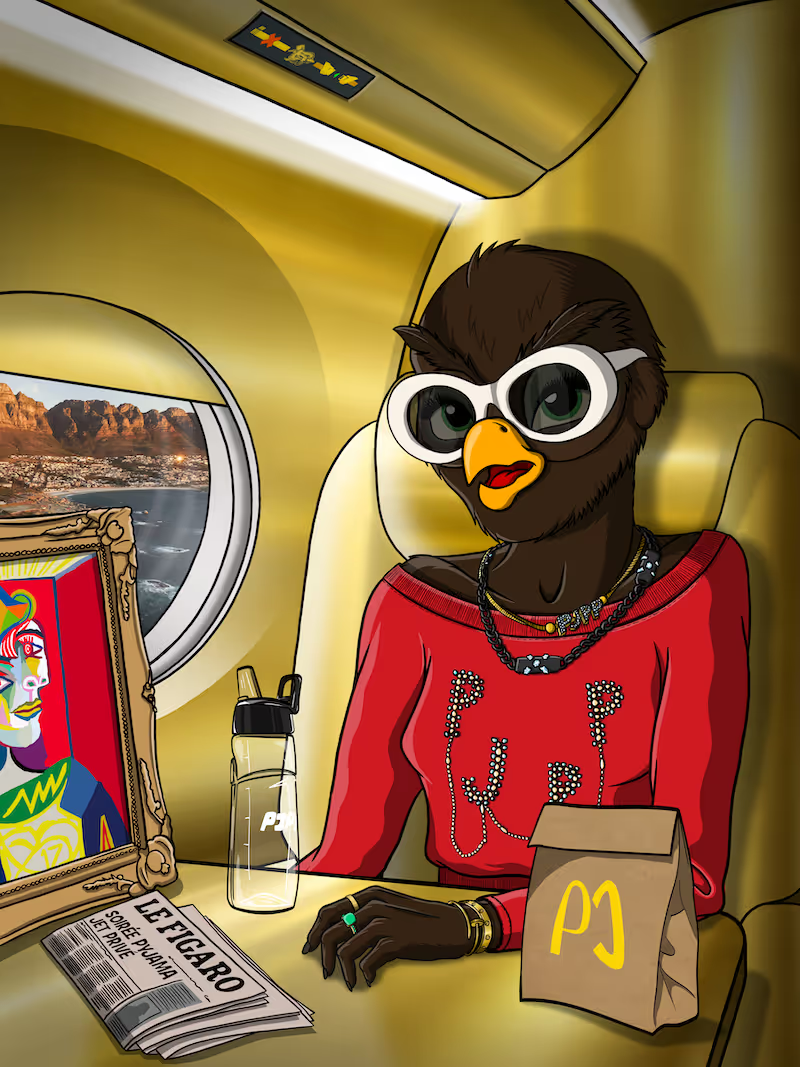
Mo Abrishamchi: Yes. So the OG collection is made up of male owls. It was the first collection that was dropped. And Benny Robinson, who has very close ties with a lot of top fashion houses like Louis Vuitton and other brands, was the designer. He was part of the project initially with the founders. Today, he doesn't have any connection to the brand, but we are in open discussion with him whenever we need him to do something for us, and he does it.
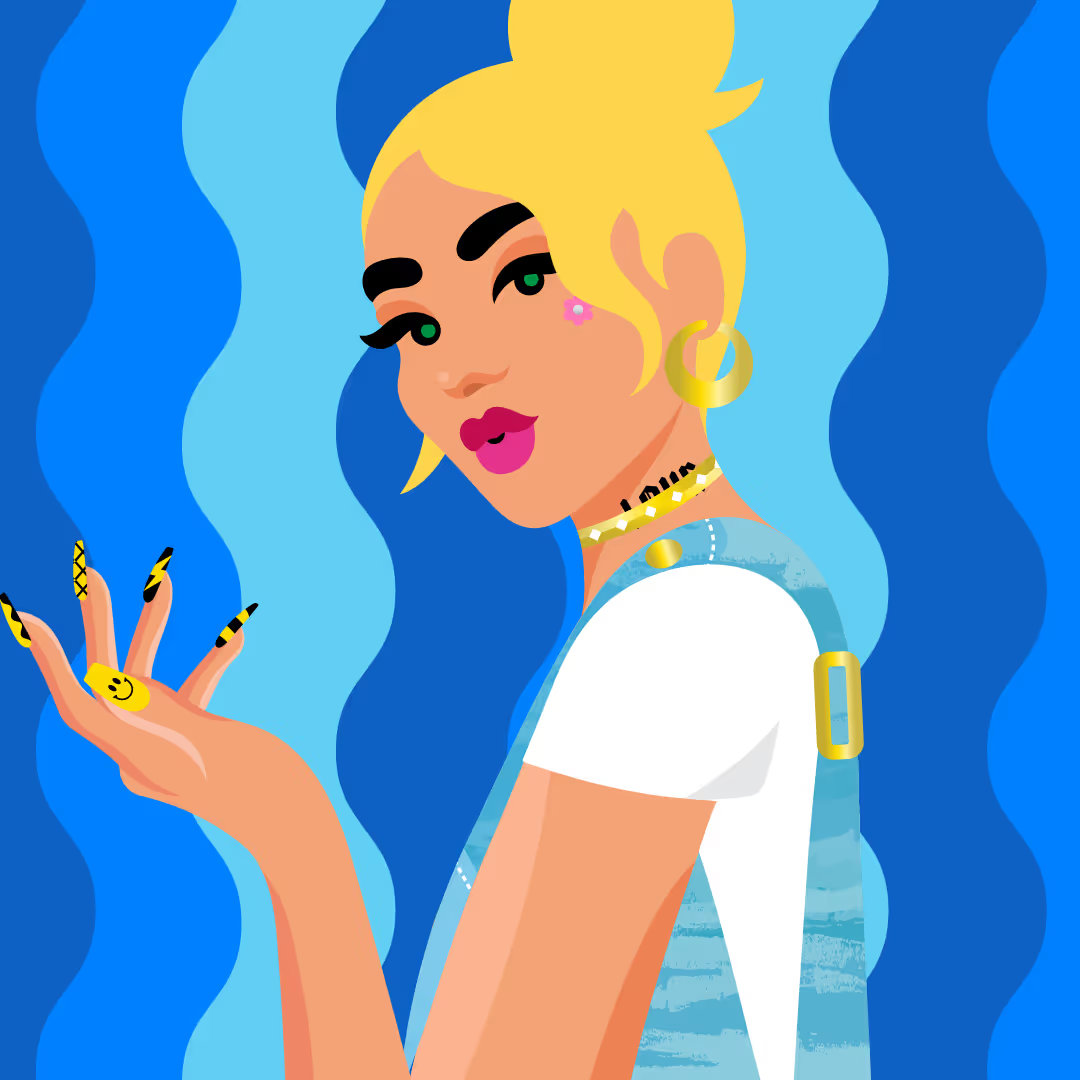
Surprisingly, we got a lot of traction from women within the web2 and web3 space, so the female owls were created. There was a lot more thought in the female version. When you look at them, they're much more beautiful than the men. The details are more defined and they did a really good job creating the female collection.

OpenSea: You mentioned earlier that the majority of people who are a part of the PJPP community are people who maybe are not very natively web3 and that this may be their only NFT, and that more of the group of women are actually natively web3. I'm curious, what makes this a web3 project? What is the benefit to you for this being built this way? Is your goal as you keep going to bring on more people who are natively from within the space? Or are you trying to move the direction to be more web 2 over time?
Mo Abrishamchi: I don't know, to be honest with you, we really are not a web3 company. It's strange, even though we try so hard to get some visibility on Twitter, most of our community has zero presence on Twitter, and they're more on Instagram. And one day we said, you know what? We are really not a web3 business even though we use the blockchain. Our NFTs are used to access this digital member club, but eventually all the benefits and all the perks that we are providing are all in real life. I would say we are more of a web2 company than a web3 company.
OpenSea: Interesting. So it's more that the access point to getting there is web3, but once you're there, the rest of the experience is web2?
Mo Abrishamchi: It's web2. Yeah.
OpenSea: And as you continue to grow the company, is your goal to push it further in that direction or to lean towards web3?
Mo Abrishamchi: Obviously, we all got together because we were fascinated by the web3 space. So we want to push towards web3 and have plans to do that. We need to start educating and letting them get familiar with the culture of web3.
For the first time ever, we had a couple of degens — OGs of the crypto space — attend our events. This was a very nice touchpoint between our web2 community and degens from the crypto space. All of these degens were like, “nobody's doing any of these events, and nobody knows about you guys.” It's not in our benefit to stay in web2. We really need to push towards web3.
We're actually working on developing an app, which we hope will become the perfect community app for other NFT communities. It is going to be a turnkey solution for other NFT projects out there who don't feel comfortable using Discord. Through discussions that I've had with many other project managers, project founders and owners, I’ve learned that most of them are looking for another platform where they can do that.
We have been creating this app since January, which is going to be ready soon. It's a platform where communities can go and choose all the options that they want to see on their app from the chat system. If they have their own partners, we can integrate all of the partners within that platform. We’ll create an Android and iOS native app for that community. So, in the future, I think that’s going to be the main revenue stream for PJPP. At the same time, we are going to move our own community from Discord to that app as well.
OpenSea: When do you have plans to release the app?
Mo Abrishamchi: The app’s front end design is ready. We're working on the backend of the dashboard where the managers get access and they can create their own app using that. It will be out, hopefully, in the first quarter of 2024.
OpenSea: If you had one word or phrase to describe PJPP, how would you describe it?
Mo Abrishamchi: "Connection" and "to elevate."
OpenSea: Outside of what you're doing right now, is there anything else within the web3 and NFT space that really excites you about the future of the space in general?
Mo Abrishamchi: Yes. Since we are struggling with exposure within the crypto space, I always try to reach out to a lot of other founders and builders out there. And I see a lot of amazing founders. Even though they are in a bear market, they are building and that gives me a lot of confidence that NFTs are going to be around for a long time. Maybe the use cases will change, but they will become a big part of our day to day life.
I have three kids. My daughter, she's seven, knows everything about NFTs and smart contracts on the blockchain. I was explaining to her that NFTs sound very new to most people, but in the future they’ll be using the technology without even knowing it. I explained that her little sister will use it without even knowing what she knows today. She's not going to know about how the blockchain or smart contracts work — she's just going to live with the technology and use it.
Also, I think as we are moving to a digital world, human connections on a physical level will be decreased, so I can only tell you that if you have a group of people or a community that can meet each other, can have fun, can really elevate each other’s lives, can help each other, can do business together, the value of that community will only grow as time passes.
Editor’s note: This conversation has been edited for brevity and clarity.


.png)
.png)
.png)