.avif)

Most digital collectibles sit in a crypto wallet. However, Forgotten Runes, an Ethereum-based storytelling project launched in 2021, turns them into characters in a player-owned fantasy universe.
The independent team behind the project, Magic Machine, has built a system where people who own Forgotten Runes NFT characters can write their backstories in an on-chain archive called “The Book of Lore.” Each entry is permanently recorded on blockchain technology, inscribing member contributions as part of a shared, evolving history. Unlike traditional entertainment properties, where studios control every aspect of a story, Forgotten Runes gives its community a direct role in shaping the world.
This new model couldn’t come at a better time: More and more these days, the traditional templates for gaming and entertainment companies are showing their cracks. In March 2025, for instance, Village Roadshow—the production company behind “The Matrix” and “Oceans Eleven” franchises—just filed for bankruptcy after years of debt and legal battles with its business partner, Warner Bros. Discovery. Even with a $400 million content library, the producer—and countless like it—finds it harder than ever to sustain operations.
Magic Machine’s co-founders are entertainment industry veterans. They have seen how corporate control over intellectual property (IP) can leave fan-favorite franchises locked in legal disputes, abandoned in development hell, or diluted by profit-driven decisions. Fans pour time and passion into these worlds but have no say in their future. So, Magic Machine created Forgotten Runes to change that, hoping to give holders real ownership over characters and stories. By decentralizing IP, it protects the universe from studio politics and keeps world-building in the hands of the people who care most.
Now, Magic Machine is expanding “Forgotten Runes” from NFT collections into gaming. Forgotten Runiverse, a multiplayer online role-playing game, launches March 26, bringing Forgotten Runes characters into an interactive world. And thanks to the effort of their game developer, Bisonic, who locked down console distribution, the game has been approved for Nintendo, PlayStation, Xbox, and mobile. It will reach beyond crypto audiences and introduce fans to digital ownership in ways they may not realize they’ve needed all along.
Ahead, OpenSea spoke with Magic Machine’s founding team. Dotta, CEO, leads all over company direction, engineering, and all things blockchain. Bearsnake, chief operating officer, focuses on partnerships and business development. And Elf, creative director, oversees art and lore. The trio discussed their shift from digital collectibles to gaming, their approach to community-driven storytelling, and what the Runiverse means for the future of entertainment.
Note: This transcript has been edited for length and clarity.
OpenSea: Congratulations on getting Forgotten Runes approved for Nintendo, PlayStation, and Xbox! What does this milestone mean for the project and blockchain gaming as a whole?
Bearsnake: At our core, we’ve been building for almost four years, starting at a time when web3 was still a small, emerging community. This approval, which was secured by our amazing game developers at Bisonic, is a significant moment because it marks an inflection point where we can expand beyond the tech-savvy early adopters and introduce blockchain-enabled gaming to a mainstream audience. Not everyone can afford expensive NFTs, but millions of people play video games. This is a key step in breaking down walls and onboarding new users into blockchain gaming.
OpenSea: Forgotten Runes has a passionate community. How did you decide on the balance between serving the web3-native audience and expanding to a broader market?
Bearsnake: Our first priority is our community, “The Cult,” along with the larger native web3 audience. They're the ones who will bootstrap the game from day one. Phase One is web3. Phase Two is expanding into a wider audience beyond crypto. These major web2 platforms—Nintendo, PlayStation, Xbox—are part of that second phase. But our approach has always been to lean into the people who have been with us since the beginning, the ones who really understand what we’re building. That core community, those thousand true fans, are what propel us forward. We use that momentum to reach a bigger audience. That’s always been the plan, but it’s important to talk about it now because, in my opinion, the biggest fear in this space is that everything just goes to zero. If no new people come in, the cycle just repeats—one person buys an NFT, then another, then another, but if there’s no broader participation, it stalls. That’s why we’re making it clear that this is bigger than just web3. We’re not here to stay in a niche. We want a billion people to know about Forgotten Runes and what we’re building in gaming.
OpenSea: You mentioned “The Book of Lore.” What is it, and why is it such an important part of the Forgotten Runes ecosystem?
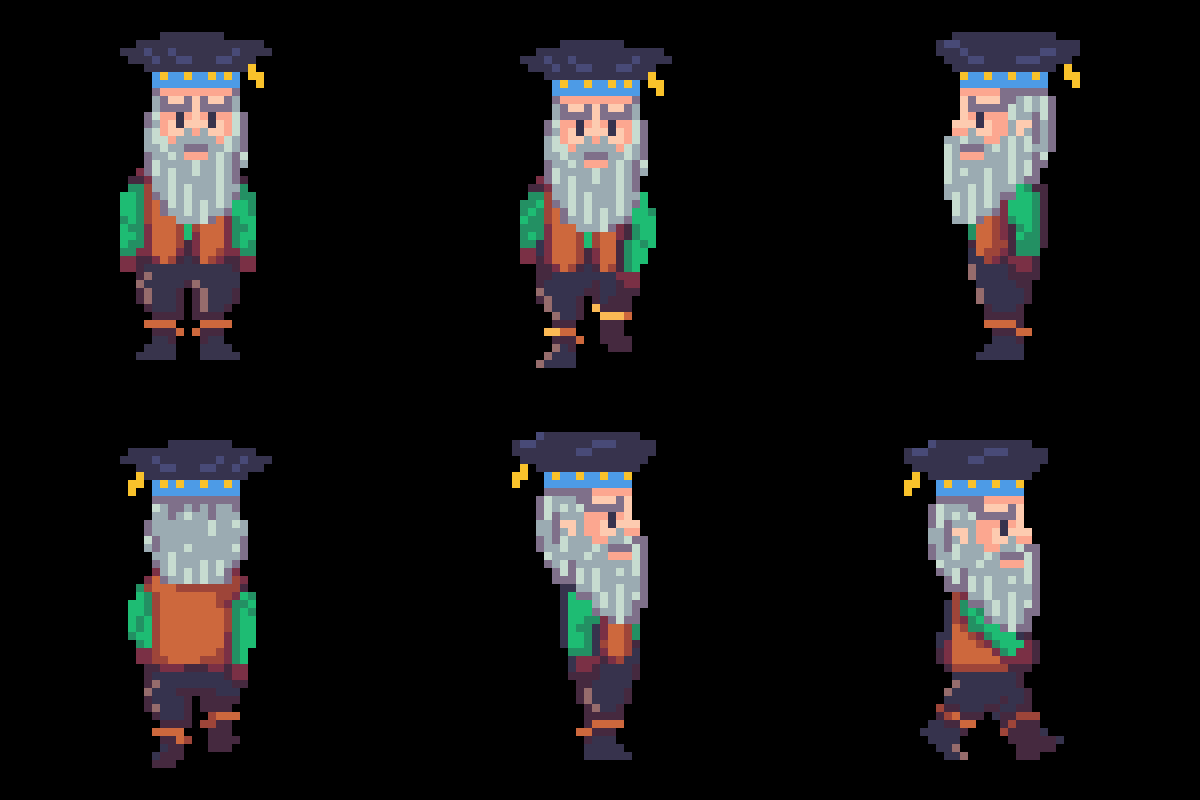
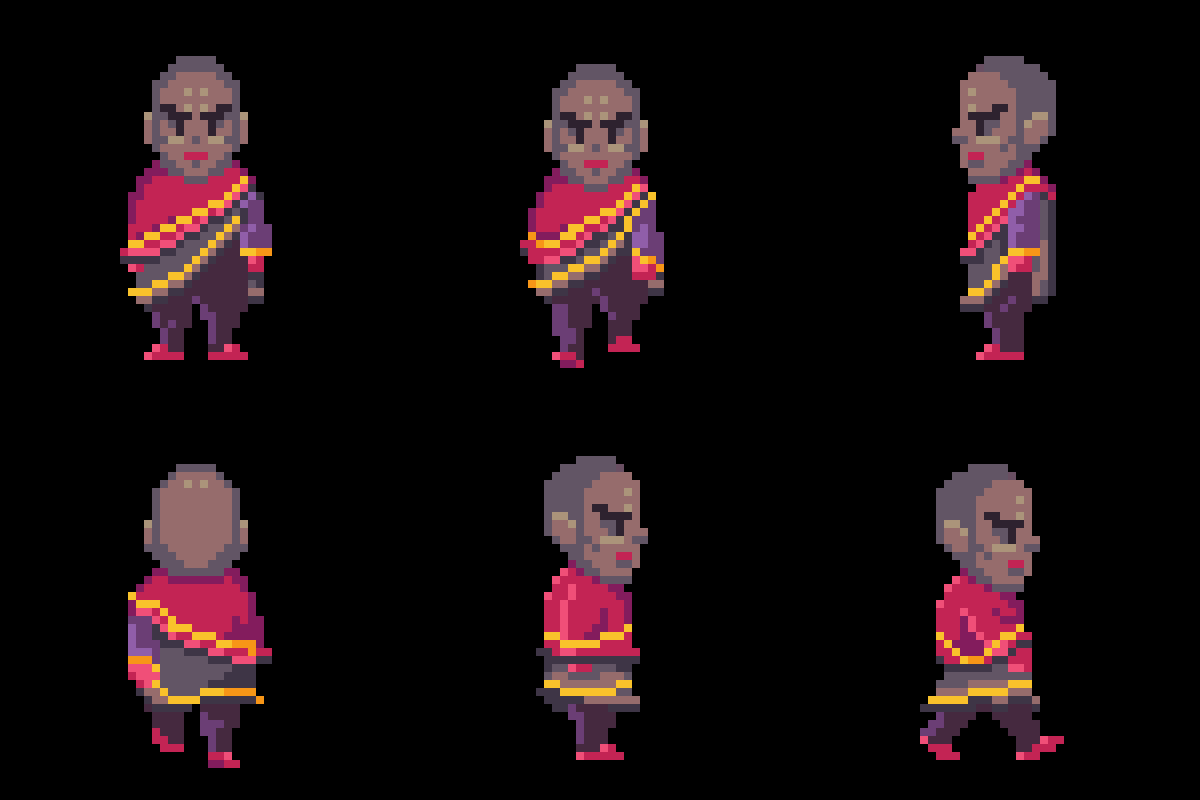
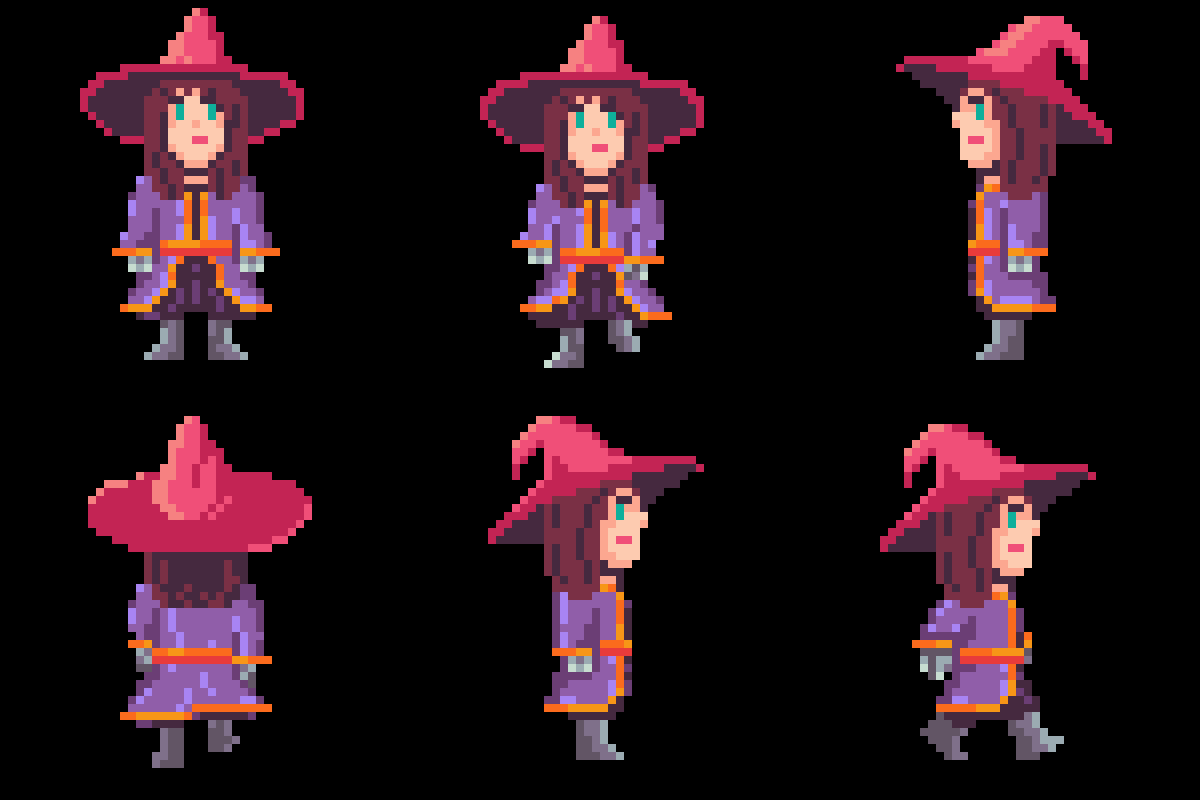
Elf: To understand “The Book of Lore,” you first have to understand the core of our project. “Forgotten Runes” is a fantasy-themed NFT project where the main tokens are characters. Our flagship set is the Wizards, but we also have Warriors, Ponies, and a bunch of monsters called Souls. There are Legendary Beasts, plus relics and items that Wizards can use on quests and adventures. It's essentially a full set of creative building blocks that our community uses to make art, stories, and lore—basically, to build an entire world. That’s why I call it a decentralized world-building project.
Usually, with world-building, you have one creator, like J.R.R. Tolkien, George R.R. Martin, J.K. Rowling, or George Lucas, who creates an entire universe filled with characters. From that, you can spin out endless media—comics, video games, toys, movies, books, all of it.
We’re asking, instead of one creative genius at the top, what happens if you decentralize the whole process? What if the fans build the world with you?
Take Star Wars, for example. George Lucas made three incredible films. Then Disney bought it and told millions of fans that if they made a Darth Vader T-shirt, they’d get sued. If they wrote a book about Yoda, they’d get sued. The message was: You can love it, but you can’t touch it.
We’re flipping that. We’re saying: Make the shirt. Write the book. Build the franchise with us. If you own a “Forgotten Runes” character, you can create for it, and the blockchain tracks that progress.
“The Book of Lore” is the central archive where all that creativity is stored. If you open it, you’ll see entire backstories, biographies, and artwork for every character that has been developed by its owner. To me, that’s the most powerful metric. Forgotten Runes has the biggest, most passionate community of builders and storytellers in the NFT space.
And what’s cool is that the stories written in “The Book of Lore” don’t just stay there. A lot of the content in the game comes from it. Our comic book series pulls directly from community-created lore. Even better, if your Wizard appears in the comic and that comic sells a certain number of copies, you get a royalty share.
The goal is to create a world where the community drives the narrative, rather than a single entity dictating the storyline. This not only fosters engagement but also gives creators ownership over their contributions.
OpenSea: How does IP ownership work within your ecosystem? Are you licensed under Creative Commons (CC0)?
Dotta B: No, we’re not CC0. While CC0 can be a great model, we’ve found that it often lacks an economic structure for capturing IP value. Our approach gives character holders commercial rights up to $5 million in revenue before they owe royalties back to Magic Machine, which then redistributes those funds to the community. This ensures that fans can monetize their contributions while maintaining a level of brand stewardship.
OpenSea: What major partnerships have you formed in traditional media, like publishing or production studios?
Bearsnake: Outside of the video game, we have our comic books and our graphic novel, and we have a global publishing deal with Titan Comics. So, we’re in physical comic book stores all over the place. The graphic novel is also in major bookstores and was one of Amazon’s best new sellers last month.
OpenSea: You’ve been approached by major studios interested in buying the Forgotten Runes TV rights. But you turned them down. Why?
Bearsnake: A major studio offered to buy the show after we brought in “John Wick” creator Derek Kolstad as an executive producer. The deal was structured like a typical Hollywood agreement—meaning they would own almost everything, and we’d get a tiny percentage. That’s not the model we’re building. We want to retain control over the IP and ensure the community benefits from its success.
Instead, we’re using our momentum from the game and the comic book—which was a bestseller on Amazon—to strengthen our position when negotiating future deals. We aim to co-finance our TV series and keep ownership decentralized. We should have more updates on the animated series soon.
OpenSea: With over 4,000 entries in “The Book of Lore,” how do you decide which stories get adapted into comics or other media?
Elf: It’s a mix of organic selection and creative curation. Sometimes, our writers search for relevant lore using keywords, and other times, we spotlight community members who have built strong narratives around their characters. We also have some incredible creators who have naturally risen to the top, like [community manager] Magus Devon, who consistently produces compelling artwork and stories. If you put in the effort to develop your character, people will notice.
OpenSea: What kind of royalties are people starting to see from this? When someone’s character appears in the comic, do they actually get a cut?
Elf: Yes. If your wizard appears in the comic and that comic sells a certain number of copies, you get a royalty share from the sales.
OpenSea: So it’s not just about decentralizing the storytelling component, but also the financial side of things?
Elf: Exactly. When I say “decentralized world-building,” I’m not just talking about the creative process. I mean the business and profit models, too. The whole franchise is horizontally decentralized, so fans aren’t just spectators—they’re participants.
Bearsnake: The royalties we’ve paid out so far aren’t huge. They’re largely symbolic at this stage. I think we’ve paid out around $10,000 to creators for stories that have been included in the comic books. But it’s not really about the royalty numbers yet—it’s about setting up a system where people who contribute to this world eventually get paid when there’s demand on the other side. We’re really optimistic about what that means for the future of the brand.

OpenSea: Looking ahead to the video game launch on March 26, what can players expect from the Forgotten Runiverse?
Dotta B: It’s a massive multiplayer online role-playing game (MMORPG), similar to World of Warcraft meets Stardew Valley. Players can battle monsters, harvest materials, craft gear, and build homes in a player-owned land system. The game prioritizes fun first and has a carefully designed economy to avoid the pitfalls of past web3 games that collapsed due to unsustainable tokenomics.
We’re launching on Ronin, the best platform for web3 gaming, and we’ve learned a lot from previous blockchain games that struggled with balancing play-to-earn models. Our focus is on making a great game first and ensuring the economy remains sustainable.
OpenSea: Tell us about the dev studio behind The Forgotten Runiverse. Magic Machine operates independently, but you guys have a robust network of partners and industry collaborators behind the scenes.
Dotta: We're entirely self-funded—100% owned by the three of us—except for the NFT collections we've sold. We launched and sold Wizards as an NFT collection, followed by Warriors a couple of years later, and then Bitcoin ordinals called Shadows. Our game development partner, Bisonic, is an independent gaming company with about 50 people, while Magic Machine, our company, has around 10. When we launched the game, Bisonic conducted a funding round by selling land to investors, including Dialectic, Reddit founder Alexis Ohanian’s firm, 776, the early-stage venture fund One Confirmation, and a handful of others. This investment round was tied to NFT sales from two or three years ago.
OpenSea: Got it. Well, this has been a great conversation. Before we wrap up, where can new players or NFT collectors go to engage with Forgotten Runes?
Dotta B: The best place to start is our website, ForgottenRunes.com. There, you can explore “The Book of Lore,” check out 3D character models, read about the game, and watch our animated trailer. We also have an active Discord community where people can connect and start contributing to the world.
OpenSea: With blockchain gaming still in its early days, where do you see this space in five years?
Elf: I think we’re redefining the relationship between fan and franchise. Traditional media is consolidating, leaving fewer creative opportunities for artists. Building in web3 allows us to break that cycle by giving fans ownership and participation in the worlds they love. In five years, I hope “Forgotten Runes” serves as proof that decentralized storytelling can create enduring, community-driven franchises.
OpenSea: Awesome. Thanks so much for taking the time to chat. Looking forward to seeing the Runiverse go live.
Bearsnake: Thanks for having us.
Elf: Appreciate it.
Dotta: Yeah, this was great. Thanks!


.avif)
.png)

.png)
.png)
.png)
.png)