
Courtyard.io is a marketplace and tokenization service that enables anyone to easily own and trade physical collectibles on the blockchain, unlocking greater transparency, liquidity, and a powerful new form of ownership. For vaulting, Courtyard is partnered with Brink’s – one of the global leaders in security and logistics. The company is currently focused on graded cards and holds regular curated mystery pack drops to provide a fun way for enthusiasts and new collectors alike to participate.
Users can visit courtyard.io to tokenize their own graded cards for free, and follow along on Twitter, Instagram, and Discord.
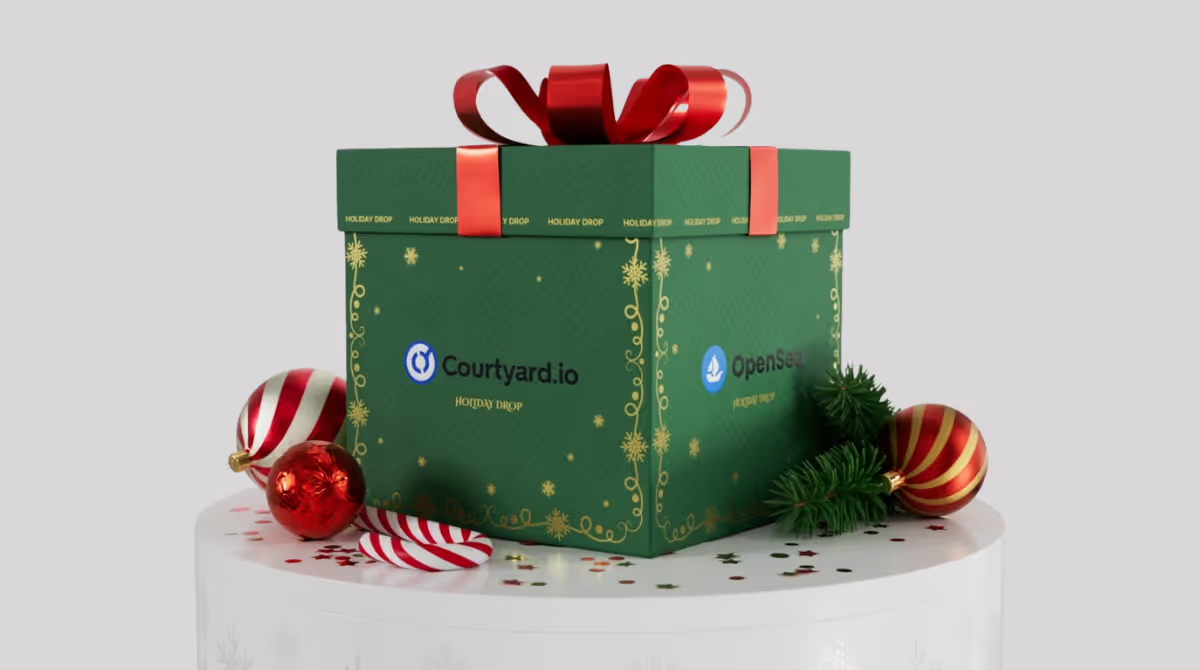
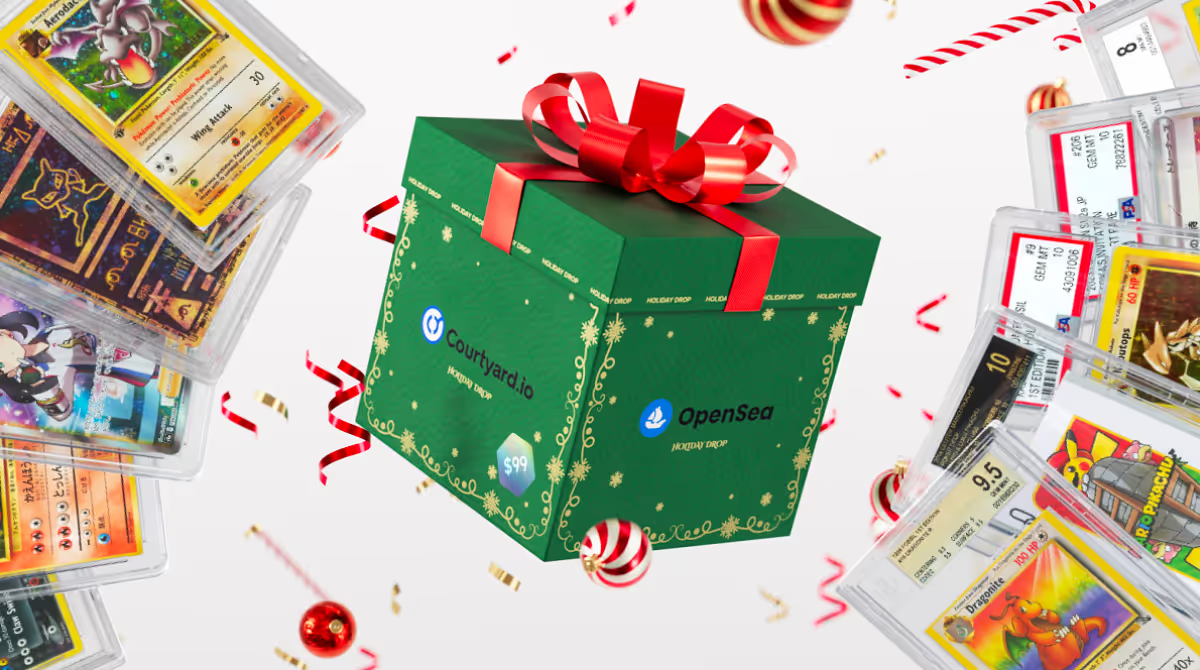
Now, Courtyard and OpenSea are teaming up to bring users a holiday shopping experience like never before. The Holiday Box collection was created to delight and take you back in time — no wrapping paper required.
Each box contains one tokenized Pokémon card vaulted at Brink’s. Ditch the 2-day shipping and enjoy delivery to your wallet as soon as you mint. Send your box to that special someone anywhere in the world in seconds, or hold onto it for the main event. On December 25th, you can unwrap your box to see what card you got and bring your friends and family along for the ride.
The mint starts December 18 at 10:00 AM PST. Once minted, you can view your items here.
OpenSea: Can you tell us about the inspiration behind Courtyard.io x OpenSea: The Holiday Box?
Courtyard: We knew we wanted to do something special for the holidays and wanted to reach new collectors in the process. This drop is all about recreating the magic and the experience of buying, gifting, and unwrapping a present in web3. We thought it was a great opportunity to join forces with a company like OpenSea to bring this first-of-its-kind holiday shopping experience to as many people as possible.
OpenSea: How did the idea come about? Did it evolve over time into the final product?
Courtyard: We view drops as an entertaining and exciting way for people to collect. We’ve been in this space of tokenizing real-world assets (specifically cards) for a couple of years now and found that people get really excited with the drop mechanic.
Going to a store and opening up a pack of Pokémon cards is very similar to the Holiday Box or any other drop experience that we provide. You know there’s a collectible in there that you want, and you’re going to have fun in the process of revealing it. We’re capturing that excitement in a digital way.
For holidays, we like to leverage different mechanics to create a special experience for that moment in time. For this one, we cooked up a unique reveal animation that we hope will delight collectors when they start to unwrap their boxes on December 25th.
OpenSea: Walk us through the process of buying a Holiday Box. What will holders receive?
Courtyard: The process is super simple – this is the first time we’re doing a simultaneous drop, so people can choose to mint on OpenSea, Courtyard.io, or both.
- Go to OpenSea or Courtyard.io.
- Mint a holiday box using a credit card, USDC, or MATIC, depending on the site
- Collectors will receive their mystery box in their wallet and can choose to send/gift to a friend, sell it on the marketplace, or HODL.
- On December 25th at 9 am ET, collectors can begin to unwrap their box to see what card they got.
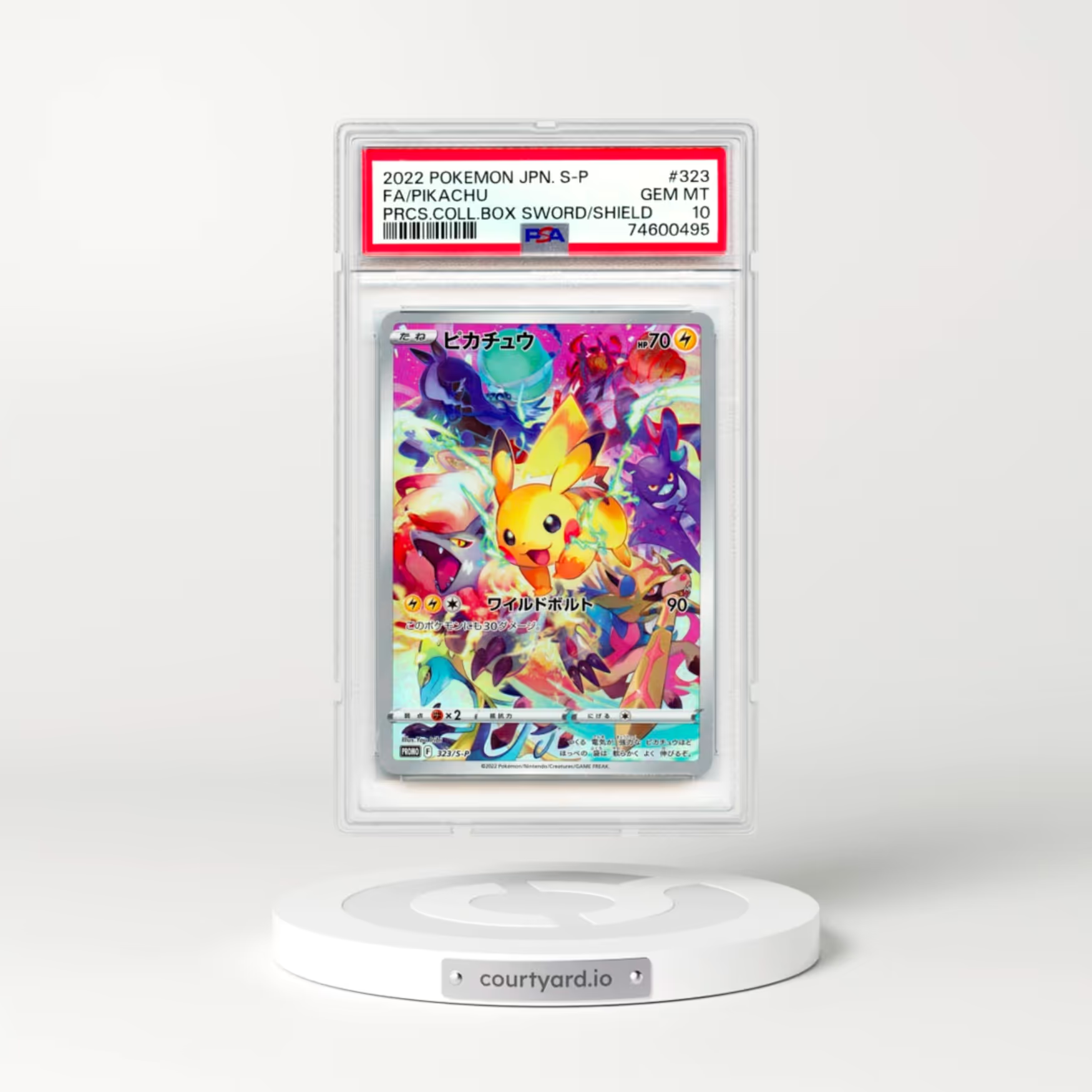
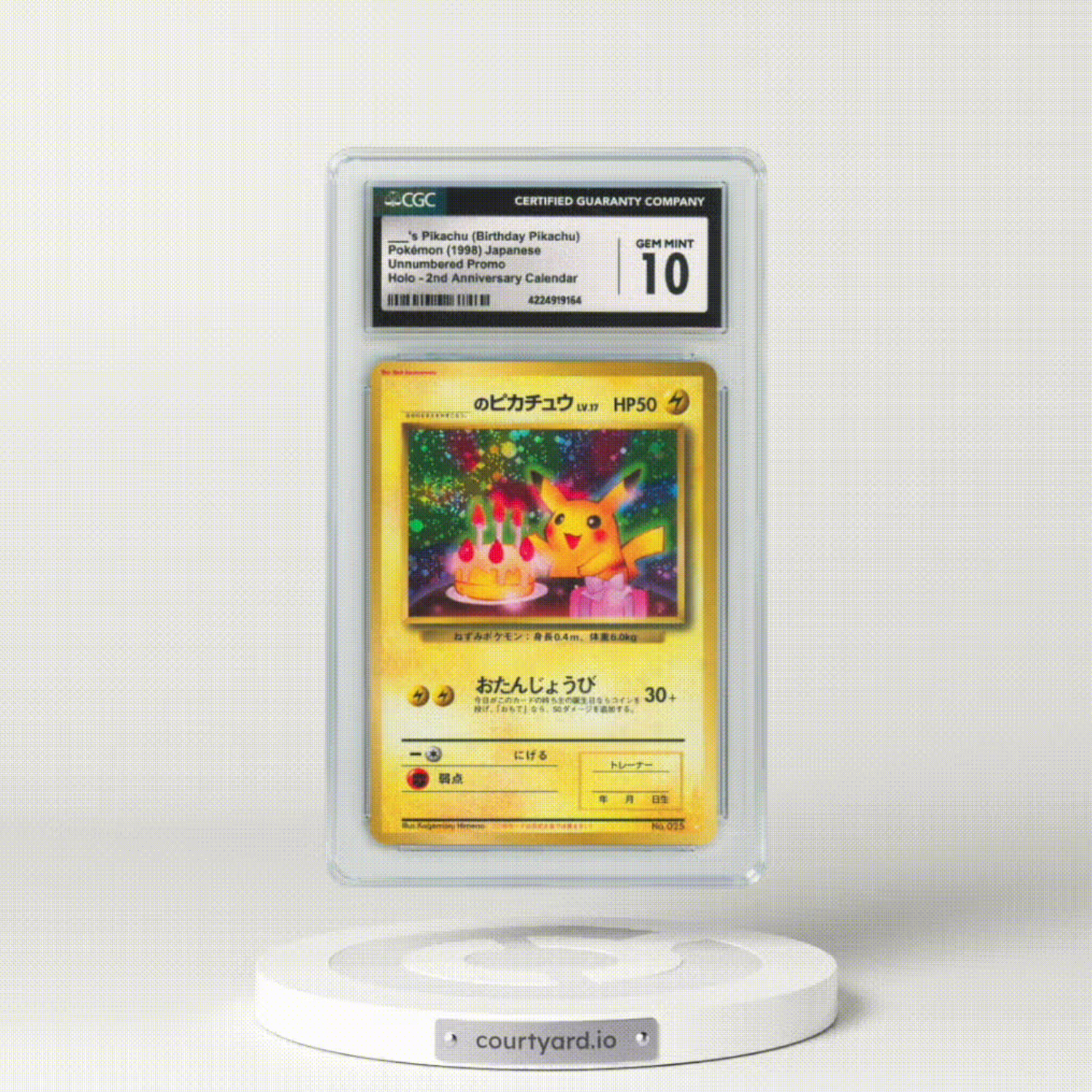
- Holders receive a graded collectible Pokémon card vaulted at Brink’s and can hold, trade, or redeem. These cards are thoughtfully curated and deliberately placed in this drop to create a fun experience for people and give them a chance to add some cool cards to the collection that they might not otherwise get.
OpenSea: How do you think NFTs can change gifting?
Courtyard: Speed, efficiency, frictionlessness, access to global markets, and provenance/traceability are some of the many perks that tokenized RWAs can bring to the table. We think of NFTs as a vessel – a thoughtful gift will always be a thoughtful gift, but the way people receive gifts changes over time.
OpenSea: Courtyard is known for empowering collectors to take control of their collections with “true digital ownership.” Tell us about how that works and where the concept came from.
Courtyard: Traditional e-commerce marketplaces like eBay provide a great experience at connecting buyers and sellers quickly, but the process of shipping/receiving/authenticating cards and all the friction and expenses involved can prevent seamless transactions for collectors.
We bring collecting into the digital age by empowering collectors to truly own and trade their collection digitally, without physical items needing to be moved around or re-authenticated each time.
We all enjoy collecting and once we saw how smooth and seamless it was to buy and trade NFTs, we knew there was a better way of collecting in the physical world. The blockchain unlocks a better way to connect collectors from all over the world and bring more liquidity to the $400B+ collectibles market.
OpenSea: As the NFT and web3 ecosystem continues to evolve, what developments or trends are you most excited about, and how do you see them shaping the future of web3?
Courtyard: Improved UX - making it dead simple for anyone to access the benefits of the blockchain without the complexity (for example, Courtyard.io and OpenSea both do this with credit card support, making it easy for anyone to get started). Additionally, on Courtyard.io we took this a step further by sponsoring gas fees for users and offering automatically created embedded wallets upon account creation. Someone who visits Courtyard.io today and purchases a rare 1st Edition Charizard card might not even realize they’re doing so on the blockchain.
Supercharging the collecting experience to pave the way for a new generation of collectors who are digitally native.
Interoperability - the sky's the limit for what people can build on top of our platform. Web3 came about by identifying inefficiencies in the market. We see Courtyard.io as a catalyst to bring web2-centric companies on-chain, [which is] something that we welcome with open arms.
For the card world specifically, releasing cards on the blockchain adds a new level of trust and transparency. We use Chainlink to ensure provably random distribution, which is something that’s [been] absent from the web2 card market.



.avif)
.png)
.png)
.png)

.png)