.avif)
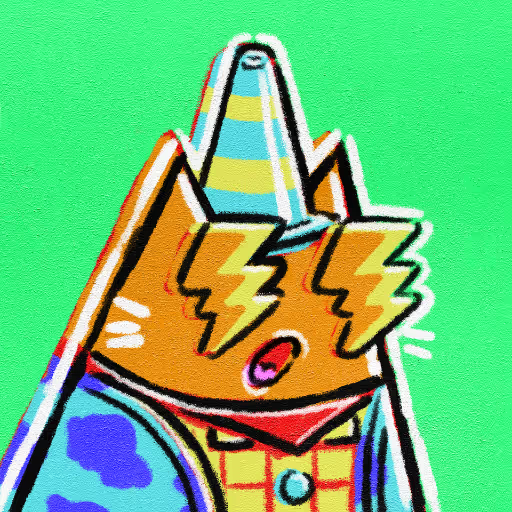
Founded by digital artist Nick Greenawalt, Wanderers has endured as it transformed from an art-and-lore-based PFP collection into an art-and-lore-based gaming project with real players and backing from top investors.
Having just launched its open beta on Epic Games Store, Wanderers has had an intriguing journey and is well-positioned for even more twists and turns as it moves toward launching a mass-market game with NFT-backed collectibles.
Wandering from digital art creator to web3 founder
Greenawalt's path to creating Wanderers still surprises him to this day. With a background in interactive design and animation, Greenawalt spent several years working at an interactive design agency in Philadelphia. There, he honed his skills creating engaging digital experiences for touchscreens, museum installations, and various digital platforms.
"We would do touch screens, museum installations, websites, apps, stuff like that," Greenawalt explains. "It really focused on storytelling for nonprofits, making cool stuff."
As his career progressed, Greenawalt found success as a content creator on YouTube and Instagram, where he taught animation techniques and shared free resources. This led him to pursue content creation full-time, leaving his agency job behind to become a YouTuber focused on creating educational content for making digital art.
The pivot to web3 came unexpectedly when a friend suggested Greenawalt explore SuperRare, a platform for selling digital art as NFTs. As a long-time crypto investor, the idea of combining his artistic passion with blockchain technology appealed to his penchant for making interactive digital art. Greenawalt's animations found success on SuperRare, setting the stage for his next big move.
“I never thought I’d make art on the blockchain full-time,” said Greenawalt. “Success came overnight and I had to explore this new world full-time.”
The beginning of the Wanderers journey
In mid-2021, as the NFT market was heating up with various PFP collections dropping weekly, Greenawalt saw an opportunity to create something unique. He prototyped what would become the Wanderers collection: an animated series of clips captured first-person from the perspective of a pilot in outer space, each with a vast array of unique traits and accompanying music.

"I thought, ‘I could do that’ and sat down and prototyped what would become The Wanderers," Greenawalt recalls. "It's an animated collection, a first-person point of view of pilots with a crazy amount of unique traits and variety and music attached to them."
The Wanderers NFT launch was a resounding success, selling out of 8,888 units quickly, establishing a dedicated community, and raising over $2.3 million for Greenawalt to build with. In Greenawalt’s view, what set Wanderers apart was its focus on storytelling and world-building from the very beginning. While most NFT collections used the same template of a character facing to the right, Wanderers NFTs featured clips of a space traveler, with first-person view, music, and spaceship controls.
"The way that we approach storytelling in this project, I think it's been really, really important to help its stickiness," Greenawalt explains. "We really leaned hard into the storytelling: we made some short films to explain the universe and built a lot of lore with comics and exploration puzzles, which our community responded to extremely well."
This emphasis on narrative and immersion would prove crucial as Wanderers evolved beyond a simple NFT collection.
Wandering into building a game
While some NFT projects have struggled to deliver on their ambitious roadmaps, Wanderers has taken a different approach. Instead of following the typical pattern of launching with PFPs first, they introduced their animated characters later in the process. This allowed them to focus on building a rich universe that could support multiple creative endeavors.
The decision to develop a game came naturally to Greenawalt, a lifelong gamer himself. When approached by GameFi Ventures and Animoca Brands with an offer to invest if Greenawalt’s team would pursue a game set in the burgeoning Wanderers universe, the opportunity was too good to pass up.
”They saw the value in the Wanderers universe as it was and they believed it was ripe for a game," Greenawalt says. "Of course, that was super exciting to me as a lifelong gamer to not only have a video game based on my universe, but I’m the one who gets to build and there are amazing investors backing me in the process."
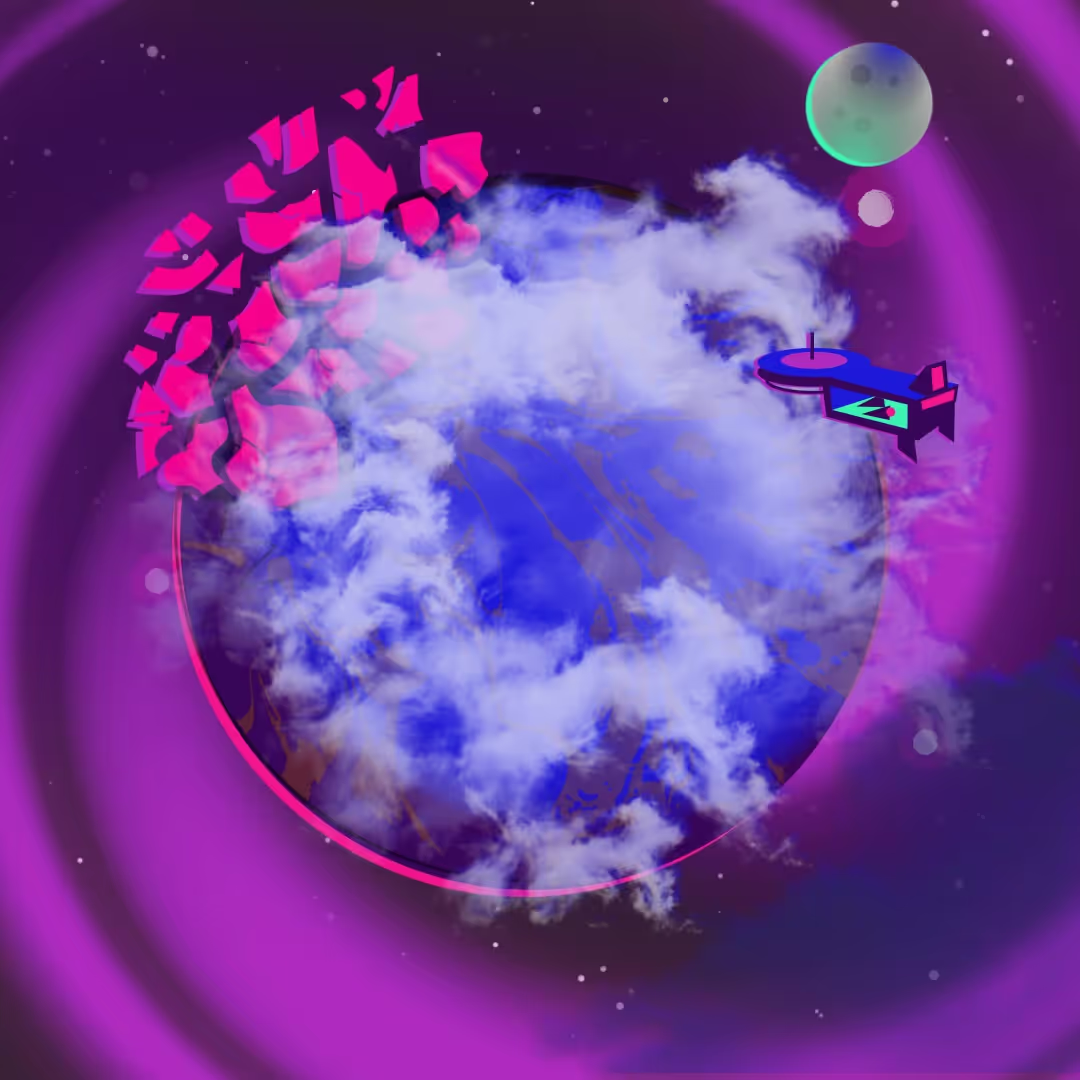
The Wanderers game is shaping up to be a fascinating blend of genres and gameplay mechanics. Described as a “roguelike” with “deckbuilding elements,” it draws inspiration from mainstay roguelike titles like Slay the Spire and Hades, in which players tackle layers of dungeons.
What sets the Wanderers game apart in its genre is its approach to the free-to-play model in a web3 context. While most roguelike games are purchased once and played to completion, the Wanderers team is tackling the challenge of creating an infinitely replayable experience with live operations and new content — a tall order for a genre typically associated with finite experiences.
“Most roguelites have a narrative that naturally ends, leading players to move on to other titles and hope for a sequel if they liked the first one enough,” said Greenawalt. “We’re building Wanderers to remain relevant and keep our players engaged over the long term. You won’t be able to beat the game in a weekend.”
A key component of the gameplay revolves around collectible cards called Random Access Memories (RAM). These cards represent memories of other heroes and fighters, granting players unique abilities throughout their runs in the game. Players will be able to earn, buy, and swap these cards with each other to curate their ideal builds and playstyles. Bundles will be available for purchase on OpenSea.
Currently, the game is in a closed beta phase, with all elements existing off-chain. This approach allows the team to refine the gameplay and economy before implementing blockchain features.
"Our main goal is that the game be fun and accessible," Greenawalt emphasized. "We're in a state right now where we're just making sure that the game loop and economy and all that stuff is very healthy and sticky before we start storing anything on-chain."
Wandering toward the blockchain
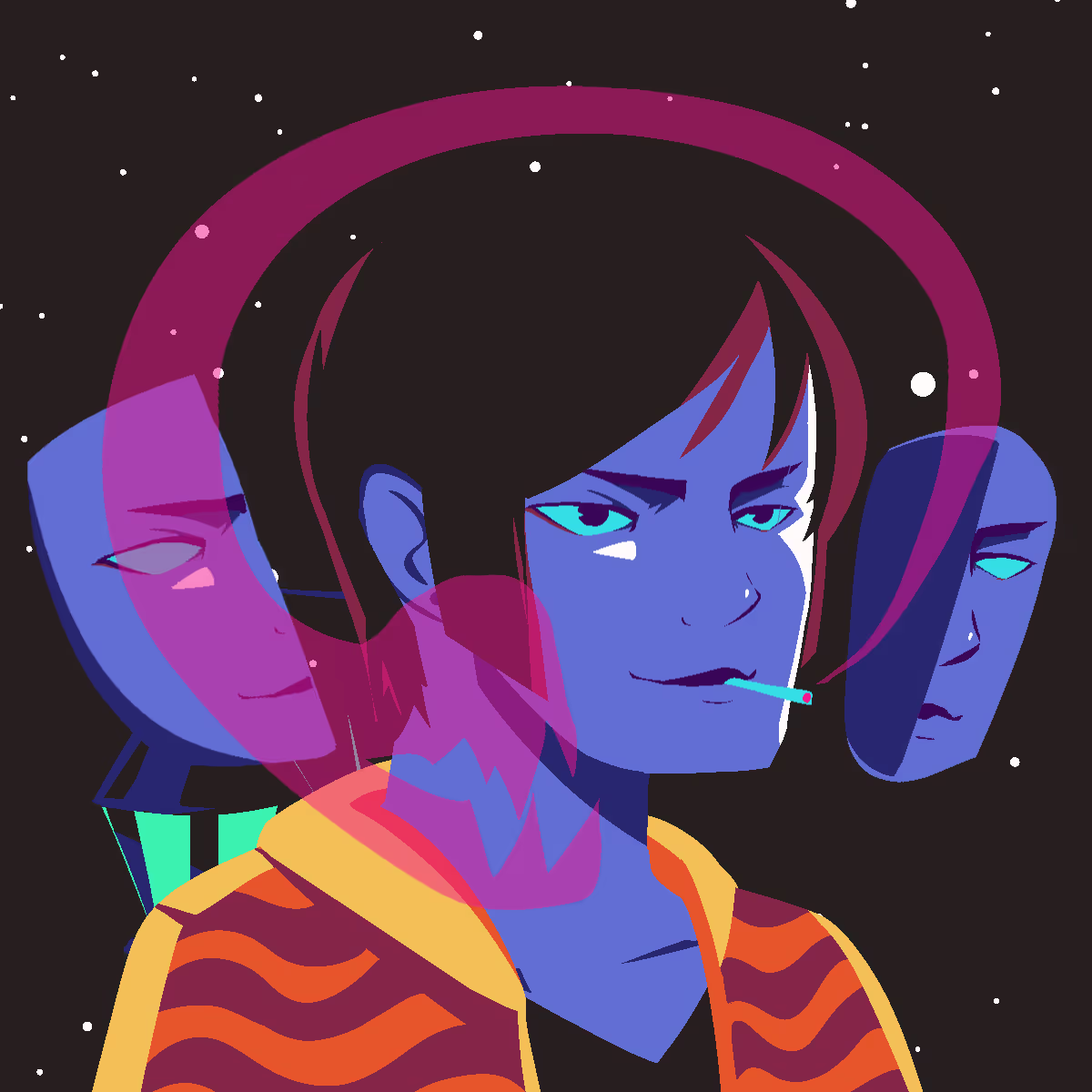
While the specifics of Wanderers' blockchain integration are still being finalized, the team has a clear vision for how NFTs and on-chain elements will enhance the game experience.
Central to this vision is an account system the Wanderers team built called Codex, which will link players' game accounts with their blockchain assets. This system aims to make the game accessible to mainstream audiences while providing a pathway to true digital ownership for those interested in web3 features.
"We can essentially link them on the backend so you can manage your web3 items in our portal," Greenawalt explains. "If you want to play the game without wallet attacks or anything like that, you can totally do that. We'll create custody wallets for you which you have the ability to take ownership of on our portal."
The team plans to implement a marketplace where players can buy and sell in-game assets, including RAM cards and cosmetics. There are even plans to allow players to fuse cards together, creating unique items that can also be swapped with others.
As for the original Wanderers NFTs, Greenawalt wants them to play a meta-level role in the game ecosystem and postulated there could be NFTs tied to music tracks that generate creator earnings or that grant exclusive access to special events and concerts.
“While the game is currently our core product, we still have an expansive view of what Wanderers overall really is and can become,” said Greenawalt. “We’re sitting at the intersection of art, gameplay, and storytelling.”
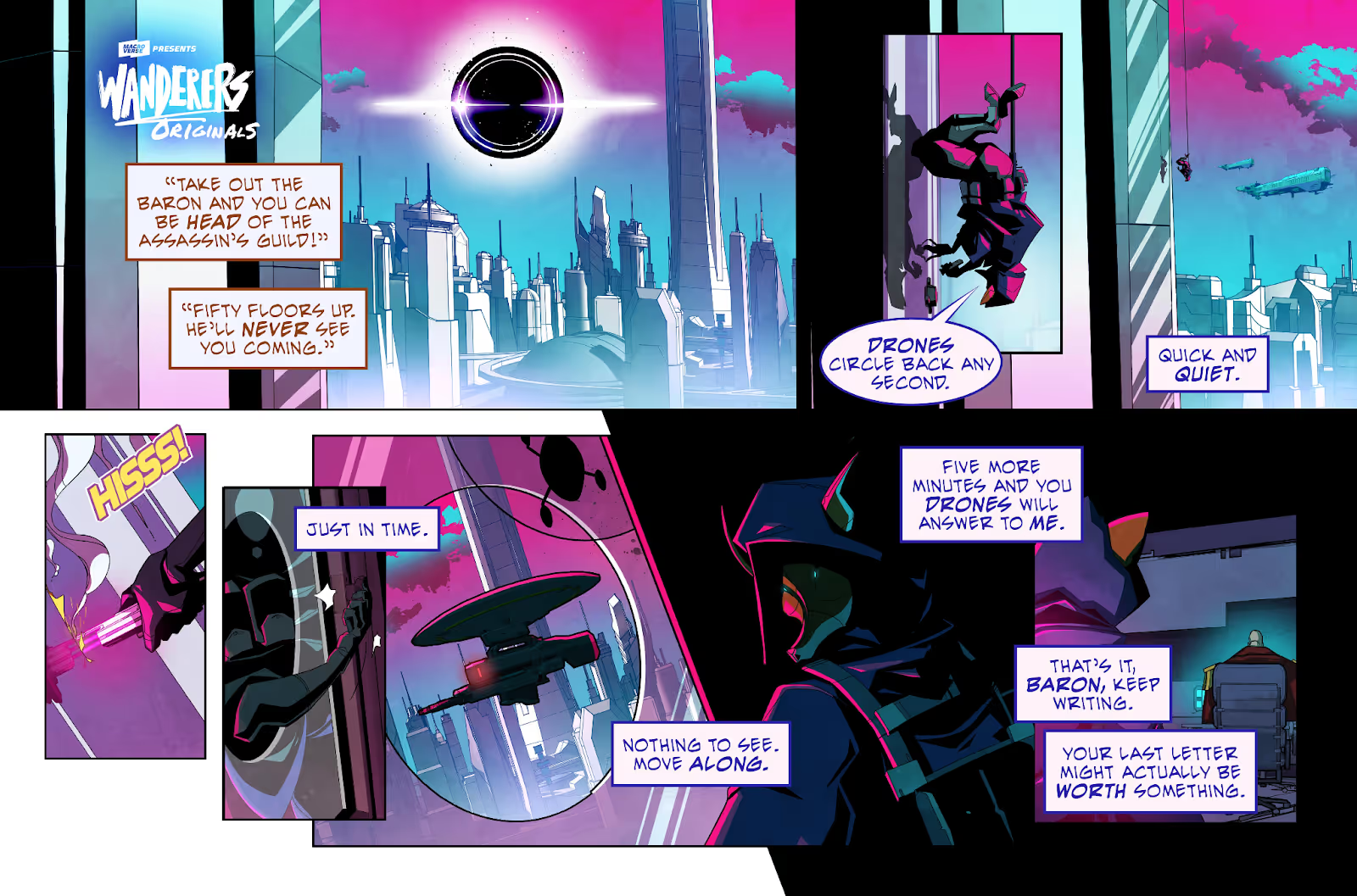
With new announcements and activations on the horizon, Wanderers is poised for a strong run into the public beta and beyond, all with focused storytelling at the heart of it all.
"It's surreal to imagine this kind of success a couple of years ago, to have a video game that is being played by other people, that they funded a game based on my art and universe,” said Greenawalt. “The fact that people really like it and they want to be a part of it, and they want to be playing the game, is very surreal.”


.avif)
.png)
.png)
.png)
.png)

.png)