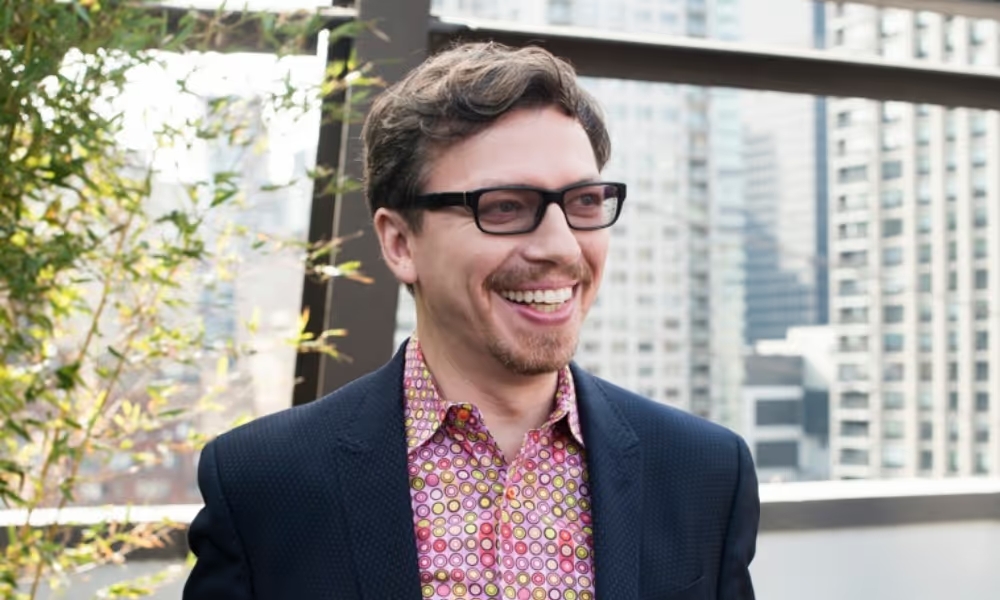

As the conversation around tokenized real-world assets gains momentum, LiveArt is building one of the most sophisticated platforms at the intersection of art, culture, and blockchain. Now, with the launch of its LiveArt AI Agent, designed to help collectors navigate and manage a growing universe of tokenized assets, LiveArt is setting a new standard for accessibility and intelligence in the space.
We sat down with co-founder and CEO Boris Pevzner, a seasoned entrepreneur with a background in tech and the traditional art world, to talk about the company’s vision for democratizing ownership. From bridging web2 and web3 collector cultures to building tools that make fine art and luxury goods accessible, Boris shares what it takes to make this space both trusted and intuitive.
In the following interview, Pevzner shares his perspective on where tokenized collecting is headed and why AI might be the key to unlocking its future.
OpenSea: You've described LiveArt as bridging the traditional art world and web3. What has been the biggest challenge in connecting those communities?
Boris Pevzner: I think the cultures of those two communities are completely different. And to back up for a second, we don't just operate in the fine art world. We are a decentralized ecosystem designed to bring the world's most desirable real-world assets on-chain.
So that’s the broader mission. Fine art is a major part of it, but we also focus on classic cars, spirits, watches…all real assets, as opposed to financial assets. Other companies do financial assets. We deal with real assets and bring them on-chain.
So, when we talk about bridging two worlds, it’s in the context of many types of assets. What unites web2 and web3 as it relates to these items is the concept of ownership. That’s the commonality that binds the offline and on-chain worlds.
This idea of ownership, whether it’s physical in web2 or digital and self-custodied in web3, is central. Our mission is to make sure anyone can own these assets, even if they couldn’t traditionally afford to. Not everyone can buy a million-dollar painting or an expensive car. But with blockchain, tokenization, fractionalization, and even AI to help guide your portfolio, you're suddenly able to own them digitally and on-chain. That democratizes ownership.
Now, the cultures are vastly different. The traditional world is exclusive and closed off, especially fine art. Web3, on the other hand, is passionate, open, and community-driven. For us, coming from a web2 background, it was refreshing to experience that culture shift.
Our community is now global, with participants from over 100 countries and around 13 million wallets. Every time we publish a fractionalized drop, whether it's an artwork or another asset, we see this open, enthusiastic engagement. People post prints and artifacts they’ve collected on Twitter. That openness is a major departure from how people behave in the traditional asset world.
OpenSea: How do you explain the value of tokenizing something like physical art? I know you cover more than just art, but let's use that as an example. How do you make this concept approachable to someone new?
Boris Pevzner: It comes back to what I mentioned earlier: the ownership experience. People who own physical art enjoy it on their walls. They can see it, touch it, show it off. It’s tangible and personal.
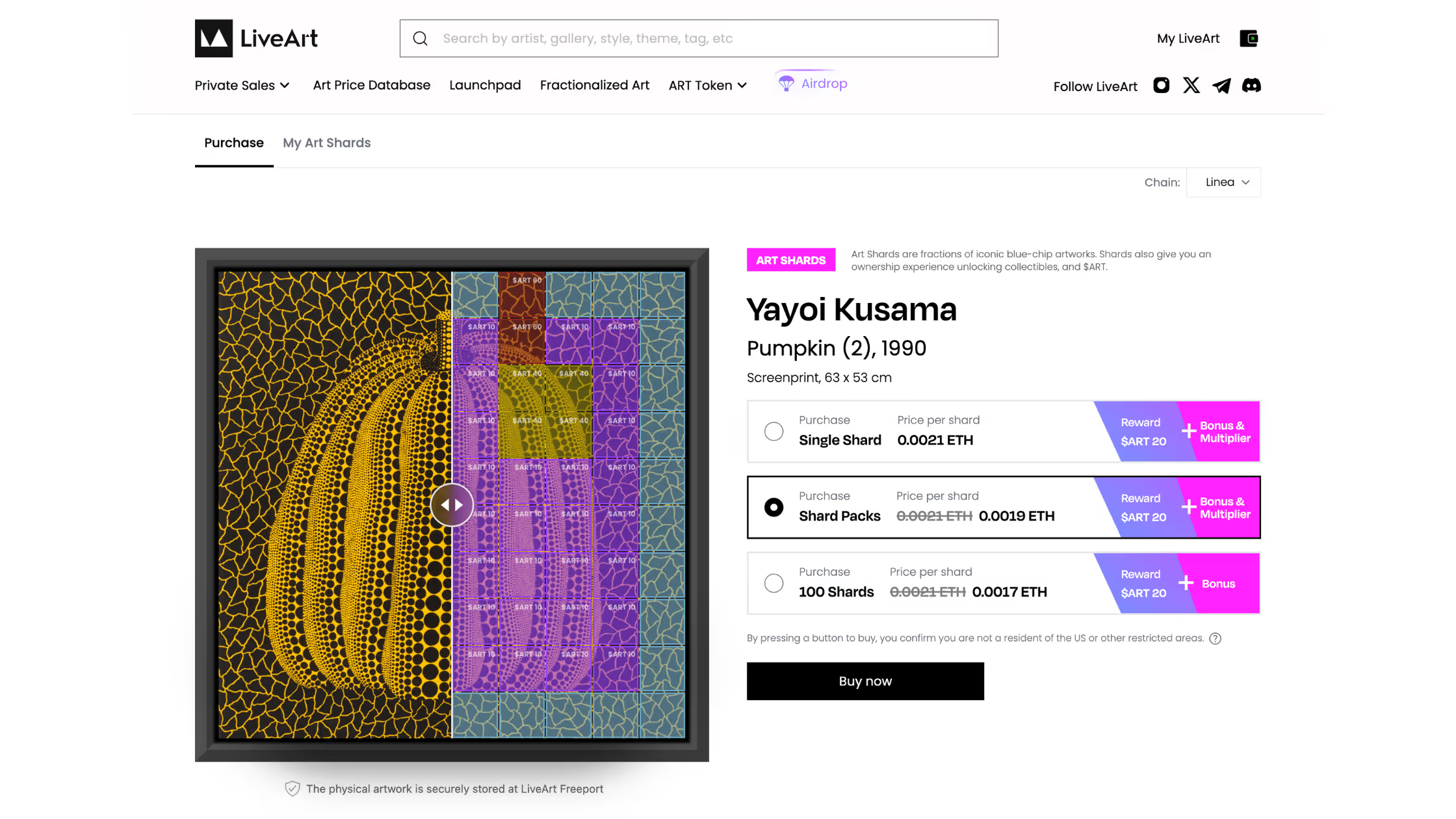
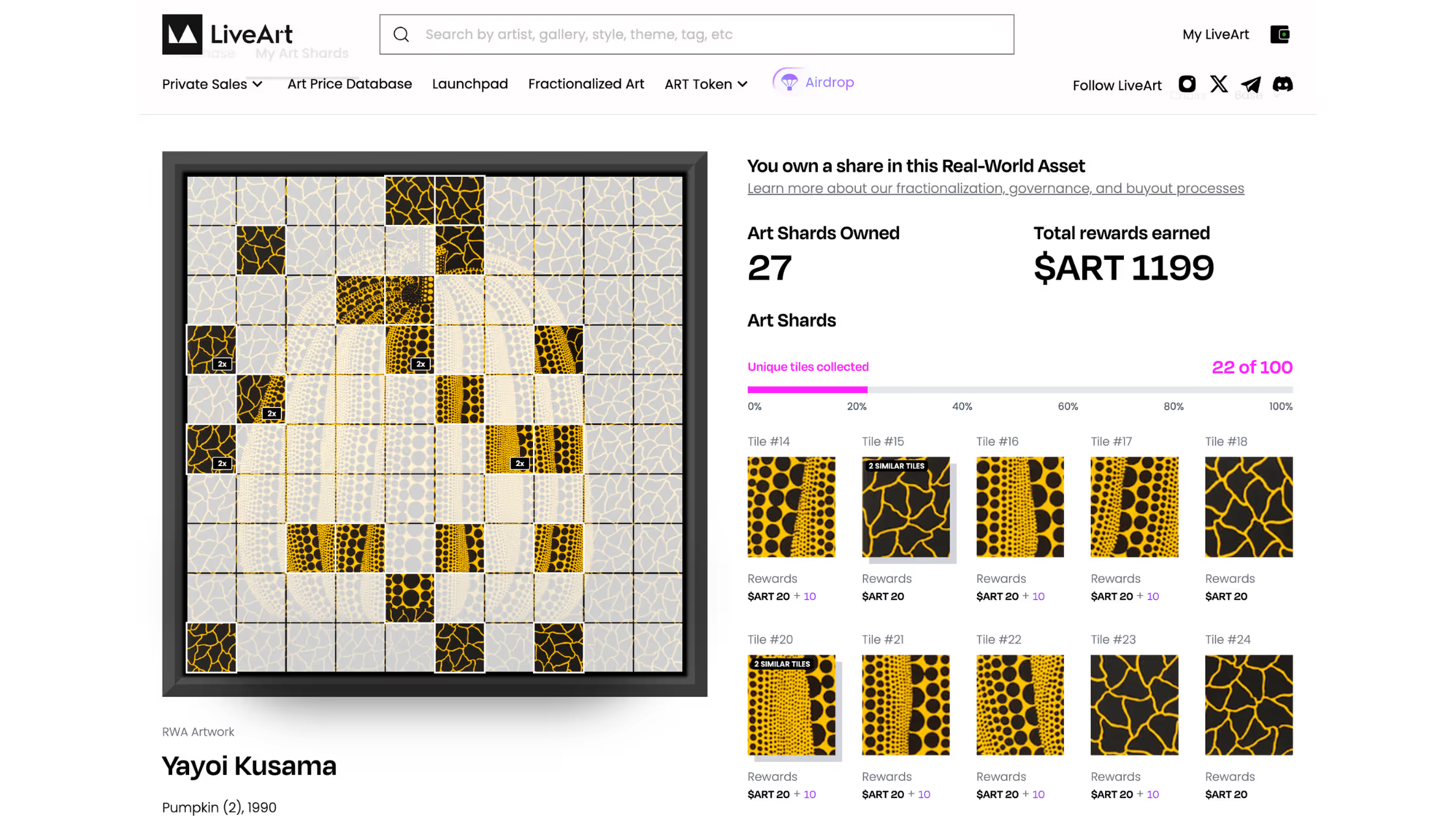
When you fractionalize something—split it into shards, as we call them—you need to recreate that ownership experience digitally. That’s something we’ve thought deeply about.
We see ownership not just as holding a piece of something, but as an invitation to engage with culture, financial insight, and even the artists themselves. It becomes a multi-dimensional experience that blends emotional connection, financial data, and real-world access.
We break that down into five core pillars:
- Provenance and authentication. This is the technical foundation—blockchain-based certificates of authenticity, transparency, valuation history, appraisal data. The buyer needs full confidence that their digital fraction connects to the real-world item.
- Cultural and emotional connection. We create immersive storytelling around each asset—videos, interviews, AMAs, curated content. Owners often have a say in how and where the piece is exhibited.
- Expert access. That includes deep market analysis, curator talks, educational webinars, and early access to new drops.
- Real-world utility. At in-person events, especially crypto conferences, we host IRL experiences. Fractional holders get VIP access related to their assets.
- Financial exposure. These are high-performing alternative asset classes: fine art, whiskey, classic cars. Retail investors haven’t had access until now. But with fractionalization, they can participate financially without large capital outlays.
We’re constantly refining how we package these elements to create a full, ongoing ownership experience—not a one-time purchase, but something that evolves over time.
OpenSea: That was helpful and in-depth. I’d love to hear more about your new AI agent. It’s so interesting. Can you tell me about why you created it and what it’s designed to do?
Boris Pevzner: Sure. The idea is simple. If you’re a collector and you have thousands of items—paintings, cars, bottles of whiskey—you need to make sense of it all. You need to understand what’s valuable, what’s ready to sell, what’s performing well.
When you’re dealing with fractions of these assets, it’s the same. Today we’ve fractionalized a few dozen items. Eventually, it’ll be thousands or even tens of thousands. So how do you manage that? How do you balance your Picassos and Warhols with your Lamborghinis or Patek Philippes?
That’s what the AI agent is for. Similar tools exist in the traditional financial world for blue-chip stocks and crypto, but nothing like this has existed for alternative real-world assets—until now.
It helps people build and manage collections, understand pricing and risk, and navigate momentum in specific asset categories.
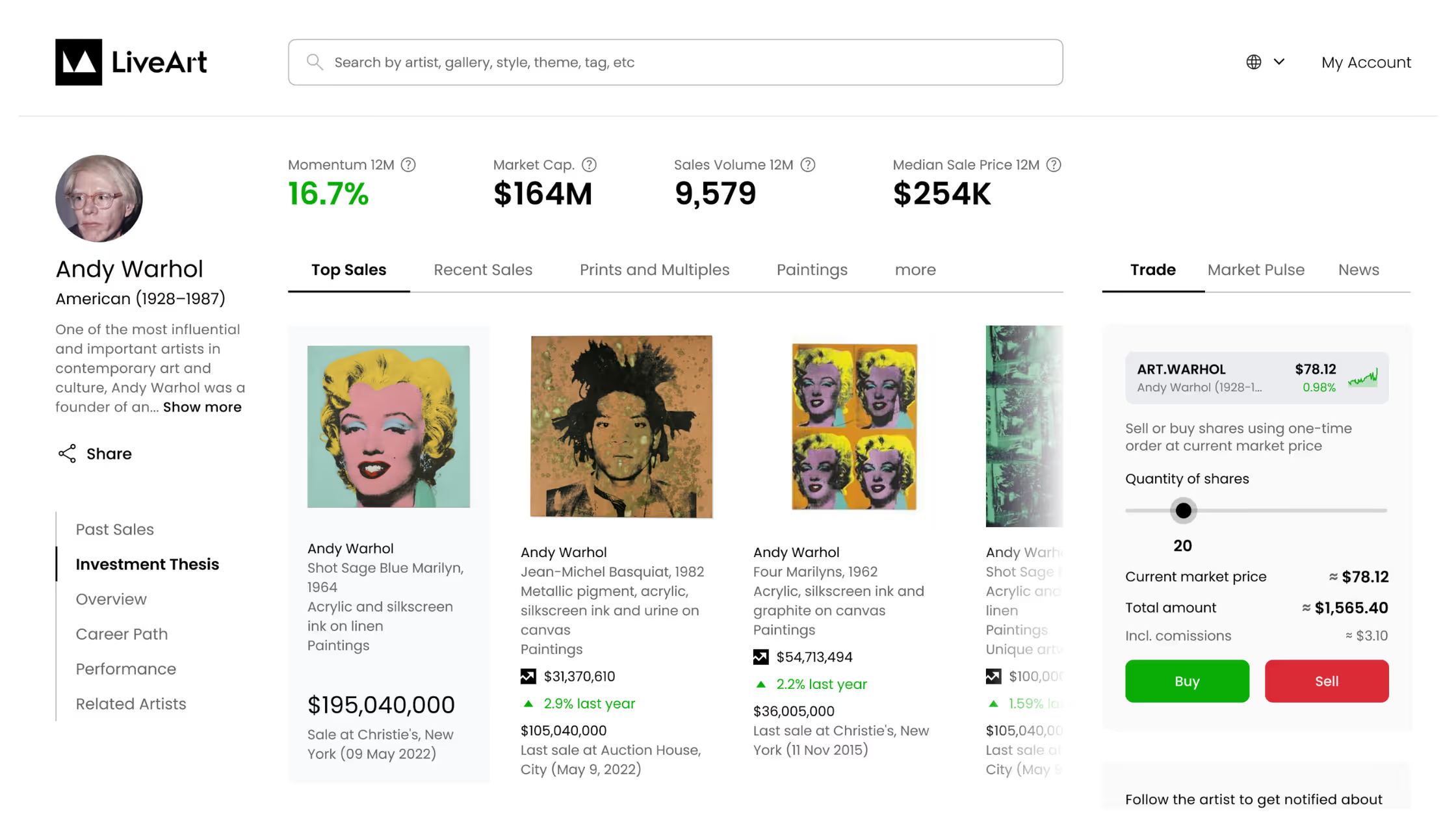
We didn’t build this from scratch. Our first product three years ago was a data platform for fine art—over 10 million historical sales records, with AI analytics to show current market values and trends across genres, artists, and asset types. That became the foundation.
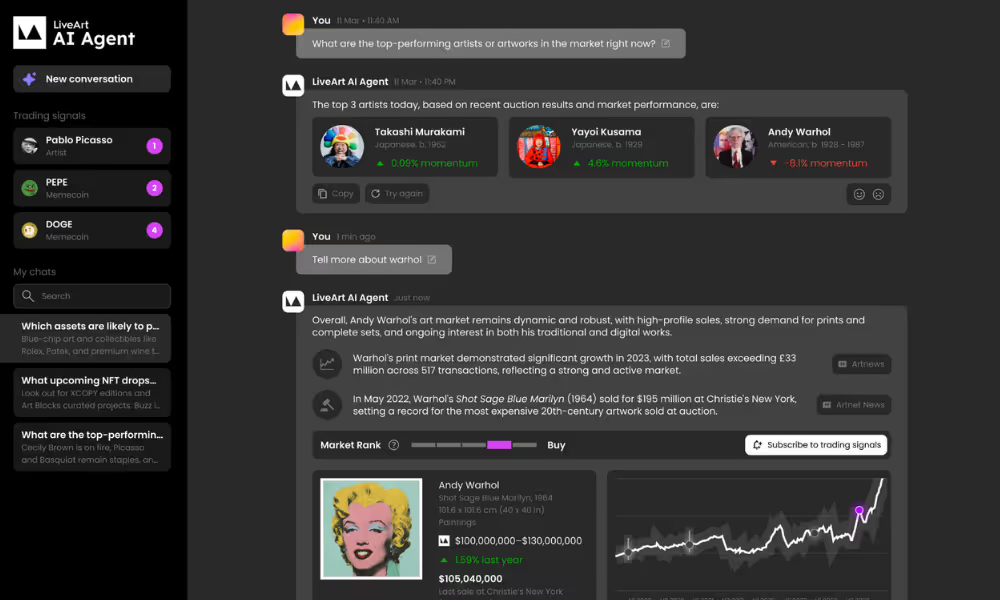
Now, the AI agent sits on top of that data. It’s available at liveart.ai and can answer questions like: “What are the top-performing artists right now?” or “How has Picasso performed compared to Lichtenstein?” It gives real answers with real market data and pricing charts—everything you’d need to make informed decisions.
OpenSea: That’s amazing. I saw those suggested prompts—it’s a really smart way to help people dig deeper. And it makes such a difference to go from having raw data to having something actionable.
Boris Pevzner: Exactly. The feedback has been great so far. I think for people in the industry, this kind of tool will eventually become essential. Just like a Bloomberg Terminal—you can’t navigate financial markets without it. We think the same will be true for this space once fractionalized assets scale up.
OpenSea: One thing you touched on earlier was that tokenized fine art changes the relationship between collectors and artists. I’m curious, what patterns or themes have you seen recently in how these groups interact? How is that relationship evolving?
Boris Pevzner: There are a few types of relationships here. When we think about our audience, we think in terms of investors, collectors, and traders. They behave differently, they have different motivations—and honestly, that’s the same in the traditional art market.
Some people buy art because they love it. It gives them aesthetic satisfaction or social validation. Others buy it as a long-term investment. Then you have the traders, dealers, flippers, who are more transactional, buying and selling constantly.
In the digital world, those same dynamics apply. But what’s different is how collectors behave. Digital collectors are more open. They show off their holdings, share them online. Traditional collectors tend to be more private. They rarely reveal what they own. The whole culture is much more closed. Web3 culture, on the other hand, encourages openness and community.
Some artists love that—they enjoy spending time with collectors, engaging with their audiences. Those artists really thrive in this new cultural environment. Others are more reclusive. They just want to work in the studio and don’t want to engage, so they find the web3 model less appealing.
To be clear, we mostly work with artists from the traditional world. Many of the artists we tokenize are among the top 20 globally—and most of them are no longer living. So in those cases, the relationship isn’t with the artist directly but with their brand or legacy.
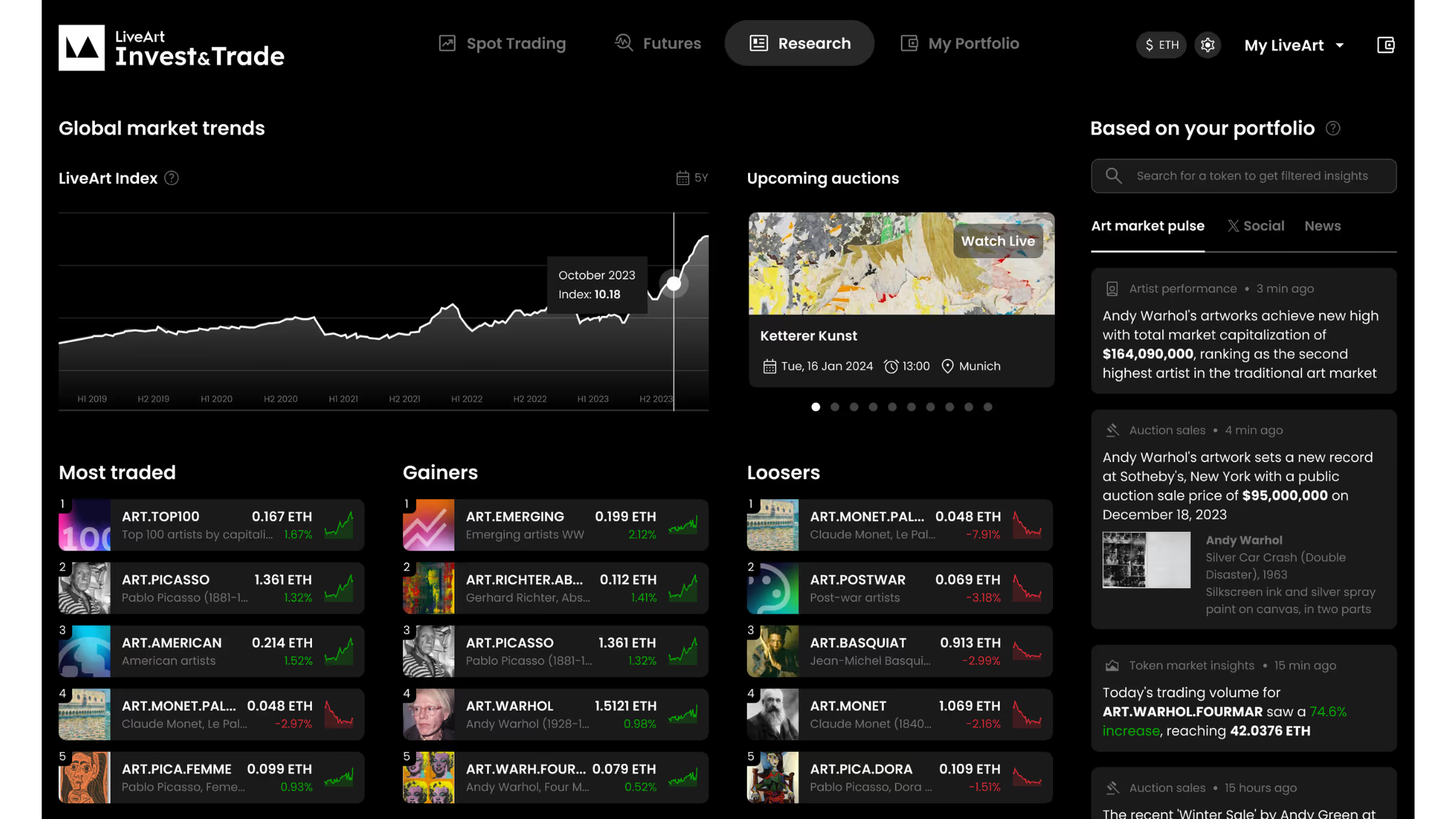
Take Warhol, for example—we’ve tokenized some Warhol works. People know the images, the iconography. The relationship is more like what you’d have with a luxury brand. That’s why artists like Warhol or Murakami have collaborated with fashion houses. Their work exists in that cultural space.
OpenSea: That tracks. In a way, buying into a blue-chip NFT collection feels similar—it’s not just about the art. It’s about identity and how people want to be perceived. It's part affiliation, part self-expression.
Boris Pevzner: Exactly. And the same is true in traditional collecting. People often buy something because someone they admire bought it. That behavior is consistent across categories—it’s a human instinct. But the web3 community just operates differently. How it buys, how it displays preferences, how it engages—it’s all more public and more dynamic.
OpenSea: What role does the $ART token play in LiveArt’s long-term vision?
Boris Pevzner: It’s fundamental. It’s a utility token but with a twist. It supports governance, so holders can influence which artists or categories we focus on. But it also powers a strong incentive system.
A lot of the mechanics already exist in our current points system. The token hasn’t launched yet, but it will inherit those same mechanisms. The more people participate—by collecting, engaging, supporting drops—the more they’re rewarded.
You’ll also be able to use the token to purchase limited edition shards of major artists. So it will serve as a kind of access pass as well as a utility layer. The idea is that the token will deepen everything we’re already doing, and once it’s live, it will make the community even more cohesive and participatory.
OpenSea: Is there anything you’d like to add? Anything we didn’t cover that you think readers should know?
Boris Pevzner: I’d say the two most important ideas are: first, the ownership experience—and second, the importance of AI in navigating this new world.
People sometimes wonder why owning a piece of something could be meaningful or even more valuable than owning the whole thing. What we’ve spent the most time thinking about is how to make that ownership experience rich, long-lasting, and not just transactional.
And on the AI side—today, these tools may seem like toys, but they’re going to be essential. As this asset class grows, AI will become the only practical way to navigate it. Just like chatbots are replacing search engines for information, AI agents will be how people manage collections, build portfolios, and make decisions in a space where no two assets are alike.
Every piece is unique—even within an artist’s own body of work. Warhol has a huge market cap, but each of his works has different attributes. Comparing two Warhols—or a Warhol and a Kusama, or even a painting and a car—is complex.
We need technology that can help solve that. If these asset classes are going to become accessible and investable for everyday people, we need to give them tools to navigate, analyze, and make confident decisions.
OpenSea: Absolutely. That was a great way to tie it all together. Thank you so much
Boris Pevzner: Great. Thanks again.


.avif)
.png)
.png)

.png)
.png)