We’re excited to announce that Gitcoin Kudos are now tradeable on OpenSea. Check out the bargain-priced Kudos the Gitcoin team are selling with us! You’ll find something for the shills, the superstars, and even the party people in your life. Stick around to learn why sending a coworker a Kudos is more than just airdropping an NFT!
Gitcoin is a model project in the Ethereum community: they’re solving a real problem, they attract real users, and they kept their heads through the ICO mania (plus, we can testify: they’re absolute collaboration machines). Gitcoin provides low-overhead infrastructure for matching up people who have money and need software with people who have skills and need money. In other words, Gitcoin helps funders find developers.
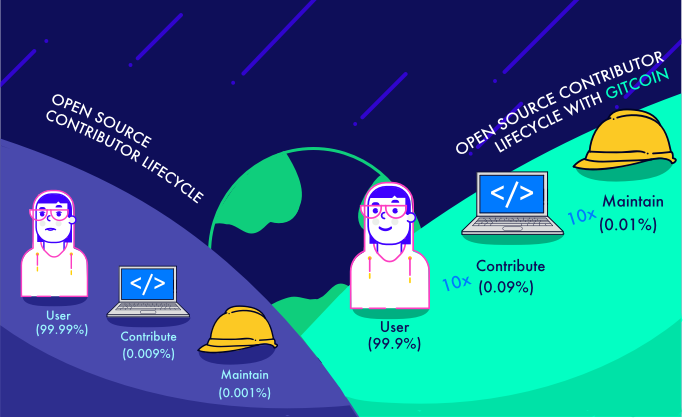
Bounties provide Gitcoin’s primary mechanism for completing this matchmaking duty. A funder creates specifications for a feature they need built and promises a reward for its completion. Bounty hunters select tasks from the list of available bounties, complete the work, and get paid in Ethereum.
But a clean, transactional contract like a paid bounty isn’t all the joy of contributing to software projects. Software engineers also enjoy soft benefits, like getting casual props from a supervisor, feeling the prestige of being known among a peer group as a subject matter expert, or receiving a handwritten thank you note after helping a coworker out of a tight spot.
Gitcoin rolled out Kudos, nonfungible tokens of appreciation, to fill this gap. To paraphrase Kevin Owocki, “Kudos are the greeting card of the blockchain era.”
While bounties offer monetary value, Kudos derive their value and meaning from the very act of being sent as a reward for excellence. Bounties remain the core of Gitcoin’s functionality. But Kudos represent the first addition to a suite of products, designed to grow and sustain the open source software world, that Gitcoin plans on releasing in the next few years.

OpenSea + Gitcoin Connect
We get it, we love it, and we had to have a piece of it for our own. So, we commissioned a “Salty Dog” Kudos and we’re psyched to start sending them to the OpenSea community!
For the most part, Kudos operate just like the ERC-721s you know and love. But there’s an extra kicker: owners of Gen0 Kudos earn 90% of the cloning fee each time a Gitcoin user clones a Kudos. Under normal circumstances, the Gen0 version of a token is held by the artist who created the image for it. But if you can get your hands on one, it’ll throw off revenue!
An Interview with Gitcoin’s Founder Kevin Owocki
We had the privilege of hosting the self-described Chief Janitor of Gitcoin, Kevin Owocki, for a chat about Kudos, bounties, and the perks of building on the blockchain in Colorado.
Dan: Where did the Kudos idea originate from?
Kevin: The products that you ship are one result of a career in software development, but the relationships that you build are another sort of really important output. I’ve worked at four or five different startups and I keep in touch with all the engineers I’ve worked with at those different places.
I have these really fond memories of being in the trenches with them, working really hard, and releasing great products. And for each person I can look back and think, “This person is really good at X and this person is really good at Y.” When I worked on site with people, we would go out and have beers or get dinner to celebrate our successes. But when you’re in a distributed team, you can do that as much. That’s sort of thread number one.
Number two is that open source software has historically been very intrinsically motivated and Gitcoin pulled it over toward being extrinsically motivated with rewards like bounties. By introducing a product that allows members of our network to show appreciation for each other and engage in more robust networking with each other, we felt like we were righting the ship and pulling it back towards the historical intrinsic motivations of open source software. So, I would say that those are sort of the two threads that informed the introduction of Kudos.
And Kudos is not just a double sided market with the sender and the receiver. It’s a triple sided market, where there’s an artist who’s selling to the sender, who then sends to the receiver, right? CryptoKitties are all procedurally generated and that allows you to operate without leaning as heavily on that artist leg in the tripod. Maybe it’s that I’m just not a talented enough procedurally generated artwork programmer or maybe it was a considered choice, but we designed Kudos in such a way that you need to have that actor that sells the artwork. We’re not procedurally generating them.
“Who earns money when a new Kudos is created?
When a new Kudos is created, the ETH sent during that minting process is directly sent to the illustrator who created the Kudos artwork…”
And by providing a cryptoeconomic incentive for the artist to produce more artwork for the community, you’re actually structuring the product such that there’s going to be more inventory on the Kudos platform over time. The cloning mechanism is the way that the artists are going to make their money on the Gitcoin Kudos marketplace. It’s going to help create us more inventory, because as artists make money off of selling their Kudos, then they’ll hopefully tell their friends and attract more artists. That’s the theory, at least. We’ve only been launched for a few weeks!
Dan: How are holders of kudos going to be able to meaningfully convey the contents their collection to an interested audience?
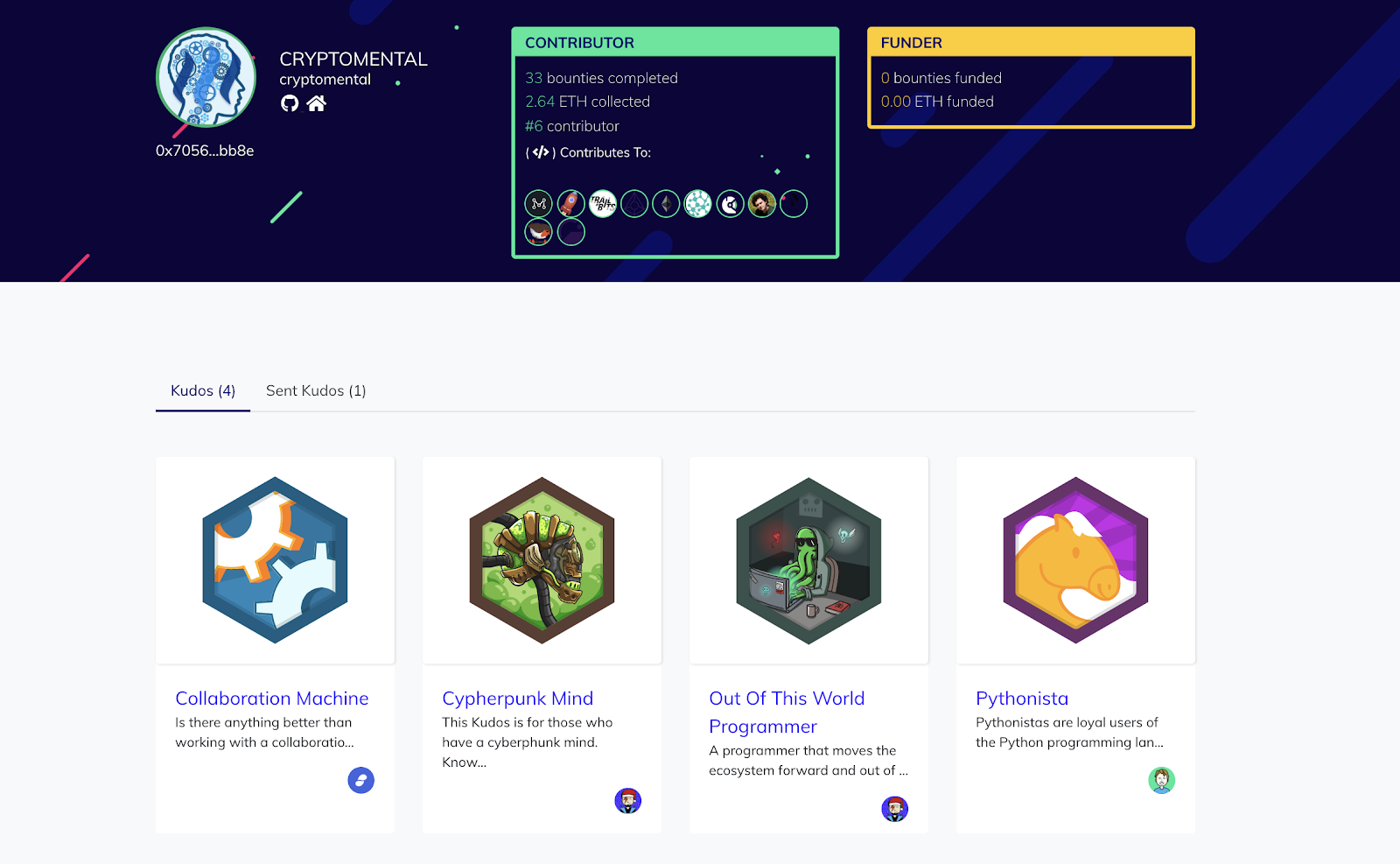
Kevin: On each Gitcoin profile, there’s a bunch of stats about how many bounties the user has completed and what they’ve been up to on the platform. But they’ve got this ‘My Kudos’ section where you can flip a Kudos around and see who sent it.
Basically, I think a Kudos is an attestation of someone’s reputation and it’s got three parts. It’s got a sender, a receiver and the Kudos in the context in between the sender and receiver. And that’s what sort of gives it value. Once a kudos is sent to someone, it’s in this sort of gallery on their profile. And we’re going to experiment with ways that you can embed your gallery on different sites, like on your resumé, but haven’t gotten there yet.
Dan: Will I be able to see Kudos on GitHub?
Kevin: Yeah, we’ve got to GitHub issue out for that. I should probably put a bounty on that so that someone builds it!
Dan: Could you talk a little bit about getting funders up to speed and what the most common issues in the Gitcoin workflow?
Kevin: The way I like to explain it goes like this: if you hire an Uber driver, you have pretty clear expectations for what you want out of them. You want them to take you from A to B. You want them to do it safely and quickly — and hopefully they’re not a creep. You’ll give them five stars if that happens. The problem with software development is that the task that I tell you to do, let’s call it task ‘X’, you might hear that as ‘X′’ and deliver ‘X′’. Then I see it and I’m like, “Oh, well, I really wanted ‘X′1.’” Software development is very abstract as compared to something like an Uber ride.
There’s this progressive elaboration of scope when it comes to software development. Encouraging people to really think through what they want, why they want it, what it’s going to look like, and how many iterations there will be, that’s basically teaching people product management. And so far, we’ve put out a series of Medium posts about how to price your bounty, how to specify your bounty, and how your report should be documented. Maybe 10 percent of our funders will look through all that documentation before they fund their first bounty and maybe 80 percent of them will just YOLO their way into their first bounty.
Just teaching funders how to be good project managers is something that we have to take on because, if you have a bad experience with a product, it doesn’t matter if it’s the result of some funder being a bad project manager. It’s still a brand dilution for Gitcoin. So, we’re trying to take responsibility for the quality of the scope and the pricing of the bounties on the platform. It’s a long term investment in our community, but I think it’s going to really pay off because these are core skills of working in the digital economy and I think it’s a public service to be teaching them to people.
Dan: Is Gitcoin Gold a Band-Aid solution to carry you over to the days when people are better at project management? Or is that a core part of the Gitcoin revenue model?

Kevin: A lot of crypto-rich funders might say, “I don’t want to deal with this. Whatever. You manage our bounties for us.” That’s why Gitcoin Gold is available. I think that you’re going to see periods in which the cost of capital is high. We’re in crypto winter right now, in a bear market. But you’re going to see times when the cost of capital is low and people are more time poor than they’re money poor. Gitcoin Gold is just a way for people who are cash rich and time poor to deal with management of bounties.
We haven’t done any long term projections about how that’s going to look as we train more people to do project management. But my theory is that a certain percentage of people are always just going to pay us to manage their bounties because it’s just easier than figuring it out for themselves.
Dan: The Denver-Boulder orbit is home to a lot of folks building blockchain tech. What is it about Colorado that makes it such fertile ground for blockchain tech?
Kevin: Good question. I’m always happy to talk about this because it’s part of my role as a Colorado community organizer to shill Colorado.
I think that basically, you have people who moved to Colorado because their values included having time in the outdoors and getting out of the rat race. There’s sort of a freethinking, frontier, libertarian kind of mindset out here. I think that that subset of people overlaps heavily with the blockchain developer subset.
Colorado is a community of transplants and because of that, we’ve been really welcoming to people on the west coast and on the east coast that want to come out for events like ETH Denver or Colorado blockchain week. There’s a really good sort of overlap culturally between the blockchain space and Colorado. And also it’s just a great place to be. It shouldn’t be any surprise that blockchain people are coming out here.
But we have a pretty audacious goal of competing with Silicon Valley and with New York for blockchain talent and I hope that it comes to fruition, because it’s amazing to be out here in Colorado.
Dan: I hope I can make it to the next ETHDenver. Thanks for the time and insights!
* * *
Can you think of a colleague that deserves a pat on the back? Give one! Have you been guided by a useful discussion in the comments of a GitHub issue? Thanks all around! What else do you have to be grateful for? Check out the selection of Gitcoin Kudos on OpenSea here for inspiration and make your appreciation known.
Why list your Gitcoin Kudos on OpenSea? Well, first of all, developers need to be able to buy Kudos if they’re going to send them to their task-crushing colleagues. And that means we need sellers! Plus, selling on OpenSea gives you superpowers. Check them out!
Keep your items in your wallet while they’re on sale
You can create an auction for a Kudos but keep it in your own wallet while it’s on sale. Learn more about this feature here.
List Kudos without paying gas
Once you’ve set up your OpenSea account, you can list your Gitcoin Kudos without paying gas or waiting for confirmations from the blockchain. When you list a Kudos, you just sign the listing with MetaMask. When the item is purchased, the buyer submits a transaction, and the deal is done.
Accept bids for your Kudos

Not sure how to price your Gitcoin Kudos? You don’t have to! When someone sees a Kudos that they might want to send to a coworker, they can bid on it (even if it’s not on sale!) without any action from its owner. The owner can immediately fulfill these bids, receiving WETH in exchange for the Kudos.
Sell Kudos by the bundle
Sellers on OpenSea can sell multiple assets in one transaction. You could even sell a full stack pack, so the buyer can reward the whole team for a feature well shipped. Or if you’ve got a load of surplus Gitcoin Kudos all of one type, you can group them into a single listing for a single price. Plus, it’s gasless! Just put together the bundle listing and sign it with MetaMask. For more details, check out our Medium post.
Get more exposure
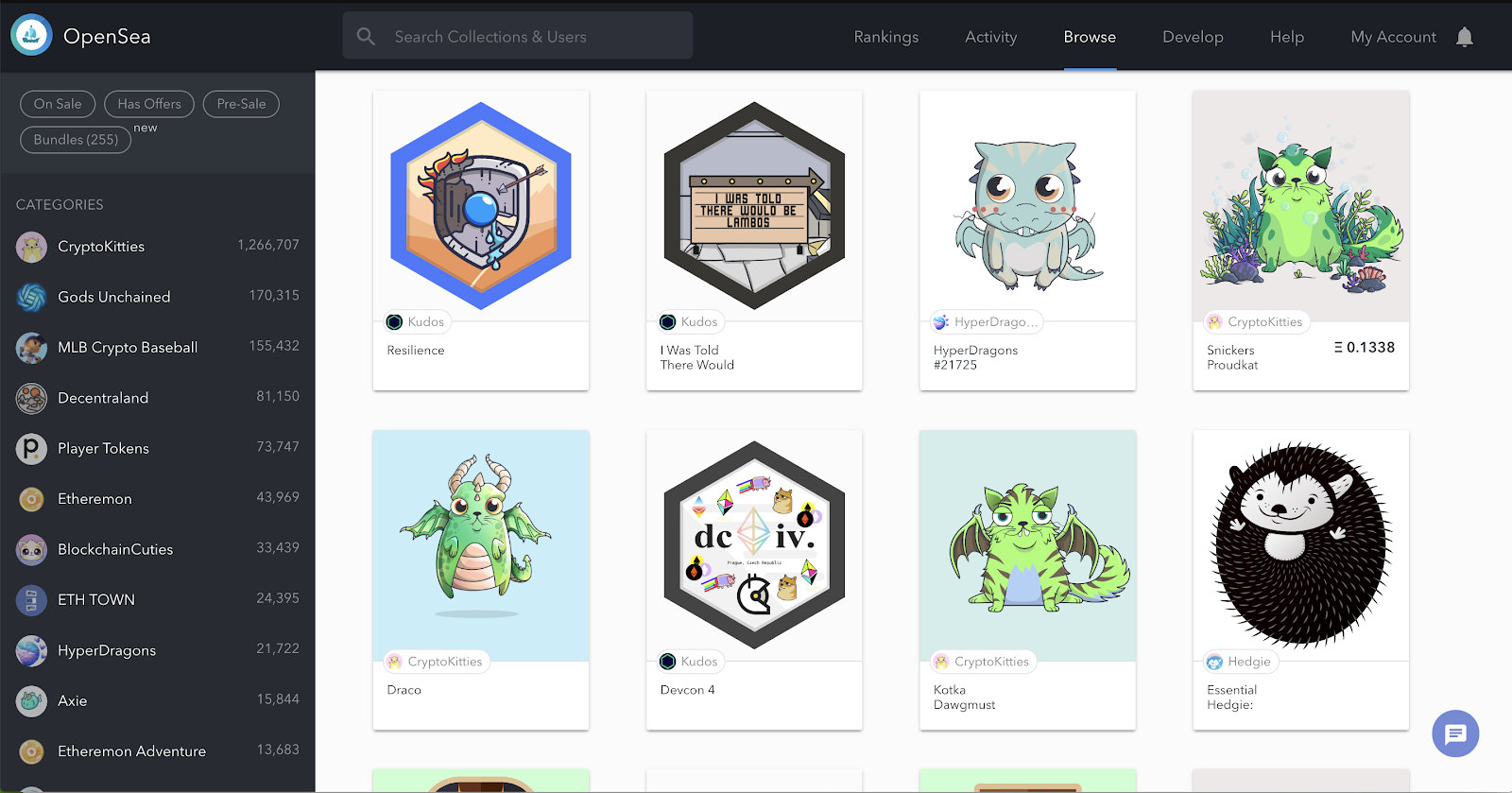
Thousands of users browse OpenSea for all sorts of game items, collectibles, digital artwork, and more. By listing your Kudos alongside other collectibles, you gain a ton of exposure.
Interested in joining the Gitcoin discussion? Check out the chatter on Slack. For more information on Gitcoin, check out Gitcoin’s website or read through their content on Medium. To see what else is brewing in the world of NFTs, join us over at the OpenSea Discord channel.



.avif)
.png)
.png)

.png)

.png)