SLIPS
SLIPS
Floor price0.0090.009 ETH
1d floor %0%
Top offer
—
24h volume0.000.00 ETH
Total volume0.000.00 ETH
Listed1.4%1.4%
Owners (Unique)325325 (19.2%19.2% )
SLIPSSLIPS
SLIPS
SLIPS
SLIPS explores the increasingly opaque nature of modern technology, wherein complex systems like blockchain and AI operate as black boxes that are used and depended upon by countless millions, yet are rarely understood by them.
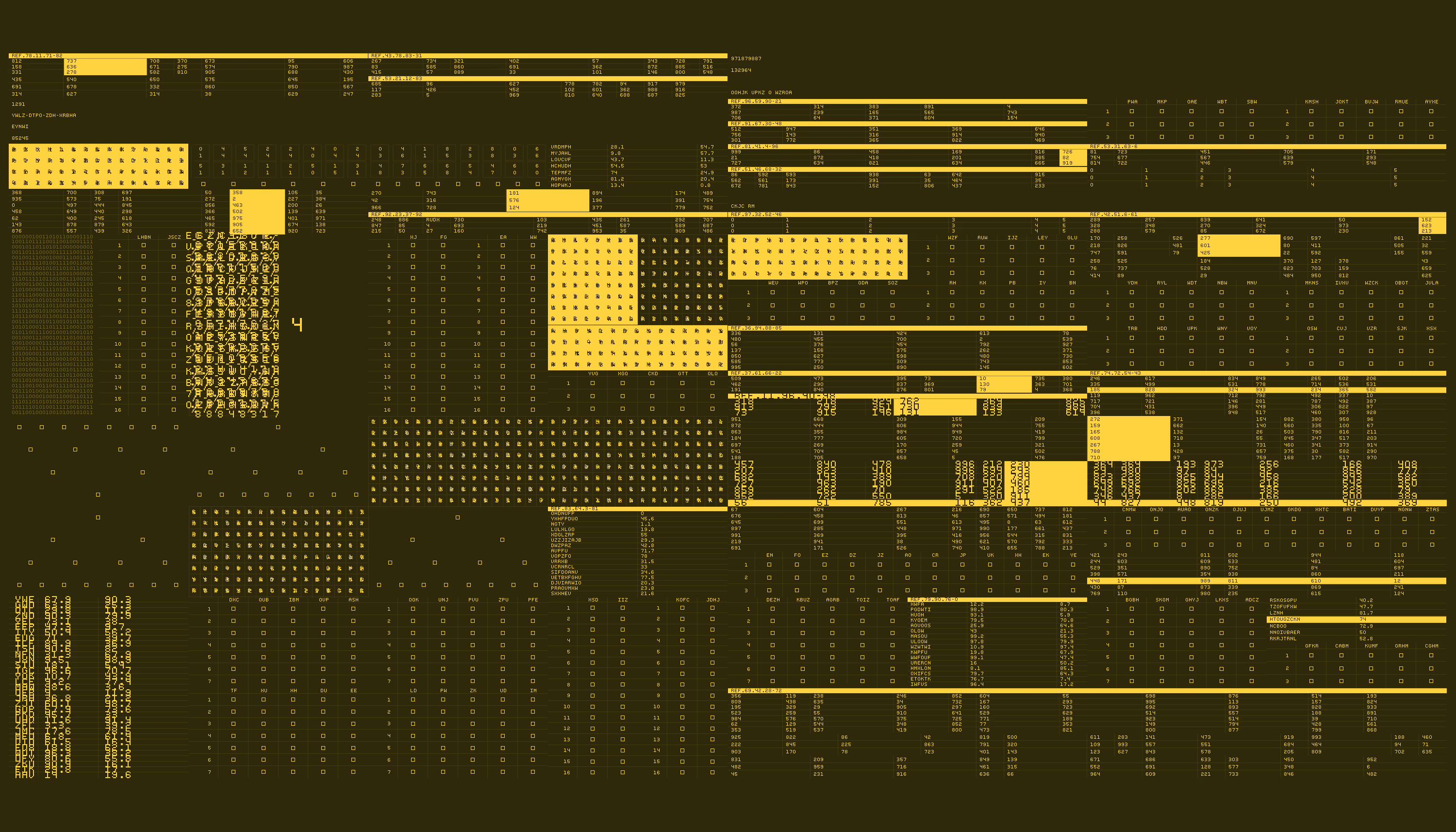
Visually inspired by traditional betting slips and vintage punchcards, each SLIPS edition represents an imaginary betting form encoded with logic but ultimately driven by randomness. This deliberate structure reflects our contemporary reliance on technologies whose internal workings remain largely obscure.
By employing randomized rolls to determine outcomes, SLIPS mirrors the precarious balance between perceived control and pure chance. This highlights the illusion of informed decision-making and the seductive pull of gambling on unknown outcomes.
SLIPS explores the increasingly opaque nature of modern technology, wherein complex systems like blockchain and AI operate as black boxes that are used and depended upon by countless millions, yet are rarely understood by them.
Visually inspired by traditional betting slips and vintage punchcards, each SLIPS edition represents an imaginary betting form encoded with logic but ultimately driven by randomness. This deliberate structure reflects our contemporary reliance on technologies whose internal workings remain largely obscure.
By employing randomized rolls to determine outcomes, SLIPS mirrors the precarious balance between perceived control and pure chance. This highlights the illusion of informed decision-making and the seductive pull of gambling on unknown outcomes.
SLIPS explores the increasingly opaque nature of modern technology, wherein complex systems like blockchain and AI operate as black boxes that are used and depended upon by countless millions, yet are rarely understood by them.
Visually inspired by traditional betting slips and vintage punchcards, each SLIPS edition represents an imaginary betting form encoded with logic but ultimately driven by randomness. This deliberate structure reflects our contemporary reliance on technologies whose internal workings remain largely obscure.
By employing randomized rolls to determine outcomes, SLIPS mirrors the precarious balance between perceived control and pure chance. This highlights the illusion of informed decision-making and the seductive pull of gambling on unknown outcomes.