
Discover
Collections
Tokens
Swap
Drops
Activity
Rewards
Studio
/
Items
Holders
Activity
Aggregating
Networks
Terms of Service
Privacy Policy
$1,915.99
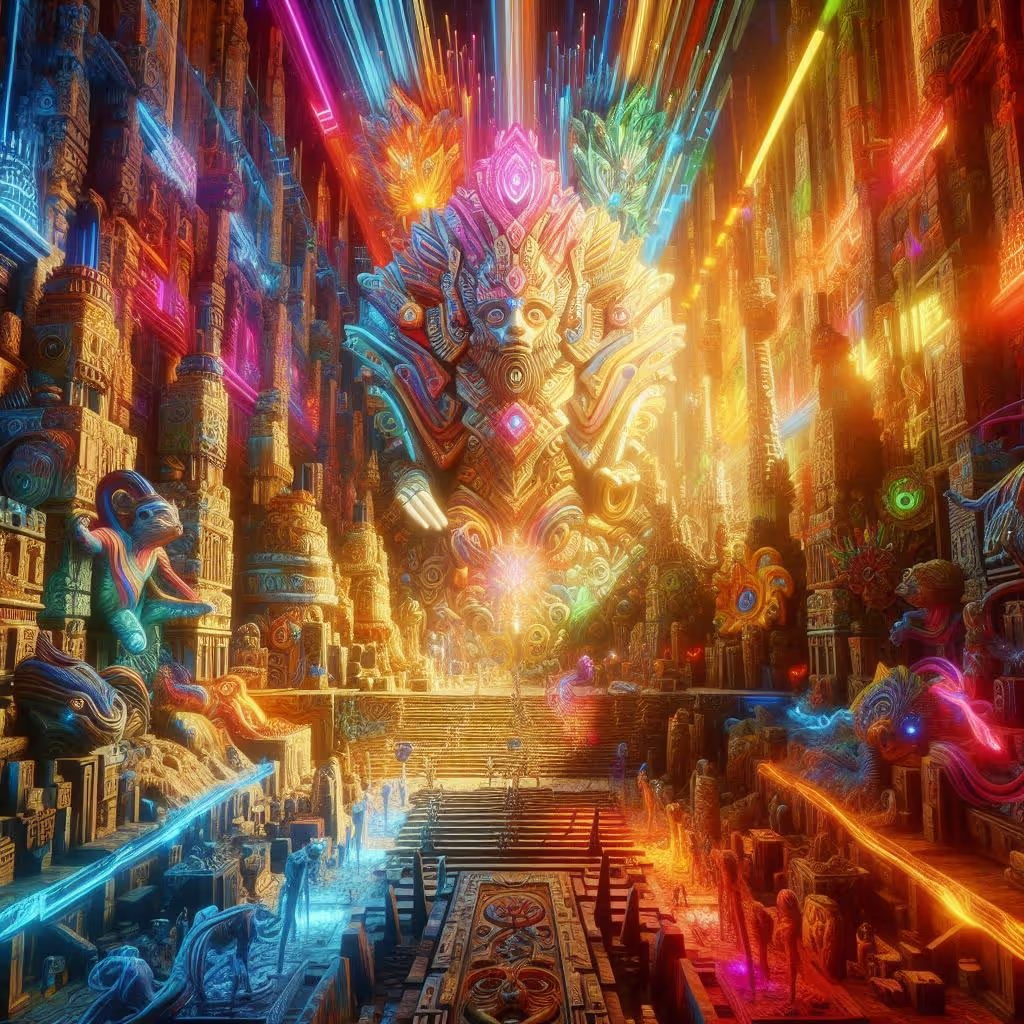
The All is Mind

The Principle of Duality: In many ancient texts and philosophies, the universe is understood to be governed by the principle of duality. This means that everything has its opposite: light and darkness, good and evil, joy and sorrow. This duality is necessary for balance and harmony in the universe. Without darkness, light would have no meaning. Without evil, good would not be appreciated. Free Will: A key concept in many religious traditions is that humans are given free will. For free will to be meaningful, there must be real choices to be made, including the choice between good and evil. If only good existed, there would be no genuine freedom or moral growth, as there would be no real alternative to choose from. Moral and Spiritual Growth: The presence of evil and suffering is often explained as a means for moral and spiritual development. Overcoming challenges, including moral evil, can lead to personal growth, resilience, and a deeper understanding of compassion and justice. The Concept of Testing: In the Bible and other religious texts, life is often seen as a testing ground for faith and character. The existence of evil serves as a test for humans to prove their righteousness and loyalty to God. This is seen in the story of Job, where Job’s faith is tested through immense suffering. The Idea of a Greater Good: Some theodicies (explanations for the existence of evil) argue that what appears as evil from a limited human perspective may contribute to a greater good from a divine perspective. This perspective is often beyond human understanding but is part of a larger, benevolent divine plan.
The All is Mind

The Principle of Duality: In many ancient texts and philosophies, the universe is understood to be governed by the principle of duality. This means that everything has its opposite: light and darkness, good and evil, joy and sorrow. This duality is necessary for balance and harmony in the universe. Without darkness, light would have no meaning. Without evil, good would not be appreciated. Free Will: A key concept in many religious traditions is that humans are given free will. For free will to be meaningful, there must be real choices to be made, including the choice between good and evil. If only good existed, there would be no genuine freedom or moral growth, as there would be no real alternative to choose from. Moral and Spiritual Growth: The presence of evil and suffering is often explained as a means for moral and spiritual development. Overcoming challenges, including moral evil, can lead to personal growth, resilience, and a deeper understanding of compassion and justice. The Concept of Testing: In the Bible and other religious texts, life is often seen as a testing ground for faith and character. The existence of evil serves as a test for humans to prove their righteousness and loyalty to God. This is seen in the story of Job, where Job’s faith is tested through immense suffering. The Idea of a Greater Good: Some theodicies (explanations for the existence of evil) argue that what appears as evil from a limited human perspective may contribute to a greater good from a divine perspective. This perspective is often beyond human understanding but is part of a larger, benevolent divine plan.

Seven Hermetic Principles

Polygon
15 unique
42,218
Jul 2024
Art
Polygon
15 unique items
42,218
Launched Jul 2024
Art
Floor price
—
1d floor %—
Top offer
—
24h volume
0.00 POL
Total volume
0.00 POL
Listed0%
Owners (Unique)1 (0%)

Seven Hermetic Principles

Polygon
15 unique
42,218
Jul 2024
Art
Polygon
15 unique items
42,218
Launched Jul 2024
Art
Items
Offers
Holders
Traits
Activity
About

Seven Hermetic Principles

Polygon
15 unique
42,218
Jul 2024
Art
Polygon
15 unique items
42,218
Launched Jul 2024
Art
Floor price
—
1d floor %—
Top offer
—
24h volume
0.00 POL
Total volume
0.00 POL
Listed0%
Owners (Unique)1 (0%)

Seven Hermetic Principles

Polygon
15 unique
42,218
Jul 2024
Art
Polygon
15 unique items
42,218
Launched Jul 2024
Art
Items
Offers
Holders
Traits
Activity
About
The All is Mind

The Principle of Duality: In many ancient texts and philosophies, the universe is understood to be governed by the principle of duality. This means that everything has its opposite: light and darkness, good and evil, joy and sorrow. This duality is necessary for balance and harmony in the universe. Without darkness, light would have no meaning. Without evil, good would not be appreciated. Free Will: A key concept in many religious traditions is that humans are given free will. For free will to be meaningful, there must be real choices to be made, including the choice between good and evil. If only good existed, there would be no genuine freedom or moral growth, as there would be no real alternative to choose from. Moral and Spiritual Growth: The presence of evil and suffering is often explained as a means for moral and spiritual development. Overcoming challenges, including moral evil, can lead to personal growth, resilience, and a deeper understanding of compassion and justice. The Concept of Testing: In the Bible and other religious texts, life is often seen as a testing ground for faith and character. The existence of evil serves as a test for humans to prove their righteousness and loyalty to God. This is seen in the story of Job, where Job’s faith is tested through immense suffering. The Idea of a Greater Good: Some theodicies (explanations for the existence of evil) argue that what appears as evil from a limited human perspective may contribute to a greater good from a divine perspective. This perspective is often beyond human understanding but is part of a larger, benevolent divine plan.

The All is Mind

The Principle of Duality: In many ancient texts and philosophies, the universe is understood to be governed by the principle of duality. This means that everything has its opposite: light and darkness, good and evil, joy and sorrow. This duality is necessary for balance and harmony in the universe. Without darkness, light would have no meaning. Without evil, good would not be appreciated. Free Will: A key concept in many religious traditions is that humans are given free will. For free will to be meaningful, there must be real choices to be made, including the choice between good and evil. If only good existed, there would be no genuine freedom or moral growth, as there would be no real alternative to choose from. Moral and Spiritual Growth: The presence of evil and suffering is often explained as a means for moral and spiritual development. Overcoming challenges, including moral evil, can lead to personal growth, resilience, and a deeper understanding of compassion and justice. The Concept of Testing: In the Bible and other religious texts, life is often seen as a testing ground for faith and character. The existence of evil serves as a test for humans to prove their righteousness and loyalty to God. This is seen in the story of Job, where Job’s faith is tested through immense suffering. The Idea of a Greater Good: Some theodicies (explanations for the existence of evil) argue that what appears as evil from a limited human perspective may contribute to a greater good from a divine perspective. This perspective is often beyond human understanding but is part of a larger, benevolent divine plan.

The All is Mind

The Principle of Duality: In many ancient texts and philosophies, the universe is understood to be governed by the principle of duality. This means that everything has its opposite: light and darkness, good and evil, joy and sorrow. This duality is necessary for balance and harmony in the universe. Without darkness, light would have no meaning. Without evil, good would not be appreciated. Free Will: A key concept in many religious traditions is that humans are given free will. For free will to be meaningful, there must be real choices to be made, including the choice between good and evil. If only good existed, there would be no genuine freedom or moral growth, as there would be no real alternative to choose from. Moral and Spiritual Growth: The presence of evil and suffering is often explained as a means for moral and spiritual development. Overcoming challenges, including moral evil, can lead to personal growth, resilience, and a deeper understanding of compassion and justice. The Concept of Testing: In the Bible and other religious texts, life is often seen as a testing ground for faith and character. The existence of evil serves as a test for humans to prove their righteousness and loyalty to God. This is seen in the story of Job, where Job’s faith is tested through immense suffering. The Idea of a Greater Good: Some theodicies (explanations for the existence of evil) argue that what appears as evil from a limited human perspective may contribute to a greater good from a divine perspective. This perspective is often beyond human understanding but is part of a larger, benevolent divine plan.

The All is Mind

The Principle of Duality: In many ancient texts and philosophies, the universe is understood to be governed by the principle of duality. This means that everything has its opposite: light and darkness, good and evil, joy and sorrow. This duality is necessary for balance and harmony in the universe. Without darkness, light would have no meaning. Without evil, good would not be appreciated. Free Will: A key concept in many religious traditions is that humans are given free will. For free will to be meaningful, there must be real choices to be made, including the choice between good and evil. If only good existed, there would be no genuine freedom or moral growth, as there would be no real alternative to choose from. Moral and Spiritual Growth: The presence of evil and suffering is often explained as a means for moral and spiritual development. Overcoming challenges, including moral evil, can lead to personal growth, resilience, and a deeper understanding of compassion and justice. The Concept of Testing: In the Bible and other religious texts, life is often seen as a testing ground for faith and character. The existence of evil serves as a test for humans to prove their righteousness and loyalty to God. This is seen in the story of Job, where Job’s faith is tested through immense suffering. The Idea of a Greater Good: Some theodicies (explanations for the existence of evil) argue that what appears as evil from a limited human perspective may contribute to a greater good from a divine perspective. This perspective is often beyond human understanding but is part of a larger, benevolent divine plan.