
Rare Rocks is a collection of 10,000 pixel stones, each one drawn by code — no AI. Granite and basalt, amethyst and ruby, lava that cooled a few years ago and diamonds three billion years old. No two are alike.

Every rock in the collection was found somewhere real. Amethyst from the geodes of Artigas, rubies from the Mogok Valley, lapis from the mountains of Afghanistan, meteorites from the fields where they fell — 65 real places in all.
Each stone carries its own record: where it was found, how it formed, how old it is and how hard it is. Some are a few years old, still warm from the volcano. Some are older than life on Earth.

Two diamonds side by side from Golconda, the land of legendary diamonds, wrapped in a soft aura. 2.6 billion years old.

Cracked diamond crystals from Kimberley, surrounded by sparkles. One of only 8 diamond crystal clusters.
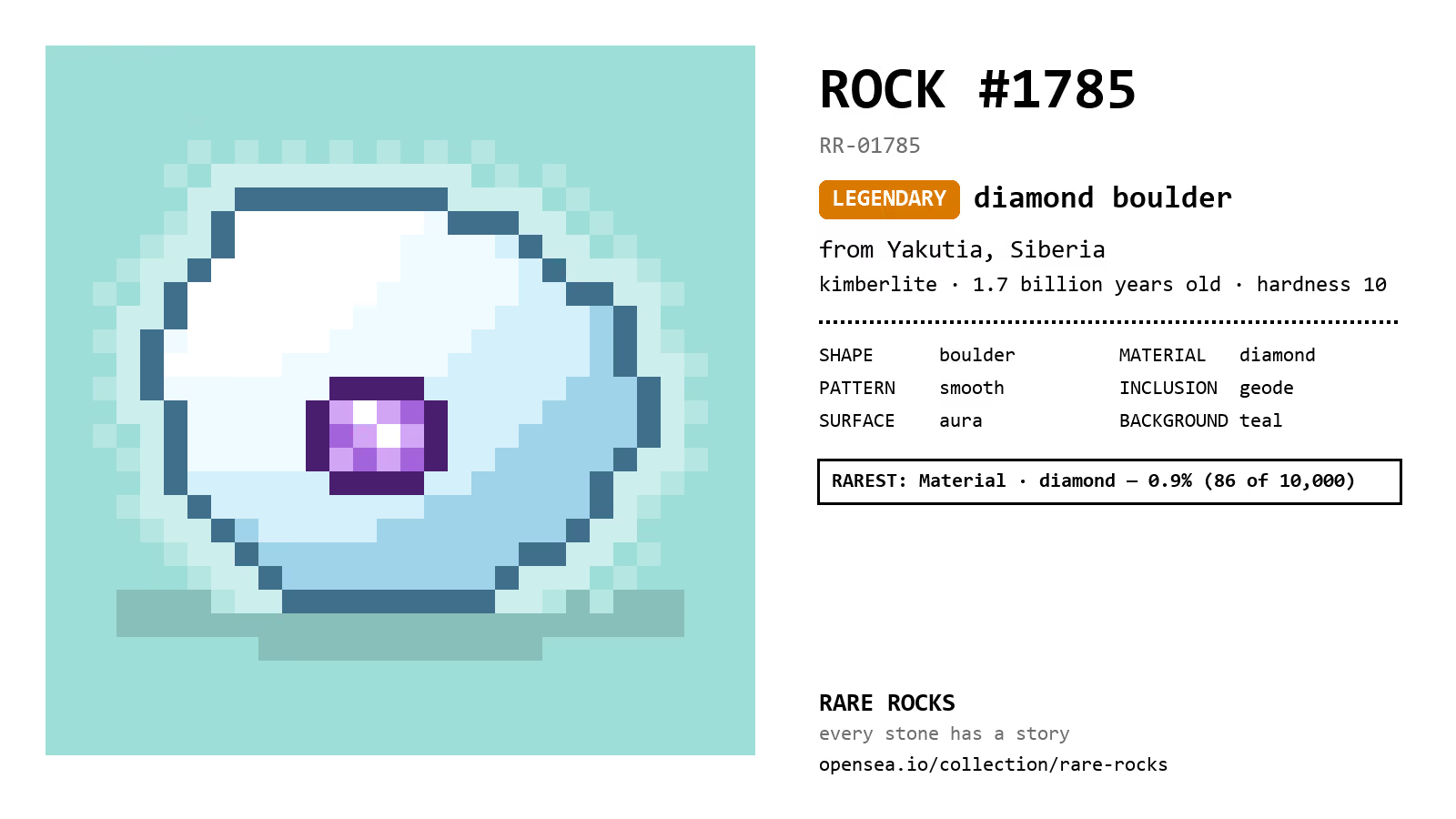

A diamond boulder from Yakutia with an open geode at its core. One of 7 diamonds with a geode.

A diamond boulder from Jwaneng, Botswana, crowned with a crystal and glowing with an aura. 3.2 billion years old.

Diamonds stacked into a cairn, touched by lichen. One of only 4 diamond cairns in the collection.

Lava with burning orange veins and an open geode, surrounded by sparkles. From Stromboli, only 38 years old.

Moonstone crystals with a glowing vein and frost. From Meetiyagoda, Sri Lanka, 520 million years old.

Every rock is built from 6 visual traits — Shape, Material, Pattern, Inclusion, Surface and Background — with 64 possible values. On top of that, each stone has its story traits: Rarity, Origin, Found at, Age and Hardness.
Rarity comes from the material. Most rocks are Common granite, sandstone and basalt. Only 464 are Legendary — moonstone, lava and diamond — and there are just 86 diamonds in the whole collection.
Any two rocks differ in at least two visual traits, and every stone has its own silhouette. Every rock also has its own description: what it is, where it was found, how old it is and how hard it is.


Rare Rocks is a collection of 10,000 pixel stones, each one drawn by code — no AI. Granite and basalt, amethyst and ruby, lava that cooled a few years ago and diamonds three billion years old. No two are alike.

Every rock in the collection was found somewhere real. Amethyst from the geodes of Artigas, rubies from the Mogok Valley, lapis from the mountains of Afghanistan, meteorites from the fields where they fell — 65 real places in all.
Each stone carries its own record: where it was found, how it formed, how old it is and how hard it is. Some are a few years old, still warm from the volcano. Some are older than life on Earth.

Two diamonds side by side from Golconda, the land of legendary diamonds, wrapped in a soft aura. 2.6 billion years old.

Cracked diamond crystals from Kimberley, surrounded by sparkles. One of only 8 diamond crystal clusters.

A diamond boulder from Yakutia with an open geode at its core. One of 7 diamonds with a geode.

A diamond boulder from Jwaneng, Botswana, crowned with a crystal and glowing with an aura. 3.2 billion years old.

Diamonds stacked into a cairn, touched by lichen. One of only 4 diamond cairns in the collection.

Lava with burning orange veins and an open geode, surrounded by sparkles. From Stromboli, only 38 years old.

Moonstone crystals with a glowing vein and frost. From Meetiyagoda, Sri Lanka, 520 million years old.

Every rock is built from 6 visual traits — Shape, Material, Pattern, Inclusion, Surface and Background — with 64 possible values. On top of that, each stone has its story traits: Rarity, Origin, Found at, Age and Hardness.
Rarity comes from the material. Most rocks are Common granite, sandstone and basalt. Only 464 are Legendary — moonstone, lava and diamond — and there are just 86 diamonds in the whole collection.
Any two rocks differ in at least two visual traits, and every stone has its own silhouette. Every rock also has its own description: what it is, where it was found, how old it is and how hard it is.

Rare Rocks is a collection of 10,000 pixel stones, each one drawn by code — no AI. Granite and basalt, amethyst and ruby, lava that cooled a few years ago and diamonds three billion years old. No two are alike.

Every rock in the collection was found somewhere real. Amethyst from the geodes of Artigas, rubies from the Mogok Valley, lapis from the mountains of Afghanistan, meteorites from the fields where they fell — 65 real places in all.
Each stone carries its own record: where it was found, how it formed, how old it is and how hard it is. Some are a few years old, still warm from the volcano. Some are older than life on Earth.

Two diamonds side by side from Golconda, the land of legendary diamonds, wrapped in a soft aura. 2.6 billion years old.

Cracked diamond crystals from Kimberley, surrounded by sparkles. One of only 8 diamond crystal clusters.

A diamond boulder from Yakutia with an open geode at its core. One of 7 diamonds with a geode.

A diamond boulder from Jwaneng, Botswana, crowned with a crystal and glowing with an aura. 3.2 billion years old.

Diamonds stacked into a cairn, touched by lichen. One of only 4 diamond cairns in the collection.

Lava with burning orange veins and an open geode, surrounded by sparkles. From Stromboli, only 38 years old.

Moonstone crystals with a glowing vein and frost. From Meetiyagoda, Sri Lanka, 520 million years old.

Every rock is built from 6 visual traits — Shape, Material, Pattern, Inclusion, Surface and Background — with 64 possible values. On top of that, each stone has its story traits: Rarity, Origin, Found at, Age and Hardness.
Rarity comes from the material. Most rocks are Common granite, sandstone and basalt. Only 464 are Legendary — moonstone, lava and diamond — and there are just 86 diamonds in the whole collection.
Any two rocks differ in at least two visual traits, and every stone has its own silhouette. Every rock also has its own description: what it is, where it was found, how old it is and how hard it is.


