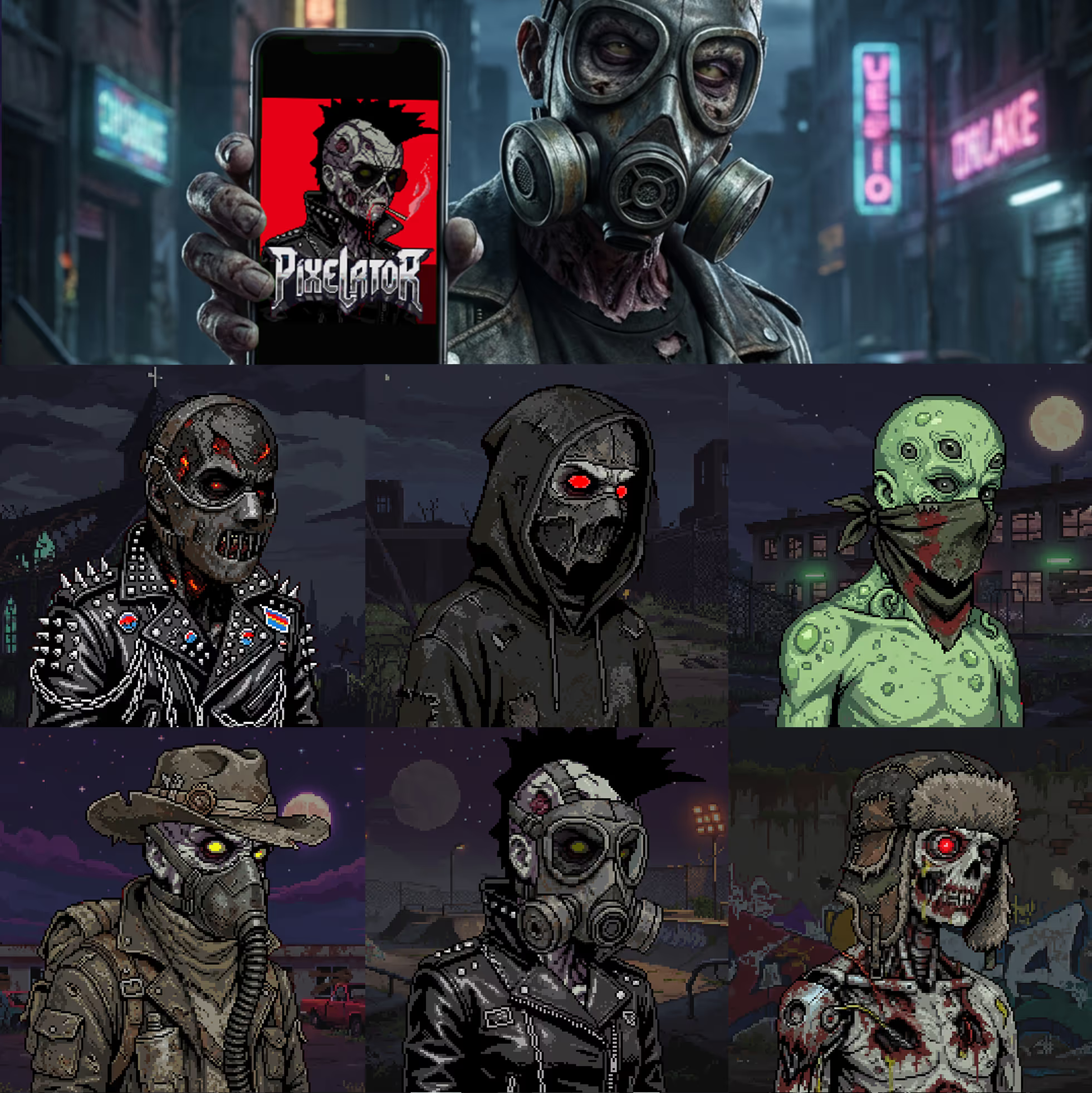
OpenSea Mobile is live: Trade everything, together.
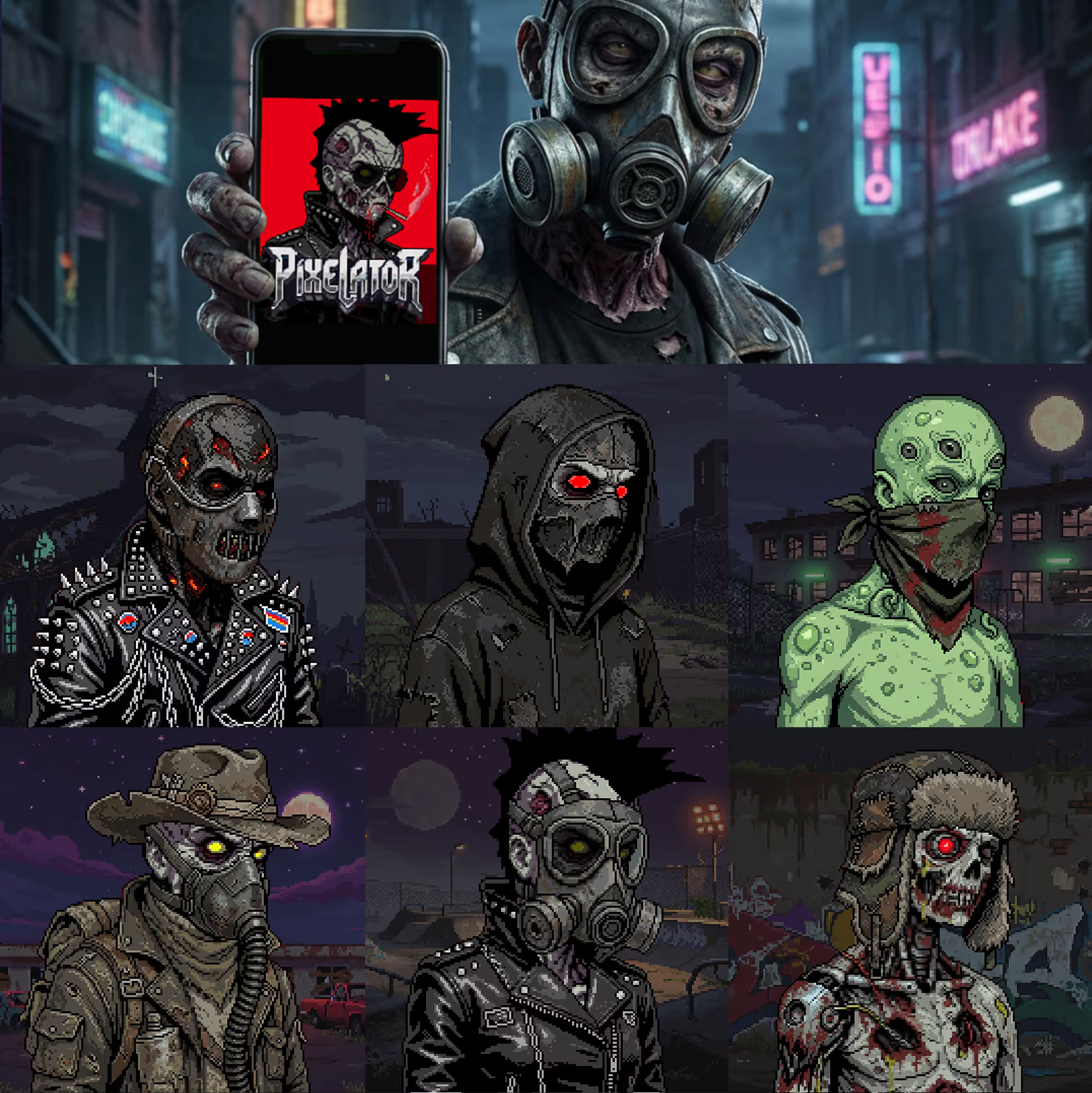
Pixelator is not just an NFT collection it is a narrative ecosystem built around decay, mutation, and the persistence of identity in a post-collapse world. At its core, the project expands into 19 distinct types of undead, each defined by varying stages of decomposition, damage, and corruption. Vampires, mutants, spectres, infected, and biomechanical hybrids coexist in a fractured hierarchy where biology no longer follows natural rules, but instead evolves through visual and narrative deterioration.
Alongside the undead, the collection introduces three types of human survivors. Numerically in the minority, they represent the last fragmented trace of humanity within this broken world.
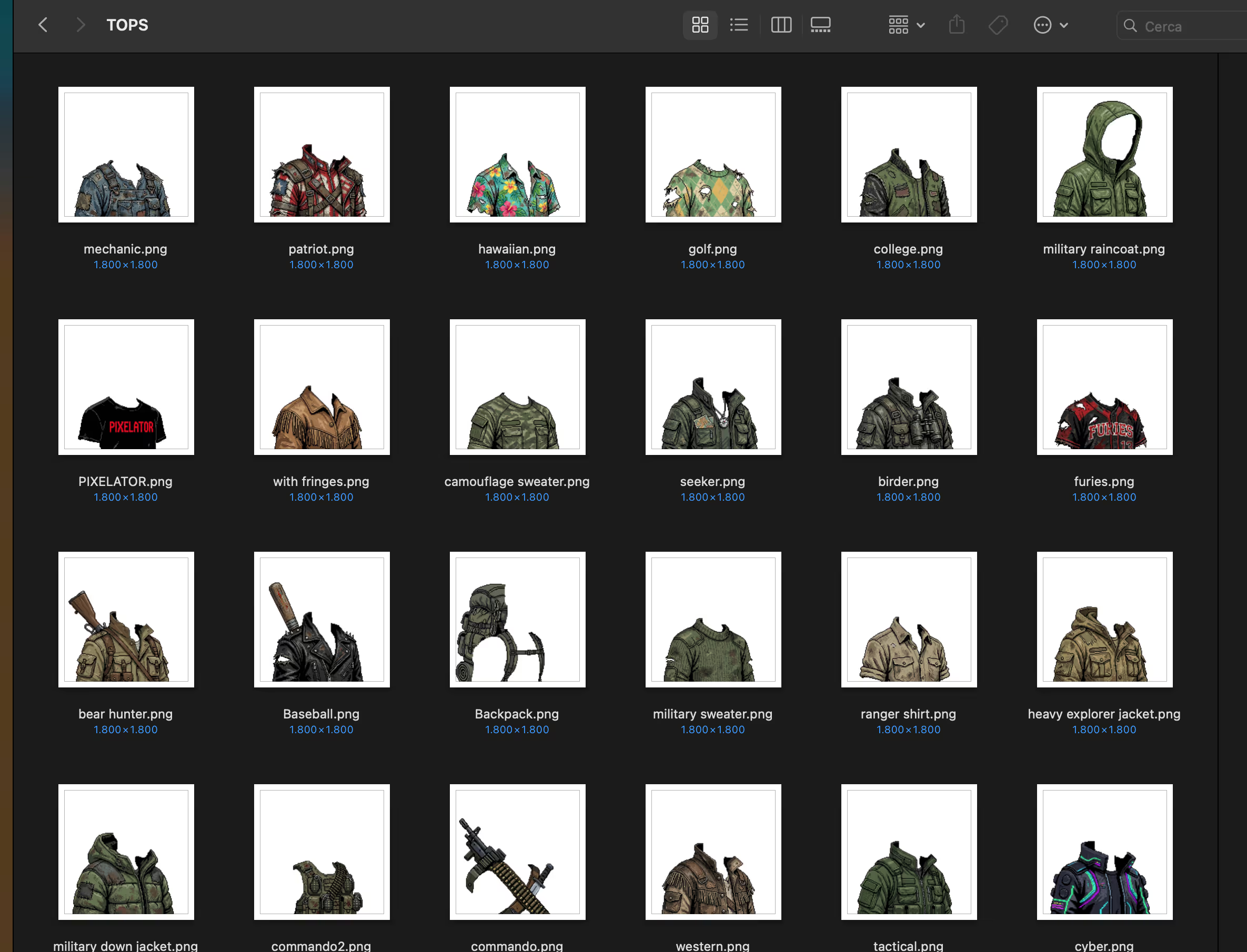
From a technical and collectible standpoint, Pixelator features over 200 total traits, creating a deep and highly diverse visual system. Core trait categories include Tops, Head Accessories, Hair, Face Accessories, Eye Accessories and Backgrounds. The Tops category alone contains 50+ variations, including rare items such as Balaclava, Skull Mask, and Hoodie. Survivors also include exclusive and rare traits, designed to differentiate them not only narratively but also in rarity and collectible value.
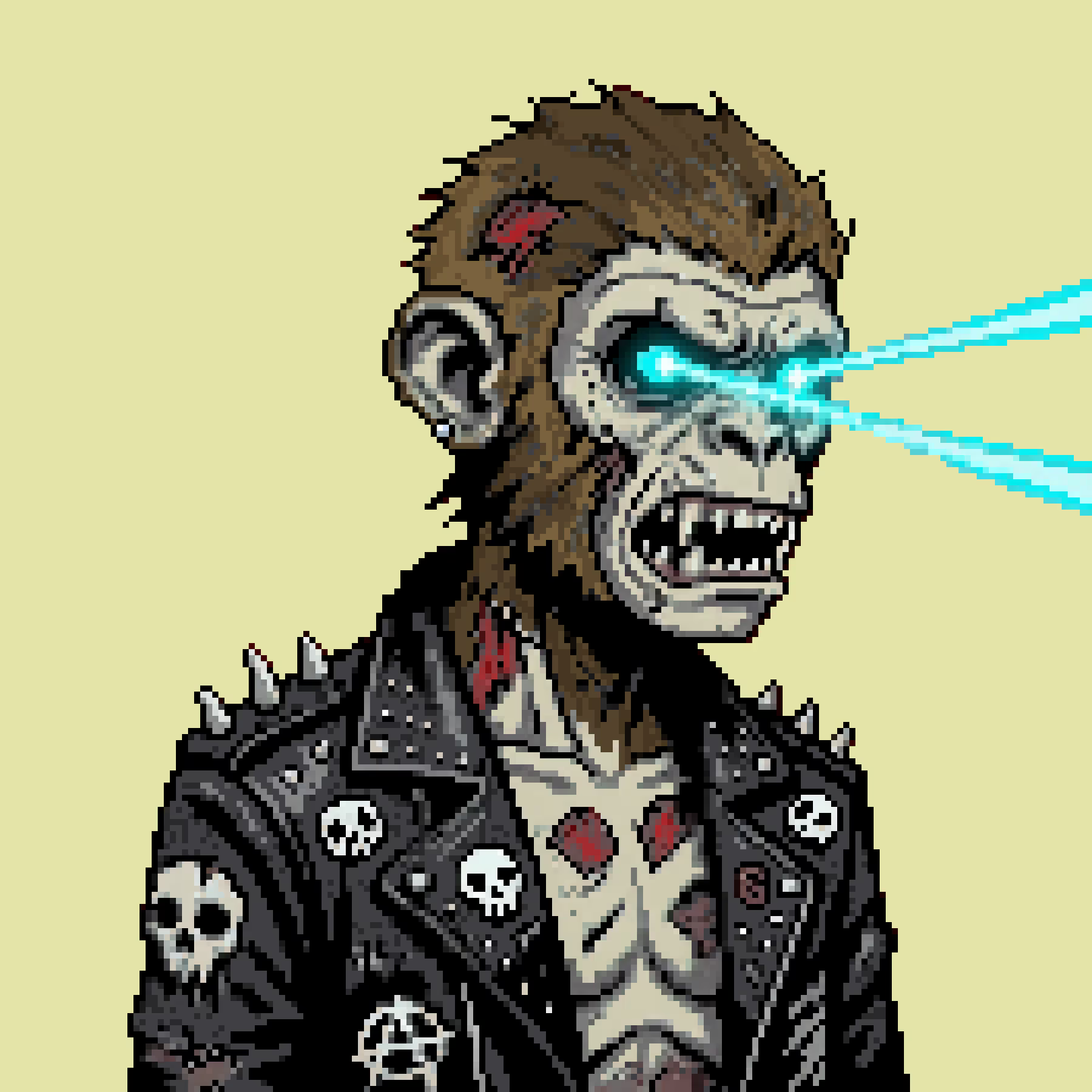
The collection includes 14 1/1 artwork.
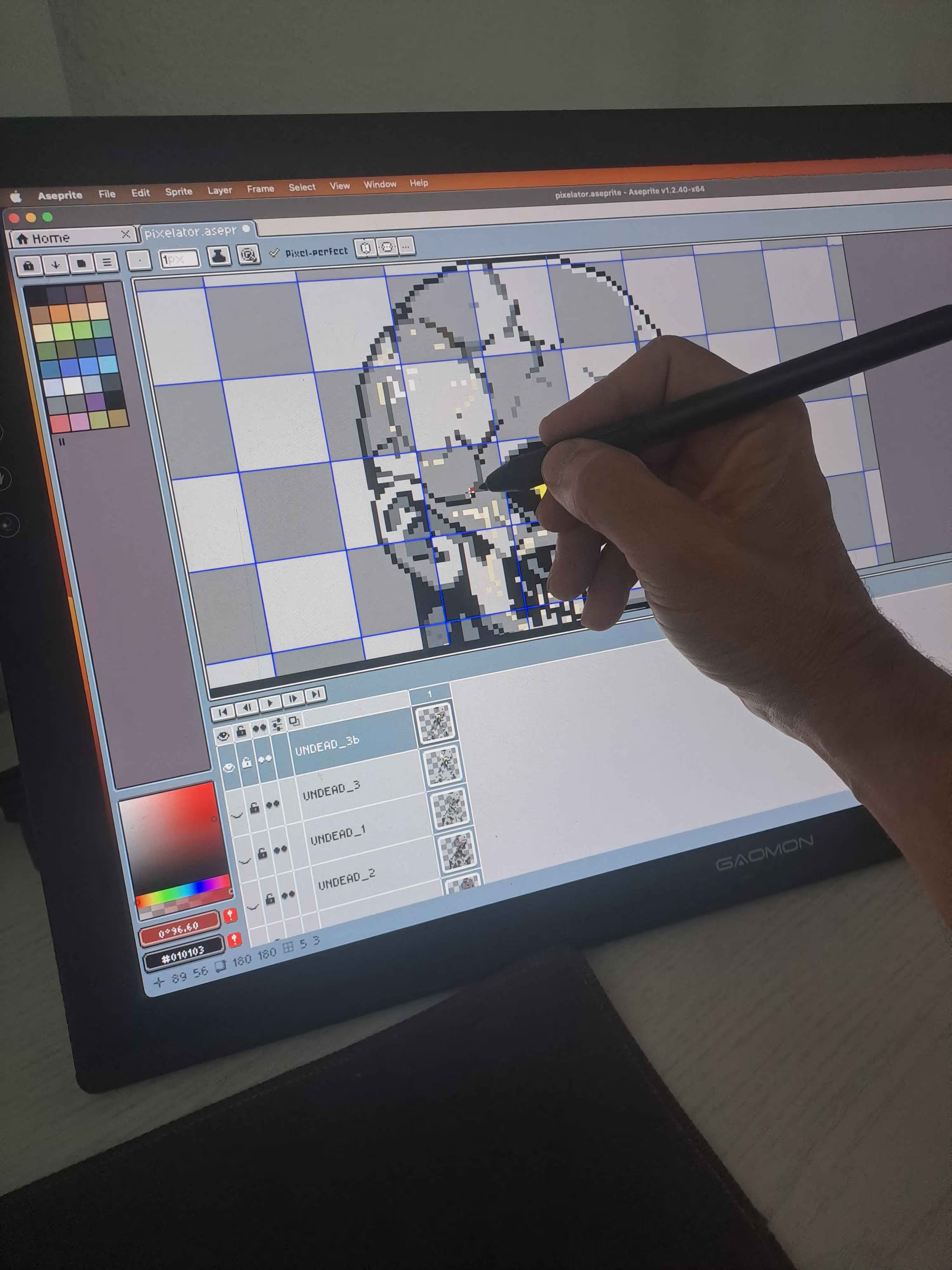
I'm trying to describe my workflow and pixel art style, and I hope people aren't so quick to assume that work like this can't be created by hand. First, I work with a graphics tablet and a Gaomon pen. My process begins with a simple black pencil tool, which I use to sketch the character and define its outlines. Next, I apply the base colors and main shadows, then gradually start working on the texture using the "spray" technique. The study of texture has always fascinated me, especially in pixel art, which is generally quite minimal. In my case, out of personal preference, I wanted to make it more organic, with a wide range of shades and imperfections, aiming for a result closer to a realistic rendering or at least one with a much broader color range.
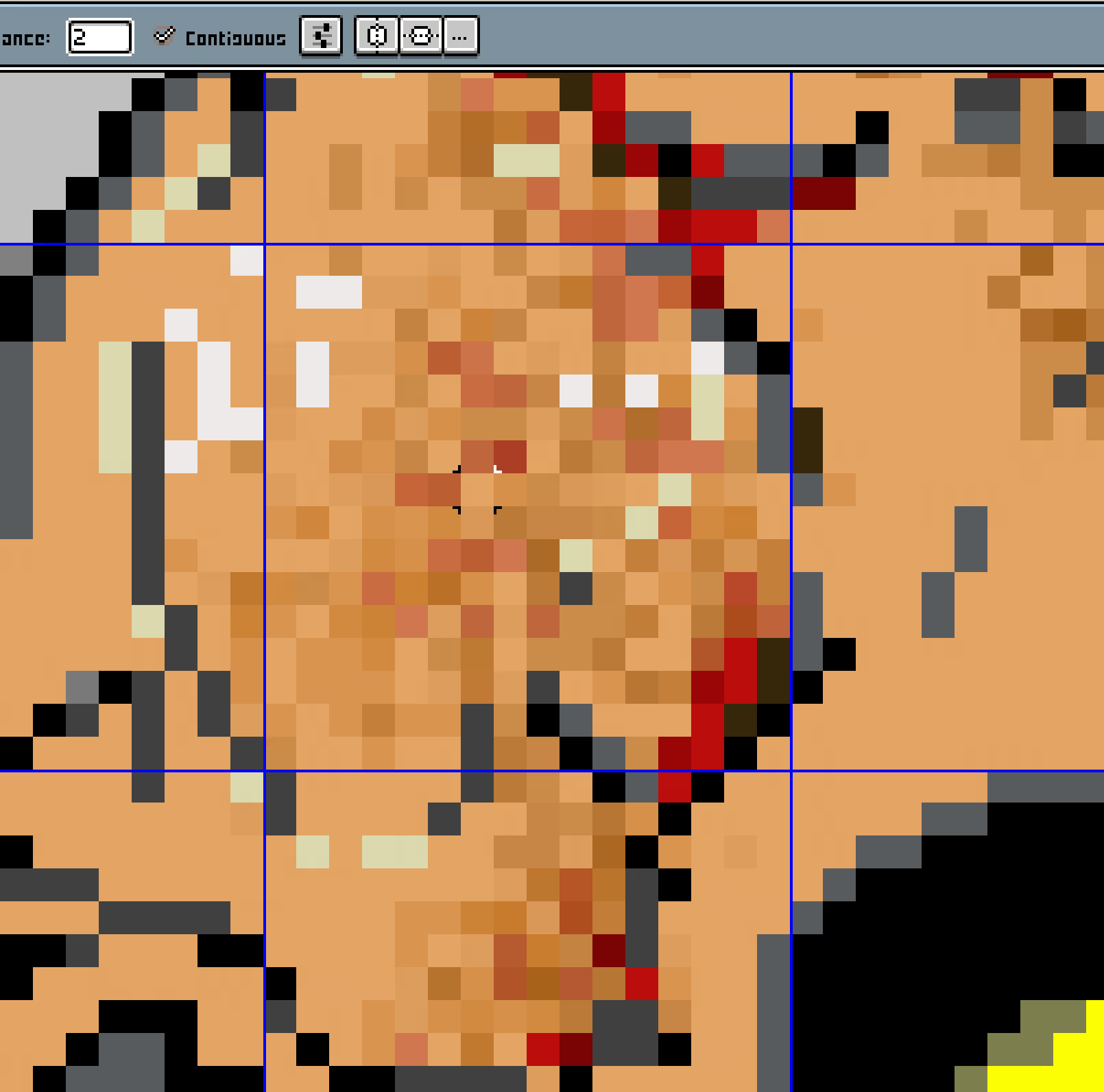
My pixel art technique is heavily based on the use of the Spray Tool with custom settings (Ink: Alpha Compositing, Opacity between 50% and 100%, with the brush size adjusted depending on the area being worked on). This approach allows me to build multiple layers of color and generate a wide range of tones and transitions directly within the artwork. The result is a level of color variation and blending that would be extremely difficult, time-consuming, or nearly impossible to achieve using only the traditional Pencil Tool approach commonly associated with pixel art.
My pixel art technique is heavily based on the use of the Spray Tool with custom settings (Ink: Alpha Compositing, Opacity between 50% and 100%, with the brush size adjusted depending on the area being worked on). This approach allows me to build multiple layers of color and generate a wide range of tones and transitions directly within the artwork. The result is a level of color variation and blending that would be extremely difficult, time-consuming, or nearly impossible to achieve using only the traditional Pencil Tool approach commonly associated with pixel art.
I work in Aseprite using custom scripts developed specifically for my workflow. The project is built on a 180×180 pixel grid, with each asset later exported at a resolution of 1800×1800 pixels. The collection is composed of numerous handcrafted traits and attributes, all created individually before being organized into layers. These layers were then imported into Visual Studio Code, where the generative system was used to assemble the final collection of 2,999 Pixelators.