
Manuel Pereira da Silva's work has abstract aesthetic tendencies, with the human figure as the main theme and sub-themes including: man, woman, couples, family, and motherhood. Generally, the creative process begins with one or more drawings on paper, usually A4 sheets, which can later be transferred to a larger format like cardboard. Then it can be moved to canvas, first drawing in pencil and only then painting, using various materials: gouache, watercolor, India ink, or oil. Finally, sculpture can be used, first in clay and then in plaster on an aluminum frame, only resorting to bronze for commissions. The purpose of all these studies, mostly done in ballpoint pen (Bic), but sometimes in pencil or crayon, is to transform them into sculptures.
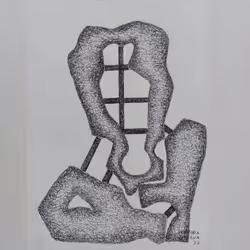
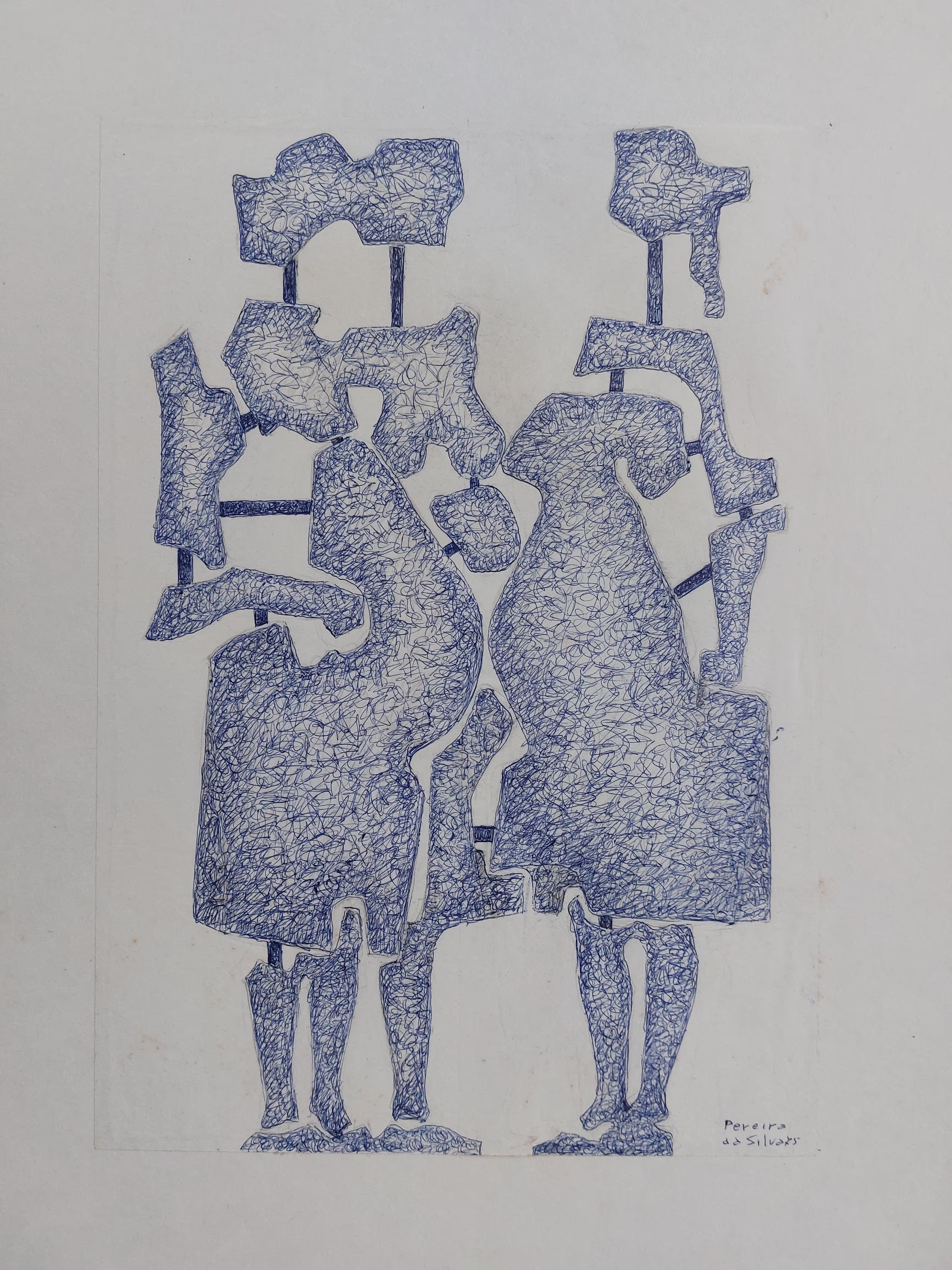
Manuel Pereira da Silva's work has abstract aesthetic tendencies, with the human figure as the main theme and sub-themes including: man, woman, couples, family, and motherhood. Generally, the creative process begins with one or more drawings on paper, usually A4 sheets, which can later be transferred to a larger format like cardboard. Then it can be moved to canvas, first drawing in pencil and only then painting, using various materials: gouache, watercolor, India ink, or oil. Finally, sculpture can be used, first in clay and then in plaster on an aluminum frame, only resorting to bronze for commissions. The purpose of all these studies, mostly done in ballpoint pen (Bic), but sometimes in pencil or crayon, is to transform them into sculptures.

Manuel Pereira da Silva's work has abstract aesthetic tendencies, with the human figure as the main theme and sub-themes including: man, woman, couples, family, and motherhood. Generally, the creative process begins with one or more drawings on paper, usually A4 sheets, which can later be transferred to a larger format like cardboard. Then it can be moved to canvas, first drawing in pencil and only then painting, using various materials: gouache, watercolor, India ink, or oil. Finally, sculpture can be used, first in clay and then in plaster on an aluminum frame, only resorting to bronze for commissions. The purpose of all these studies, mostly done in ballpoint pen (Bic), but sometimes in pencil or crayon, is to transform them into sculptures.

Manuel Pereira da Silva's work has abstract aesthetic tendencies, with the human figure as the main theme and sub-themes including: man, woman, couples, family, and motherhood. Generally, the creative process begins with one or more drawings on paper, usually A4 sheets, which can later be transferred to a larger format like cardboard. Then it can be moved to canvas, first drawing in pencil and only then painting, using various materials: gouache, watercolor, India ink, or oil. Finally, sculpture can be used, first in clay and then in plaster on an aluminum frame, only resorting to bronze for commissions. The purpose of all these studies, mostly done in ballpoint pen (Bic), but sometimes in pencil or crayon, is to transform them into sculptures.

Manuel Pereira da Silva's work has abstract aesthetic tendencies, with the human figure as the main theme and sub-themes including: man, woman, couples, family, and motherhood. Generally, the creative process begins with one or more drawings on paper, usually A4 sheets, which can later be transferred to a larger format like cardboard. Then it can be moved to canvas, first drawing in pencil and only then painting, using various materials: gouache, watercolor, India ink, or oil. Finally, sculpture can be used, first in clay and then in plaster on an aluminum frame, only resorting to bronze for commissions. The purpose of all these studies, mostly done in ballpoint pen (Bic), but sometimes in pencil or crayon, is to transform them into sculptures.

Manuel Pereira da Silva's work has abstract aesthetic tendencies, with the human figure as the main theme and sub-themes including: man, woman, couples, family, and motherhood. Generally, the creative process begins with one or more drawings on paper, usually A4 sheets, which can later be transferred to a larger format like cardboard. Then it can be moved to canvas, first drawing in pencil and only then painting, using various materials: gouache, watercolor, India ink, or oil. Finally, sculpture can be used, first in clay and then in plaster on an aluminum frame, only resorting to bronze for commissions. The purpose of all these studies, mostly done in ballpoint pen (Bic), but sometimes in pencil or crayon, is to transform them into sculptures.
