Discover
Collections
Tokens
Swap
Drops
Activity
Rewards
Tools
Beta
Studio
Profile
/
Items
Holders
Activity
Analytics
Aggregating
Networks
Terms of Service
Privacy Policy
$2,681.56
$2,681.56
Live Mints
Minter
Price
Qty
Time
Live Sales
Item
Price
From
Time
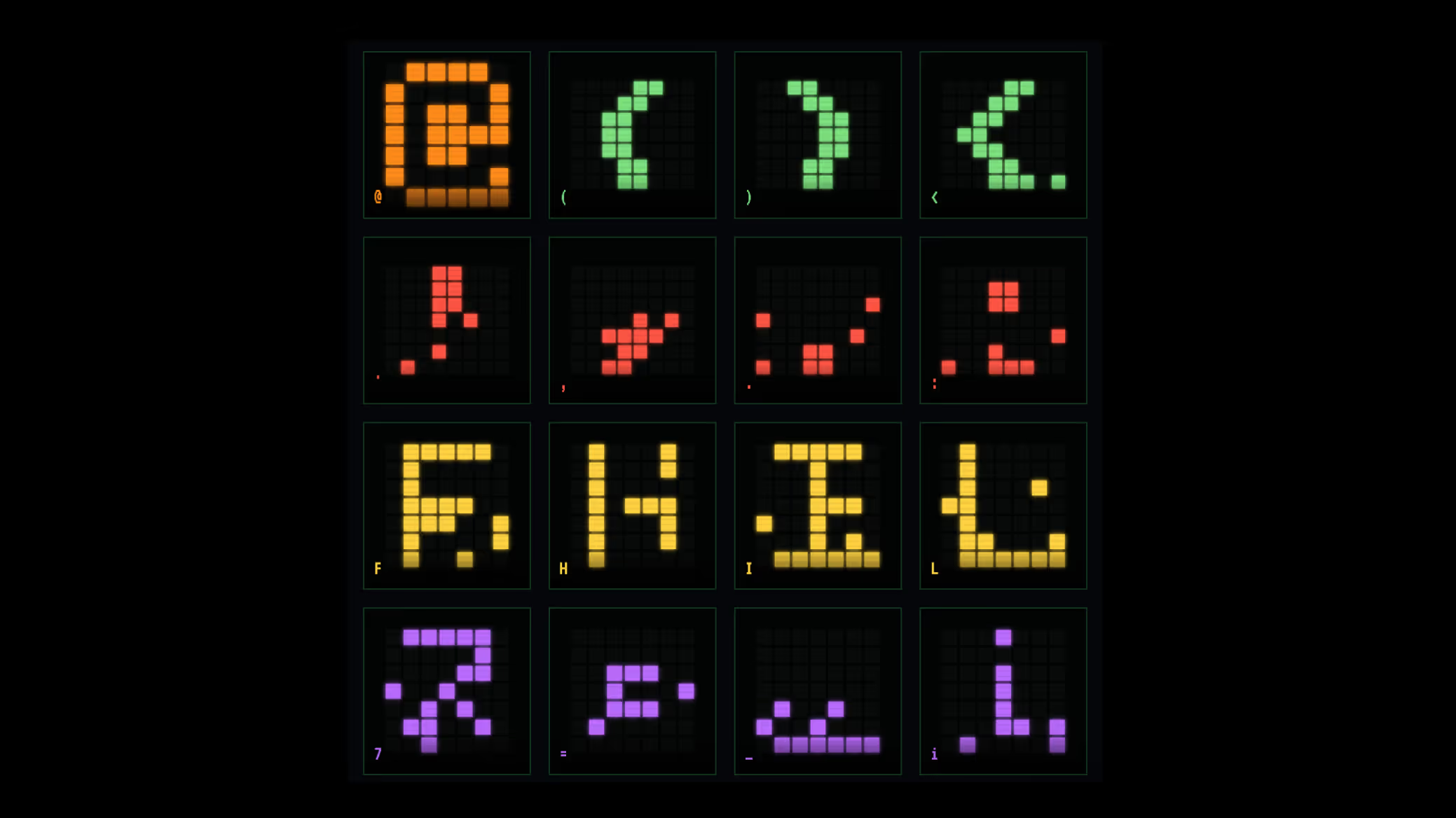
PATTERN RETRIEVAL is encoded memory

Every printable ASCII character within PATTERN RETRIEVAL is a memory under pressure.

The form is stored once and then deliberately ruined: cells flipped at random until the shape dissolves into static. What follows is not drawing but remembering.

The network has no picture to copy from; it has only the relationships it learned, and it feels its way back down the slope of its own energy until a familiar shape settles out of the noise.

I am drawn to that moment of settling, the passes where tension transforms into resolve.
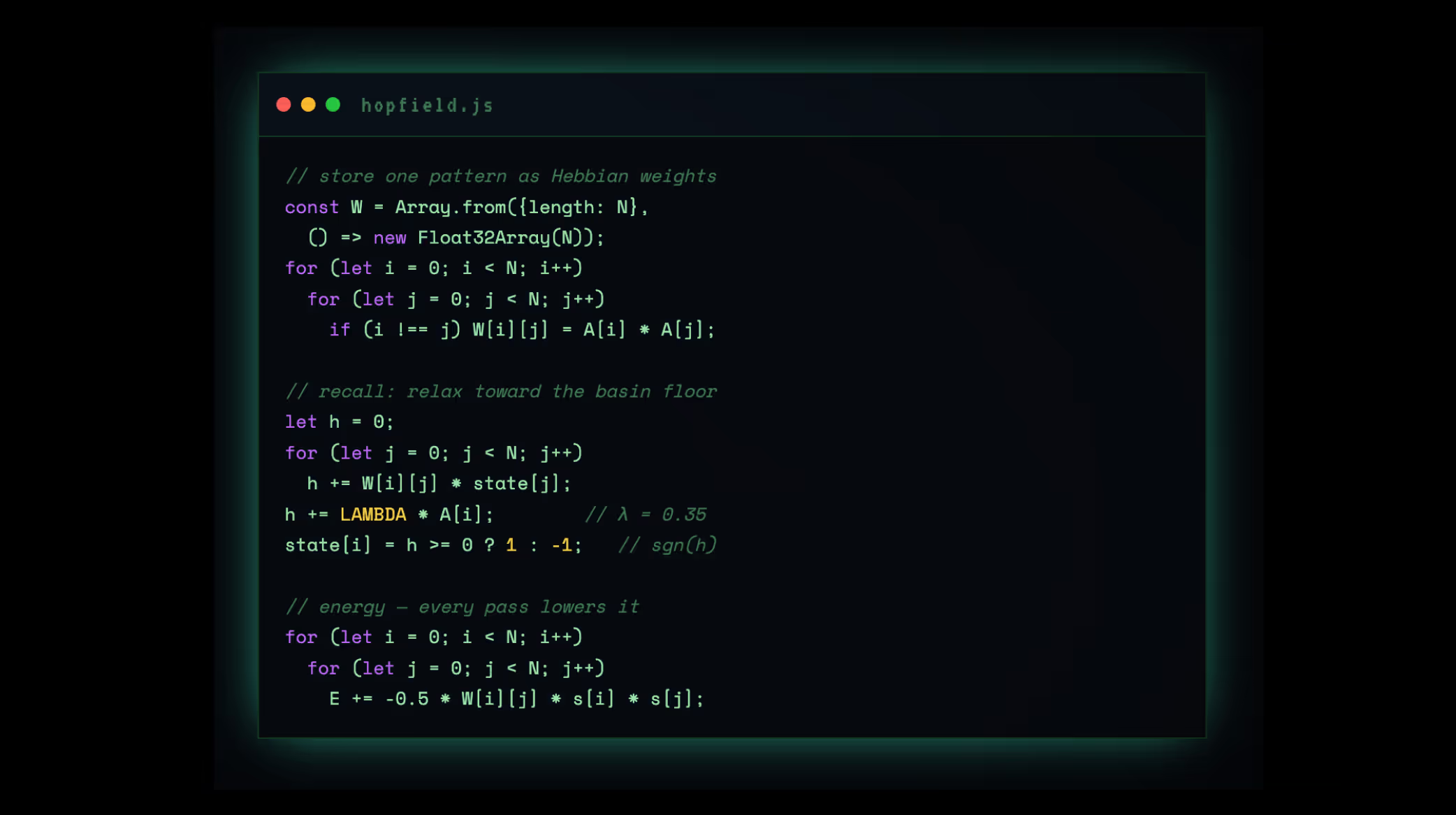
Each pass mimics human recall

We tend to think of memory as storage, but a Hopfield network insists it is something more active and more fragile: a basin you fall into, a pattern that reasserts itself only because the parts agree on what they used to be.

There's purposefully a small bias built into the coded recall.

The Lambda (set to 0.35) gives each neuron a quiet pull toward the stored pattern when it isn't sure which way to flip.

But this is because human memory doesn't work in a vacuum.

We rehearse the things we want to keep. We write them out, say them to ourselves, come back to them when nothing else is asking us to.

The Lambda does the same thing for the network. A small lean toward what the pattern used to be, applied every pass, quiet enough that the recall still has to do most of the work.

Not a flaw in the system. The will to remember, written into its core.
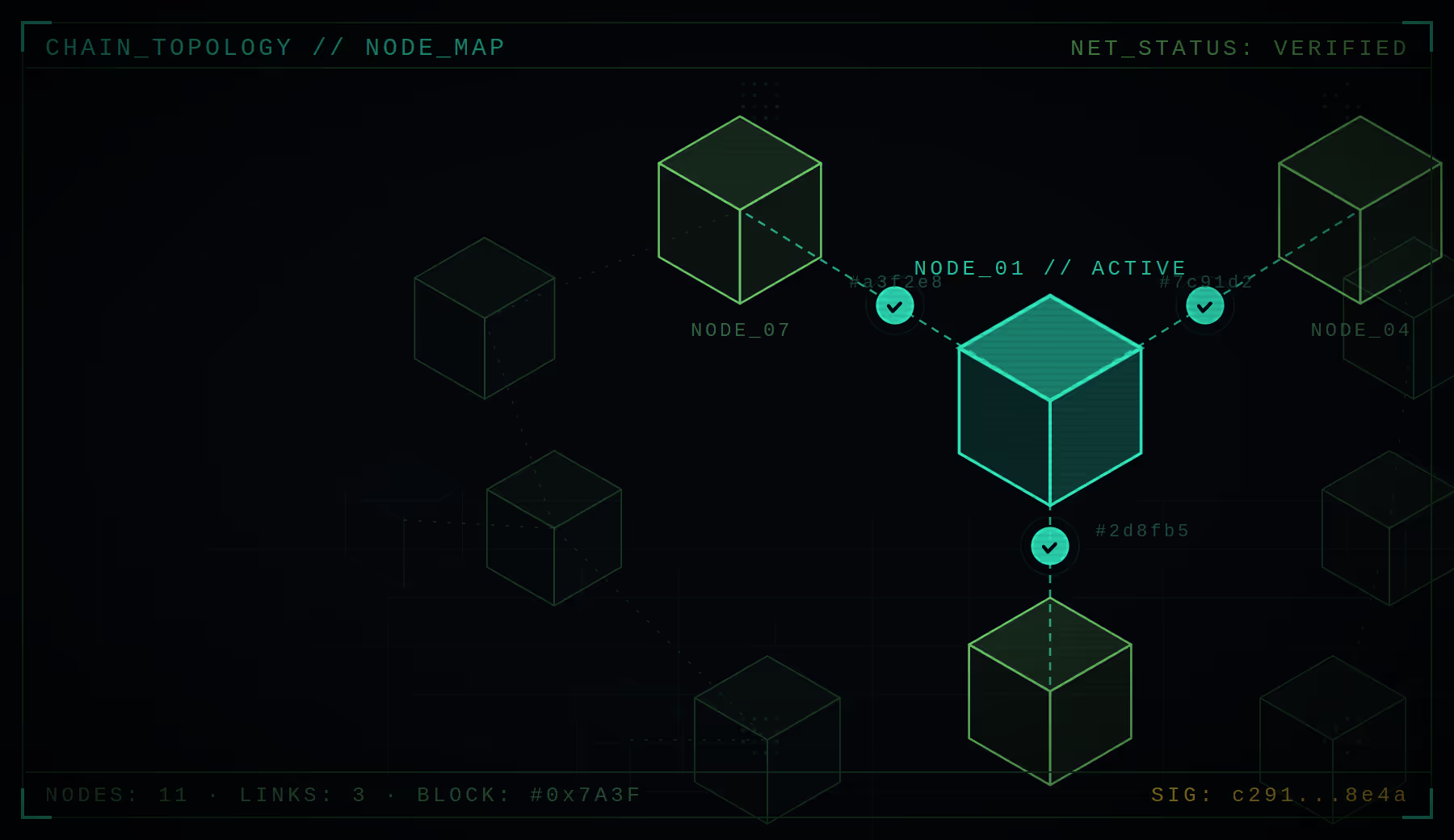
PATTERN RETRIEVAL is fully onchain

Each HTML file is written to Ethereum itself as contract bytecode.

The implementation uses a SeaDrop extension built by @cartyisme that pairs OpenSea's mint infrastructure with SSTORE2, a way of writing data as if it were code.

The storage limit per token is tight, which forces a certain discipline onto the artist. Everything that makes one of these artworks has to fit. The music engine, the CRT shader, the network itself, all squeezed into the same envelope. The constraint isn't incidental. A piece about holding a shape against entropy should probably try to do the same.

Each piece is a single, self-contained HTML file, the network, its noise, and its score all in one place, looping its recall in an endless repeat.
PATTERN RETRIEVAL is fully onchain

Each HTML file is written to Ethereum itself as contract bytecode.

The implementation uses a SeaDrop extension built by @cartyisme that pairs OpenSea's mint infrastructure with SSTORE2, a way of writing data as if it were code.

The storage limit per token is tight, which forces a certain discipline onto the artist. Everything that makes one of these artworks has to fit. The music engine, the CRT shader, the network itself, all squeezed into the same envelope. The constraint isn't incidental. A piece about holding a shape against entropy should probably try to do the same.

Each piece is a single, self-contained HTML file, the network, its noise, and its score all in one place, looping its recall in an endless repeat.

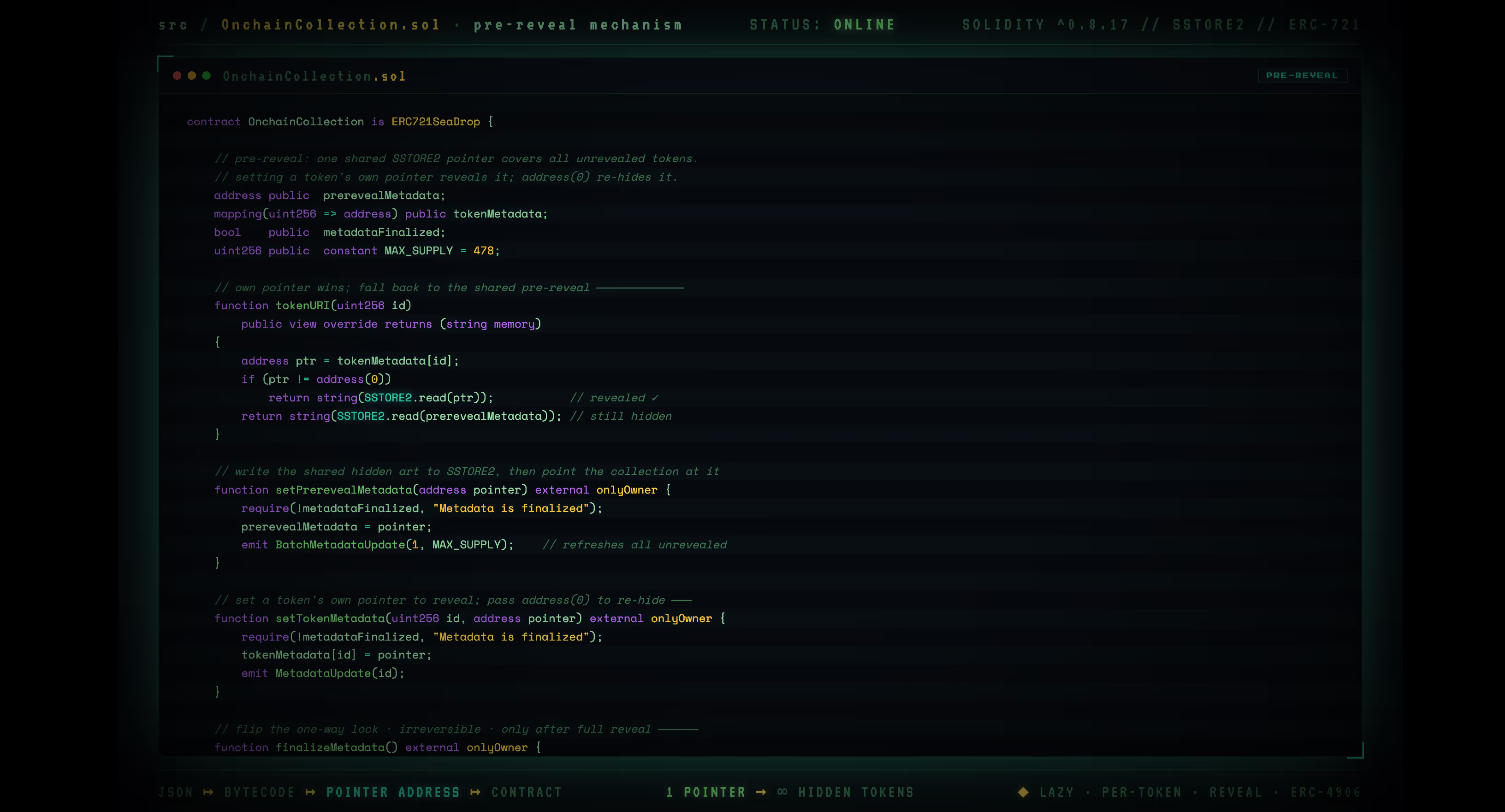
Fully onchain pre-reveal

The collection might be the first-ever to use a single shared SSTORE2 pointer (prerevealMetadata) that all unrevealed tokens fall back to, meaning every token displays the same hidden artwork until individually revealed.

When tokenURI() is called, it checks whether a token has its own pointer set — if so, it returns that token's unique JSON; if not, it serves the shared pre-reveal metadata. This makes reveal flexible: you can unveil the entire collection at once by uploading all per-token metadata in one sweep, or do it gradually token by token.

A token can even be re-hidden by setting its pointer back to address(0), which returns it to the pre-reveal state — until finalizeMetadata() is called, which permanently locks all pointers and makes any still-hidden tokens show the pre-reveal art forever.

Fully onchain pre-reveal

The collection might be the first-ever to use a single shared SSTORE2 pointer (prerevealMetadata) that all unrevealed tokens fall back to, meaning every token displays the same hidden artwork until individually revealed.

When tokenURI() is called, it checks whether a token has its own pointer set — if so, it returns that token's unique JSON; if not, it serves the shared pre-reveal metadata. This makes reveal flexible: you can unveil the entire collection at once by uploading all per-token metadata in one sweep, or do it gradually token by token.

A token can even be re-hidden by setting its pointer back to address(0), which returns it to the pre-reveal state — until finalizeMetadata() is called, which permanently locks all pointers and makes any still-hidden tokens show the pre-reveal art forever.

ASCII and pixelation as deliberate choices

This set of printable ASCII characters are the most ordinary marks we have: letters, digits, and the punctuation we use every day without thinking.

Rendering them on simulated phosphor, behind the curve and glow of a screen that no longer exists, is asking what it costs to hold even the simplest form against entropy.

Each one carries its own small piece of generated music, so that recognition arrives as sound and image together. The instant the static resolves, the Hopfield network briefly sings.

Frequently Asked Questions
Who is included on the Allowlist?
All collectionsethereum collections

PATTERN RETRIEVAL

By asterism_eth
478
Jun 2026
5% creator fee
By asterism_eth
478
Jun 2026
5% creator fee
Floor price
$23.68
1d floor %-0%
Top offer
$2.15
24h volume
$0.00
Total volume
$89.8K
Listed68 (14.2%)
Owners (Unique)217 (45.4%)
Floor price
$23.68
1d floor %-0%
Top offer
$2.15
24h volume
$0.00
Total volume
$89.8K
Listed68 (14.2%)
Owners (Unique)217 (45.4%)

PATTERN RETRIEVAL
PATTERN RETRIEVAL

By asterism_eth
478
Jun 2026
5% creator fee
By asterism_eth
478
Jun 2026
5% creator fee
Explore
Items
Offers
Holders
Traits
Activity
Analytics
About

PATTERN RETRIEVAL

By asterism_eth
478
Jun 2026
5% creator fee
By asterism_eth
478
Jun 2026
5% creator fee
Floor price
$23.68
1d floor %-0%
Top offer
$2.15
24h volume
$0.00
Total volume
$89.8K
Listed68 (14.2%)
Owners (Unique)217 (45.4%)
Floor price
$23.68
1d floor %-0%
Top offer
$2.15
24h volume
$0.00
Total volume
$89.8K
Listed68 (14.2%)
Owners (Unique)217 (45.4%)

PATTERN RETRIEVAL
PATTERN RETRIEVAL

By asterism_eth
478
Jun 2026
5% creator fee
By asterism_eth
478
Jun 2026
5% creator fee
Explore
Items
Offers
Holders
Traits
Activity
Analytics
About
Live Mints
Minter
Price
Qty
Time
Live Sales
Item
Price
From
Time
PATTERN RETRIEVAL is encoded memory

Every printable ASCII character within PATTERN RETRIEVAL is a memory under pressure.

The form is stored once and then deliberately ruined: cells flipped at random until the shape dissolves into static. What follows is not drawing but remembering.

The network has no picture to copy from; it has only the relationships it learned, and it feels its way back down the slope of its own energy until a familiar shape settles out of the noise.

I am drawn to that moment of settling, the passes where tension transforms into resolve.

Each pass mimics human recall

We tend to think of memory as storage, but a Hopfield network insists it is something more active and more fragile: a basin you fall into, a pattern that reasserts itself only because the parts agree on what they used to be.

There's purposefully a small bias built into the coded recall.

The Lambda (set to 0.35) gives each neuron a quiet pull toward the stored pattern when it isn't sure which way to flip.

But this is because human memory doesn't work in a vacuum.

We rehearse the things we want to keep. We write them out, say them to ourselves, come back to them when nothing else is asking us to.

The Lambda does the same thing for the network. A small lean toward what the pattern used to be, applied every pass, quiet enough that the recall still has to do most of the work.

Not a flaw in the system. The will to remember, written into its core.

PATTERN RETRIEVAL is fully onchain

Each HTML file is written to Ethereum itself as contract bytecode.

The implementation uses a SeaDrop extension built by @cartyisme that pairs OpenSea's mint infrastructure with SSTORE2, a way of writing data as if it were code.

The storage limit per token is tight, which forces a certain discipline onto the artist. Everything that makes one of these artworks has to fit. The music engine, the CRT shader, the network itself, all squeezed into the same envelope. The constraint isn't incidental. A piece about holding a shape against entropy should probably try to do the same.

Each piece is a single, self-contained HTML file, the network, its noise, and its score all in one place, looping its recall in an endless repeat.

PATTERN RETRIEVAL is fully onchain

Each HTML file is written to Ethereum itself as contract bytecode.

The implementation uses a SeaDrop extension built by @cartyisme that pairs OpenSea's mint infrastructure with SSTORE2, a way of writing data as if it were code.

The storage limit per token is tight, which forces a certain discipline onto the artist. Everything that makes one of these artworks has to fit. The music engine, the CRT shader, the network itself, all squeezed into the same envelope. The constraint isn't incidental. A piece about holding a shape against entropy should probably try to do the same.

Each piece is a single, self-contained HTML file, the network, its noise, and its score all in one place, looping its recall in an endless repeat.

Fully onchain pre-reveal

The collection might be the first-ever to use a single shared SSTORE2 pointer (prerevealMetadata) that all unrevealed tokens fall back to, meaning every token displays the same hidden artwork until individually revealed.

When tokenURI() is called, it checks whether a token has its own pointer set — if so, it returns that token's unique JSON; if not, it serves the shared pre-reveal metadata. This makes reveal flexible: you can unveil the entire collection at once by uploading all per-token metadata in one sweep, or do it gradually token by token.

A token can even be re-hidden by setting its pointer back to address(0), which returns it to the pre-reveal state — until finalizeMetadata() is called, which permanently locks all pointers and makes any still-hidden tokens show the pre-reveal art forever.

Fully onchain pre-reveal

The collection might be the first-ever to use a single shared SSTORE2 pointer (prerevealMetadata) that all unrevealed tokens fall back to, meaning every token displays the same hidden artwork until individually revealed.

When tokenURI() is called, it checks whether a token has its own pointer set — if so, it returns that token's unique JSON; if not, it serves the shared pre-reveal metadata. This makes reveal flexible: you can unveil the entire collection at once by uploading all per-token metadata in one sweep, or do it gradually token by token.

A token can even be re-hidden by setting its pointer back to address(0), which returns it to the pre-reveal state — until finalizeMetadata() is called, which permanently locks all pointers and makes any still-hidden tokens show the pre-reveal art forever.

ASCII and pixelation as deliberate choices

This set of printable ASCII characters are the most ordinary marks we have: letters, digits, and the punctuation we use every day without thinking.

Rendering them on simulated phosphor, behind the curve and glow of a screen that no longer exists, is asking what it costs to hold even the simplest form against entropy.

Each one carries its own small piece of generated music, so that recognition arrives as sound and image together. The instant the static resolves, the Hopfield network briefly sings.

Frequently Asked Questions
Live Mints
Minter
Price
Qty
Time
Live Sales
Item
Price
From
Time
PATTERN RETRIEVAL is encoded memory

Every printable ASCII character within PATTERN RETRIEVAL is a memory under pressure.

The form is stored once and then deliberately ruined: cells flipped at random until the shape dissolves into static. What follows is not drawing but remembering.

The network has no picture to copy from; it has only the relationships it learned, and it feels its way back down the slope of its own energy until a familiar shape settles out of the noise.

I am drawn to that moment of settling, the passes where tension transforms into resolve.

Each pass mimics human recall

We tend to think of memory as storage, but a Hopfield network insists it is something more active and more fragile: a basin you fall into, a pattern that reasserts itself only because the parts agree on what they used to be.

There's purposefully a small bias built into the coded recall.

The Lambda (set to 0.35) gives each neuron a quiet pull toward the stored pattern when it isn't sure which way to flip.

But this is because human memory doesn't work in a vacuum.

We rehearse the things we want to keep. We write them out, say them to ourselves, come back to them when nothing else is asking us to.

The Lambda does the same thing for the network. A small lean toward what the pattern used to be, applied every pass, quiet enough that the recall still has to do most of the work.

Not a flaw in the system. The will to remember, written into its core.

PATTERN RETRIEVAL is fully onchain

Each HTML file is written to Ethereum itself as contract bytecode.

The implementation uses a SeaDrop extension built by @cartyisme that pairs OpenSea's mint infrastructure with SSTORE2, a way of writing data as if it were code.

The storage limit per token is tight, which forces a certain discipline onto the artist. Everything that makes one of these artworks has to fit. The music engine, the CRT shader, the network itself, all squeezed into the same envelope. The constraint isn't incidental. A piece about holding a shape against entropy should probably try to do the same.

Each piece is a single, self-contained HTML file, the network, its noise, and its score all in one place, looping its recall in an endless repeat.

PATTERN RETRIEVAL is fully onchain

Each HTML file is written to Ethereum itself as contract bytecode.

The implementation uses a SeaDrop extension built by @cartyisme that pairs OpenSea's mint infrastructure with SSTORE2, a way of writing data as if it were code.

The storage limit per token is tight, which forces a certain discipline onto the artist. Everything that makes one of these artworks has to fit. The music engine, the CRT shader, the network itself, all squeezed into the same envelope. The constraint isn't incidental. A piece about holding a shape against entropy should probably try to do the same.

Each piece is a single, self-contained HTML file, the network, its noise, and its score all in one place, looping its recall in an endless repeat.

Fully onchain pre-reveal

The collection might be the first-ever to use a single shared SSTORE2 pointer (prerevealMetadata) that all unrevealed tokens fall back to, meaning every token displays the same hidden artwork until individually revealed.

When tokenURI() is called, it checks whether a token has its own pointer set — if so, it returns that token's unique JSON; if not, it serves the shared pre-reveal metadata. This makes reveal flexible: you can unveil the entire collection at once by uploading all per-token metadata in one sweep, or do it gradually token by token.

A token can even be re-hidden by setting its pointer back to address(0), which returns it to the pre-reveal state — until finalizeMetadata() is called, which permanently locks all pointers and makes any still-hidden tokens show the pre-reveal art forever.

Fully onchain pre-reveal

The collection might be the first-ever to use a single shared SSTORE2 pointer (prerevealMetadata) that all unrevealed tokens fall back to, meaning every token displays the same hidden artwork until individually revealed.

When tokenURI() is called, it checks whether a token has its own pointer set — if so, it returns that token's unique JSON; if not, it serves the shared pre-reveal metadata. This makes reveal flexible: you can unveil the entire collection at once by uploading all per-token metadata in one sweep, or do it gradually token by token.

A token can even be re-hidden by setting its pointer back to address(0), which returns it to the pre-reveal state — until finalizeMetadata() is called, which permanently locks all pointers and makes any still-hidden tokens show the pre-reveal art forever.

ASCII and pixelation as deliberate choices

This set of printable ASCII characters are the most ordinary marks we have: letters, digits, and the punctuation we use every day without thinking.

Rendering them on simulated phosphor, behind the curve and glow of a screen that no longer exists, is asking what it costs to hold even the simplest form against entropy.

Each one carries its own small piece of generated music, so that recognition arrives as sound and image together. The instant the static resolves, the Hopfield network briefly sings.

Frequently Asked Questions
Mint PATTERN RETRIEVAL
Available items
0
Live Mints
Minter
Price
Qty
Time
Live Sales
Item
Price
From
Time
Mint PATTERN RETRIEVAL
Items minted
478 / 478
Artist MintSold outAll items minted
View items
Mint schedule
  1. Ended
    Artist Mint
    Allowlist
    Started: Free | Limit 10 per wallet
  2. Ended
    Frens & Family
    Allowlist
    Started:
    $18.50
    | Limit 2 per wallet
  3. Ended
    Guaranteed
    Allowlist
    Started:
    $18.50
  4. Ended
    Public
    Public
    Started: Ended:
    $26.82
    | Limit 1 per wallet
Live Mints
Minter
Price
Qty
Time
Live Sales
Item
Price
From
Time
Mint PATTERN RETRIEVAL
Items minted
478 / 478
Artist MintSold outAll items minted
View items
Mint schedule
  1. Ended
    Artist Mint
    Allowlist
    Started: Free | Limit 10 per wallet
  2. Ended
    Frens & Family
    Allowlist
    Started:
    $18.50
    | Limit 2 per wallet
  3. Ended
    Guaranteed
    Allowlist
    Started:
    $18.50
  4. Ended
    Public
    Public
    Started: Ended:
    $26.82
    | Limit 1 per wallet
Live Mints
Minter
Price
Qty
Time
Live Sales
Item
Price
From
Time
No sales yet
Item
Price
From
Time
No mints yet
Minter
Price
Qty
Time
Item
Price
From
Time
219
Uppercase I
$3.16
87
Underscore
$19.01
69
Six
$3.97
68
Lowercase p
$4.72
212
Colon
$22.70
222
Uppercase Y
$11.24
437
Uppercase Z
$26.36
321
Uppercase Z
$26.36
222
Uppercase Y
$22.91
383
Uppercase U
$7.47
418
Vertical bar
$23.55
320
Uppercase S
$11.21
222
Uppercase Y
$10.85
290
Uppercase R
$11.76
449
Lowercase x
$27.08
268
Three
$23.37
301
Lowercase y
$23.37
190
Three
$13.54
301
Lowercase y
$12.64
191
Uppercase O
$13.54
Item
Price
From
Time
219
Uppercase I
$3.16
87
Underscore
$19.01
69
Six
$3.97
68
Lowercase p
$4.72
212
Colon
$22.70
222
Uppercase Y
$11.24
437
Uppercase Z
$26.36
321
Uppercase Z
$26.36
222
Uppercase Y
$22.91
383
Uppercase U
$7.47
418
Vertical bar
$23.55
320
Uppercase S
$11.21
222
Uppercase Y
$10.85
290
Uppercase R
$11.76
449
Lowercase x
$27.08
268
Three
$23.37
301
Lowercase y
$23.37
190
Three
$13.54
301
Lowercase y
$12.64
191
Uppercase O
$13.54
Minter
Price
Qty
Time
06e677
$0.55
1
432bb0
$0.83
1
c001ab
$0.83
1
1a4531
$0.83
1
dcabdb
$0.83
1
f7bdf1
$0.55
1
b62e10
$0.55
1
36b272
$0.55
1
15d522
$0.55
1
fdc5e9
$0.83
1
d649d6
$0.55
1
91bc7f
$0.83
1
fc29ee
$0.55
1
a15e87
$0.83
1
7b4c7f
$0.55
1
ee5637
$0.55
1
98da8b
$0.55
1
9eb382
$0.55
1
474ed5
$0.55
1
c7ef81
$16.52
1
0268be
$0.55
1
62fbd4
$0.83
1
077443
$0.55
1
94223a
$16.52
1
ac75ef
$0.83
1
4b607c
$0.83
1
685dd9
$0.55
1
73e312
$0.55
1
ab9b48
$0.55
1
bf2df3
$0.55
1
16773e
$0.83
1
236425
$0.83
1
Minter
Price
Qty
Time
06e677
$0.55
1
432bb0
$0.83
1
c001ab
$0.83
1
1a4531
$0.83
1
dcabdb
$0.83
1
f7bdf1
$0.55
1
b62e10
$0.55
1
36b272
$0.55
1
15d522
$0.55
1
fdc5e9
$0.83
1
d649d6
$0.55
1
91bc7f
$0.83
1
fc29ee
$0.55
1
a15e87
$0.83
1
7b4c7f
$0.55
1
ee5637
$0.55
1
98da8b
$0.55
1
9eb382
$0.55
1
474ed5
$0.55
1
c7ef81
$16.52
1
0268be
$0.55
1
62fbd4
$0.83
1
077443
$0.55
1
94223a
$16.52
1
ac75ef
$0.83
1
4b607c
$0.83
1
685dd9
$0.55
1
73e312
$0.55
1
ab9b48
$0.55
1
bf2df3
$0.55
1
16773e
$0.83
1
236425
$0.83
1