From Apollo to Artemis While the Moon has always been an object of wonder and scientific interest to humanity, lunar exploration began in earnest in the 1950s, with the United States and the USSR developing and launching robotic spacecraft. In 1959, the USSR's Luna 1 was the first spacecraft to fly by the Moon. In 1966, Luna 9 achieved the first soft landing and in 1969, the U.S.'s Apollo 11 achieved the first human landing. In the decades since, many nations have contributed to lunar orbiters and landers. As of January 2024, four nations have successfully landed on the Moon (USSR, United States, India, China).
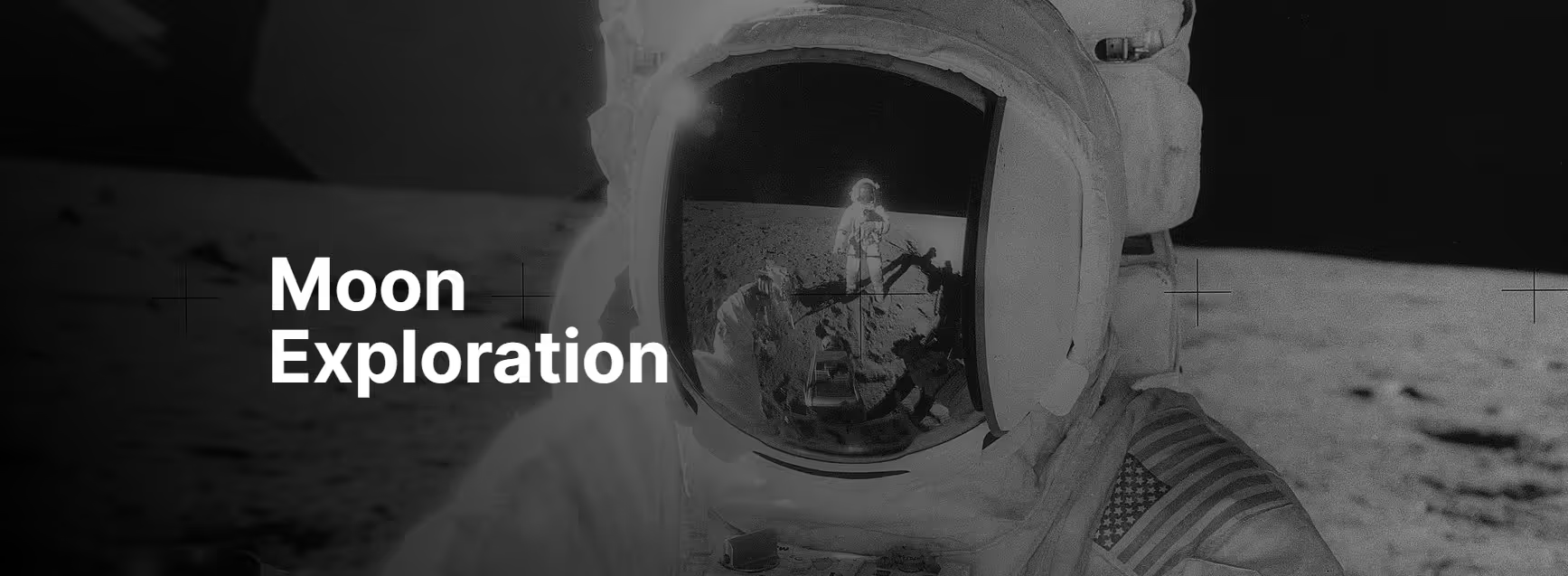
During the Apollo missions of 1969–1972, 12 American astronauts walked on the Moon and used a Lunar Roving Vehicle to travel on the surface and extend their studies of soil mechanics, meteoroids, lunar ranging, magnetic fields, and solar wind. The Apollo astronauts brought back 382 kilograms (842 pounds) of rock and soil to Earth for study.
From Apollo to Artemis While the Moon has always been an object of wonder and scientific interest to humanity, lunar exploration began in earnest in the 1950s, with the United States and the USSR developing and launching robotic spacecraft. In 1959, the USSR's Luna 1 was the first spacecraft to fly by the Moon. In 1966, Luna 9 achieved the first soft landing and in 1969, the U.S.'s Apollo 11 achieved the first human landing. In the decades since, many nations have contributed to lunar orbiters and landers. As of January 2024, four nations have successfully landed on the Moon (USSR, United States, India, China).
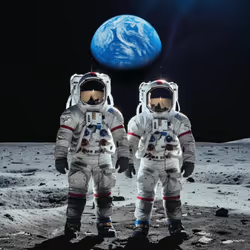
During the Apollo missions of 1969–1972, 12 American astronauts walked on the Moon and used a Lunar Roving Vehicle to travel on the surface and extend their studies of soil mechanics, meteoroids, lunar ranging, magnetic fields, and solar wind. The Apollo astronauts brought back 382 kilograms (842 pounds) of rock and soil to Earth for study.

From Apollo to Artemis While the Moon has always been an object of wonder and scientific interest to humanity, lunar exploration began in earnest in the 1950s, with the United States and the USSR developing and launching robotic spacecraft. In 1959, the USSR's Luna 1 was the first spacecraft to fly by the Moon. In 1966, Luna 9 achieved the first soft landing and in 1969, the U.S.'s Apollo 11 achieved the first human landing. In the decades since, many nations have contributed to lunar orbiters and landers. As of January 2024, four nations have successfully landed on the Moon (USSR, United States, India, China).
During the Apollo missions of 1969–1972, 12 American astronauts walked on the Moon and used a Lunar Roving Vehicle to travel on the surface and extend their studies of soil mechanics, meteoroids, lunar ranging, magnetic fields, and solar wind. The Apollo astronauts brought back 382 kilograms (842 pounds) of rock and soil to Earth for study.

From Apollo to Artemis While the Moon has always been an object of wonder and scientific interest to humanity, lunar exploration began in earnest in the 1950s, with the United States and the USSR developing and launching robotic spacecraft. In 1959, the USSR's Luna 1 was the first spacecraft to fly by the Moon. In 1966, Luna 9 achieved the first soft landing and in 1969, the U.S.'s Apollo 11 achieved the first human landing. In the decades since, many nations have contributed to lunar orbiters and landers. As of January 2024, four nations have successfully landed on the Moon (USSR, United States, India, China).
During the Apollo missions of 1969–1972, 12 American astronauts walked on the Moon and used a Lunar Roving Vehicle to travel on the surface and extend their studies of soil mechanics, meteoroids, lunar ranging, magnetic fields, and solar wind. The Apollo astronauts brought back 382 kilograms (842 pounds) of rock and soil to Earth for study.

From Apollo to Artemis While the Moon has always been an object of wonder and scientific interest to humanity, lunar exploration began in earnest in the 1950s, with the United States and the USSR developing and launching robotic spacecraft. In 1959, the USSR's Luna 1 was the first spacecraft to fly by the Moon. In 1966, Luna 9 achieved the first soft landing and in 1969, the U.S.'s Apollo 11 achieved the first human landing. In the decades since, many nations have contributed to lunar orbiters and landers. As of January 2024, four nations have successfully landed on the Moon (USSR, United States, India, China).
During the Apollo missions of 1969–1972, 12 American astronauts walked on the Moon and used a Lunar Roving Vehicle to travel on the surface and extend their studies of soil mechanics, meteoroids, lunar ranging, magnetic fields, and solar wind. The Apollo astronauts brought back 382 kilograms (842 pounds) of rock and soil to Earth for study.

From Apollo to Artemis While the Moon has always been an object of wonder and scientific interest to humanity, lunar exploration began in earnest in the 1950s, with the United States and the USSR developing and launching robotic spacecraft. In 1959, the USSR's Luna 1 was the first spacecraft to fly by the Moon. In 1966, Luna 9 achieved the first soft landing and in 1969, the U.S.'s Apollo 11 achieved the first human landing. In the decades since, many nations have contributed to lunar orbiters and landers. As of January 2024, four nations have successfully landed on the Moon (USSR, United States, India, China).
During the Apollo missions of 1969–1972, 12 American astronauts walked on the Moon and used a Lunar Roving Vehicle to travel on the surface and extend their studies of soil mechanics, meteoroids, lunar ranging, magnetic fields, and solar wind. The Apollo astronauts brought back 382 kilograms (842 pounds) of rock and soil to Earth for study.
