OpenSea Mobile is live: Trade everything, together.

FAUV•TOSHI is a generative parent/child collection of Ordinals as NFTs by Cartyisme. Reimagining a fauvist 24x18 traditional portrait of Fake Satoshi as 512 print-ready inscriptions minted on Base. Each piece is generated from onchain data, with art inscribed recursively on Satoshis and referenced directly as the animation_url via onchain metadata with a custom SeaDrop implementation.
TLDR: The Ordinal is the NFT.
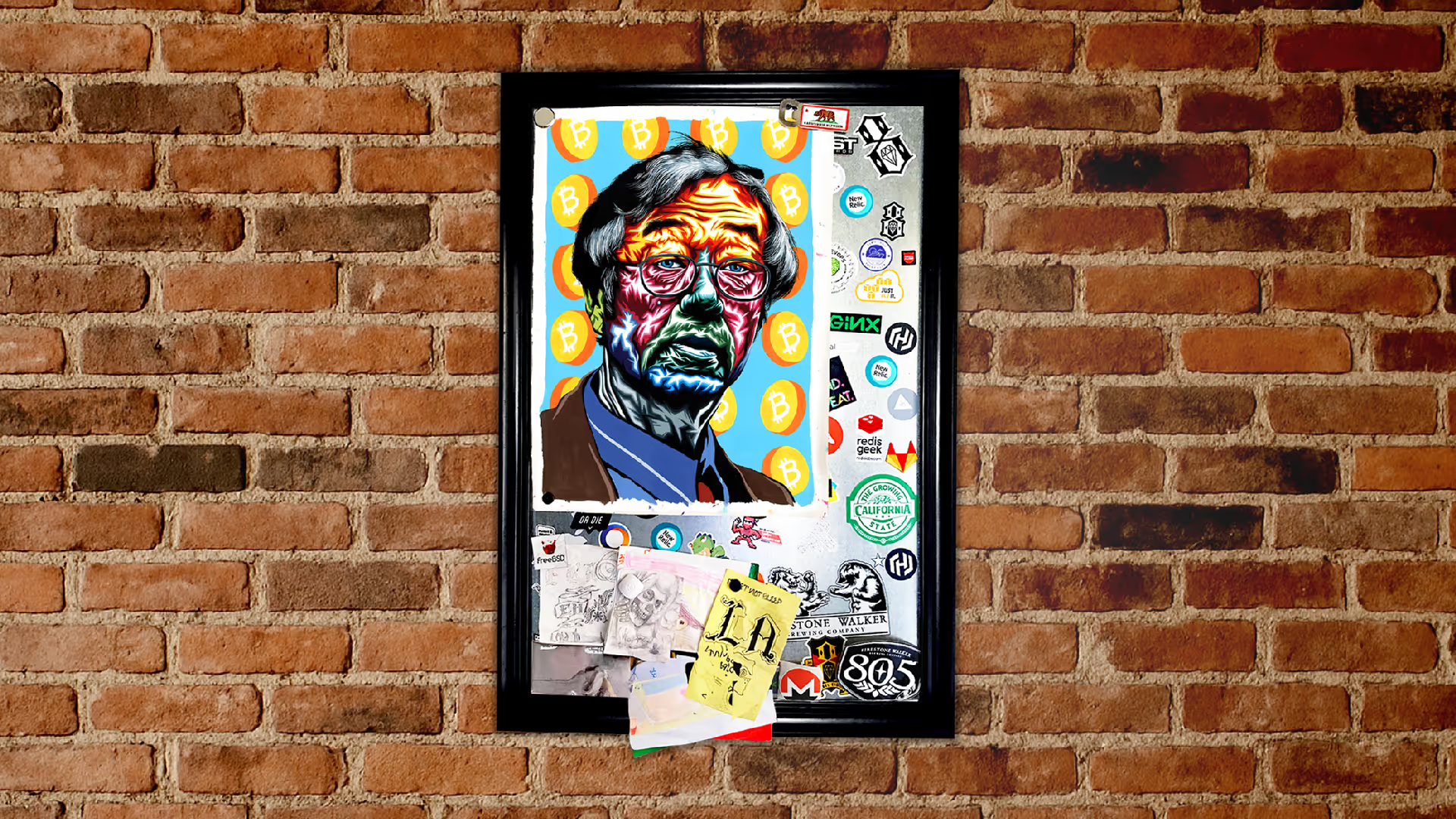
FAUV•TOSHI began as an 18×24-inch fauvist acrylic portrait of Dorian Nakamoto by Cartyisme. It was transformed into hand-drawn SVGs, animated with generative code, inscribed recursively on Bitcoin, to be minted on Base as onchain NFTs with embedded contract-level metadata.
FAUV•TOSHI began as an 18×24-inch fauvist acrylic portrait of Dorian Nakamoto by Cartyisme. It was transformed into hand-drawn SVGs, animated with generative code, inscribed recursively on Bitcoin, to be minted on Base as onchain NFTs with embedded contract-level metadata.
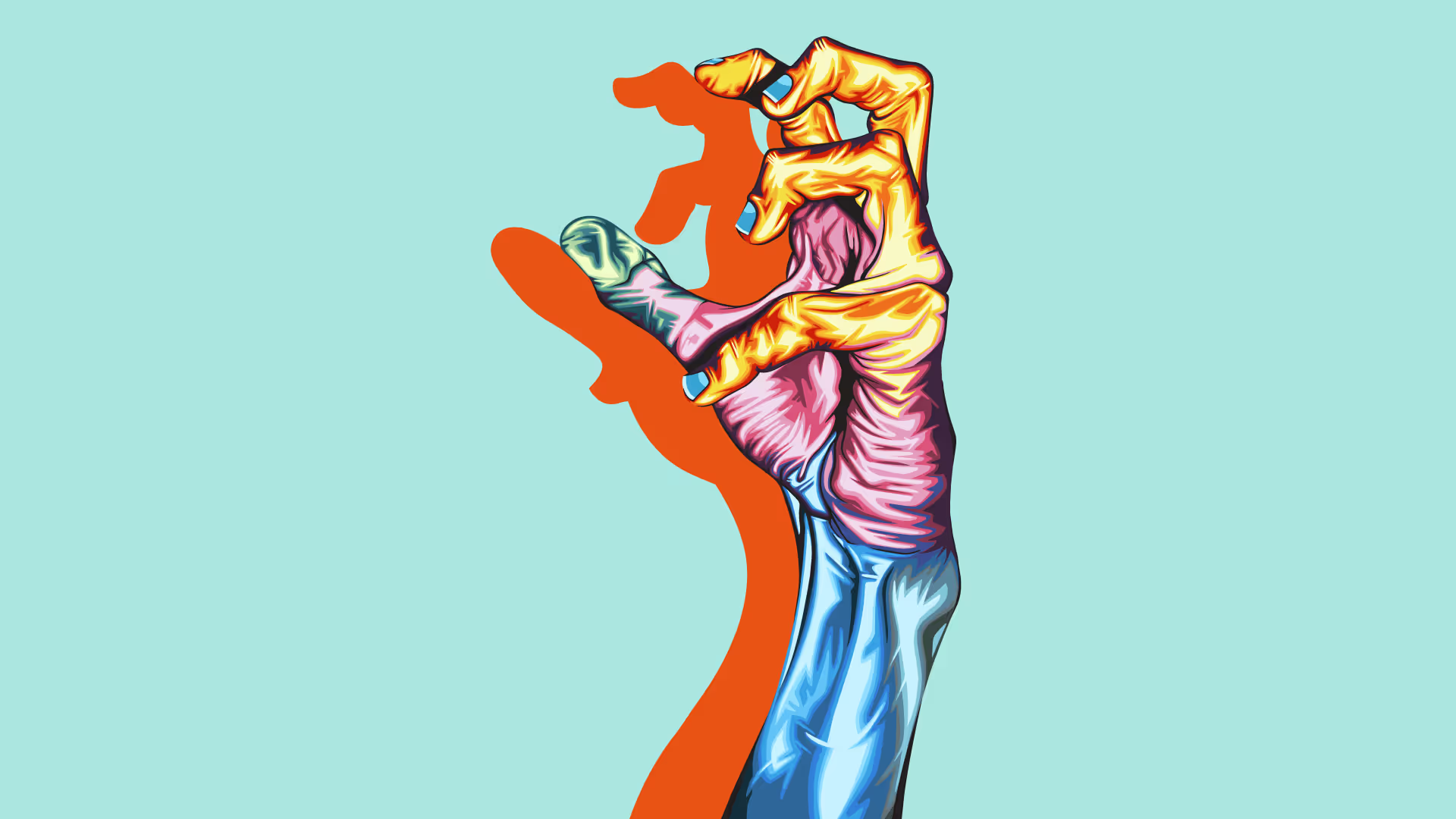
Traditional Artist turned degen, Cartyisme started painting crypto-themed art as early as 2014, minted his first NFT on Rarible in 2020, and later co-founded Art101 in 2021, joining OpenSea as a full-time employee shortly after.
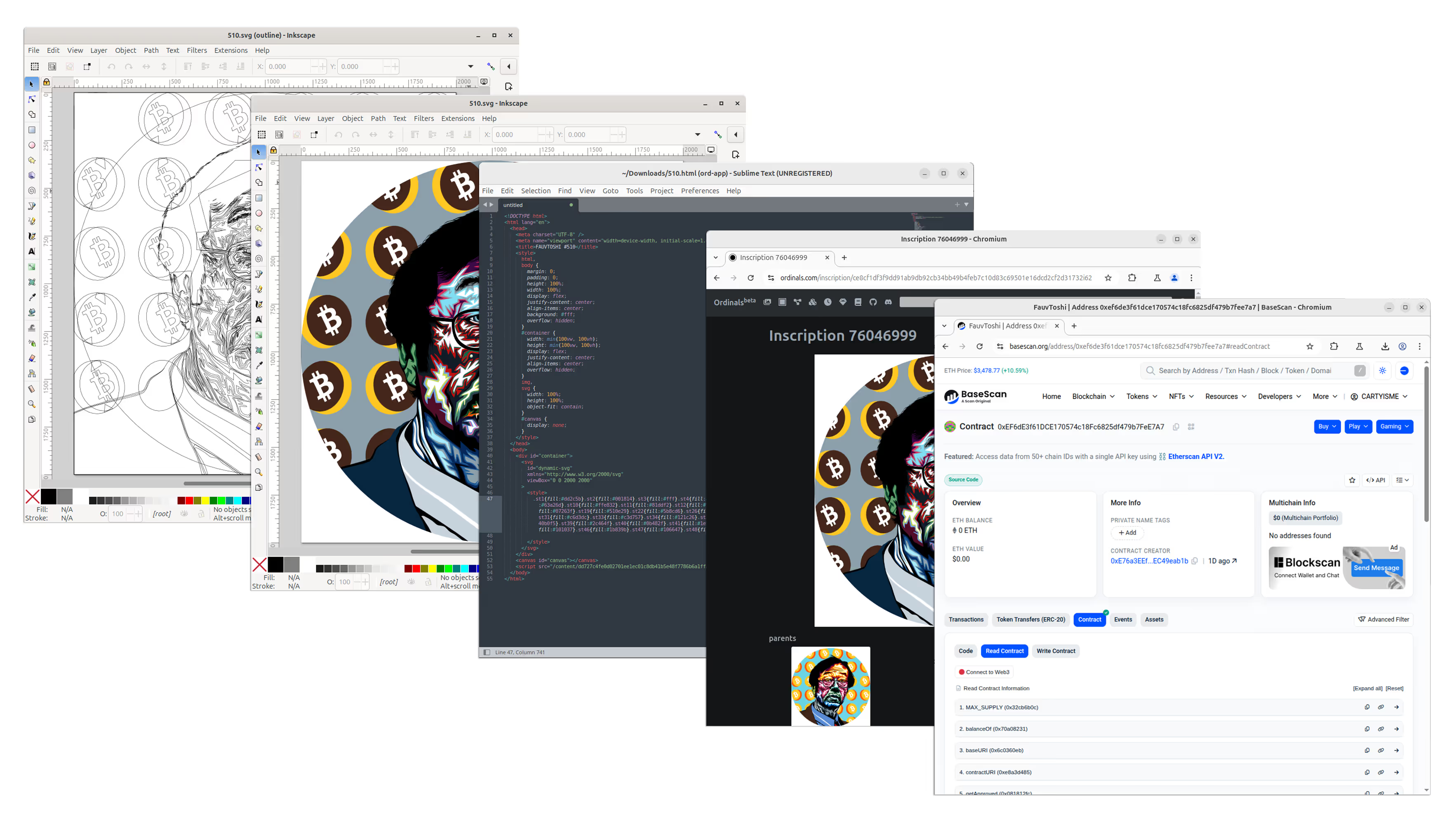
Inscribed recursively on Bitcoin and deployed on Base, FAUV•TOSHI pushes the creative boundaries of both the motherchain and the EVM. A multi-chain NFT, the Ordinals are built with hand-drawn infinitely scalable SVG paths, generative CSS, HTML, JavaScript, and directly referenced as the animation_url in contract-level metadata via SSTORE2. Culminating in 512 3600×3600 300DPI print-ready onchain multi-chain works of art.
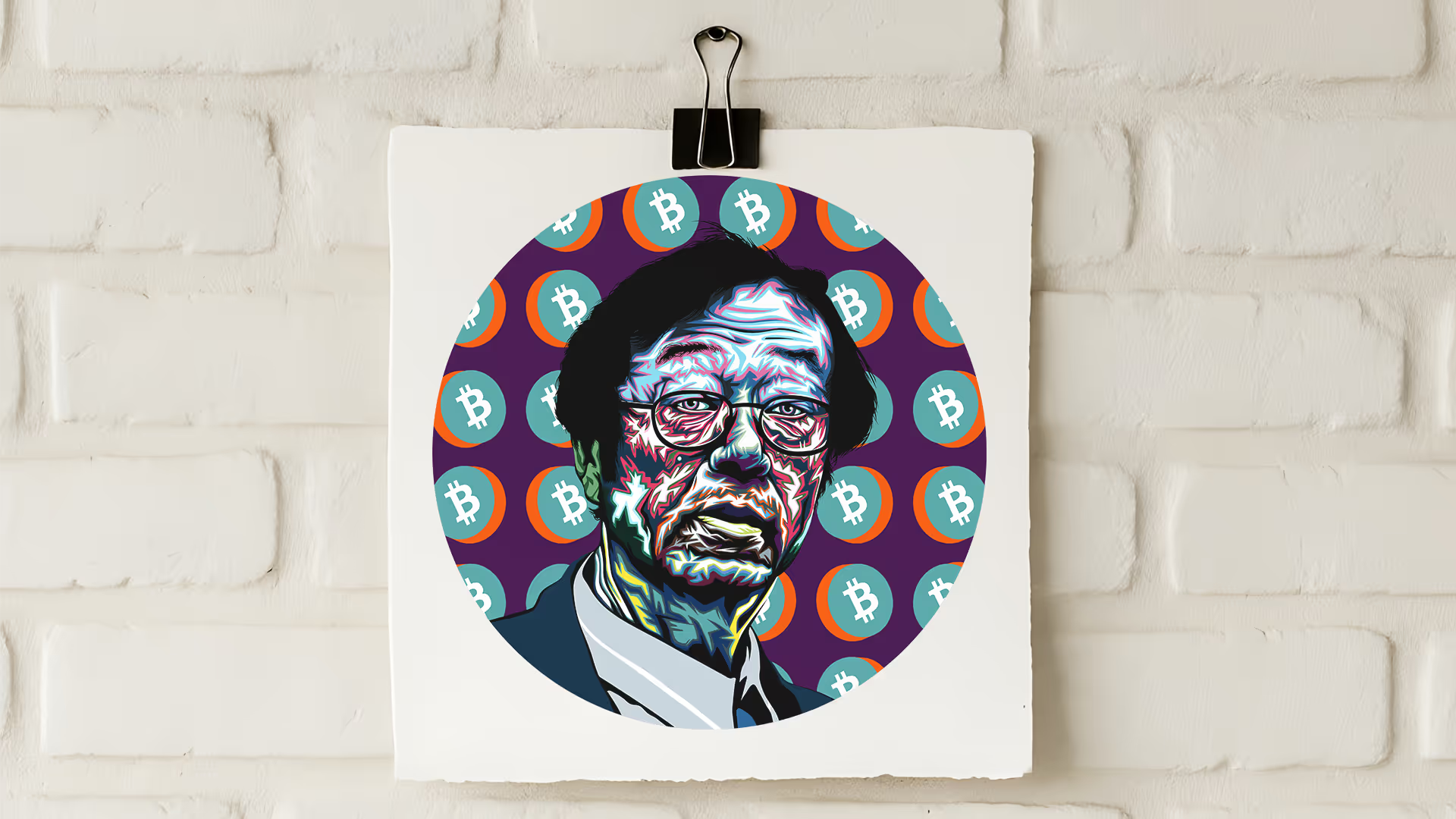
FAUV•TOSHI isn’t just optimized for blockchain, it’s built for the real world. Every piece in the collection renders as a 3600×3600 pixel, 300 DPI PNG, making it giclée-ready for archival printing. FAUV•TOSHI bridges the digital and physical by ensuring that its onchain generative art holds up as a tangible artifact, not just a screen-bound asset. It’s crypto-native, but print-perfect.
FAUV•TOSHI is a fully onchain, print-ready generative art collection. Combining traditional painting, generative art, Ordinals, and EVM. Reimagining a portrait of Dorian Nakamoto as a fauvist, recursively inscribed, multi-chain NFT collection on Base.
Fauve (French for “wild beast”) refers to an early 20th-century art movement known for its bold, non-naturalistic use of color and expressive brushwork. Created by Henri Matisse it embraces vivid, often clashing palettes to evoke raw emotional energy over realism.
The collection lives across both Ethereum L2 (Base) and Bitcoin. Metadata is stored onchain on Base via the EVM using SSTORE2, while the actual artwork, recursive fully rendered 3600×3600 PNGs, are immutably inscribed on Bitcoin as Ordinals.
SSTORE2 allows for efficient, low-cost storage of large immutable data blobs directly in Ethereum smart contracts. Each FAUV•TOSHI NFT's metadata is stored entirely onchain at it's own contract address.
It's a play on Satoshi, and furthermore Bitcoin is the most secure, censorship-resistant, and permanent ledger we have. By inscribing the artwork directly on Bitcoin, FAUV•TOSHI ensures that every visual asset is immutable, decentralized, and timestamped on the motherchain itself. It’s a nod to Bitcoin's permanence, aesthetics, and Satoshi Nakamoto.
The visual art is recursively inscribed on Bitcoin as Ordinals. And referenced in the animation_url via onchain contract-level metadata on Base. Using Ordinals.com's content portal like IPFS.
All FAUV•TOSHI ordinals are held in perpetuity by the creator, Cartyisme, at a dedicated taproot address on the Bitcoin network.
Yes. FAUV•TOSHI uses a custom SeaDrop contract for minting and distribution, adapted to support onchain metadata via SSTORE2 and ensure compatibility with Base. This lets it plug in and mint on OpenSea's infrastructure while staying fully onchain.
Right click > Save as. Every piece renders as a 3600×3600 300 DPI giclée-ready 12x12 inch PNG. Download your NFT, find a local print shop, and frame your piece. FAUV•TOSHI is meant to live both onchain and IRL.


