OpenSea Mobile is live: Trade everything, together.

by Residual Labs
Coded entirely in R, an open-source software environment for statistical computing and graphics, Cryptid Art explores the feasibility of using stochastic processes to assemble patterns that resemble life.
Each piece is created from a stochastically generated sequence of Gaussian random walks reflected across a temporal axis to produce symmetry, complexity, and perceptual identity.
Cryptid Art is organized into 4 broad classes – loose taxonomies shaped by density, drift, and random variation. Within each class, the system is capable of generating infinitely many unique cryptids, each one an unpredictable expression of the underlying statistical design.
(Cryptid Taxonomy)
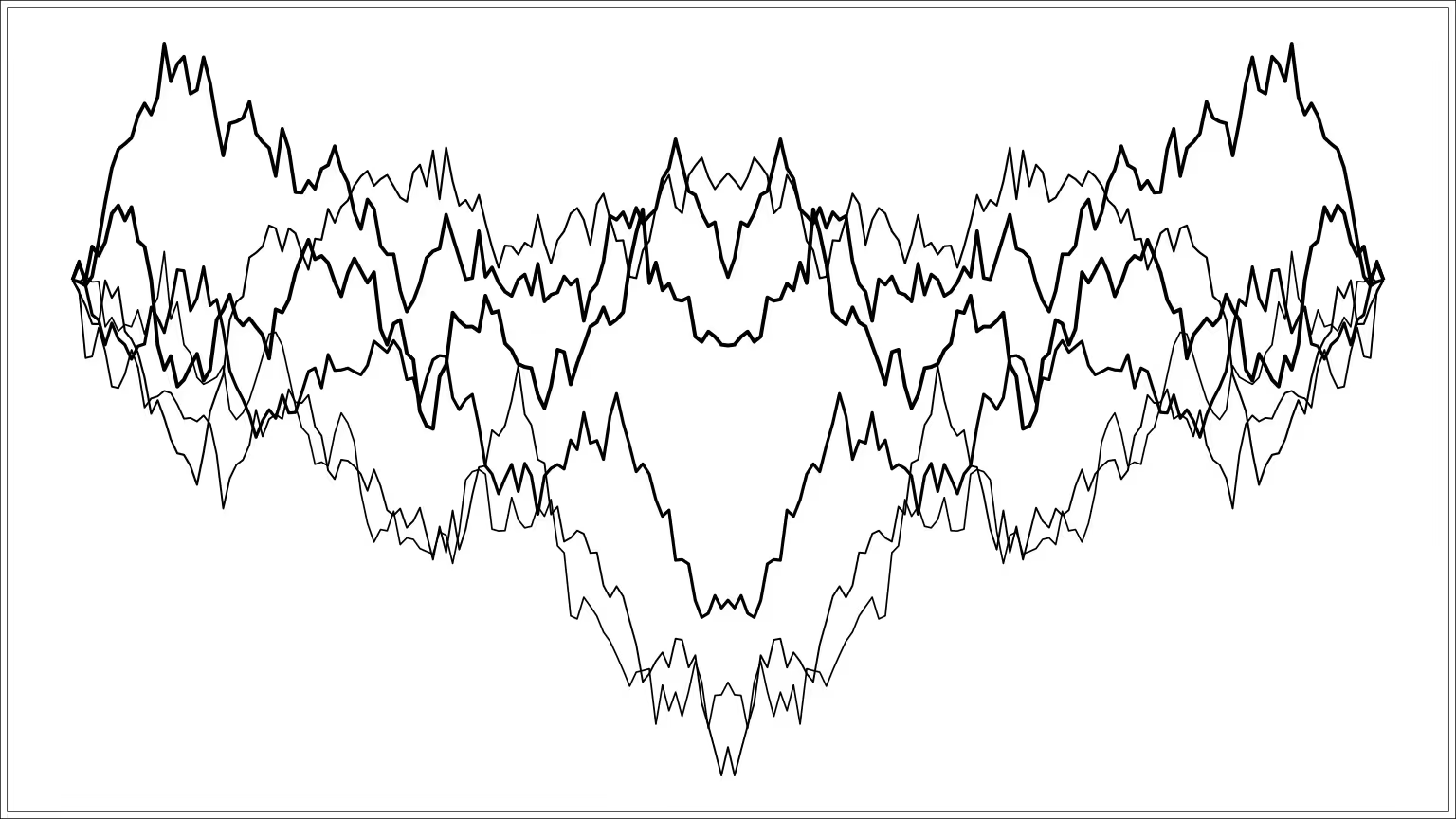
Sometimes bat. Sometimes crab. Sometimes both. Always Bat-Crab.
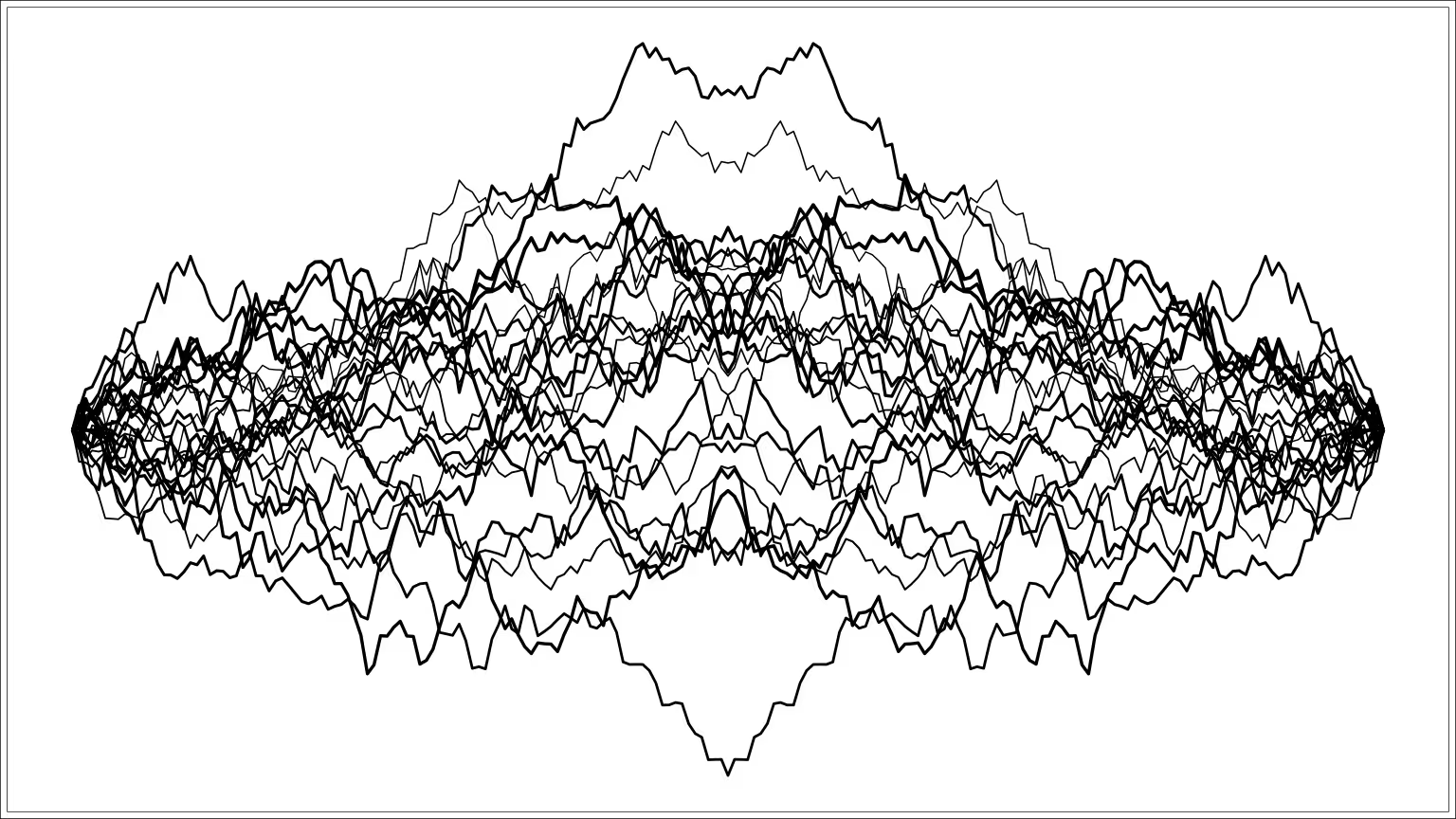
Mothman-adjacent entity.
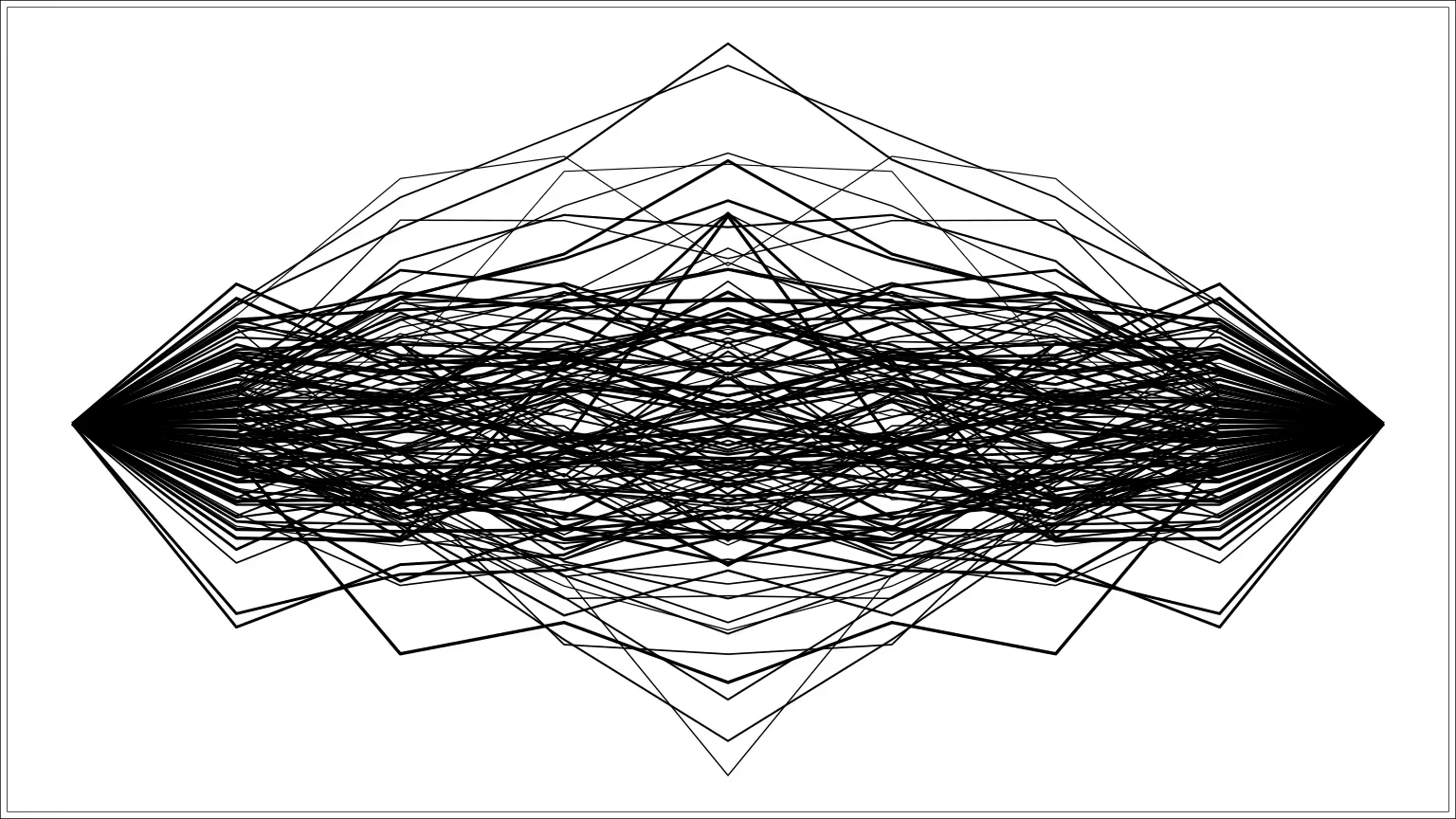
Aerial biologic. Possible organic-machine hybrid.
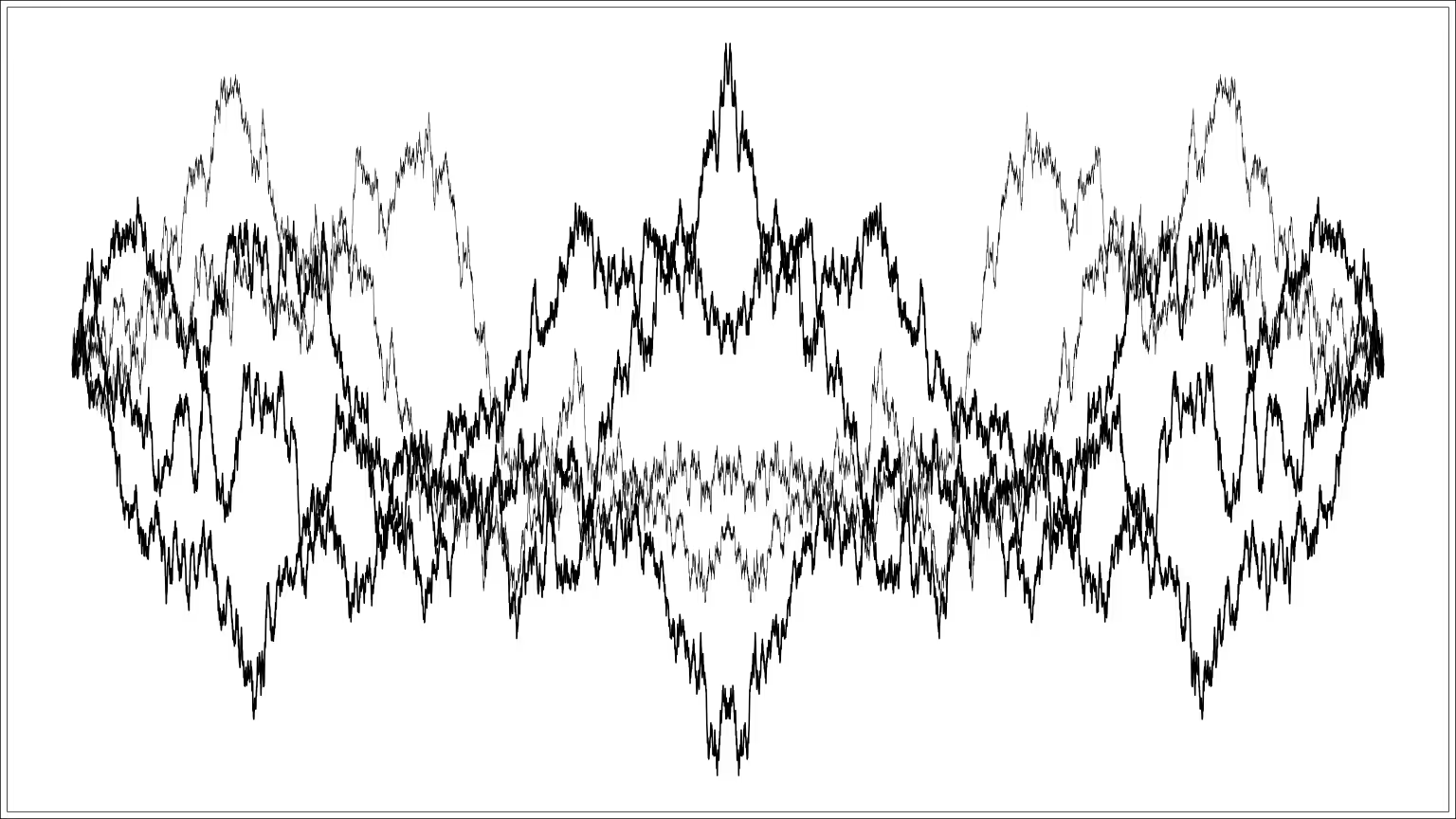
Eldritch manifestation.
No. Cryptid Art is a custom, hand-coded generative system written entirely in R, an open-source software environment for statistical computing and graphics.
Bat-Crab, Moth Creature, UFO, and Lovecraftian Horror. These classes are loose taxonomies defined by mutually exclusive parameter groupings.
No. The mint is fully randomized. You don't choose the cryptid - the cryptid chooses you.
Yes. Each cryptid has 4 traits: Class, Seed, Density, and Drift. These traits appear in the metadata and shape each cryptid’s structure and appearance.
Not by design. The system is balanced so that each class represents approximately 25% of the total collection. Any rarity with respect to traits or perceptual identity is purely emergent.
Yes. 4 cryptids – one from each class – were hand-selected by the artist to represent the conceptual and visual range of the collection. 195 cryptids were then randomly generated (long-form). A final set of 51 were selected from a random sample of N=800 cryptids (short-form).
Cryptid Art uses a standard OpenSea ERC-721 contract, which stores a reference to each cryptid’s metadata on-chain. The metadata and the artwork (.svg files) are stored on IPFS, a decentralized file storage protocol, for durability and long-term accessibility.
Coming Soon
DM residualLabs on X or email kristopher@residualLabs.io
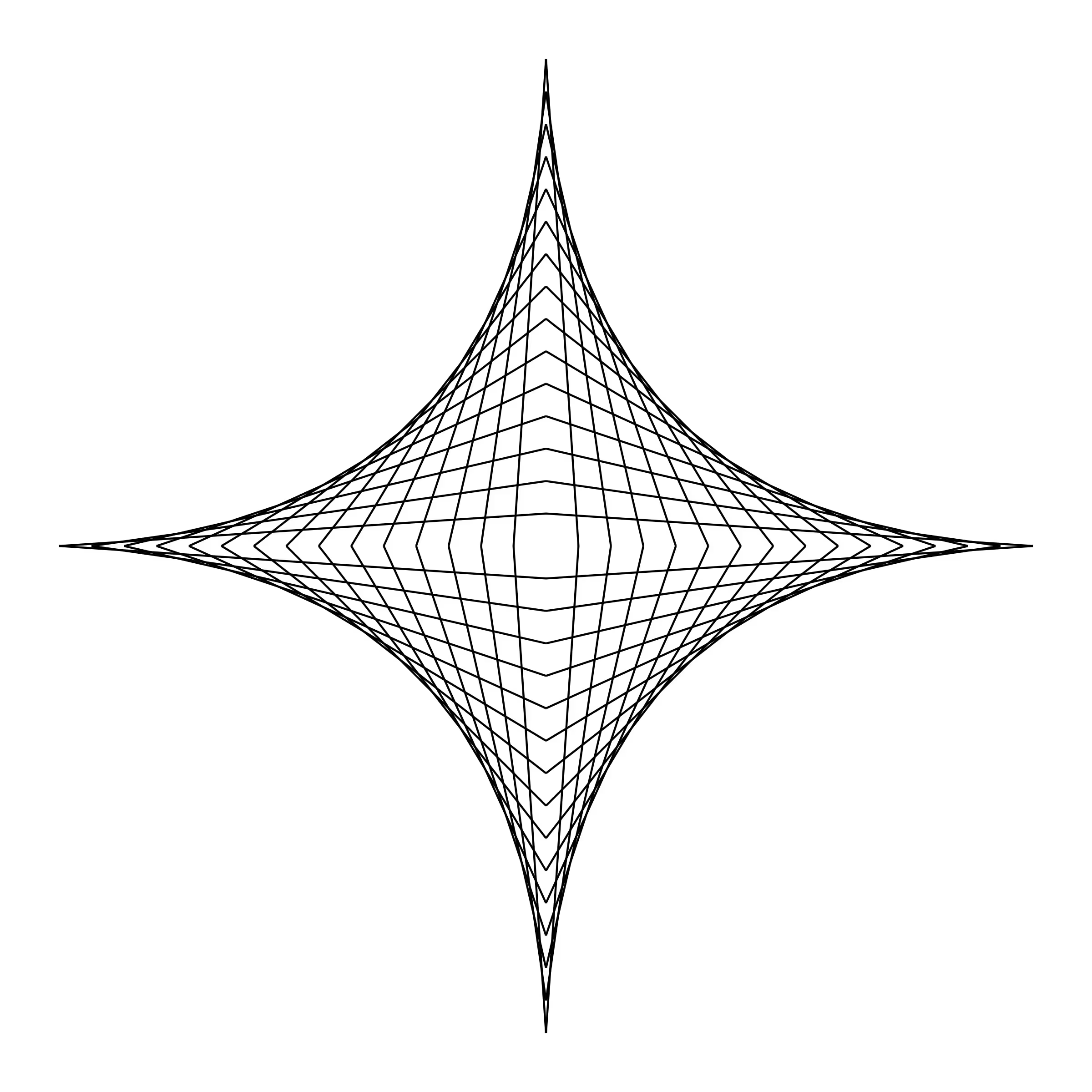
Residual Labs is an independent artist-owned creative technology studio based in Chicago. All works are made with math and built with R. □
Residual Labs is an independent artist-owned creative technology studio based in Chicago. All works are made with math and built with R. □
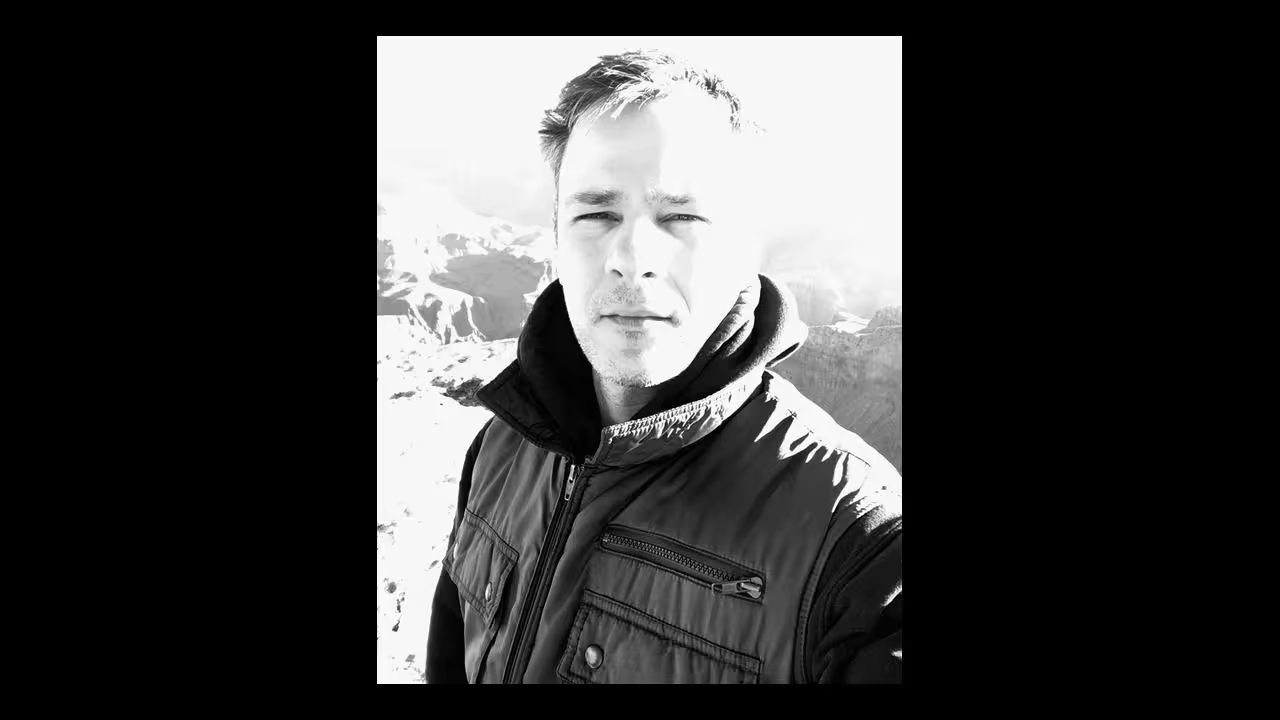
Kristopher Huffman is a Chicago-based artist who holds a BS in Mathematics and an MS in Statistics from Northern Illinois University. The founder of Residual Labs, his work employs mathematics, statistics, and data science as mediums for creating innovative art and design.
He works in R, an open-source software environment for statistical computing and graphics. His process is deliberately low-level. With minimal reliance on external libraries, his hand-coded systems create an aesthetic shaped by code, not convention.
His work explores how mathematical and statistical processes can be used – not just to model the world, but to create entirely new forms within it.
Cryptid Art is his genesis collection.
□
© 2026, Residual Labs


by Residual Labs
Coded entirely in R, an open-source software environment for statistical computing and graphics, Cryptid Art explores the feasibility of using stochastic processes to assemble patterns that resemble life.
Each piece is created from a stochastically generated sequence of Gaussian random walks reflected across a temporal axis to produce symmetry, complexity, and perceptual identity.
Cryptid Art is organized into 4 broad classes – loose taxonomies shaped by density, drift, and random variation. Within each class, the system is capable of generating infinitely many unique cryptids, each one an unpredictable expression of the underlying statistical design.
(Cryptid Taxonomy)
Sometimes bat. Sometimes crab. Sometimes both. Always Bat-Crab.
Mothman-adjacent entity.
Aerial biologic. Possible organic-machine hybrid.
Eldritch manifestation.
No. Cryptid Art is a custom, hand-coded generative system written entirely in R, an open-source software environment for statistical computing and graphics.
Bat-Crab, Moth Creature, UFO, and Lovecraftian Horror. These classes are loose taxonomies defined by mutually exclusive parameter groupings.
No. The mint is fully randomized. You don't choose the cryptid - the cryptid chooses you.
Yes. Each cryptid has 4 traits: Class, Seed, Density, and Drift. These traits appear in the metadata and shape each cryptid’s structure and appearance.
Not by design. The system is balanced so that each class represents approximately 25% of the total collection. Any rarity with respect to traits or perceptual identity is purely emergent.
Yes. 4 cryptids – one from each class – were hand-selected by the artist to represent the conceptual and visual range of the collection. 195 cryptids were then randomly generated (long-form). A final set of 51 were selected from a random sample of N=800 cryptids (short-form).
Cryptid Art uses a standard OpenSea ERC-721 contract, which stores a reference to each cryptid’s metadata on-chain. The metadata and the artwork (.svg files) are stored on IPFS, a decentralized file storage protocol, for durability and long-term accessibility.
Coming Soon
DM residualLabs on X or email kristopher@residualLabs.io
Residual Labs is an independent artist-owned creative technology studio based in Chicago. All works are made with math and built with R. □
Residual Labs is an independent artist-owned creative technology studio based in Chicago. All works are made with math and built with R. □
Kristopher Huffman is a Chicago-based artist who holds a BS in Mathematics and an MS in Statistics from Northern Illinois University. The founder of Residual Labs, his work employs mathematics, statistics, and data science as mediums for creating innovative art and design.
He works in R, an open-source software environment for statistical computing and graphics. His process is deliberately low-level. With minimal reliance on external libraries, his hand-coded systems create an aesthetic shaped by code, not convention.
His work explores how mathematical and statistical processes can be used – not just to model the world, but to create entirely new forms within it.
Cryptid Art is his genesis collection.
□
© 2026, Residual Labs

