.png)
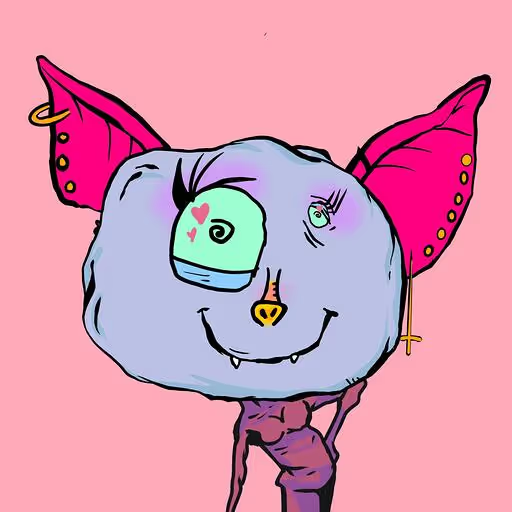
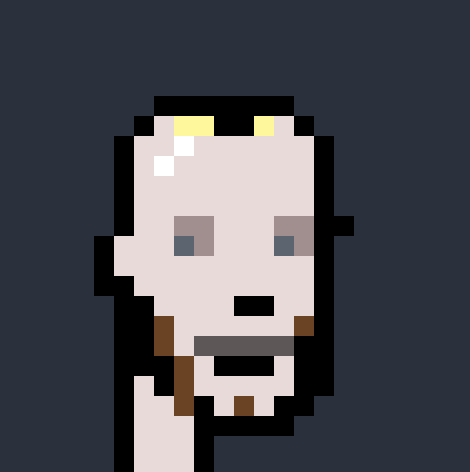
Michael Hirsch, also known as the Slopfather, is the creator of Slonks, a collection of 10,000 onchain NFTs built on Ethereum that uses a neural network model attempting to reconstruct the original CryptoPunks pixel by pixel, and failing in ways that turned out to be the whole point. What began as an experiment in onchain AI became a fully realized ecosystem built around imperfection, complete with a merge and burn mechanic, a token called $SLOP tied directly to pixel deviation, and an upcoming onchain arcade called Slops.
We sit down with Michael Hirsch to discuss the origins of Slonks, what it means to build art around failure, how $SLOP turns collector behavior into token supply, and what comes next for the ecosystem.
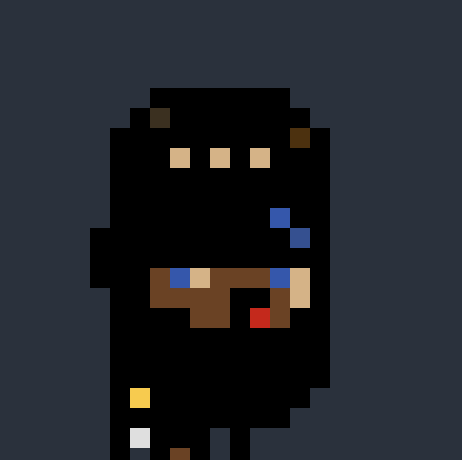
OpenSea: Slonks are described as "onchain neural reconstructions" of CryptoPunk images, a model stored on Ethereum trying to recreate a 24x24 pixel image and getting it almost right. Where did that concept come from, and why did imperfection feel like the right foundation to build on?
Michael Hirsch: It started because I wanted to see if I could train an AI model that could recreate all 10,000 CryptoPunks perfectly, while keeping the parameters small enough to fit onchain. That turned out to be seemingly impossible. But as I looked at the outputs, I started to love the imperfections and realized that could be the meme. So I ran with it. I even tuned the parameters down to create more imperfections in the collection and added a merge and burn mechanism to gamify creating more slop, or more imperfections, in the art.
OpenSea: "The slop is the art" is a pretty provocative statement. What does that actually mean, and why does imperfection sit at the center of this project?
Michael Hirsch: To me, it means the imperfections are not a flaw in the project. They are the project. Slonks started as an AI model trying to recreate CryptoPunks and failing in strange, funny, sometimes beautiful ways. That gap between the original and the reconstruction is where the art lives. It shows that AI can imitate creativity, but perfection is not what makes something meaningful.
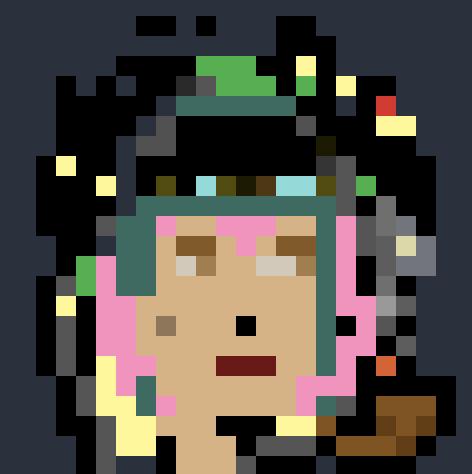
OpenSea: When you merge two Slonks, one is gone forever and the other becomes something new. How do you think about that? Is it loss, transformation, or something else?
Michael Hirsch: It is both loss and transformation. There are multiple reasons someone might want to merge and burn. They could be trying to create the Slonk with the most burns. For example, there is one that has consumed 63 other Slonks. They could be trying to create something aesthetically pleasing, where they see how many merges they can do while still keeping it clean. Or they could be going after the highest slop count.
OpenSea: The void is the mechanism that makes slop liquid. You void a Slonk, you mint $SLOP equal to its pixel deviation count, and that same amount buys someone else's Slonk back out. How did you arrive at that design, and what problem were you trying to solve?
Michael Hirsch: I was creating a mining script that would look at your Slonks, along with the ones listed for sale, and try to find merge paths that produced the highest slop counts. While working on that, I realized the number of possible outcomes was astronomical. I thought it would be cool if this script could basically run forever and function like mining a token. That led to $SLOP: a token you can exchange your Slonk for, receiving 1 $SLOP for each pixel that diverges from the original Punk.
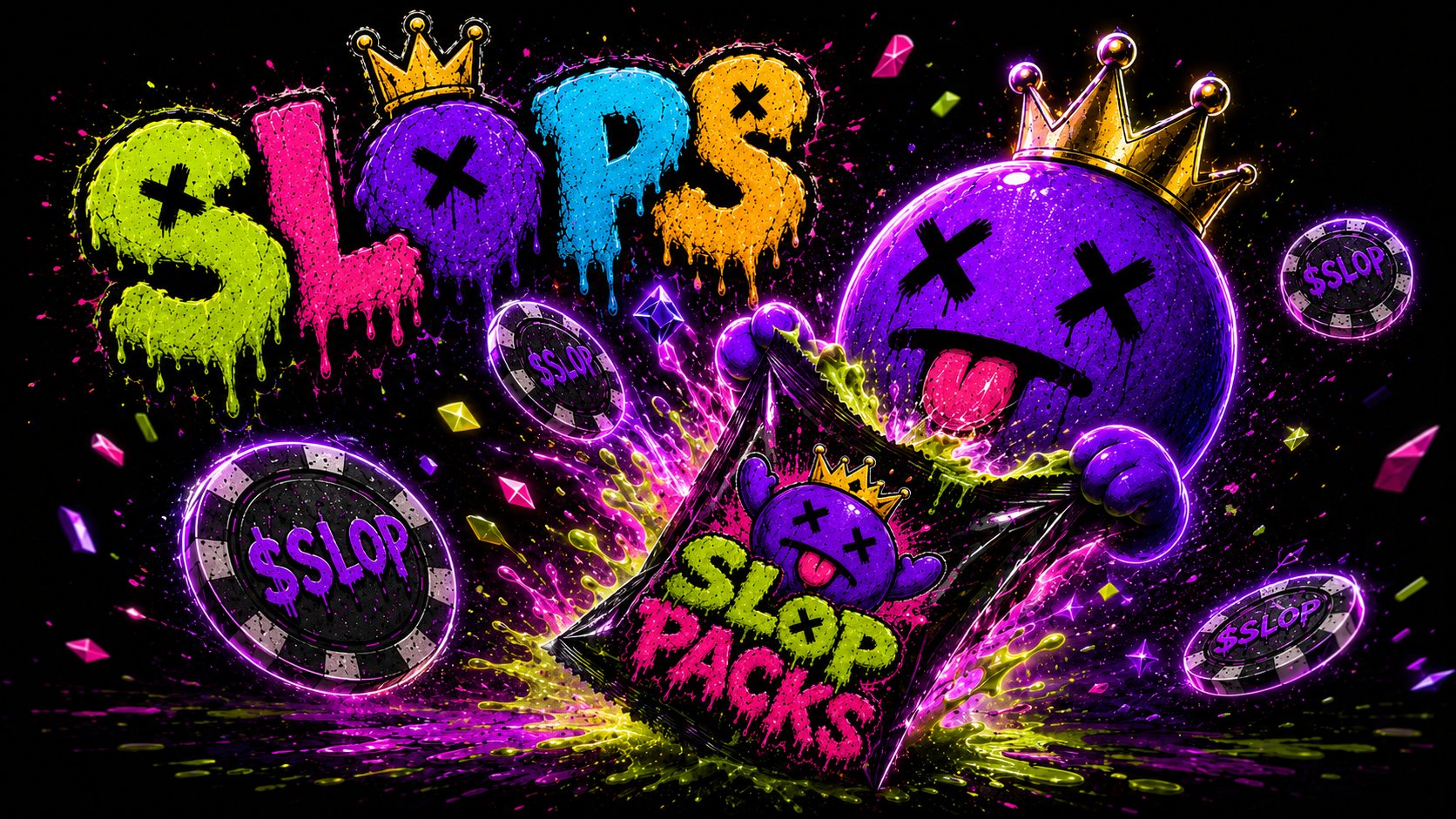
OpenSea: $SLOP launched with 576,000 tokens in a one-sided pool, and after that initial inventory, new supply only enters through user voiding. What was the thinking behind making the community's own behavior the emission mechanism rather than a fixed schedule?
Michael Hirsch: I wanted $SLOP emissions to come from the NFT side, not from an arbitrary schedule. The token is created when someone chooses to void a Slonk, so the supply is directly tied to collector behavior and the art itself. The initial pool was there to create liquidity for that exchange, but after that, the community determines how new $SLOP enters circulation. I also wanted it to be circular: $SLOP can come from voiding a Slonk, and it can also be used to bring a Slonk back out of the void.
OpenSea: Now you're building Slops, an onchain arcade that runs on $SLOP tokens. What made that the right next step?
Michael Hirsch: I have been creating an endless supply of slop and Slonk puns on X, and in one of them I called the whole ecosystem a slop machine. Then I realized that it could actually become a really cool burn mechanic for the $SLOP token. Initially, I thought users would only reveal Slonks, but then I thought it would be much more exciting if it expanded to NFTs from across the space, including collections like Pudgy Penguins, CyberKongz, Doodles, and more. It opens the whole thing up to the entire NFT space and brings different communities together under one project.
OpenSea: You've brought in Quirkies, Normies, Chimpers, GVC, Deadfellaz, Meebits, Space Riders, and 1337 Skulls as prizes. What does a collab look like in the context of Slops, and what were you looking for in these specific communities?
Michael Hirsch: I am looking for strong communities with trust, history, and people who are open to new onchain experiences. In Slops, a collab means their NFTs can become part of the Vault and part of the machine’s story. Users get to reveal NFTs from communities they already know and respect, and those communities get new visibility and ongoing support as the Vault continues to grow. The goal is for trading fees from the token to keep supporting the experience over time, so the ecosystem can keep expanding.
OpenSea: What's next for Slonks and Slops? Where do you see this whole ecosystem going from here?
Michael Hirsch: From day one, I just wanted to have fun onchain and build cool new experiences. That is what I plan to keep doing. With Slonks, the core mechanic stays the same: you can merge and burn Slonks to try to create higher slop counts, and that slop can then be converted into $SLOP. Slonks are the mining layer of the ecosystem.
With Slops, I want to build the largest onchain NFT arcade in the space. It will be powered by $SLOP, and the first step is what I’m calling Slop Packs. Users will use $SLOP to reveal NFTs from curated onchain collections. Over time, I want to keep adding more collections, more communities, and eventually more games, giving $SLOP a growing set of places where it can be used and burned.
The bigger vision is to create something that feels fun, social, and open to the whole NFT space. I want Slops to be a place people come back to because it is exciting, whether they win or lose. At the same time, I want it to support older communities that are still building, introduce people to new ones, and create a shared experience around NFTs that feels fresh again.
Disclaimer: This content is for informational purposes only and should not be construed as financial or trading advice. References to specific projects, products, services, or tokens do not constitute an endorsement, sponsorship, or recommendation by OpenSea. OpenSea does not guarantee the accuracy or completeness of the information presented, and readers should independently verify any claims made herein before acting on them. Readers are solely responsible for conducting their own due diligence before making any decisions.


.png)
.png)
.png)