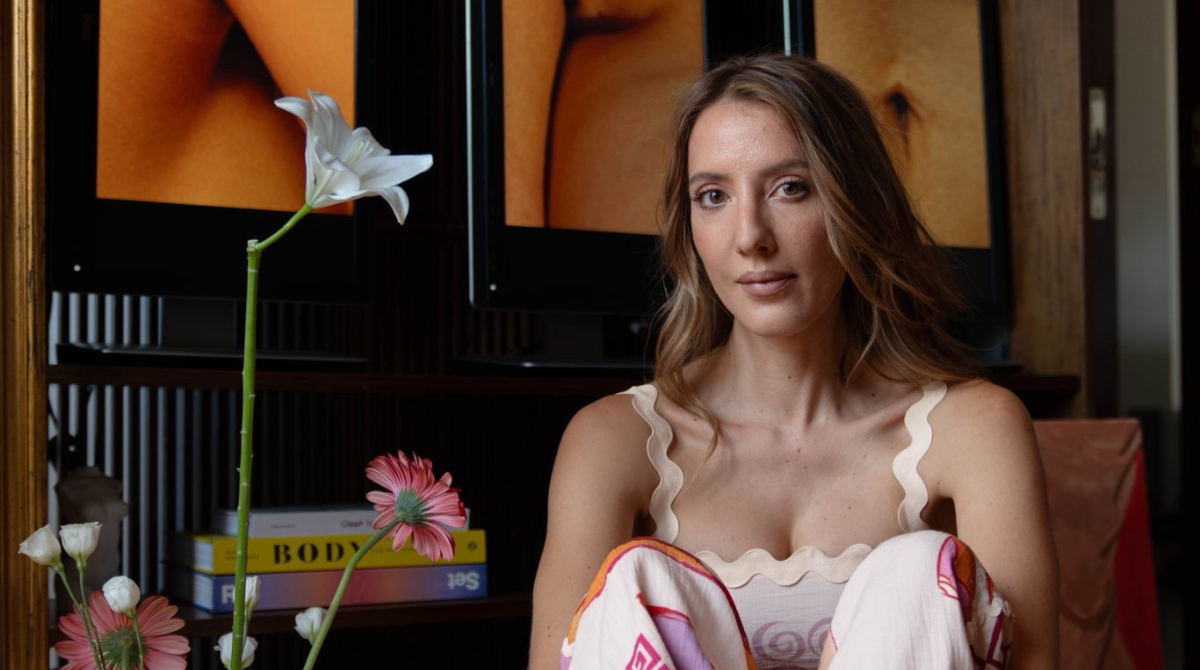
Rooted in vulnerability, freedom, and self-acceptance, Pauline Faieff’s journey began in the French Caribbean with a single, life-changing portrait. This moment marked the start of a deeply personal artistic evolution. Since then, Pauline has used self-portraiture to explore identity, body acceptance, and freedom of expression. Her work is raw, emotional, and deeply personal–often challenging how we view nudity, beauty, and art in the digital age.
In this conversation, she shares how NFTs helped her reclaim ownership over her work, why filters don’t have a place in her creative process, and how her latest project, The Alphabet, transforms the human body into a poetic language all its own.
Note: This transcript has been edited for length and clarity.
OpenSea: Let’s start from the beginning of your journey! On X, you describe yourself as neither a model nor a photographer. How did your journey into self-portraiture and artistic direction begin?
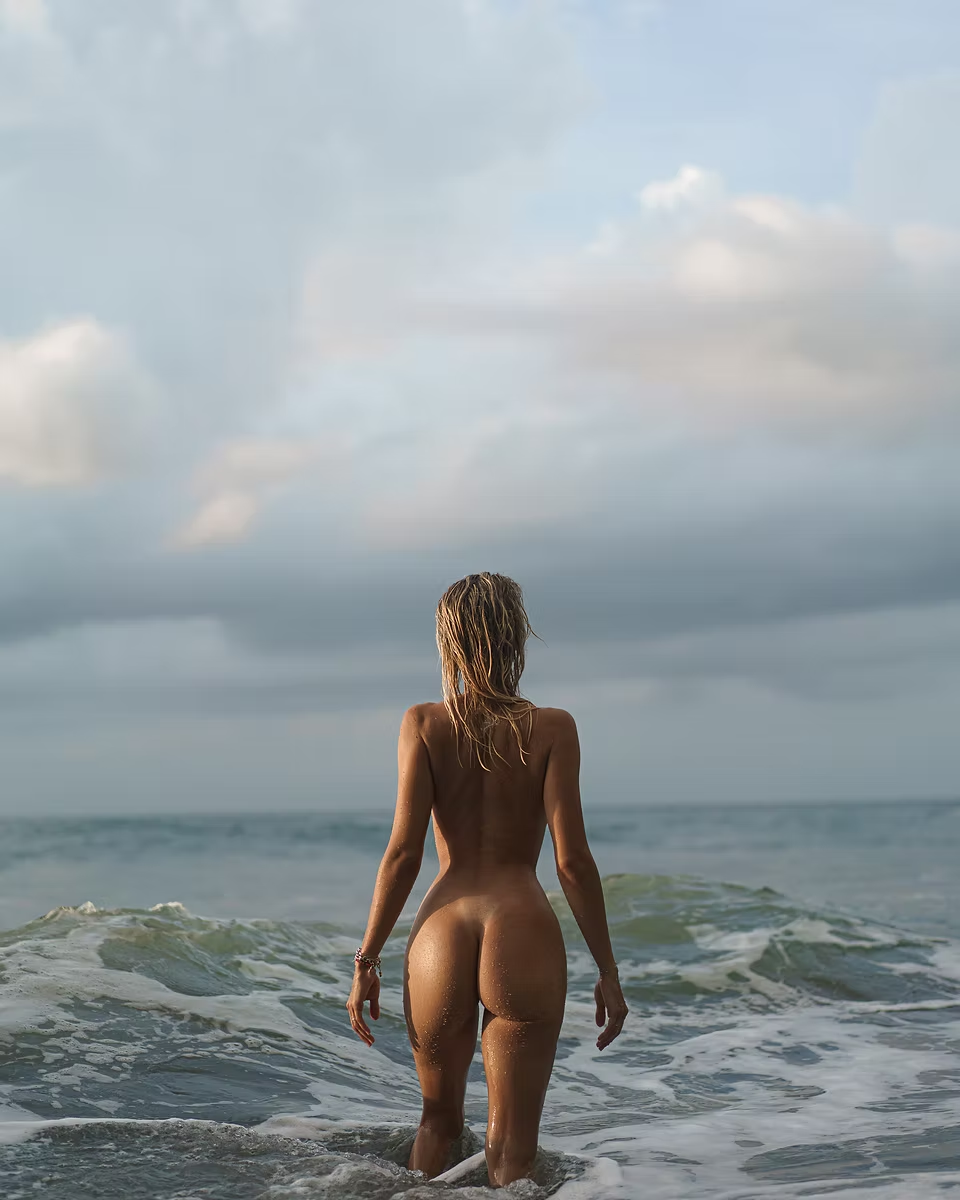
Pauline Faieff: I am my own body of art. How it started? It’s only recently that I realized I began as a content creator. I was creating photographs with my ex-boyfriend, who was my photographer, for the social media audience. One day, he took a nude shot of me in a wild ocean in Martinique in the French Caribbean where I come from. It was my first time. I was ashamed and afraid at the same time, I didn’t want to be seen but I never felt so empowered
My whole life, I struggled with my body. I didn’t accept myself. I thought I should look like the models in magazines. But with that photo, I was shocked. For the first time, I saw myself and felt love for my body. That photo—called Sagittarius—which was later sold using OpenSea with my debut collection. It was a turning point. I realized I wasn’t creating for others anymore but for myself. That was the first step toward becoming an artist.
Later, a friend introduced me to web3. I had no idea what it was. But a mix of technology and art intrigued me. When I joined the community of artists and builders, I felt something shift. I found people who shared my vision of freedom. That was part of becoming an artist too. I started creating self-portraits two years ago, following a personal crisis triggered by social media. It was a turning point — I needed to take back ownership of my body, and the only way was to photograph myself, for myself.
OpenSea: You mentioned how many women compare themselves to models they see in magazines or on social media. How did your mindset evolve from that first ocean portrait to now? How long did it take to truly feel beautiful in your body?
Pauline Faieff: I think it’s a lifelong process. I’m 34 now. In my 20s, it was very difficult. But in my 30s, I’ve accepted myself more—partly through my artistic practice. I look in the mirror and see myself as I am, not how I think I should look. I’ve learned to accept even the parts I like less. Our bodies change as we age. Practicing self-portraiture has helped me embrace that.
OpenSea: One thing I love from your work is the Alphabet series on your site—the close-up images with no retouching. It’s refreshing because on Instagram almost everything’s filtered, and we compare ourselves to unrealistic images. Then you see someone in real life, and they look totally different.
Pauline Faieff: You’re absolutely right. I hate filters. I used to use them constantly when I was creating content. I couldn’t accept my reflection in the mirror. I thought I should look like the filter. I stopped using them about three years ago. Now, I feel so much more at peace.
There shouldn’t be any standards. That’s why I create from my body. I used to think we had to fit into boxes. But we’re all different, and that’s beautiful. Taking raw photos helps build self-esteem.
OpenSea: Was there anyone early on who influenced your approach to this kind of art or your freedom in it?
Pauline Faieff: Not really. I was just trying to find myself during a difficult time. People ask why I chose this medium, and I always say—if only I could choose. It just happened. It’s one of the hardest mediums because of censorship and social norms. There are so many misconceptions. I didn’t get inspired by anyone in particular. I just wanted to feel alive—and that’s how I did it.
OpenSea: You mentioned your friend introduced you to NFTs. Was that due to censorship on platforms like Instagram, or something else?
Pauline Faieff: A friend made me realize I was creating art and said, “This should be an NFT.” The art was essential, but so was the act of reclaiming it. Ownership wasn’t secondary — it was the point. Many of my images were stolen and ended up on pornographic websites. I couldn’t prove they were mine or that I wasn’t doing pornography. NFTs gave me the chance to reclaim that ownership.
It’s not just the medium. Even sharing the work was hard. NFTs were a way to escape that “golden prison” of social media. I got followers, sure—but I wanted something deeper. Minting my work as NFTs gave me that. And the community was so welcoming. It helped a lot.
OpenSea: That’s beautiful. Your work often blends self-portraiture with poetry and texture. How do you decide the tone of each photograph? Is it location-based, or mood-based?
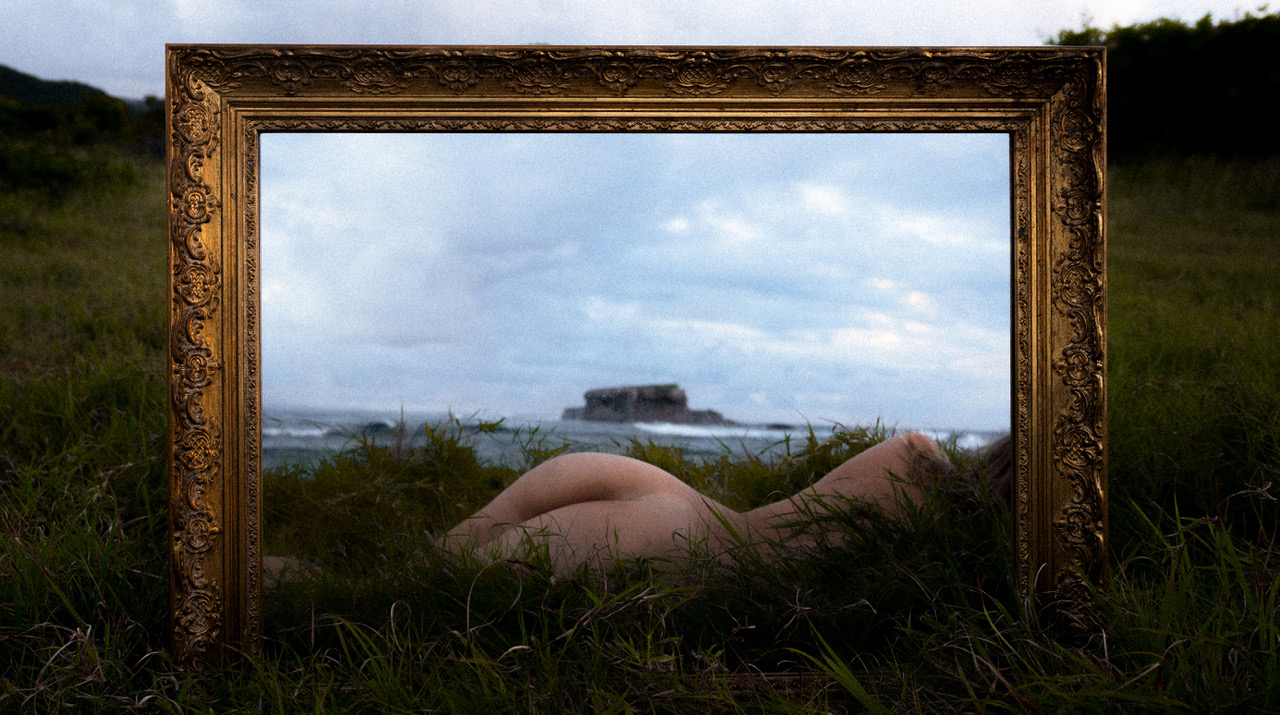
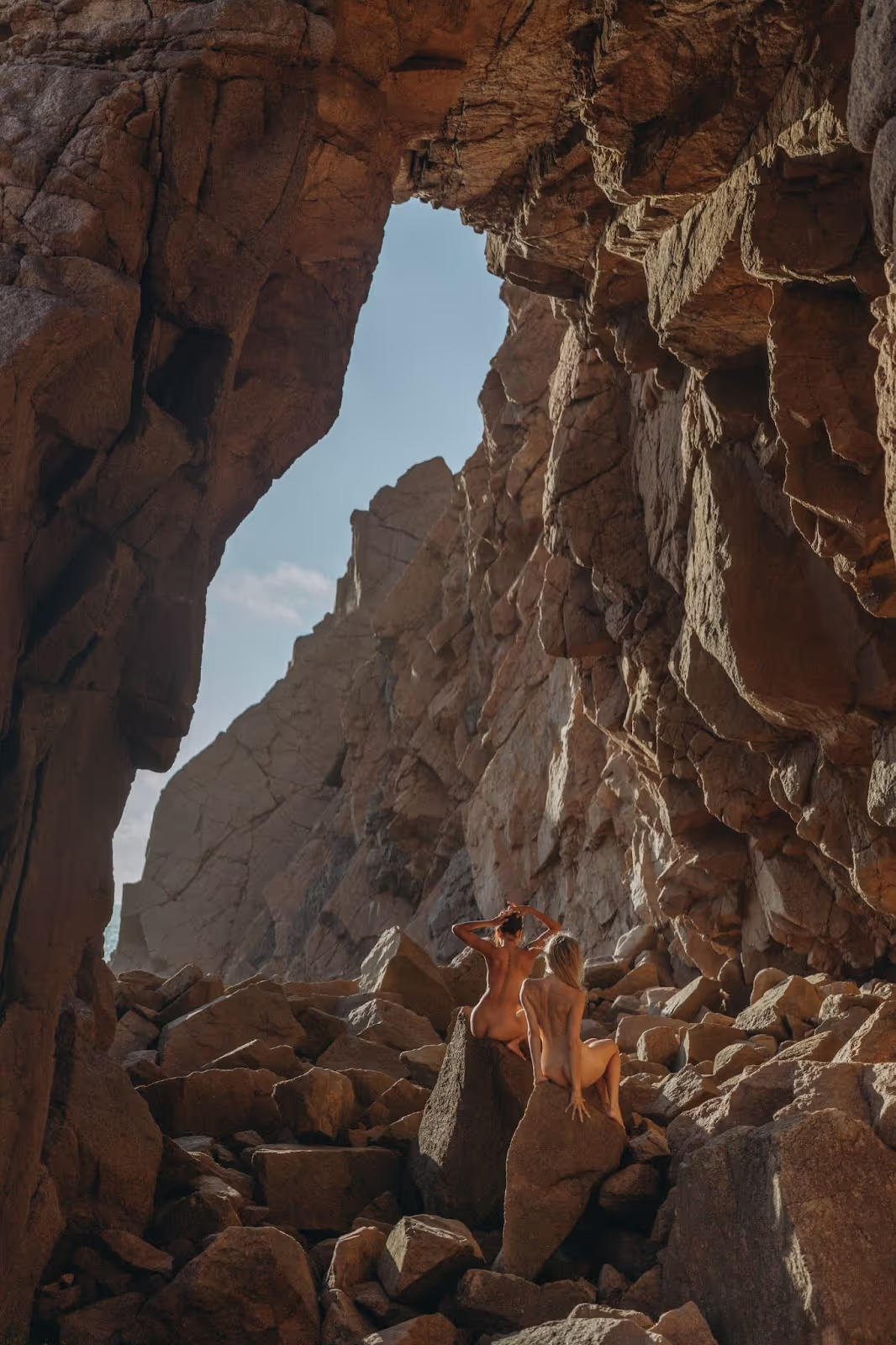
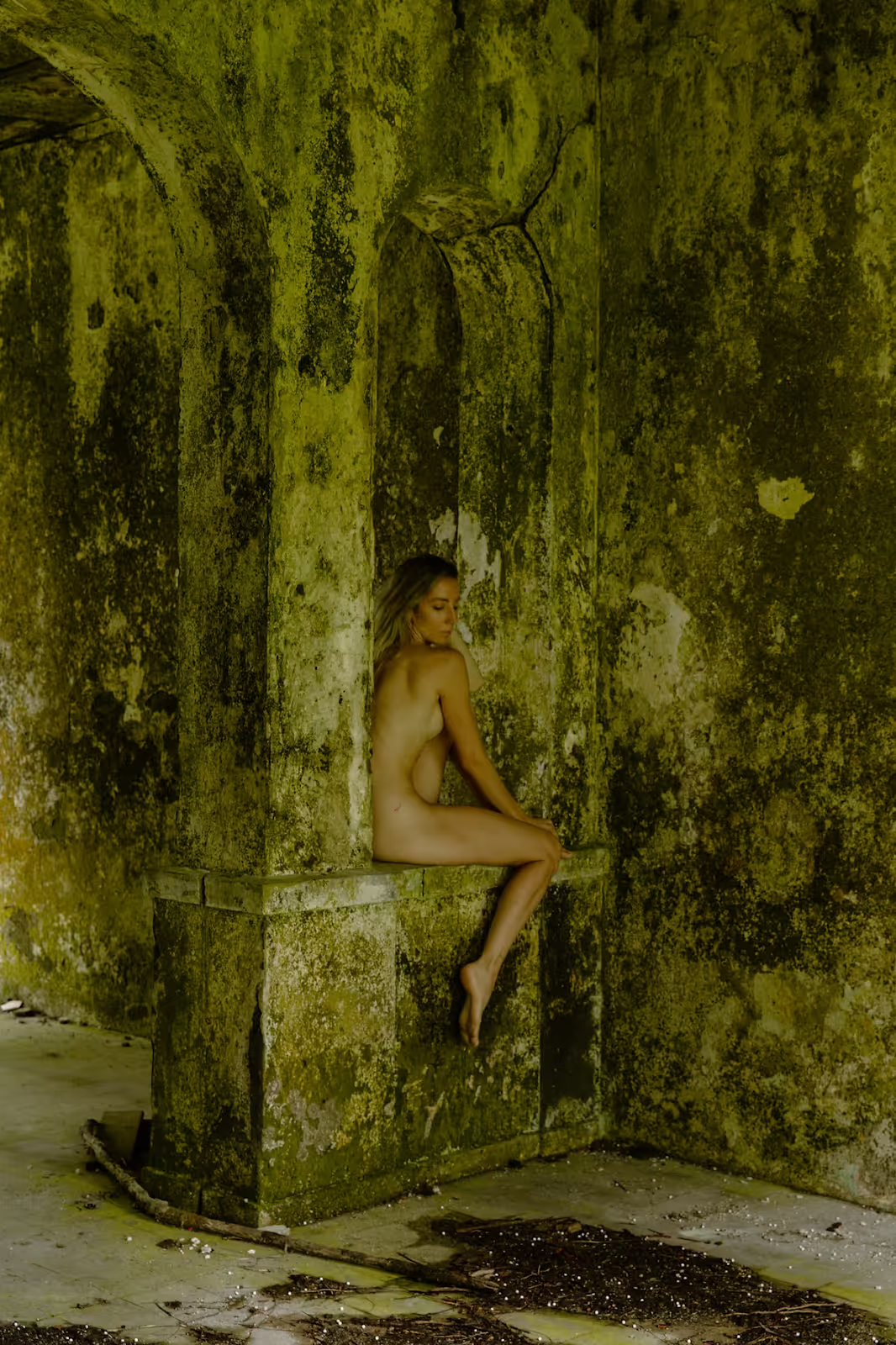
Pauline Faieff: It depends on my mood. But all my work centers around freedom, self-acceptance, and self-love. Sometimes I focus on censorship too. Nature has been an important setting for my self-portraits because it’s honest. Nature doesn’t pretend. Lately, I’ve used mirrors in my work to question how photography—especially nude photography—is viewed. You see nude paintings in museums, but rarely photography. I wanted to ask: would people view my work differently if it were framed?
So I found mirrors with frames and took self-portraits to challenge viewers. Would they see it as art if it was presented differently? It's all about the message I want to convey. I share my art to encourage others to feel free—to step out of their comfort zones and do what they love. Not necessarily nude art, but any form of authentic expression. I want people to break out of the boxes that social norms put us in.
OpenSea: That’s such a good point. In museums, we see nude paintings all the time, but rarely nude photography. They say it’s about censorship, but it’s confusing—it’s still the human body.
Pauline Faieff: Exactly. Society sexualizes the body so much. Even fashion ads are overly sexualized. That makes it harder for photography—especially nude photography—to be accepted as art. These cultural perceptions make it nearly impossible for nude artists to showcase their work.
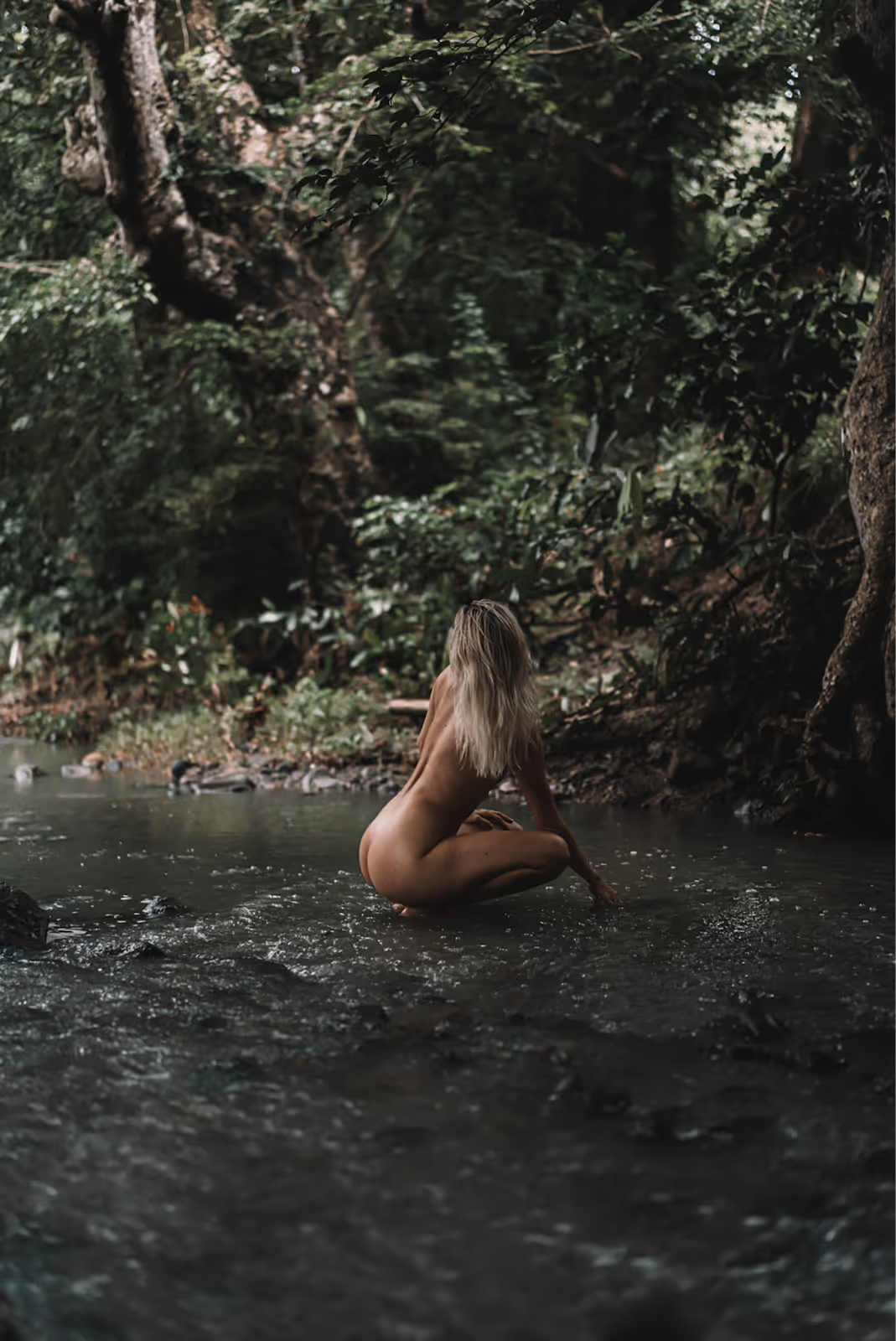
OpenSea: Your work feels sensual without being objectifying. How do you navigate that line—between empowerment and exposure?
Pauline Faieff: That’s a great question. At first, when I worked with a photographer, I think I was objectifying myself a bit. I was his muse. But when I started working alone, I brought in my own female gaze, I became my own muse. I decided what I wanted to share and what I didn’t. It’s about feeling. Everyone has their own boundary. I have friends who create more overtly sensual art, and that’s okay if it feels right to them. It’s about your personal connection to your body.
If you haven’t worked on acceptance, it’s easy to cross a line without realizing it. But when you have a sacred relationship with your body, you know what feels authentic to share and what doesn’t.
My work is a form of self-therapy. I want people to connect with themselves. When you do that, everything around you changes. Life becomes more aligned.
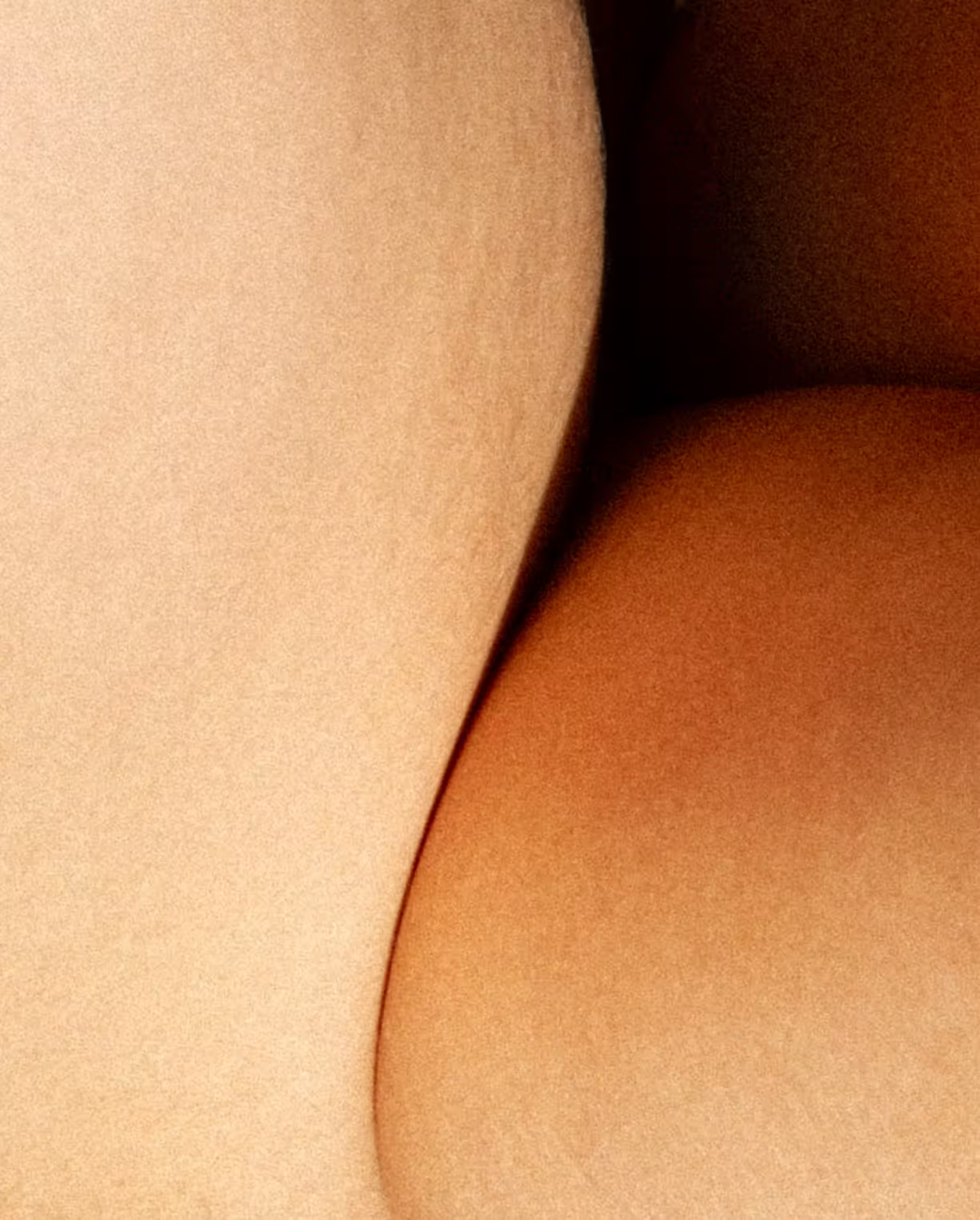
OpenSea: I would love to talk about The Alphabet project. I saw it on your website and loved the concept—close-up photos of your body forming 26 letters, almost unedited. What inspired that?
Pauline Faieff: You’re getting an alpha here—I’ve never talked about this project publicly. I’m really proud of it. I was having a conversation with another Pauline from 100 Collectors. I explained my work and how I faced extreme censorship. She suggested, “Why not write something?” But even the word “nude” gets banned on social media.
That led us to the idea of an alphabet. But I didn’t want to create something arbitrary. I knew my body had something to say. I felt the letters were already there—I just had to find them. So I took self-portraits in natural light in Martinique. It was both comfortable and uncomfortable—comfortable because it’s home, uncomfortable because of judgment. A good balance.
Then I searched for the letters in my body—not by posing, but by really looking. It took months. It was exhausting. Looking at yourself that closely is hard. Even now, there are parts of my body I struggle to love. I only went to Martinique three times, so I had to take what I could. Some letters were incredibly hard to find. But in the end, I created something genuine. I didn’t force anything.
I used sunlight and natural elements, no editing. I now feel like I’ve built my own language. In digital art, we often talk about code and language. This is my code. No one can censor me because it’s abstract. You have to spend time with it to read the letters—just like the relationship we have with our bodies. Do you take the time to truly see yourself?
The project also engages the audience. It’s not immediately obvious. There’s a second phase to the project. I’ll be collaborating with a generative artist to create letters through these photos. We’ll be able to write poems using my body. That’s what I’ve wanted to do from the start—it just took time to figure out how.
OpenSea: That’s incredible. Will that be released soon?
Pauline Faieff: It will likely be released at the end of 2025.
OpenSea: Got it. I’ll keep an eye out! Your work combines traditional photography with digital techniques to explore identity and self-love. Is your process always minimal like The Alphabet, or do you sometimes add layers?
Pauline Faieff: I try to avoid layers as much as possible. In my first collection, I wasn’t the photographer, so the process was different. Now, I want the audience to feel the connection to nature. Our bodies are part of nature. We shouldn’t be ashamed—we should embrace them, spend time understanding them.
It’s like our relationship with digital space. We build connections online, but what we love most is meeting in real life. I’m creating digitally, but showing something deeply physical. It’s hard to replicate that with AI. A body is something you feel. That’s why it makes so much sense to have this work on the blockchain.
OpenSea: For collectors who are seeing your artwork for the first time or collecting for the first time, what do you hope they feel?
Pauline Faieff: That they can be whoever they want. That there’s no shame in being different—because that’s who we are. I want them to embrace themselves, stop pretending, stop trying to please others. To feel, “I am who I am. I am enough.” I want them to feel the freedom of being.
We live in a world shaped by so many societal structures. That’s also why I connect so strongly with crypto. We’re trying to build something new—new systems, new opportunities. I don’t feel connected to the traditional world. So why not build something else for ourselves?
Yes, we’re different. We feel different. That’s why we’re here, creating together. And that’s what makes it beautiful. I hope people feel that connection—to their true selves—and understand that it’s all about self-love and self-acceptance.

OpenSea: I’ve followed you for quite some time—I’ve been in the space since 2022. I’ve seen your work evolve, and every time I see it, whether on OpenSea or on my timeline, I feel a connection. It’s empowering.
Pauline Faieff: Oh my god. Thank you so much. You made my day. That means a lot.
OpenSea: Is there anything else on the horizon?
Pauline Faieff: I have a few projects in progress. Censorship has been a huge issue for me. So I’m creating an edition around that. I don’t know when it’ll be released yet. But I’m also really grateful to be speaking with you. I’ve said this before: there’s always drama around platforms, but I was truly grateful to have OpenSea when I started. I never faced censorship there.
I was even featured on the main page several times. That was huge for me. Because you can’t claim to promote art while censoring what qualifies as nude art.
OpenSea: Thank you so much for your time today! This has been really insightful.
Pauline Faieff: Thank you!


.png)
.png)
.png)