
Remnants emerges as a quieter, more contemplative entry in XCopy’s body of work—an exploration of digital residue and memory fragments left behind in the wake of collapse. Unlike his louder, more chaotic pieces that revel in the absurdity of the crypto zeitgeist, this collection leans into decay as poetry. The characters and forms feel partially erased, as though time, technology, or indifference has worn them down. They aren’t screaming—they’re whispering, glitching softly in loops that feel like fading recollections of a system that once buzzed with noise.

Visually, Remnants leans on XCopy’s iconic motifs—flickering glitch lines, skulls, corrupted forms—but with a more melancholic energy. The palette remains jarring yet subdued, creating a sense of stillness within motion. Every frame looks like it’s breaking down in real time, inviting the viewer to meditate on impermanence. These are not images of digital life at its peak, but artifacts—scraps of identity, media, or memory, frozen in the moment just before they dissolve. They feel like the visual remains of someone or something that once mattered.

In the broader arc of XCopy’s work, this collection marks a moment of introspection—a shift from external critique toward internal reflection. For collectors, owning a piece from Remnants isn’t just about flexing taste or investment savvy; it’s about holding a fragment of a fading signal, a quiet statement about what endures in a world that forgets fast.

Remnants emerges as a quieter, more contemplative entry in XCopy’s body of work—an exploration of digital residue and memory fragments left behind in the wake of collapse. Unlike his louder, more chaotic pieces that revel in the absurdity of the crypto zeitgeist, this collection leans into decay as poetry. The characters and forms feel partially erased, as though time, technology, or indifference has worn them down. They aren’t screaming—they’re whispering, glitching softly in loops that feel like fading recollections of a system that once buzzed with noise.

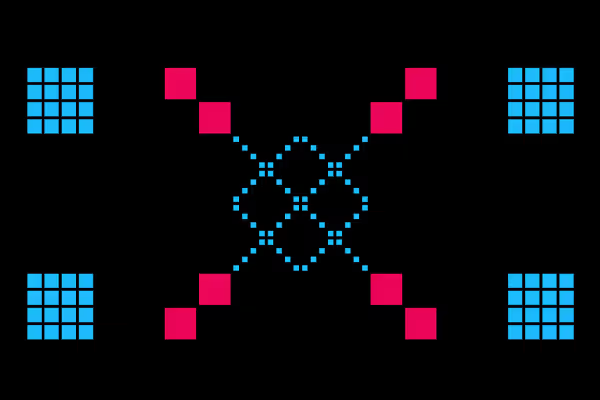
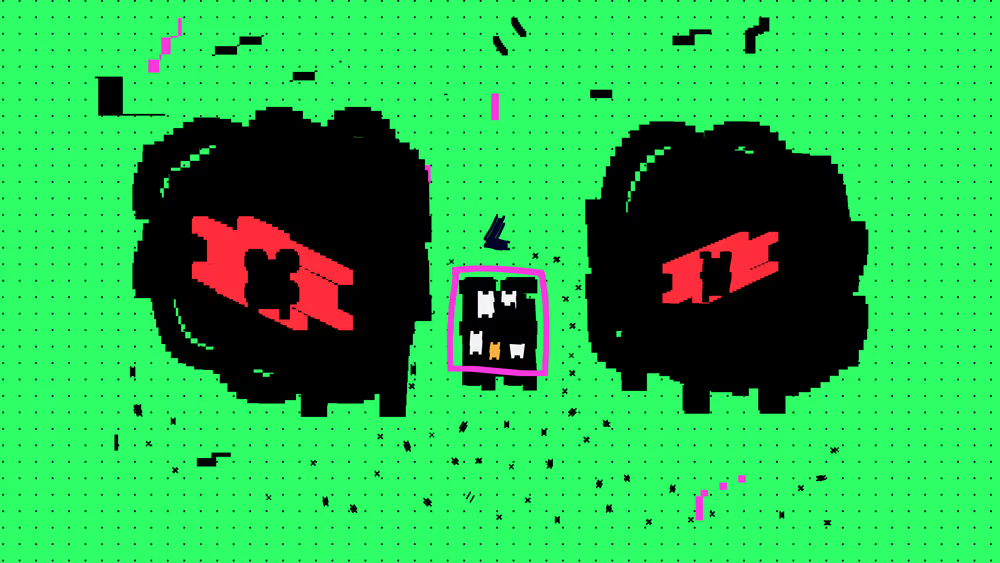

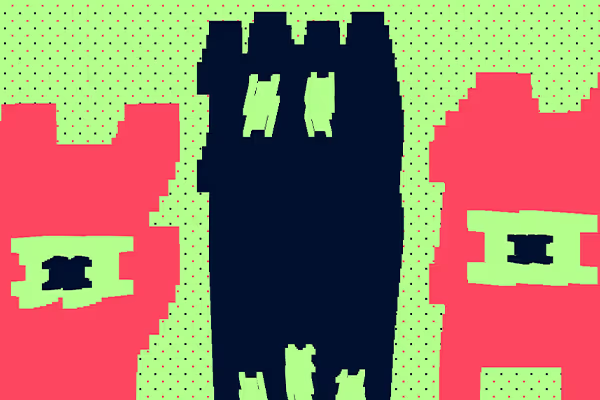

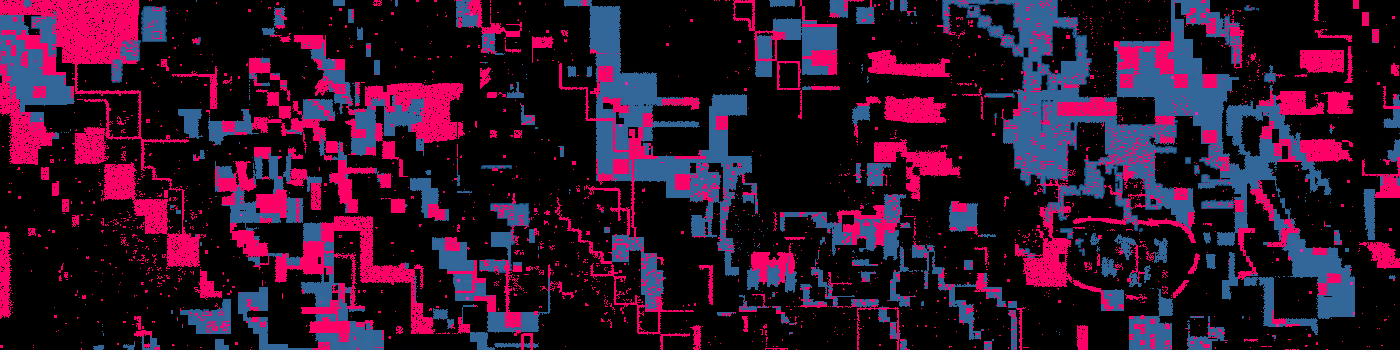
Visually, Remnants leans on XCopy’s iconic motifs—flickering glitch lines, skulls, corrupted forms—but with a more melancholic energy. The palette remains jarring yet subdued, creating a sense of stillness within motion. Every frame looks like it’s breaking down in real time, inviting the viewer to meditate on impermanence. These are not images of digital life at its peak, but artifacts—scraps of identity, media, or memory, frozen in the moment just before they dissolve. They feel like the visual remains of someone or something that once mattered.

In the broader arc of XCopy’s work, this collection marks a moment of introspection—a shift from external critique toward internal reflection. For collectors, owning a piece from Remnants isn’t just about flexing taste or investment savvy; it’s about holding a fragment of a fading signal, a quiet statement about what endures in a world that forgets fast.


Remnants emerges as a quieter, more contemplative entry in XCopy’s body of work—an exploration of digital residue and memory fragments left behind in the wake of collapse. Unlike his louder, more chaotic pieces that revel in the absurdity of the crypto zeitgeist, this collection leans into decay as poetry. The characters and forms feel partially erased, as though time, technology, or indifference has worn them down. They aren’t screaming—they’re whispering, glitching softly in loops that feel like fading recollections of a system that once buzzed with noise.

Visually, Remnants leans on XCopy’s iconic motifs—flickering glitch lines, skulls, corrupted forms—but with a more melancholic energy. The palette remains jarring yet subdued, creating a sense of stillness within motion. Every frame looks like it’s breaking down in real time, inviting the viewer to meditate on impermanence. These are not images of digital life at its peak, but artifacts—scraps of identity, media, or memory, frozen in the moment just before they dissolve. They feel like the visual remains of someone or something that once mattered.

In the broader arc of XCopy’s work, this collection marks a moment of introspection—a shift from external critique toward internal reflection. For collectors, owning a piece from Remnants isn’t just about flexing taste or investment savvy; it’s about holding a fragment of a fading signal, a quiet statement about what endures in a world that forgets fast.


