发现
系列
代币
交换
投放
活动
奖励
工作室
/
项目
持有者
活动
汇总
网络
服务条款
隐私政策
$3,220.82
Live Mints
明特
价格
数量
时间
现场销售
项目
价格
自
时间
Live Mints
明特
价格
数量
时间
现场销售
项目
价格
自
时间
UniWorlds

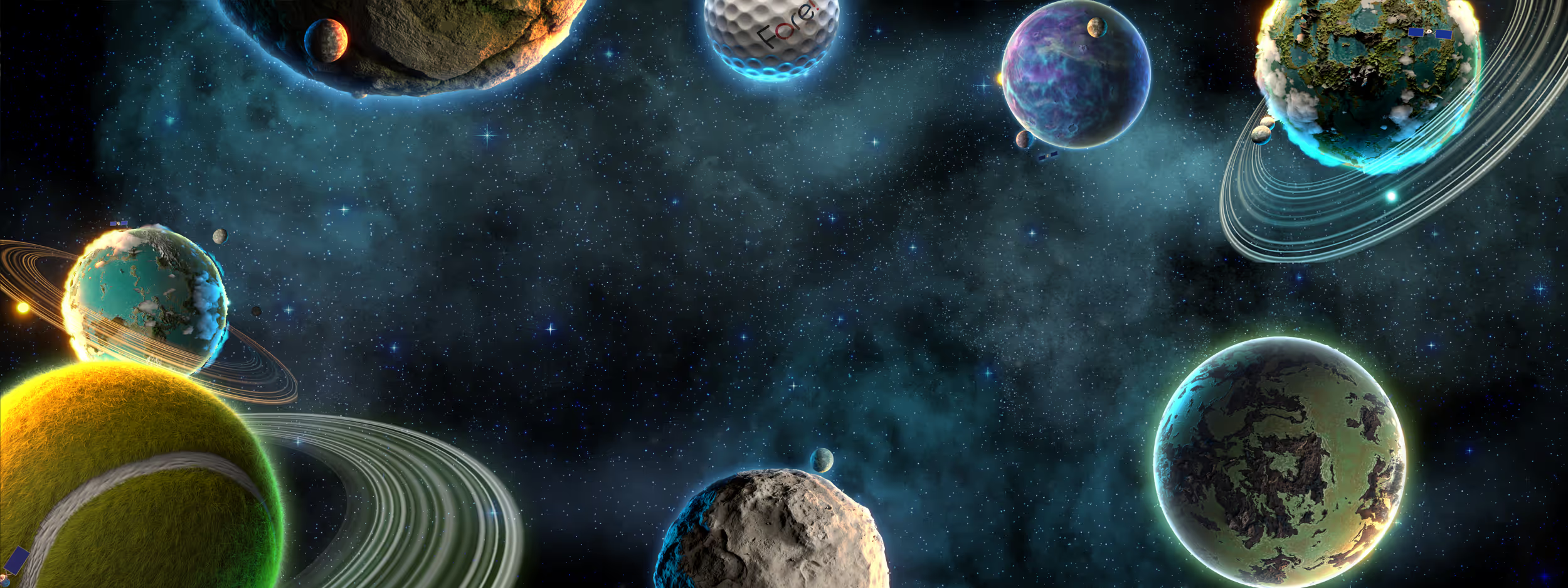
A collection of 1,337 handcrafted exoplanets

Each a digital masterpiece, designed over 6 months and rendered with careful thought of every detail from water levels to size of forrests. Each artpiece Has its own name also pragrammatically constructed from handpicked rules for propper planet names + some special additions from popculture ( if you can find them ) Each planet has its own backstory also procedually generated from a massive list of attributes and traits that the planet visually display.

Every detail is meticulously planned and refined to perfection. Very few of them have been left to coincidence.

UniWorlds

A collection of 1,337 handcrafted exoplanets

Each a digital masterpiece, designed over 6 months and rendered with careful thought of every detail from water levels to size of forrests. Each artpiece Has its own name also pragrammatically constructed from handpicked rules for propper planet names + some special additions from popculture ( if you can find them ) Each planet has its own backstory also procedually generated from a massive list of attributes and traits that the planet visually display.

Every detail is meticulously planned and refined to perfection. Very few of them have been left to coincidence.

Limited & 1:1 – Every piece is one-of-a-kind. No copies, limited sale pr. wallet

Full focus on the artwork, the craft, creativity and design

Procedually computer generated

The planets of our univers have been created around rules of material and gravity.

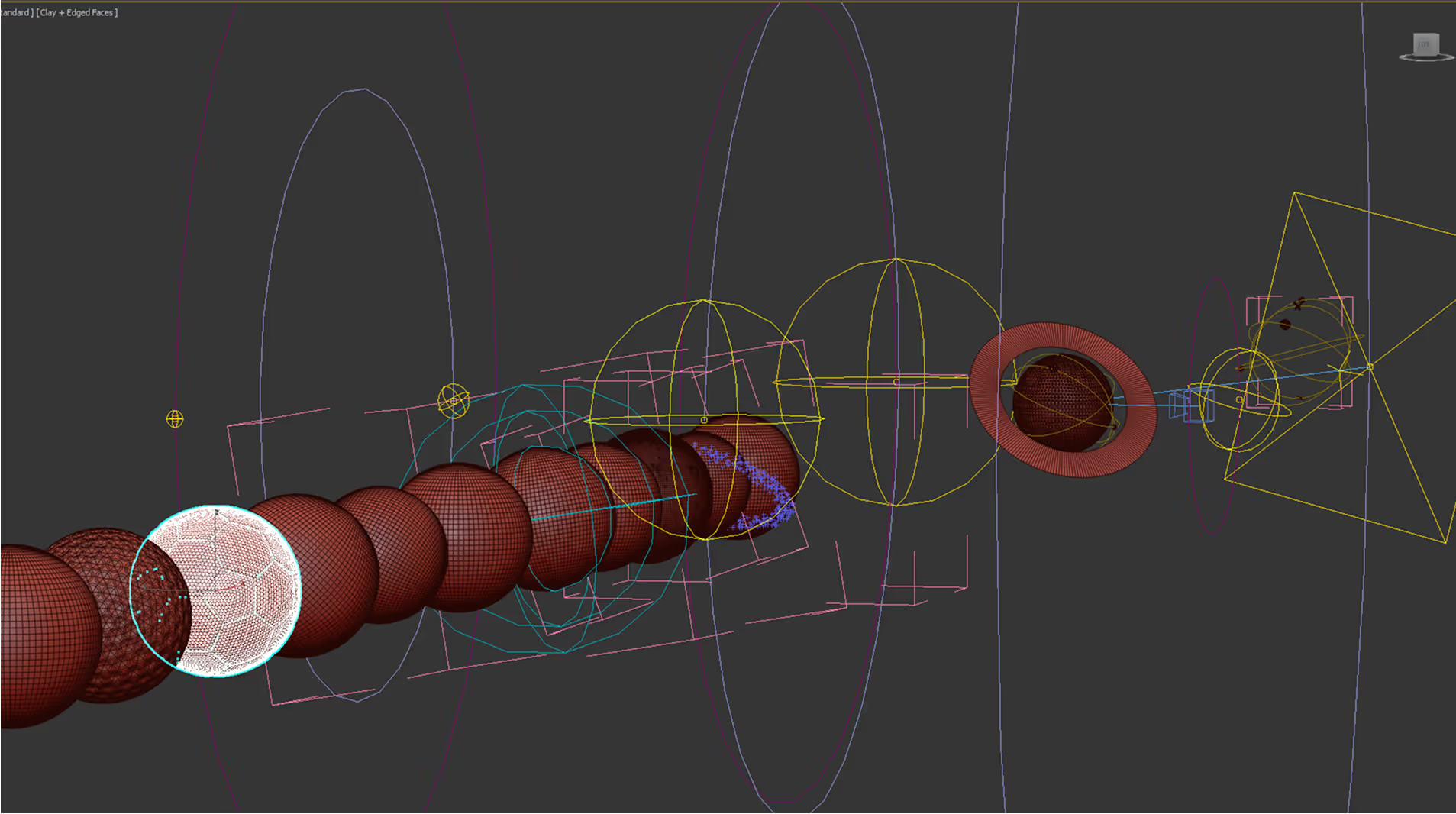
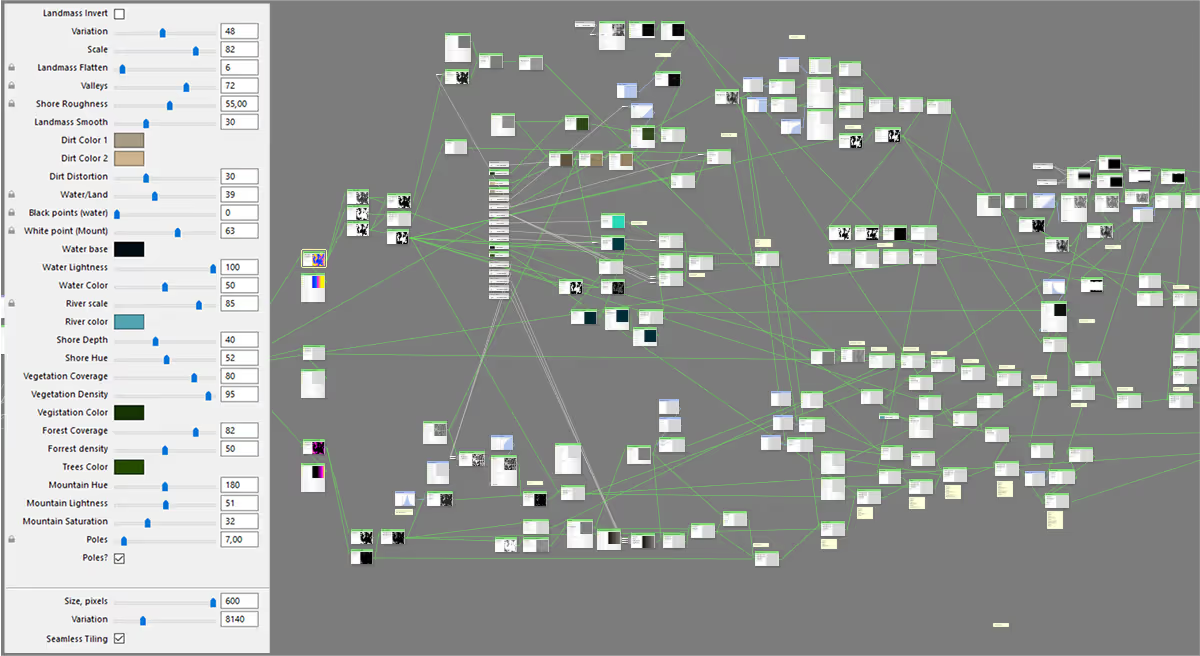
Similarly most of the UniWorlds planets have been proceedually generated through algorithms and code. The diagram above and below show how the planets and the space background have been set up via a vast amount of settings around randomization and controlled variables.
Procedually computer generated

The planets of our univers have been created around rules of material and gravity.

Similarly most of the UniWorlds planets have been proceedually generated through algorithms and code. The diagram above and below show how the planets and the space background have been set up via a vast amount of settings around randomization and controlled variables.
6 Months of 3D Configuring and Graph Algorithms
3D scene, with differend distinct type of planets
Earthlikes pre rendered in node-based procedual generation
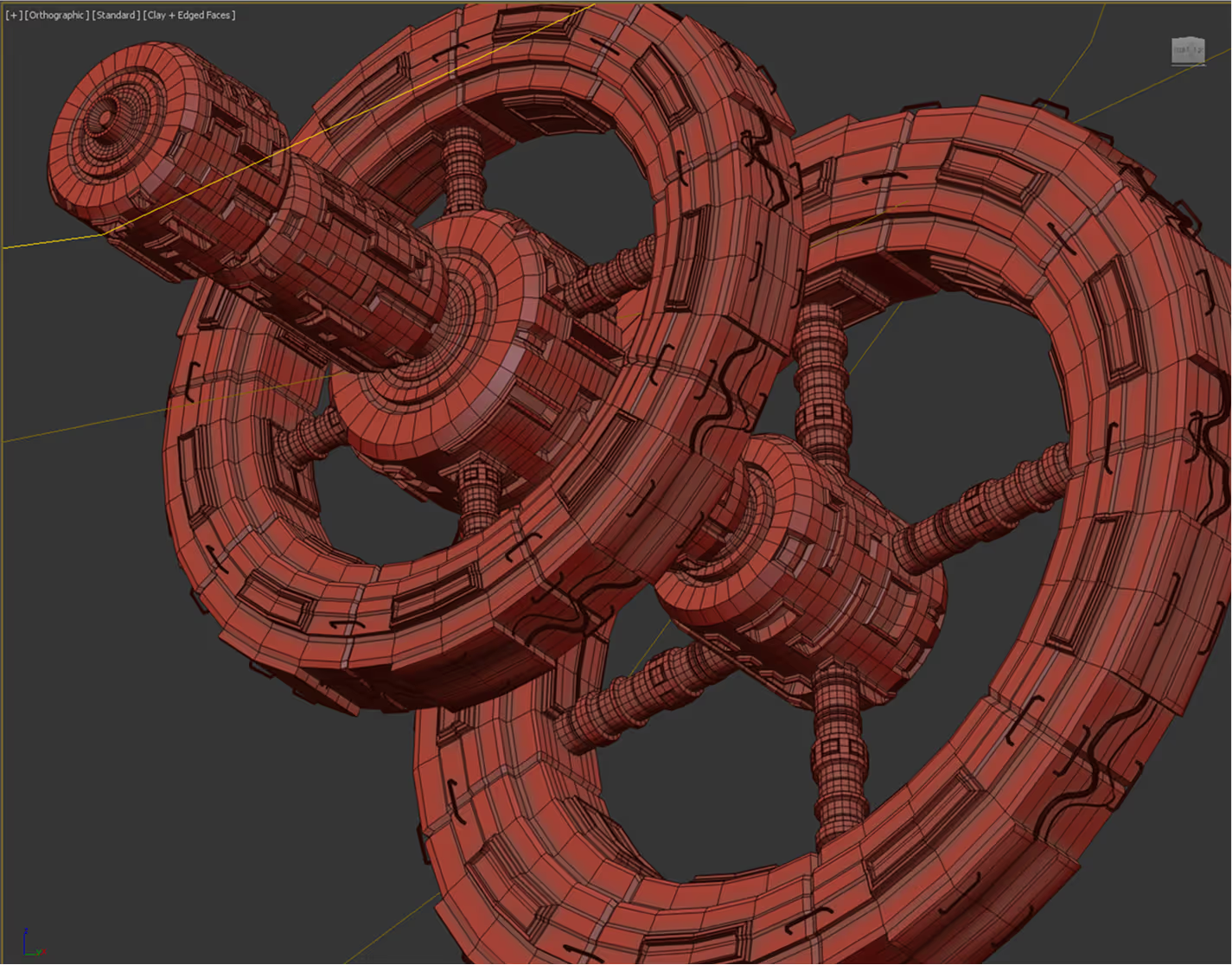
Space stations modeled manually
Depth maps calculated and generated in external application
100% Human-Crafted No AI Generation

UniWorlds was built entirely by hand, with six months of design work and a week of 3D rendering. Long before generative AI became widespread. Every planet was crafted using custom procedural logic, mathematical rules, and artistic refinement, without AI automation.

In an era of AI-generated art, UniWorlds stands as a testament to human creativity, proving that procedural design, when guided by an artist, can achieve stunning complexity on its own.

Behind the art
Philip Thonbo
UX Lead | DIGITAL DESIGN | MOTION GRAPHICS

Designer with 20+ years in User Experience design, UI and Motion Graphics. Experienced in digtial production from LEGO and Many other clients

Designer with 20+ years in User Experience design, UI and Motion Graphics. Experienced in digtial production from LEGO and Many other clients

Chapter 1: Crafting the Foundation of a Universe

I wanted to create something that felt real - not just an NFT collection with superficial variations, but a world where each piece had depth and logic. Planets were the perfect subject. They share the same fundamental form, yet no two are the same.

The challenge was to create uniqueness beyond surface-level changes - beyond the usual approach of swapping hats or colors. I wanted rules, physics, and internal consistency. So I began in 3ds Max, using procedural logic and node-based algorithms to form landscapes from the ground up.

I started with barren planets, defining their terrain, craters, and colors. The key was making them feel organic, shaped by geological forces rather than random noise. Once those felt right, I moved to orbiting elements - rings, asteroids, satellites, and space stations - bringing motion and scale into the mix.

Then came Earth-like planets, the hardest to perfect. I had previously modeled Earth in high detail - mountains, ocean depth, translucent waters, forests, and atmospheric effects - but now I had to achieve the same without direct sculpting, using only fractal noise, elevation filters, and procedural constraints. The process took 3 months. I crafted five perfect examples, tweaking them manually to establish a baseline for realism. Then, I programmed controls - sliders that adjusted terrain formation, color schemes, and atmospheric conditions - allowing me to generate organic variations within the rules I had created.

Chapter 2: From Controlled Chaos to the Impossible

Once I mastered Earth-like planets, I pushed into extremes.

Exploding planets - cracks in their surfaces glowing from an unstable core, with radiant light waves escaping. Dead worlds - lifeless husks, still faintly glowing with the last remnants of a dying core. Exotic exoplanets - atmospheres warped by alien chemistry, with surreal textures and colors. Each new category expanded the system, pushing it beyond simple realism.

Then, I went beyond science and into creativity - blending planetary logic with cultural influences. A few planets in the collection pay homage to classic sci-fi worlds, drawing from my decades-long love for the genre. Names, landscapes, and color palettes all subtly reference planets from iconic movies, books, and games.

With the full spectrum of planets complete, I needed to bring them to life visually. That’s where After Effects came in. I rendered silhouette and depth maps from 3ds Max, allowing me to fine-tune colors, atmospheric glows, and rim lighting based on how real atmospheric elements scatter light—similar to how ozone makes Earth’s sky blue.

Chapter 3: Giving Planets Identity – Names, Metadata & Storytelling

A world isn’t complete without a name and history.

I built a custom name generator, drawing from sci-fi naming conventions I had absorbed since the ‘80s. The system used a mix of linguistic rules and structured randomness to create believable planetary names. Some planets were directly inspired by famous sci-fi locations, offering hidden references for fans to discover.

To add further depth, I programmed metadata generation based on planet type, traits, and orbiting structures. Each planet now had a backstory - shaped not just by visuals, but by the data behind them.

To achieve this, I coded in JavaScript, Batch, and Python, automating the assignment of rarity traits, classifications, and environmental details. The result was a collection where every planet had an identity - not just a file, but a world with context.

With the James Webb telescope, new planets outside our solar system will soon be uncovered.

The James Webb Space Telescope takes us into a new era in space exploration, allowing us to see deeper into the universe than ever before. With its advanced infrared capabilities, it can detect distant exoplanets, analyze their atmospheres, and uncover worlds that may have the right conditions for life.

As technology advances, we are on the verge of discovering an unprecedented number of new exoplanets, expanding our understanding of the cosmos and reshaping our perception of our place in the universe.

With the James Webb telescope, new planets outside our solar system will soon be uncovered.

The James Webb Space Telescope takes us into a new era in space exploration, allowing us to see deeper into the universe than ever before. With its advanced infrared capabilities, it can detect distant exoplanets, analyze their atmospheres, and uncover worlds that may have the right conditions for life.

As technology advances, we are on the verge of discovering an unprecedented number of new exoplanets, expanding our understanding of the cosmos and reshaping our perception of our place in the universe.

Are We Alone in the Universe?

The Drake Equation estimates the number of civilizations in our galaxy based on factors like star formation, habitable planets, and the chances of intelligent life. Depending on the assumptions, estimates range from just us to thousands of civilizations.

The biggest unknown is how long civilizations survive. If they last millions of years, the galaxy could be full of life. If they self-destruct quickly, we might be alone. With new exoplanet discoveries, we are getting closer to finding out.

Designed after 20 years of Motion Graphics and Digital Artwork

I have created this collection to be able to give my design wings to leave my creative nest and fly off into the blockchain. Like when you sell a real artpiece and you let go of it. The process of giving your art away can be a beautiful thing. But 6 months of hard work on this collection also need to pay off - but does not need to make me rich.

Designed after 20 years of Motion Graphics and Digital Artwork

I have created this collection to be able to give my design wings to leave my creative nest and fly off into the blockchain. Like when you sell a real artpiece and you let go of it. The process of giving your art away can be a beautiful thing. But 6 months of hard work on this collection also need to pay off - but does not need to make me rich.

The Triple Meaning of "UniWorlds"

1️⃣ Uni comes From Latin ūnus → "One" → Every planet is one-of-a-kind each with its own name and story, and each NFT has one owner forever.

2️⃣ "Worlds" → Planets and celestial bodies, forming a digital universe of worlds.

3️⃣ The word "UniWorlds" Echoes "Universe" → Further strengthening the bond to the concept of space.

UniWorlds

Polygon
1,337
2025年3月
艺术
铸造结束
Polygon
1,337
启动 2025年3月
艺术
铸造结束
地板价
0.01 WETH
1d 楼 %0%
最佳报价
—
24小时交易量0.00 POL
总交易量0.00 POL
已刊登1%
所有者(唯一)1 (0.1%)

UniWorlds
UniWorlds

Polygon
1,337
2025年3月
艺术
铸造结束
Polygon
1,337
启动 2025年3月
艺术
铸造结束
探索
项目
报价
持有者
特征
活动
关于

UniWorlds

Polygon
1,337
2025年3月
艺术
铸造结束
Polygon
1,337
启动 2025年3月
艺术
铸造结束
地板价
0.01 WETH
1d 楼 %0%
最佳报价
—
24小时交易量0.00 POL
总交易量0.00 POL
已刊登1%
所有者(唯一)1 (0.1%)

UniWorlds
UniWorlds

Polygon
1,337
2025年3月
艺术
铸造结束
Polygon
1,337
启动 2025年3月
艺术
铸造结束
探索
项目
报价
持有者
特征
活动
关于
Live Mints
明特
价格
数量
时间
现场销售
项目
价格
自
时间
Live Mints
明特
价格
数量
时间
现场销售
项目
价格
自
时间
UniWorlds

A collection of 1,337 handcrafted exoplanets

Each a digital masterpiece, designed over 6 months and rendered with careful thought of every detail from water levels to size of forrests. Each artpiece Has its own name also pragrammatically constructed from handpicked rules for propper planet names + some special additions from popculture ( if you can find them ) Each planet has its own backstory also procedually generated from a massive list of attributes and traits that the planet visually display.

Every detail is meticulously planned and refined to perfection. Very few of them have been left to coincidence.

UniWorlds

A collection of 1,337 handcrafted exoplanets

Each a digital masterpiece, designed over 6 months and rendered with careful thought of every detail from water levels to size of forrests. Each artpiece Has its own name also pragrammatically constructed from handpicked rules for propper planet names + some special additions from popculture ( if you can find them ) Each planet has its own backstory also procedually generated from a massive list of attributes and traits that the planet visually display.

Every detail is meticulously planned and refined to perfection. Very few of them have been left to coincidence.

Limited & 1:1 – Every piece is one-of-a-kind. No copies, limited sale pr. wallet

Full focus on the artwork, the craft, creativity and design

Procedually computer generated

The planets of our univers have been created around rules of material and gravity.

Similarly most of the UniWorlds planets have been proceedually generated through algorithms and code. The diagram above and below show how the planets and the space background have been set up via a vast amount of settings around randomization and controlled variables.
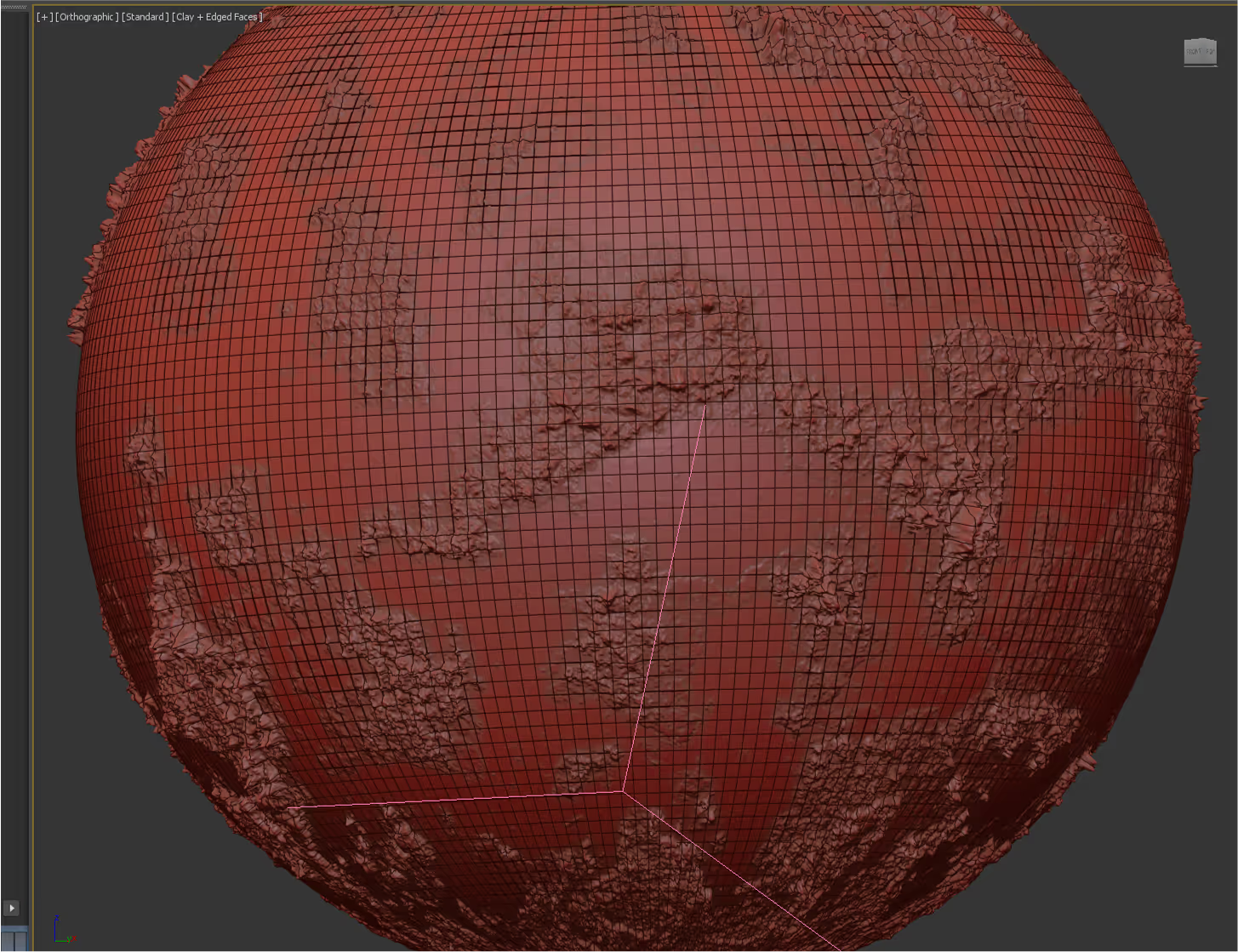
Procedually computer generated

The planets of our univers have been created around rules of material and gravity.

Similarly most of the UniWorlds planets have been proceedually generated through algorithms and code. The diagram above and below show how the planets and the space background have been set up via a vast amount of settings around randomization and controlled variables.

6 Months of 3D Configuring and Graph Algorithms
3D scene, with differend distinct type of planets
Earthlikes pre rendered in node-based procedual generation
Space stations modeled manually
Depth maps calculated and generated in external application
100% Human-Crafted No AI Generation

UniWorlds was built entirely by hand, with six months of design work and a week of 3D rendering. Long before generative AI became widespread. Every planet was crafted using custom procedural logic, mathematical rules, and artistic refinement, without AI automation.

In an era of AI-generated art, UniWorlds stands as a testament to human creativity, proving that procedural design, when guided by an artist, can achieve stunning complexity on its own.

Behind the art
Philip Thonbo
UX Lead | DIGITAL DESIGN | MOTION GRAPHICS

Designer with 20+ years in User Experience design, UI and Motion Graphics. Experienced in digtial production from LEGO and Many other clients
Designer with 20+ years in User Experience design, UI and Motion Graphics. Experienced in digtial production from LEGO and Many other clients

Chapter 1: Crafting the Foundation of a Universe

I wanted to create something that felt real - not just an NFT collection with superficial variations, but a world where each piece had depth and logic. Planets were the perfect subject. They share the same fundamental form, yet no two are the same.

The challenge was to create uniqueness beyond surface-level changes - beyond the usual approach of swapping hats or colors. I wanted rules, physics, and internal consistency. So I began in 3ds Max, using procedural logic and node-based algorithms to form landscapes from the ground up.

I started with barren planets, defining their terrain, craters, and colors. The key was making them feel organic, shaped by geological forces rather than random noise. Once those felt right, I moved to orbiting elements - rings, asteroids, satellites, and space stations - bringing motion and scale into the mix.

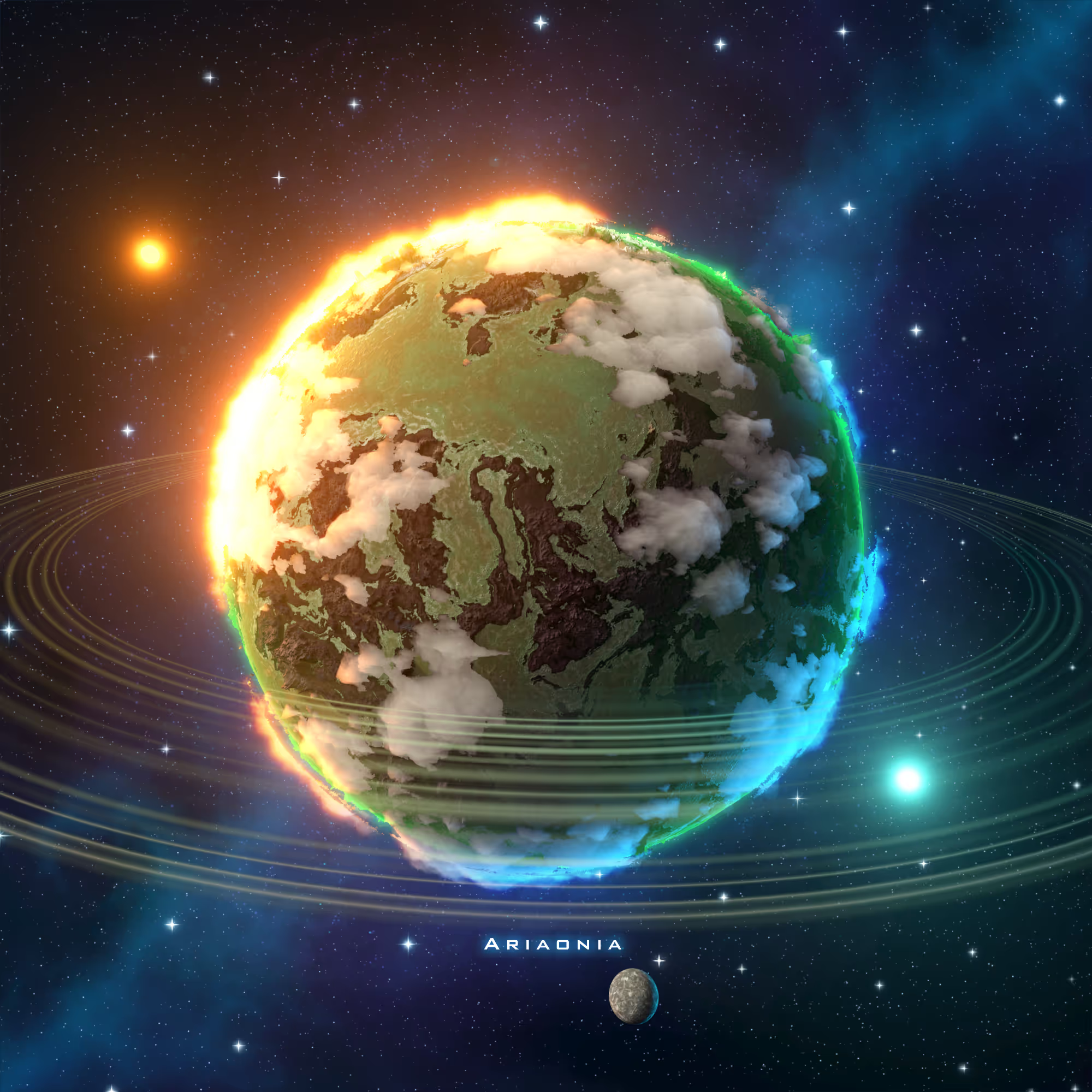
Then came Earth-like planets, the hardest to perfect. I had previously modeled Earth in high detail - mountains, ocean depth, translucent waters, forests, and atmospheric effects - but now I had to achieve the same without direct sculpting, using only fractal noise, elevation filters, and procedural constraints. The process took 3 months. I crafted five perfect examples, tweaking them manually to establish a baseline for realism. Then, I programmed controls - sliders that adjusted terrain formation, color schemes, and atmospheric conditions - allowing me to generate organic variations within the rules I had created.
Chapter 2: From Controlled Chaos to the Impossible

Once I mastered Earth-like planets, I pushed into extremes.

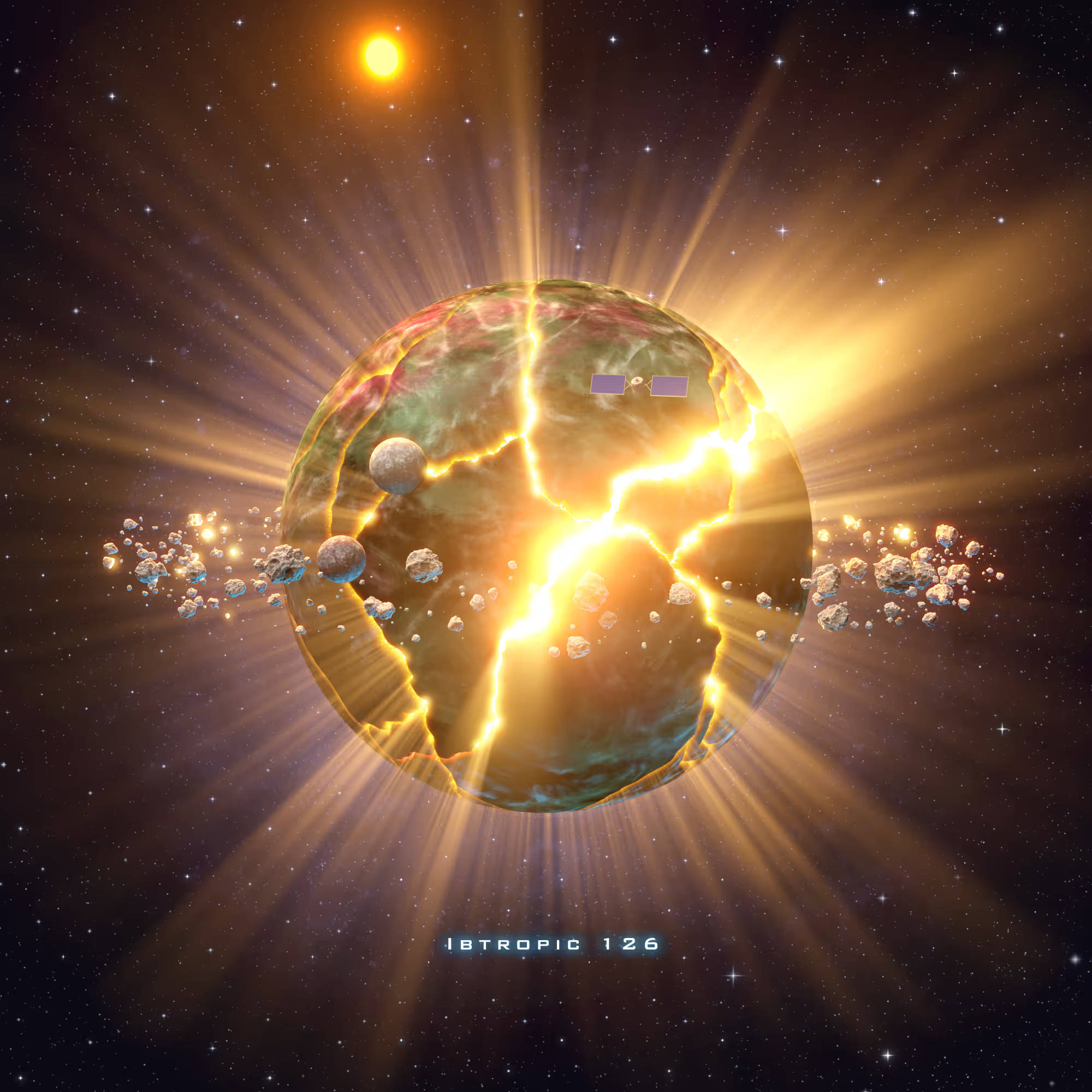
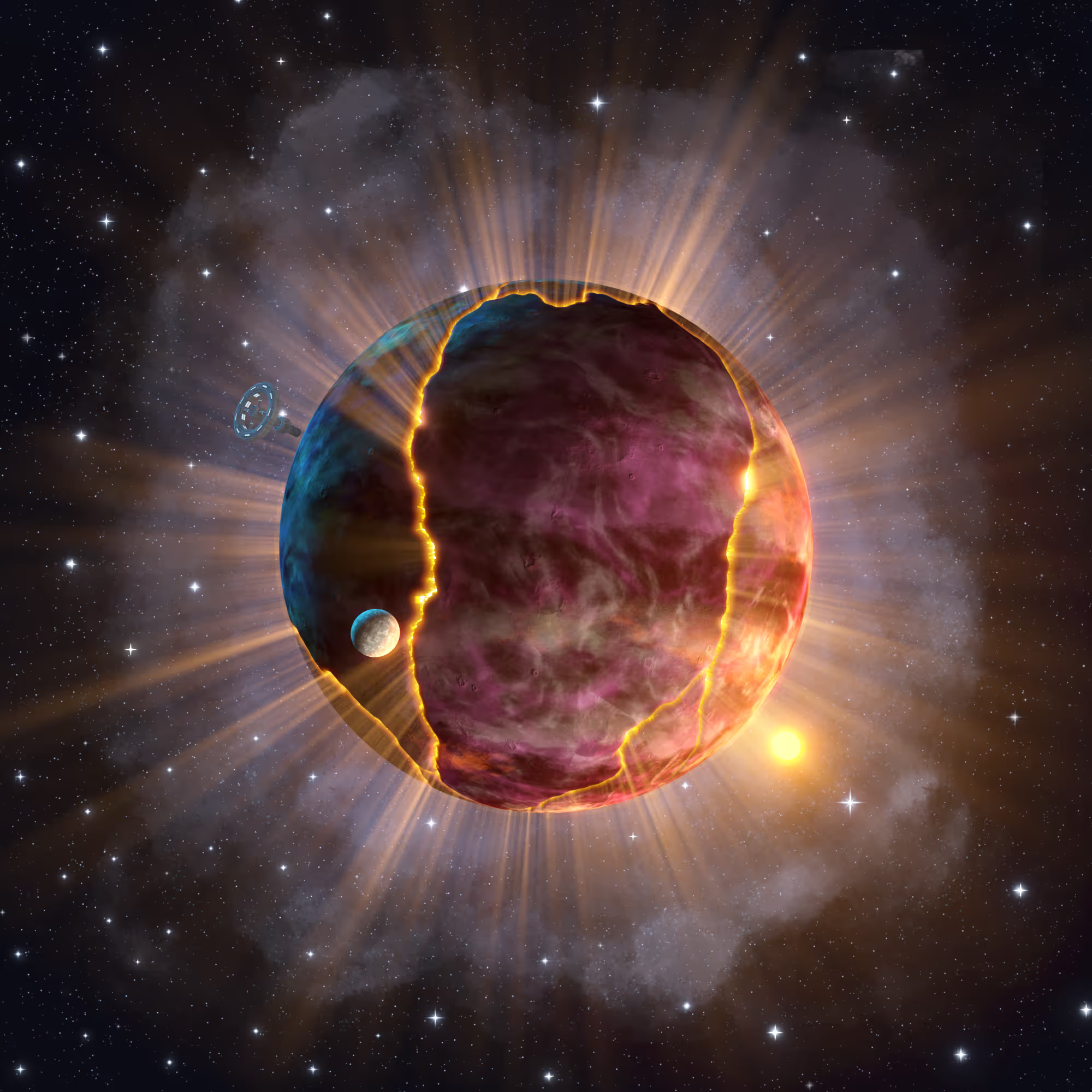
Exploding planets - cracks in their surfaces glowing from an unstable core, with radiant light waves escaping. Dead worlds - lifeless husks, still faintly glowing with the last remnants of a dying core. Exotic exoplanets - atmospheres warped by alien chemistry, with surreal textures and colors. Each new category expanded the system, pushing it beyond simple realism.

Then, I went beyond science and into creativity - blending planetary logic with cultural influences. A few planets in the collection pay homage to classic sci-fi worlds, drawing from my decades-long love for the genre. Names, landscapes, and color palettes all subtly reference planets from iconic movies, books, and games.

With the full spectrum of planets complete, I needed to bring them to life visually. That’s where After Effects came in. I rendered silhouette and depth maps from 3ds Max, allowing me to fine-tune colors, atmospheric glows, and rim lighting based on how real atmospheric elements scatter light—similar to how ozone makes Earth’s sky blue.

Chapter 3: Giving Planets Identity – Names, Metadata & Storytelling

A world isn’t complete without a name and history.

I built a custom name generator, drawing from sci-fi naming conventions I had absorbed since the ‘80s. The system used a mix of linguistic rules and structured randomness to create believable planetary names. Some planets were directly inspired by famous sci-fi locations, offering hidden references for fans to discover.

To add further depth, I programmed metadata generation based on planet type, traits, and orbiting structures. Each planet now had a backstory - shaped not just by visuals, but by the data behind them.

To achieve this, I coded in JavaScript, Batch, and Python, automating the assignment of rarity traits, classifications, and environmental details. The result was a collection where every planet had an identity - not just a file, but a world with context.
With the James Webb telescope, new planets outside our solar system will soon be uncovered.

The James Webb Space Telescope takes us into a new era in space exploration, allowing us to see deeper into the universe than ever before. With its advanced infrared capabilities, it can detect distant exoplanets, analyze their atmospheres, and uncover worlds that may have the right conditions for life.

As technology advances, we are on the verge of discovering an unprecedented number of new exoplanets, expanding our understanding of the cosmos and reshaping our perception of our place in the universe.

With the James Webb telescope, new planets outside our solar system will soon be uncovered.

The James Webb Space Telescope takes us into a new era in space exploration, allowing us to see deeper into the universe than ever before. With its advanced infrared capabilities, it can detect distant exoplanets, analyze their atmospheres, and uncover worlds that may have the right conditions for life.

As technology advances, we are on the verge of discovering an unprecedented number of new exoplanets, expanding our understanding of the cosmos and reshaping our perception of our place in the universe.

Are We Alone in the Universe?

The Drake Equation estimates the number of civilizations in our galaxy based on factors like star formation, habitable planets, and the chances of intelligent life. Depending on the assumptions, estimates range from just us to thousands of civilizations.

The biggest unknown is how long civilizations survive. If they last millions of years, the galaxy could be full of life. If they self-destruct quickly, we might be alone. With new exoplanet discoveries, we are getting closer to finding out.
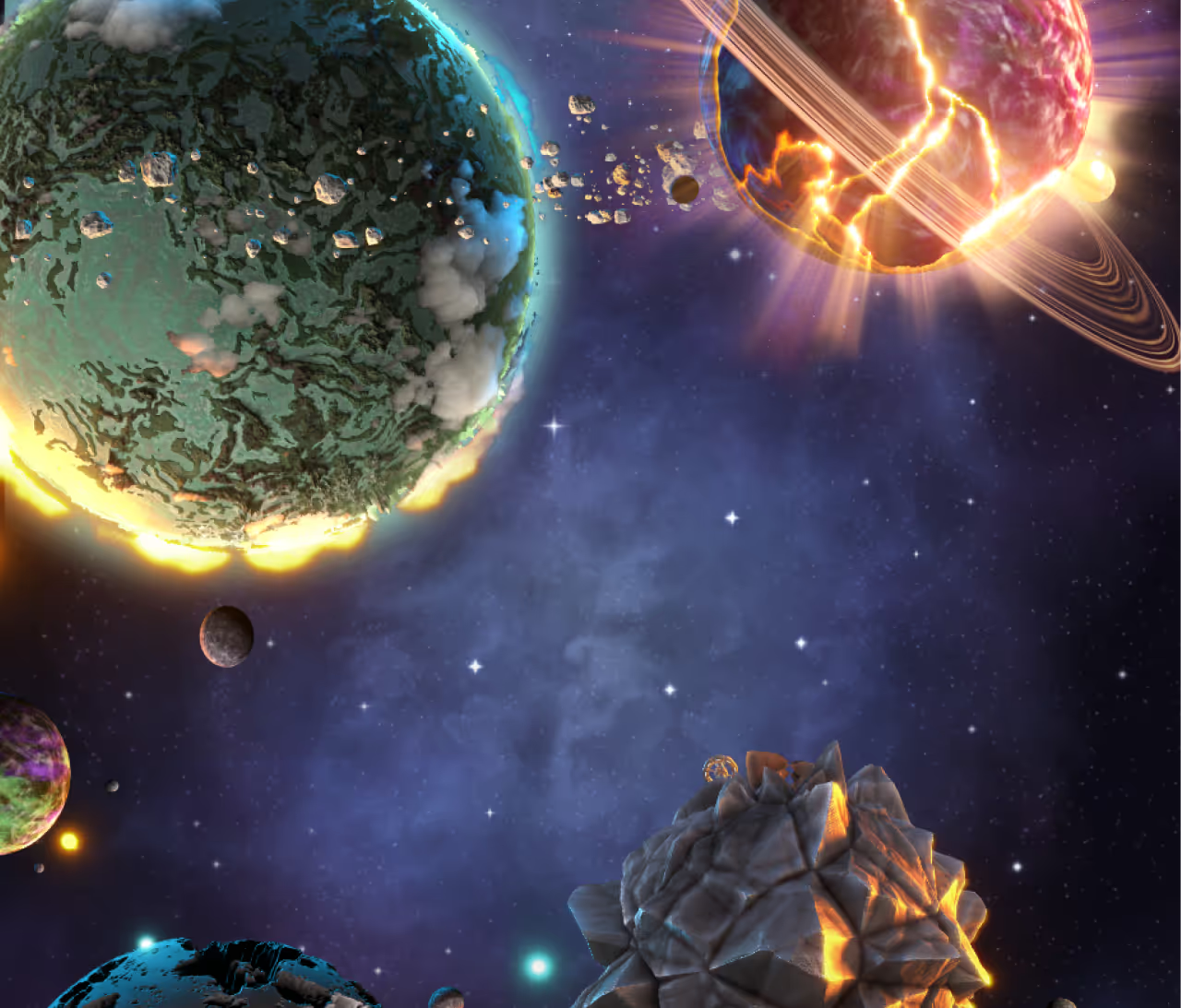
Designed after 20 years of Motion Graphics and Digital Artwork

I have created this collection to be able to give my design wings to leave my creative nest and fly off into the blockchain. Like when you sell a real artpiece and you let go of it. The process of giving your art away can be a beautiful thing. But 6 months of hard work on this collection also need to pay off - but does not need to make me rich.
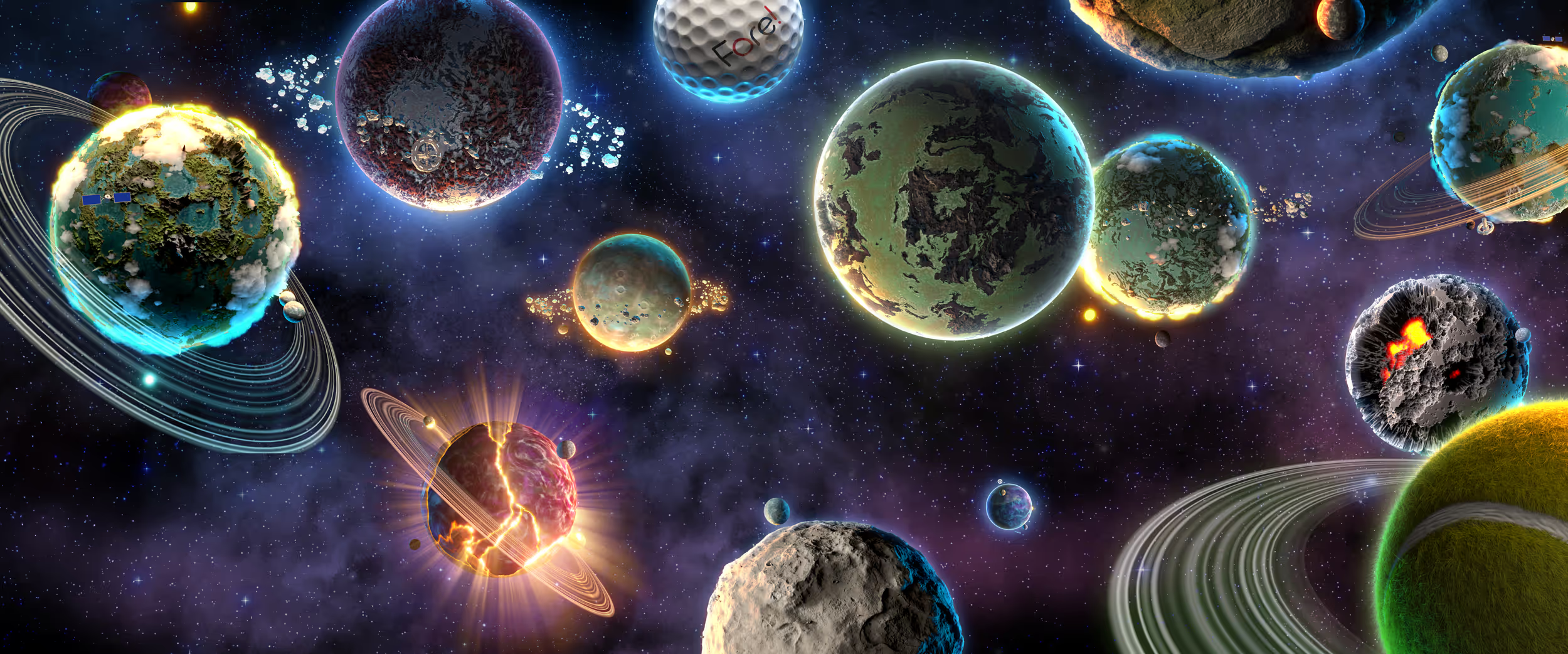
Designed after 20 years of Motion Graphics and Digital Artwork

I have created this collection to be able to give my design wings to leave my creative nest and fly off into the blockchain. Like when you sell a real artpiece and you let go of it. The process of giving your art away can be a beautiful thing. But 6 months of hard work on this collection also need to pay off - but does not need to make me rich.

The Triple Meaning of "UniWorlds"

1️⃣ Uni comes From Latin ūnus → "One" → Every planet is one-of-a-kind each with its own name and story, and each NFT has one owner forever.

2️⃣ "Worlds" → Planets and celestial bodies, forming a digital universe of worlds.

3️⃣ The word "UniWorlds" Echoes "Universe" → Further strengthening the bond to the concept of space.

Live Mints
明特
价格
数量
时间
现场销售
项目
价格
自
时间
Live Mints
明特
价格
数量
时间
现场销售
项目
价格
自
时间
UniWorlds

A collection of 1,337 handcrafted exoplanets

Each a digital masterpiece, designed over 6 months and rendered with careful thought of every detail from water levels to size of forrests. Each artpiece Has its own name also pragrammatically constructed from handpicked rules for propper planet names + some special additions from popculture ( if you can find them ) Each planet has its own backstory also procedually generated from a massive list of attributes and traits that the planet visually display.

Every detail is meticulously planned and refined to perfection. Very few of them have been left to coincidence.

UniWorlds

A collection of 1,337 handcrafted exoplanets

Each a digital masterpiece, designed over 6 months and rendered with careful thought of every detail from water levels to size of forrests. Each artpiece Has its own name also pragrammatically constructed from handpicked rules for propper planet names + some special additions from popculture ( if you can find them ) Each planet has its own backstory also procedually generated from a massive list of attributes and traits that the planet visually display.

Every detail is meticulously planned and refined to perfection. Very few of them have been left to coincidence.

Limited & 1:1 – Every piece is one-of-a-kind. No copies, limited sale pr. wallet

Full focus on the artwork, the craft, creativity and design

Procedually computer generated

The planets of our univers have been created around rules of material and gravity.

Similarly most of the UniWorlds planets have been proceedually generated through algorithms and code. The diagram above and below show how the planets and the space background have been set up via a vast amount of settings around randomization and controlled variables.

Procedually computer generated

The planets of our univers have been created around rules of material and gravity.

Similarly most of the UniWorlds planets have been proceedually generated through algorithms and code. The diagram above and below show how the planets and the space background have been set up via a vast amount of settings around randomization and controlled variables.

6 Months of 3D Configuring and Graph Algorithms
3D scene, with differend distinct type of planets
Earthlikes pre rendered in node-based procedual generation
Space stations modeled manually
Depth maps calculated and generated in external application
100% Human-Crafted No AI Generation

UniWorlds was built entirely by hand, with six months of design work and a week of 3D rendering. Long before generative AI became widespread. Every planet was crafted using custom procedural logic, mathematical rules, and artistic refinement, without AI automation.

In an era of AI-generated art, UniWorlds stands as a testament to human creativity, proving that procedural design, when guided by an artist, can achieve stunning complexity on its own.

Behind the art
Philip Thonbo
UX Lead | DIGITAL DESIGN | MOTION GRAPHICS

Designer with 20+ years in User Experience design, UI and Motion Graphics. Experienced in digtial production from LEGO and Many other clients

Designer with 20+ years in User Experience design, UI and Motion Graphics. Experienced in digtial production from LEGO and Many other clients

Chapter 1: Crafting the Foundation of a Universe

I wanted to create something that felt real - not just an NFT collection with superficial variations, but a world where each piece had depth and logic. Planets were the perfect subject. They share the same fundamental form, yet no two are the same.

The challenge was to create uniqueness beyond surface-level changes - beyond the usual approach of swapping hats or colors. I wanted rules, physics, and internal consistency. So I began in 3ds Max, using procedural logic and node-based algorithms to form landscapes from the ground up.

I started with barren planets, defining their terrain, craters, and colors. The key was making them feel organic, shaped by geological forces rather than random noise. Once those felt right, I moved to orbiting elements - rings, asteroids, satellites, and space stations - bringing motion and scale into the mix.

Then came Earth-like planets, the hardest to perfect. I had previously modeled Earth in high detail - mountains, ocean depth, translucent waters, forests, and atmospheric effects - but now I had to achieve the same without direct sculpting, using only fractal noise, elevation filters, and procedural constraints. The process took 3 months. I crafted five perfect examples, tweaking them manually to establish a baseline for realism. Then, I programmed controls - sliders that adjusted terrain formation, color schemes, and atmospheric conditions - allowing me to generate organic variations within the rules I had created.

Chapter 2: From Controlled Chaos to the Impossible

Once I mastered Earth-like planets, I pushed into extremes.

Exploding planets - cracks in their surfaces glowing from an unstable core, with radiant light waves escaping. Dead worlds - lifeless husks, still faintly glowing with the last remnants of a dying core. Exotic exoplanets - atmospheres warped by alien chemistry, with surreal textures and colors. Each new category expanded the system, pushing it beyond simple realism.

Then, I went beyond science and into creativity - blending planetary logic with cultural influences. A few planets in the collection pay homage to classic sci-fi worlds, drawing from my decades-long love for the genre. Names, landscapes, and color palettes all subtly reference planets from iconic movies, books, and games.

With the full spectrum of planets complete, I needed to bring them to life visually. That’s where After Effects came in. I rendered silhouette and depth maps from 3ds Max, allowing me to fine-tune colors, atmospheric glows, and rim lighting based on how real atmospheric elements scatter light—similar to how ozone makes Earth’s sky blue.

Chapter 3: Giving Planets Identity – Names, Metadata & Storytelling

A world isn’t complete without a name and history.

I built a custom name generator, drawing from sci-fi naming conventions I had absorbed since the ‘80s. The system used a mix of linguistic rules and structured randomness to create believable planetary names. Some planets were directly inspired by famous sci-fi locations, offering hidden references for fans to discover.

To add further depth, I programmed metadata generation based on planet type, traits, and orbiting structures. Each planet now had a backstory - shaped not just by visuals, but by the data behind them.

To achieve this, I coded in JavaScript, Batch, and Python, automating the assignment of rarity traits, classifications, and environmental details. The result was a collection where every planet had an identity - not just a file, but a world with context.

With the James Webb telescope, new planets outside our solar system will soon be uncovered.

The James Webb Space Telescope takes us into a new era in space exploration, allowing us to see deeper into the universe than ever before. With its advanced infrared capabilities, it can detect distant exoplanets, analyze their atmospheres, and uncover worlds that may have the right conditions for life.

As technology advances, we are on the verge of discovering an unprecedented number of new exoplanets, expanding our understanding of the cosmos and reshaping our perception of our place in the universe.

With the James Webb telescope, new planets outside our solar system will soon be uncovered.

The James Webb Space Telescope takes us into a new era in space exploration, allowing us to see deeper into the universe than ever before. With its advanced infrared capabilities, it can detect distant exoplanets, analyze their atmospheres, and uncover worlds that may have the right conditions for life.

As technology advances, we are on the verge of discovering an unprecedented number of new exoplanets, expanding our understanding of the cosmos and reshaping our perception of our place in the universe.

Are We Alone in the Universe?

The Drake Equation estimates the number of civilizations in our galaxy based on factors like star formation, habitable planets, and the chances of intelligent life. Depending on the assumptions, estimates range from just us to thousands of civilizations.

The biggest unknown is how long civilizations survive. If they last millions of years, the galaxy could be full of life. If they self-destruct quickly, we might be alone. With new exoplanet discoveries, we are getting closer to finding out.

Designed after 20 years of Motion Graphics and Digital Artwork

I have created this collection to be able to give my design wings to leave my creative nest and fly off into the blockchain. Like when you sell a real artpiece and you let go of it. The process of giving your art away can be a beautiful thing. But 6 months of hard work on this collection also need to pay off - but does not need to make me rich.

Designed after 20 years of Motion Graphics and Digital Artwork

I have created this collection to be able to give my design wings to leave my creative nest and fly off into the blockchain. Like when you sell a real artpiece and you let go of it. The process of giving your art away can be a beautiful thing. But 6 months of hard work on this collection also need to pay off - but does not need to make me rich.

The Triple Meaning of "UniWorlds"

1️⃣ Uni comes From Latin ūnus → "One" → Every planet is one-of-a-kind each with its own name and story, and each NFT has one owner forever.

2️⃣ "Worlds" → Planets and celestial bodies, forming a digital universe of worlds.

3️⃣ The word "UniWorlds" Echoes "Universe" → Further strengthening the bond to the concept of space.

Your browser does not support the video tag.
薄荷糖 UniWorlds
可用项目0
Your browser does not support the video tag.
Live Mints
明特
价格
数量
时间
现场销售
项目
价格
自
时间
Live Mints
明特
价格
数量
时间
现场销售
项目
价格
自
时间
Your browser does not support the video tag.
薄荷糖 UniWorlds
已铸造项目1,337 / 1,337
Your browser does not support the video tag.
Public stage售罄所有铸币物品
查看项目
铸造时间表
  1. presale 1已开始:
    0.00 POL
  2. Public stage已开始:已结束:
    200.00 POL
    | 每个钱包限20个
Live Mints
明特
价格
数量
时间
现场销售
项目
价格
自
时间
Live Mints
明特
价格
数量
时间
现场销售
项目
价格
自
时间
Your browser does not support the video tag.
薄荷糖 UniWorlds
已铸造项目1,337 / 1,337
Your browser does not support the video tag.
Public stage售罄所有铸币物品
查看项目
铸造时间表
  1. presale 1已开始:
    0.00 POL
  2. Public stage已开始:已结束:
    200.00 POL
    | 每个钱包限20个
Live Mints
明特
价格
数量
时间
现场销售
项目
价格
自
时间
Live Mints
明特
价格
数量
时间
现场销售
项目
价格
自
时间
还没有铸造
明特
价格
数量
时间
还没有铸造
明特
价格
数量
时间
尚无销售
项目
价格
自
时间
尚无销售
项目
价格
自
时间
尚无销售
项目
价格
自
时间
尚无销售
项目
价格
自
时间
尚无销售
项目
价格
自
时间
尚无销售
项目
价格
自
时间
明特
价格
数量
时间
Thonbo
Thonbo
—
1
Thonbo
Thonbo
—
31
明特
价格
数量
时间
Thonbo
Thonbo
—
1
Thonbo
Thonbo
—
31
明特
价格
数量
时间
Thonbo
Thonbo
—
1
Thonbo
Thonbo
—
31
明特
价格
数量
时间
Thonbo
Thonbo
—
1
Thonbo
Thonbo
—
31