ディスカバー
コレクション
トークン
スワップ
ドロップ
アクティビティ
報酬
スタジオ
/
アイテム
所有者
アクティビティ
集約
ネットワーク
サービス利用規約
プライバシーポリシー
$2,823.90
Soft Collapse

About Soft Collapse

Soft Collapse is the first ETH mint from Nomads & Vagabonds. The term “soft collapse” was borrowed from architecture, describing gradual structural failure. Over time, it became shorthand for the slow-motion breakdown of complex systems — economic, social, and existential.

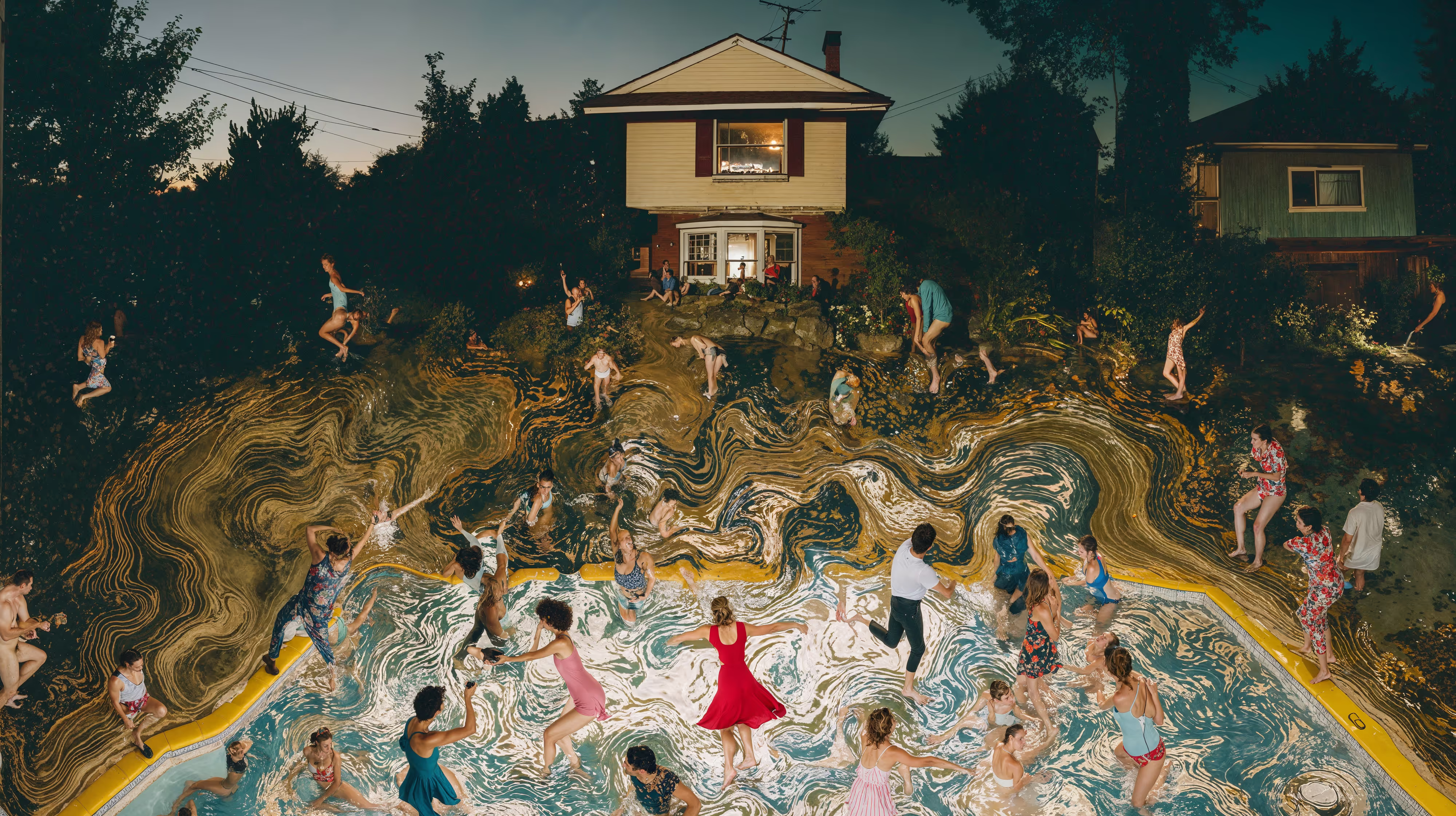
This collection imagines suburbia from an indeterminate past slipping into drastic yet somehow unremarkable disruption, which most of its citizens have accepted with admirable, or questionable, composure.

Like the boiling frog, anything can become ordinary once you experience it enough. Using post-photography combined with digital and AI mark-making, these images explore the tension between obvious collapse and collective inertia.

When absurdity feels familiar, perhaps familiarity itself has become absurd.

The Myth of Sisyphus

Albert Camus, in The Myth of Sisyphus, frames the absurd not as a single moment of rupture but as a condition—a persistent dissonance between humanity’s craving for meaning and the mute indifference of the world. His Sisyphus, condemned to eternally push a boulder uphill only to watch it roll back down, becomes an emblem of this paradox. Yet Camus resists despair. Instead, he imagines Sisyphus smiling. The recognition of absurdity, coupled with conscious persistence, becomes a form of quiet resistance.

With Soft Collapse I try to draw from this philosophy.

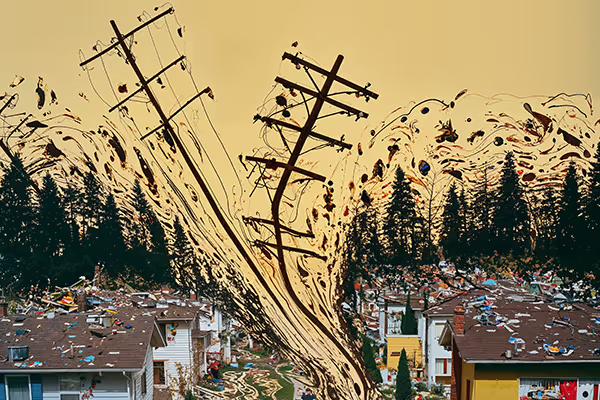
The works depict a surreal, destabilized suburbia where collapse has become ambient rather than catastrophic. Telephone poles warp, cul-de-sacs liquefy, couches emit smoke, and yet daily life continues. Residents seem unbothered. Children play, neighbors chat, errands are run. They persist, not because the world makes sense, but because persistence itself has become the default setting. The uncanny is domesticated. Absurdity is normalized.

This series is less concerned with spectacle than with psychological atmosphere. It is not a call to action. It is an exploration of what it means to live within systems that are visibly faltering (economic, political, technological) yet to carry on with familiar routines. Like Camus’ Sisyphus, the figures in Soft Collapse do not rebel with violence or revelation. They respond with acceptance. But is there dignity or danger in continuing to mow the lawn while the ground warps beneath your feet?

The imagery slips between the plausible and the hallucinatory, mimicking the uncertainty of the absurd condition itself: a reality that appears coherent until you look too closely. Ultimately, I hope Soft Collapse invites viewers to inhabit a space where disruption is quiet, persistent, and internalized. The end is not dramatic, but shockingly routine.
Soft Collapse by Nomads and Vagabonds

Ethereum
75
2025年5月
アート
Ethereum
75
2025年5月発売
アート
最低価格
1.00 ETH
1階 %+458.7%
トップオファー
—
24時間の出来高
0.00 ETH
合計出来高
0.34 ETH
出品中1.3%
所有者 (一意)43 (57.3%)

Soft Collapse by Nomads and Vagabonds

Ethereum
75
2025年5月
アート
Ethereum
75
2025年5月発売
アート
アイテム
オファー
所有者
特性
アクティビティ
当社について

Soft Collapse by Nomads and Vagabonds

Ethereum
75
2025年5月
アート
Ethereum
75
2025年5月発売
アート
最低価格
1.00 ETH
1階 %+458.7%
トップオファー
—
24時間の出来高
0.00 ETH
合計出来高
0.34 ETH
出品中1.3%
所有者 (一意)43 (57.3%)

Soft Collapse by Nomads and Vagabonds

Ethereum
75
2025年5月
アート
Ethereum
75
2025年5月発売
アート
アイテム
オファー
所有者
特性
アクティビティ
当社について
Soft Collapse

About Soft Collapse

Soft Collapse is the first ETH mint from Nomads & Vagabonds. The term “soft collapse” was borrowed from architecture, describing gradual structural failure. Over time, it became shorthand for the slow-motion breakdown of complex systems — economic, social, and existential.

This collection imagines suburbia from an indeterminate past slipping into drastic yet somehow unremarkable disruption, which most of its citizens have accepted with admirable, or questionable, composure.

Like the boiling frog, anything can become ordinary once you experience it enough. Using post-photography combined with digital and AI mark-making, these images explore the tension between obvious collapse and collective inertia.

When absurdity feels familiar, perhaps familiarity itself has become absurd.

The Myth of Sisyphus

Albert Camus, in The Myth of Sisyphus, frames the absurd not as a single moment of rupture but as a condition—a persistent dissonance between humanity’s craving for meaning and the mute indifference of the world. His Sisyphus, condemned to eternally push a boulder uphill only to watch it roll back down, becomes an emblem of this paradox. Yet Camus resists despair. Instead, he imagines Sisyphus smiling. The recognition of absurdity, coupled with conscious persistence, becomes a form of quiet resistance.

With Soft Collapse I try to draw from this philosophy.

The works depict a surreal, destabilized suburbia where collapse has become ambient rather than catastrophic. Telephone poles warp, cul-de-sacs liquefy, couches emit smoke, and yet daily life continues. Residents seem unbothered. Children play, neighbors chat, errands are run. They persist, not because the world makes sense, but because persistence itself has become the default setting. The uncanny is domesticated. Absurdity is normalized.

This series is less concerned with spectacle than with psychological atmosphere. It is not a call to action. It is an exploration of what it means to live within systems that are visibly faltering (economic, political, technological) yet to carry on with familiar routines. Like Camus’ Sisyphus, the figures in Soft Collapse do not rebel with violence or revelation. They respond with acceptance. But is there dignity or danger in continuing to mow the lawn while the ground warps beneath your feet?

The imagery slips between the plausible and the hallucinatory, mimicking the uncertainty of the absurd condition itself: a reality that appears coherent until you look too closely. Ultimately, I hope Soft Collapse invites viewers to inhabit a space where disruption is quiet, persistent, and internalized. The end is not dramatic, but shockingly routine.

Soft Collapse

About Soft Collapse

Soft Collapse is the first ETH mint from Nomads & Vagabonds. The term “soft collapse” was borrowed from architecture, describing gradual structural failure. Over time, it became shorthand for the slow-motion breakdown of complex systems — economic, social, and existential.

This collection imagines suburbia from an indeterminate past slipping into drastic yet somehow unremarkable disruption, which most of its citizens have accepted with admirable, or questionable, composure.

Like the boiling frog, anything can become ordinary once you experience it enough. Using post-photography combined with digital and AI mark-making, these images explore the tension between obvious collapse and collective inertia.

When absurdity feels familiar, perhaps familiarity itself has become absurd.

The Myth of Sisyphus

Albert Camus, in The Myth of Sisyphus, frames the absurd not as a single moment of rupture but as a condition—a persistent dissonance between humanity’s craving for meaning and the mute indifference of the world. His Sisyphus, condemned to eternally push a boulder uphill only to watch it roll back down, becomes an emblem of this paradox. Yet Camus resists despair. Instead, he imagines Sisyphus smiling. The recognition of absurdity, coupled with conscious persistence, becomes a form of quiet resistance.

With Soft Collapse I try to draw from this philosophy.

The works depict a surreal, destabilized suburbia where collapse has become ambient rather than catastrophic. Telephone poles warp, cul-de-sacs liquefy, couches emit smoke, and yet daily life continues. Residents seem unbothered. Children play, neighbors chat, errands are run. They persist, not because the world makes sense, but because persistence itself has become the default setting. The uncanny is domesticated. Absurdity is normalized.

This series is less concerned with spectacle than with psychological atmosphere. It is not a call to action. It is an exploration of what it means to live within systems that are visibly faltering (economic, political, technological) yet to carry on with familiar routines. Like Camus’ Sisyphus, the figures in Soft Collapse do not rebel with violence or revelation. They respond with acceptance. But is there dignity or danger in continuing to mow the lawn while the ground warps beneath your feet?

The imagery slips between the plausible and the hallucinatory, mimicking the uncertainty of the absurd condition itself: a reality that appears coherent until you look too closely. Ultimately, I hope Soft Collapse invites viewers to inhabit a space where disruption is quiet, persistent, and internalized. The end is not dramatic, but shockingly routine.