ディスカバー
コレクション
トークン
スワップ
ドロップ
アクティビティ
報酬
スタジオ
/
アイテム
所有者
アクティビティ
集約
ネットワーク
サービス利用規約
プライバシーポリシー
$3,099.51
SketchMaker (2007–2014)

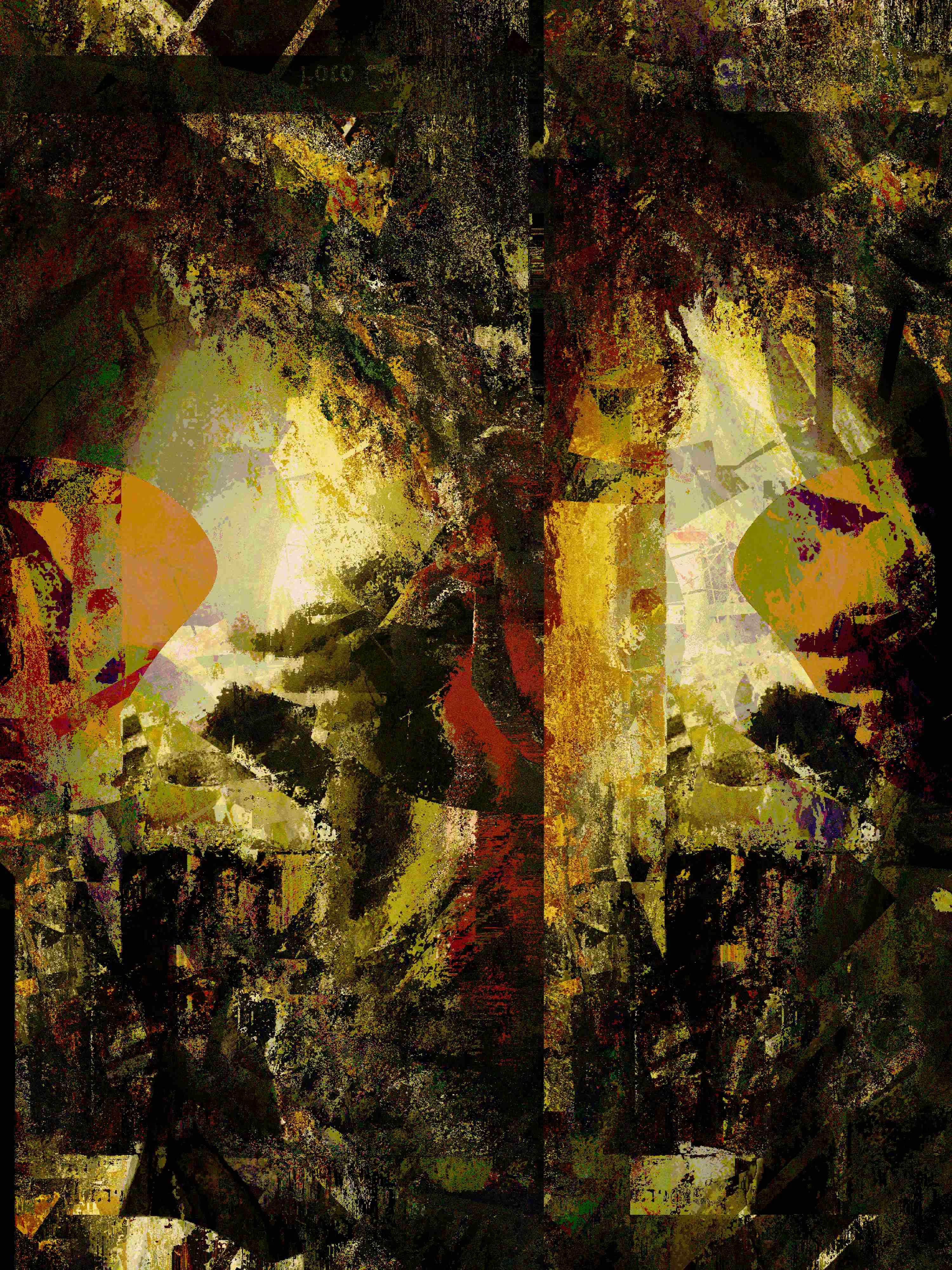
SketchMaker is the genesis of Klingemann’s journey – an early generative art project built in Adobe Flash around 2007 that marked his first foray into machine creativity. In this work, Klingemann asked a radical question: Can a computer autonomously create images that “look like art”? His answer took the form of a procedural sketch generator driven by evolutionary logic. The system randomly assembled simple drawing and image-processing actions, “atomic” operations like drawing shapes, inverting colors, blurring, and rotating, into complex sequences, essentially coding a digital ape at a typewriter, blindly throwing paint onto a canvas. Each press of the spacebar yielded a new, unpredictable composition, a visual “DNA” strand of layered operations.

Crucially, SketchMaker did not rely solely on random generation; it featured a feedback loop to refine its output. Klingemann devised a “judgement module”, a custom classifier trained on examples of art versus non-art, that would analyze each new image and score its aesthetic resemblance to known artworks. This evolutionary process allowed the software to iterate toward compositions that possessed an uncanny art-like quality, effectively enabling the program to learn a rudimentary sense of taste long before deep learning became commonplace. Conceptually, SketchMaker introduced motifs that would define Klingemann’s practice: glitch aesthetics, chance-driven creativity, and the transfer of agency from artist to algorithm.
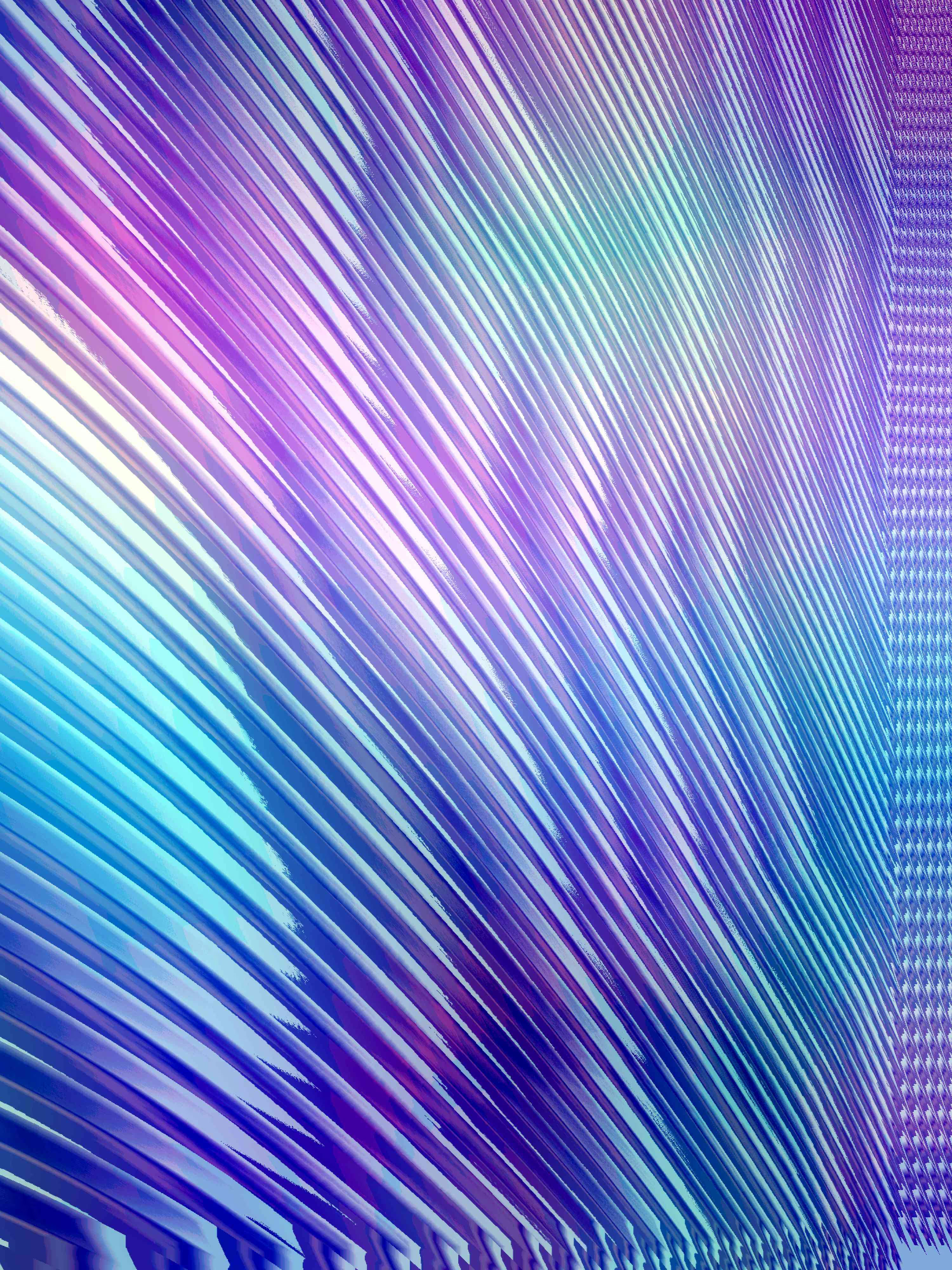
The visuals often emerged as jagged, abstract collages of color and form - sometimes chaotic, sometimes eerily harmonious - embodying the unpredictable nature of generative processes. By intentionally embracing the imperfections and “errors” of the system, Klingemann explored the beauty of machine misbehavior as an aesthetic frontier, posing the provocative question: “Who’s the artist now?” Though created with pre-neural techniques, SketchMaker foreshadows the AI art movement to come. It stands as a historical keystone, a self-contained generative artist system that anticipated many of the questions and possibilities later realized through deep learning. In its glitchy, evolutionary sketches, one can already see the seeds of Klingemann’s later works, where algorithmic intuition for form and a rebellious embrace of computational spontaneity would flourish.
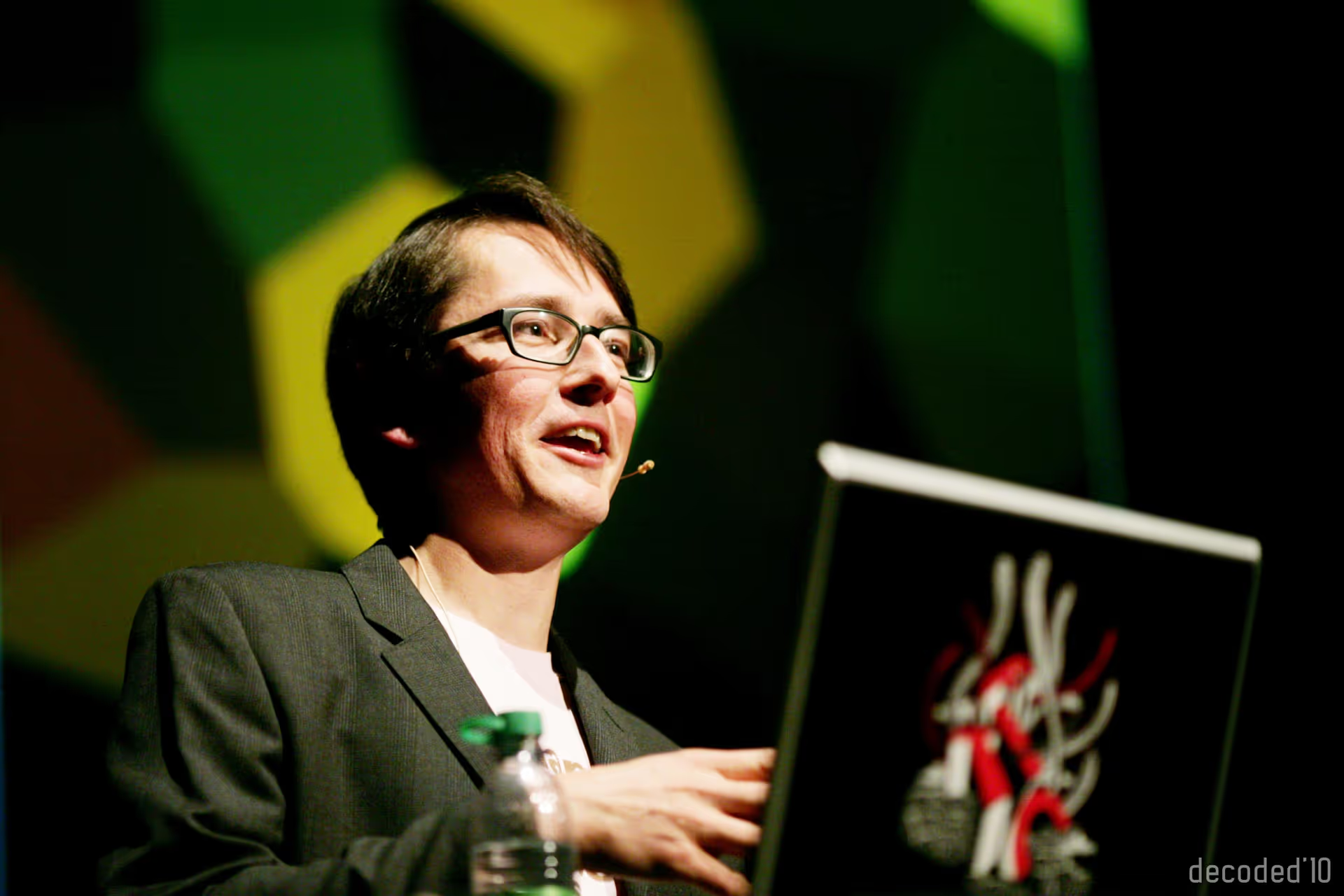
Mario Klingemann

b. 1970, Germany

Mario Klingemann is an artist who uses algorithms and artificial intelligence to create and investigate systems. He is particularly interested in human perception of art and creativity, researching methods in which machines can augment or emulate these processes, and has been recognized as a pioneer in the field of AI art, neural networks and machine learning. He has worked with prestigious institutions including The British Library, Cardiff University and New York Public Library, and was Artist in Residence at Google Arts and Culture. His artworks have been shown at MoMA New York, the Metropolitan Museum of Art New York, the Photographers’ Gallery London, ZKM Karlsruhe, and Centre Pompidou Paris.
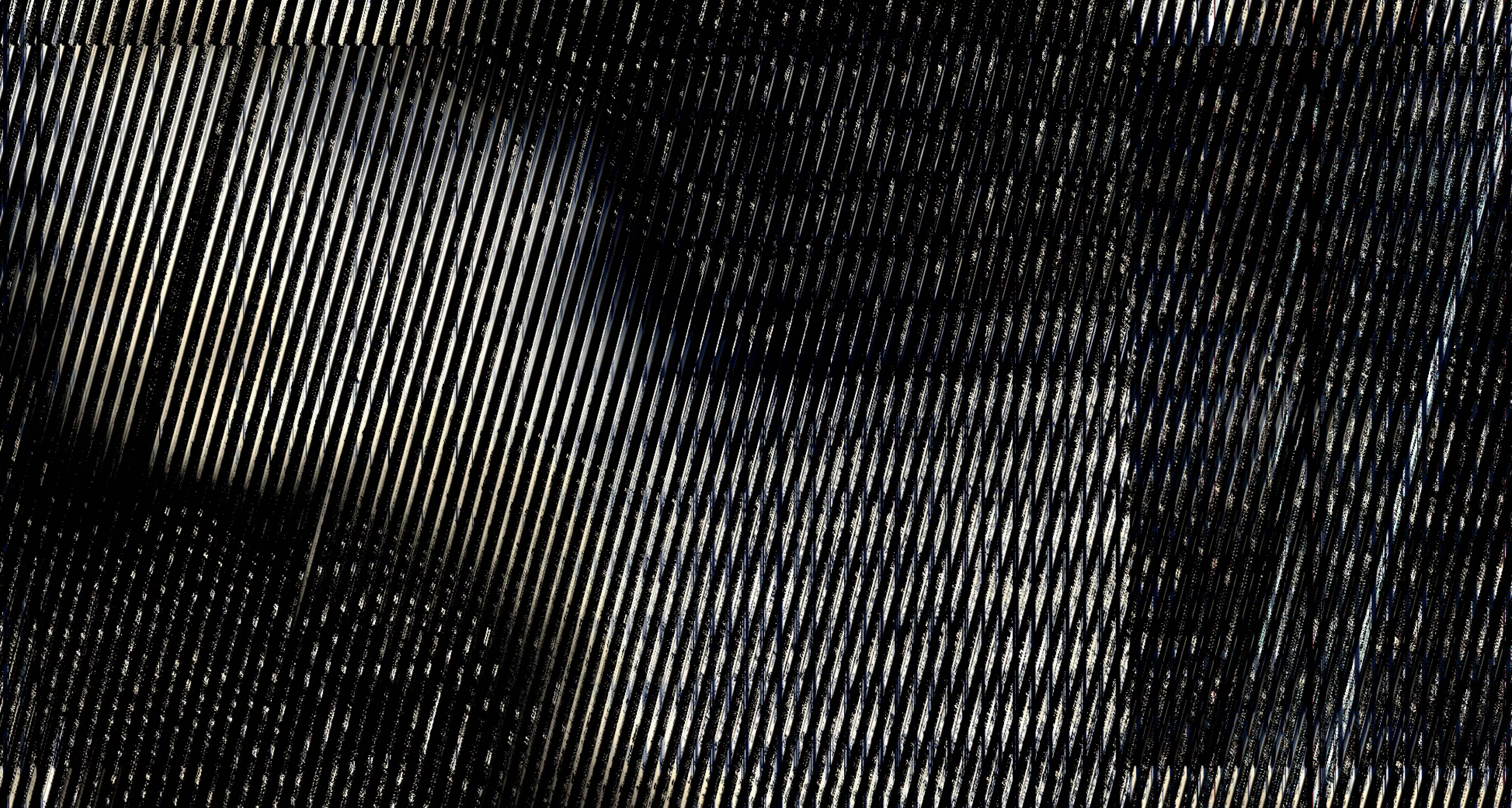
Sketchmaker by Mario Klingemann

作成者 Fellowship
Ethereum
40
2025年9月
アート
作成者 Fellowship
Ethereum
40
2025年9月発売
アート
最低価格
0.45 ETH
1階 %0%
トップオファー
0.066 WETH
24時間の出来高 0.00 ETH
合計出来高0.13 ETH
出品中2.5%
所有者 (一意)24 (60%)

Sketchmaker by Mario Klingemann

作成者 Fellowship
Ethereum
40
2025年9月
アート
作成者 Fellowship
Ethereum
40
2025年9月発売
アート
アイテム
オファー
所有者
特性
アクティビティ
当社について

Sketchmaker by Mario Klingemann

作成者 Fellowship
Ethereum
40
2025年9月
アート
作成者 Fellowship
Ethereum
40
2025年9月発売
アート
最低価格
0.45 ETH
1階 %0%
トップオファー
0.066 WETH
24時間の出来高 0.00 ETH
合計出来高0.13 ETH
出品中2.5%
所有者 (一意)24 (60%)

Sketchmaker by Mario Klingemann

作成者 Fellowship
Ethereum
40
2025年9月
アート
作成者 Fellowship
Ethereum
40
2025年9月発売
アート
アイテム
オファー
所有者
特性
アクティビティ
当社について
SketchMaker (2007–2014)

SketchMaker is the genesis of Klingemann’s journey – an early generative art project built in Adobe Flash around 2007 that marked his first foray into machine creativity. In this work, Klingemann asked a radical question: Can a computer autonomously create images that “look like art”? His answer took the form of a procedural sketch generator driven by evolutionary logic. The system randomly assembled simple drawing and image-processing actions, “atomic” operations like drawing shapes, inverting colors, blurring, and rotating, into complex sequences, essentially coding a digital ape at a typewriter, blindly throwing paint onto a canvas. Each press of the spacebar yielded a new, unpredictable composition, a visual “DNA” strand of layered operations.

Crucially, SketchMaker did not rely solely on random generation; it featured a feedback loop to refine its output. Klingemann devised a “judgement module”, a custom classifier trained on examples of art versus non-art, that would analyze each new image and score its aesthetic resemblance to known artworks. This evolutionary process allowed the software to iterate toward compositions that possessed an uncanny art-like quality, effectively enabling the program to learn a rudimentary sense of taste long before deep learning became commonplace. Conceptually, SketchMaker introduced motifs that would define Klingemann’s practice: glitch aesthetics, chance-driven creativity, and the transfer of agency from artist to algorithm.

The visuals often emerged as jagged, abstract collages of color and form - sometimes chaotic, sometimes eerily harmonious - embodying the unpredictable nature of generative processes. By intentionally embracing the imperfections and “errors” of the system, Klingemann explored the beauty of machine misbehavior as an aesthetic frontier, posing the provocative question: “Who’s the artist now?” Though created with pre-neural techniques, SketchMaker foreshadows the AI art movement to come. It stands as a historical keystone, a self-contained generative artist system that anticipated many of the questions and possibilities later realized through deep learning. In its glitchy, evolutionary sketches, one can already see the seeds of Klingemann’s later works, where algorithmic intuition for form and a rebellious embrace of computational spontaneity would flourish.

Mario Klingemann

b. 1970, Germany

Mario Klingemann is an artist who uses algorithms and artificial intelligence to create and investigate systems. He is particularly interested in human perception of art and creativity, researching methods in which machines can augment or emulate these processes, and has been recognized as a pioneer in the field of AI art, neural networks and machine learning. He has worked with prestigious institutions including The British Library, Cardiff University and New York Public Library, and was Artist in Residence at Google Arts and Culture. His artworks have been shown at MoMA New York, the Metropolitan Museum of Art New York, the Photographers’ Gallery London, ZKM Karlsruhe, and Centre Pompidou Paris.

SketchMaker (2007–2014)

SketchMaker is the genesis of Klingemann’s journey – an early generative art project built in Adobe Flash around 2007 that marked his first foray into machine creativity. In this work, Klingemann asked a radical question: Can a computer autonomously create images that “look like art”? His answer took the form of a procedural sketch generator driven by evolutionary logic. The system randomly assembled simple drawing and image-processing actions, “atomic” operations like drawing shapes, inverting colors, blurring, and rotating, into complex sequences, essentially coding a digital ape at a typewriter, blindly throwing paint onto a canvas. Each press of the spacebar yielded a new, unpredictable composition, a visual “DNA” strand of layered operations.

Crucially, SketchMaker did not rely solely on random generation; it featured a feedback loop to refine its output. Klingemann devised a “judgement module”, a custom classifier trained on examples of art versus non-art, that would analyze each new image and score its aesthetic resemblance to known artworks. This evolutionary process allowed the software to iterate toward compositions that possessed an uncanny art-like quality, effectively enabling the program to learn a rudimentary sense of taste long before deep learning became commonplace. Conceptually, SketchMaker introduced motifs that would define Klingemann’s practice: glitch aesthetics, chance-driven creativity, and the transfer of agency from artist to algorithm.

The visuals often emerged as jagged, abstract collages of color and form - sometimes chaotic, sometimes eerily harmonious - embodying the unpredictable nature of generative processes. By intentionally embracing the imperfections and “errors” of the system, Klingemann explored the beauty of machine misbehavior as an aesthetic frontier, posing the provocative question: “Who’s the artist now?” Though created with pre-neural techniques, SketchMaker foreshadows the AI art movement to come. It stands as a historical keystone, a self-contained generative artist system that anticipated many of the questions and possibilities later realized through deep learning. In its glitchy, evolutionary sketches, one can already see the seeds of Klingemann’s later works, where algorithmic intuition for form and a rebellious embrace of computational spontaneity would flourish.

Mario Klingemann

b. 1970, Germany

Mario Klingemann is an artist who uses algorithms and artificial intelligence to create and investigate systems. He is particularly interested in human perception of art and creativity, researching methods in which machines can augment or emulate these processes, and has been recognized as a pioneer in the field of AI art, neural networks and machine learning. He has worked with prestigious institutions including The British Library, Cardiff University and New York Public Library, and was Artist in Residence at Google Arts and Culture. His artworks have been shown at MoMA New York, the Metropolitan Museum of Art New York, the Photographers’ Gallery London, ZKM Karlsruhe, and Centre Pompidou Paris.