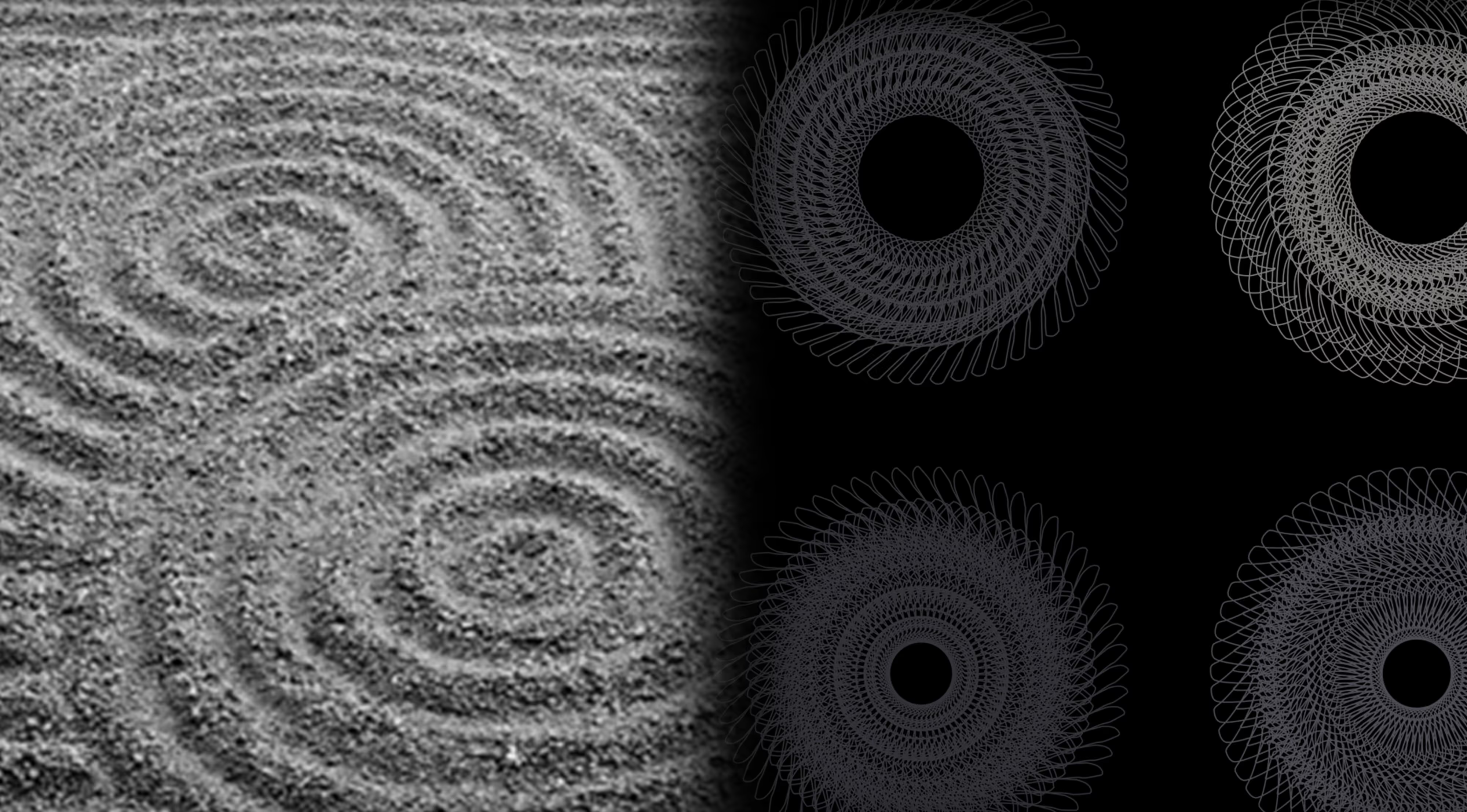
When lines join together, they become shapes. When shapes are layered, they become patterns. We named the pattern, arranged in a circle, "EN".
"EN" means "circle" in Japanese. "EN" also has the meaning of "en", which means "encounters and connections between people".
We hope to connect with people all over the world through "EN".
「EN」―最も美しい円
線がつながると形になる。 形が重なると模様になる。 その模様を円形に配置したものを「EN」と名づけた。
「EN」は日本語で「円」を意味する。 同時に、人と人との「縁(えん)」という意味も持つ。
この「EN」を通じて、世界中の人々とつながることを願っている。
When lines join together, they become shapes. When shapes are layered, they become patterns. We named the pattern, arranged in a circle, "EN".
"EN" means "circle" in Japanese. "EN" also has the meaning of "en", which means "encounters and connections between people".
We hope to connect with people all over the world through "EN".
「EN」―最も美しい円
線がつながると形になる。 形が重なると模様になる。 その模様を円形に配置したものを「EN」と名づけた。
「EN」は日本語で「円」を意味する。 同時に、人と人との「縁(えん)」という意味も持つ。
この「EN」を通じて、世界中の人々とつながることを願っている。
Zen is a Buddhist practice aimed at calming the mind and attaining enlightenment. Zen words are concise expressions of Zen teachings.
Our works are completed by combining Zen words with art created using new technologies.
〚ZEN―禅語から着想を得たアート〛
禅は、心を静め、悟りに至ることを目的とした仏教の修行法。 禅語は、その教えを簡潔に表現した言葉。
私たちの作品は、禅語と新しい技術によって生み出されたアートを融合させることで完成する。
Zen is a Buddhist practice aimed at calming the mind and attaining enlightenment. Zen words are concise expressions of Zen teachings.
Our works are completed by combining Zen words with art created using new technologies.
〚ZEN―禅語から着想を得たアート〛
禅は、心を静め、悟りに至ることを目的とした仏教の修行法。 禅語は、その教えを簡潔に表現した言葉。
私たちの作品は、禅語と新しい技術によって生み出されたアートを融合させることで完成する。

"EN" represents the Japanese word for "circle". This is called the "Pattern of EN" because Zen words are arranged in a circular shape. It is inspired by the "circular sand ripples" often seen in the dry landscapes (karesansui) of Japanese gardens. In the world of Zen, the circle (ensō) is an important motif symbolizing enlightenment and perfection. It represents the eternal cycles of nature, the harmony of the cosmos, and the interconnectedness of humans and nature. The circle conveys harmony and infinity, evoking a profound sense of tranquility.
円のパターン
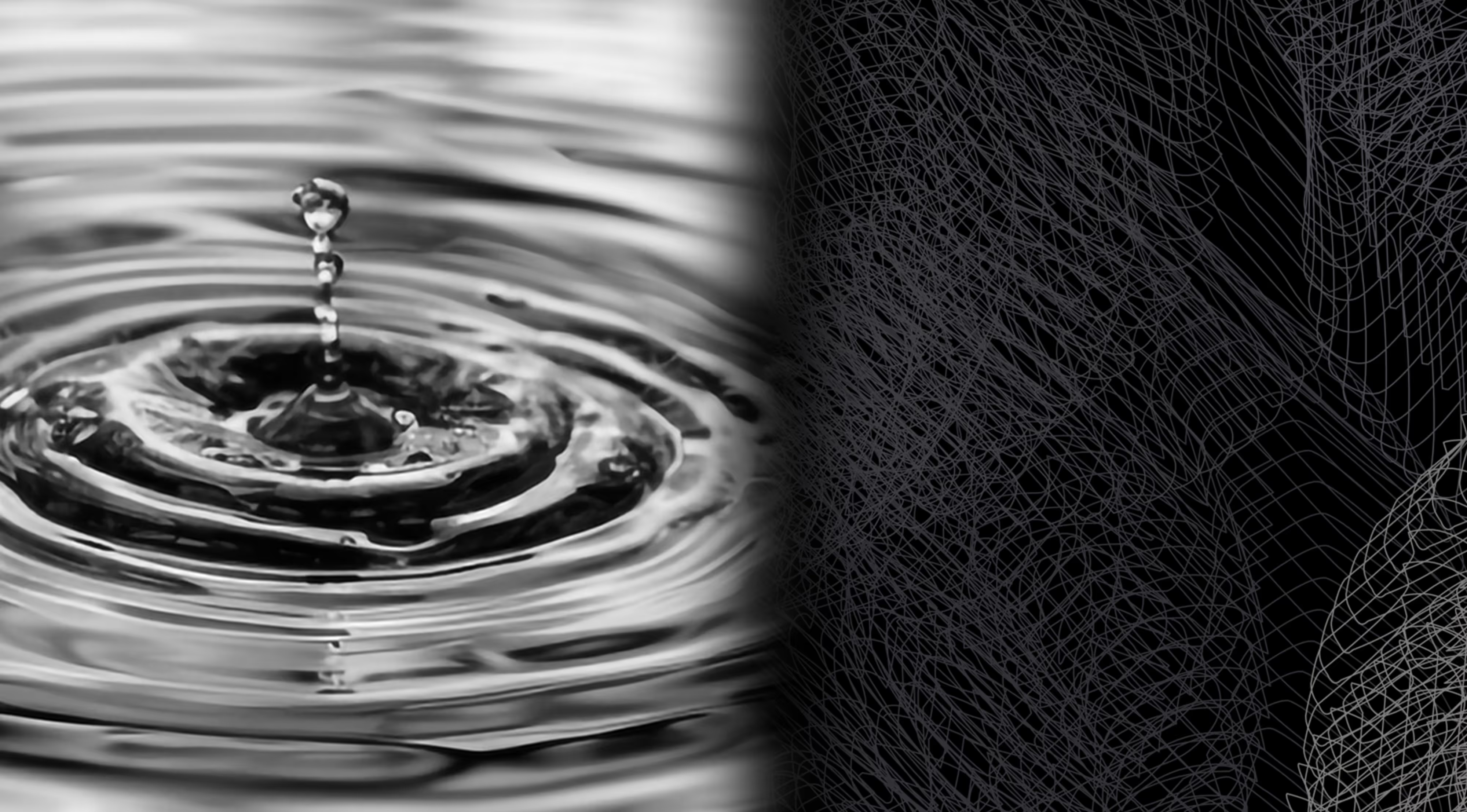
"EN" represents the Japanese word for "circle". This is called the "Pattern of EN" because Zen words are arranged in a circular shape. It is inspired by the "circular sand ripples" often seen in the dry landscapes (karesansui) of Japanese gardens. In the world of Zen, the circle (ensō) is an important motif symbolizing enlightenment and perfection. It represents the eternal cycles of nature, the harmony of the cosmos, and the interconnectedness of humans and nature. The circle conveys harmony and infinity, evoking a profound sense of tranquility.
円のパターン

"SEN" represents the Japanese word for "line". This is called the "Pattern of SEN" because it is created solely using the lines of Zen phrases. It evokes the freedom found in nature, like ripples ("hamon") drawn by the wind on the surface of water. The flowing movements and intersections of the lines express the Zen worldview, where order and chaos are in harmony. These elements bring a sense of dynamism to the whole.
線のパターン
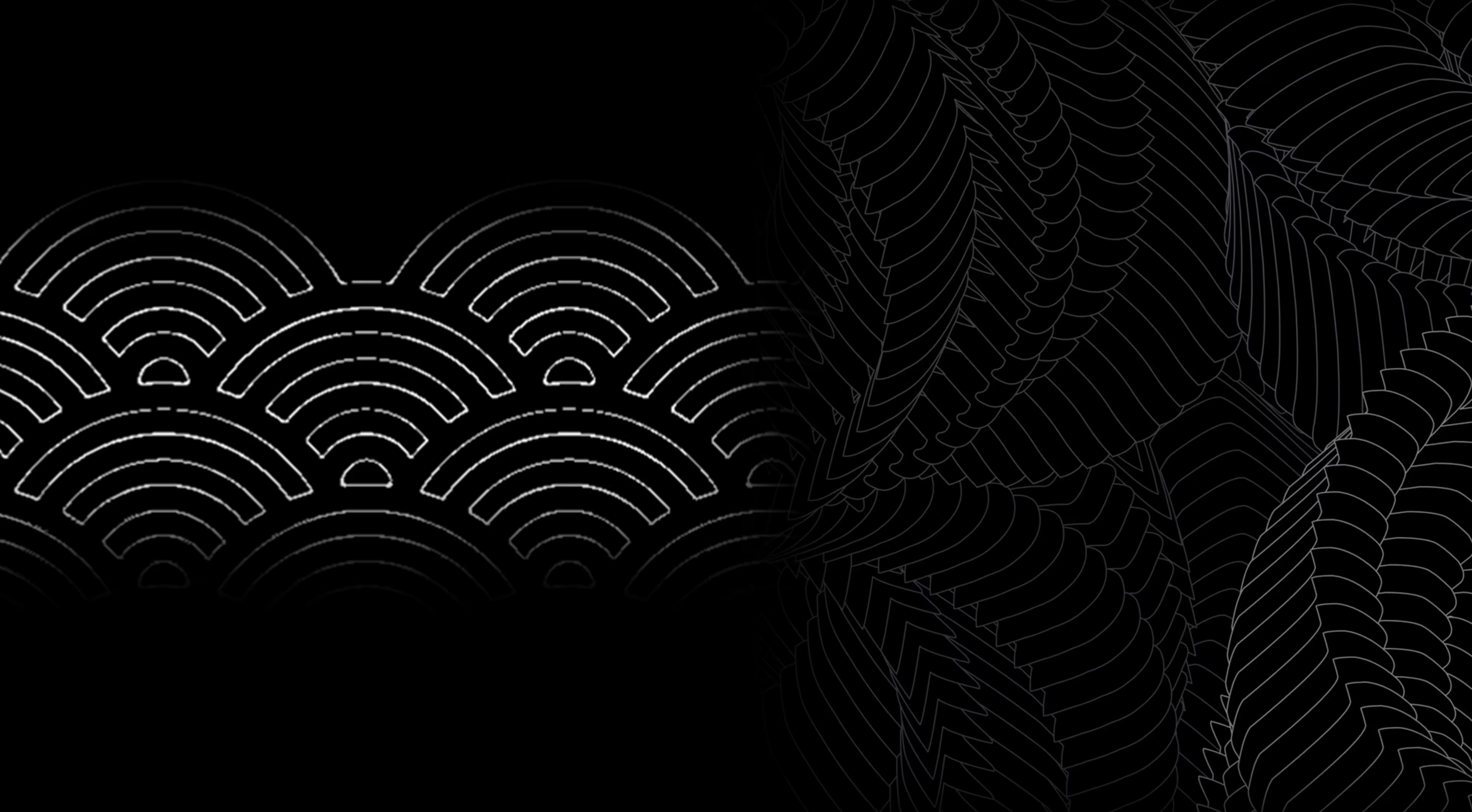
"SEN" represents the Japanese word for "line". This is called the "Pattern of SEN" because it is created solely using the lines of Zen phrases. It evokes the freedom found in nature, like ripples ("hamon") drawn by the wind on the surface of water. The flowing movements and intersections of the lines express the Zen worldview, where order and chaos are in harmony. These elements bring a sense of dynamism to the whole.
線のパターン

"REN" in Japanese means "to be connected." It refers to the "pattern of REN" where the shapes of Zen characters are connected. The continuity of the shapes evokes the traditional Japanese pattern "Seigaiha," which resembles waves. "Seigaiha" (pronounced "seigaiha") represents the image of gentle waves extending endlessly, symbolizing the flow of peaceful, continuous movement. It is a pattern considered to carry a positive meaning, symbolizing "forever" and "the continuation of a peaceful life." Additionally, the pattern is said to symbolize the washing away and purification of misfortune, often carrying a meaning of warding off evil.It conveys a sense of rhythm and flow within the connection.
連のパターン
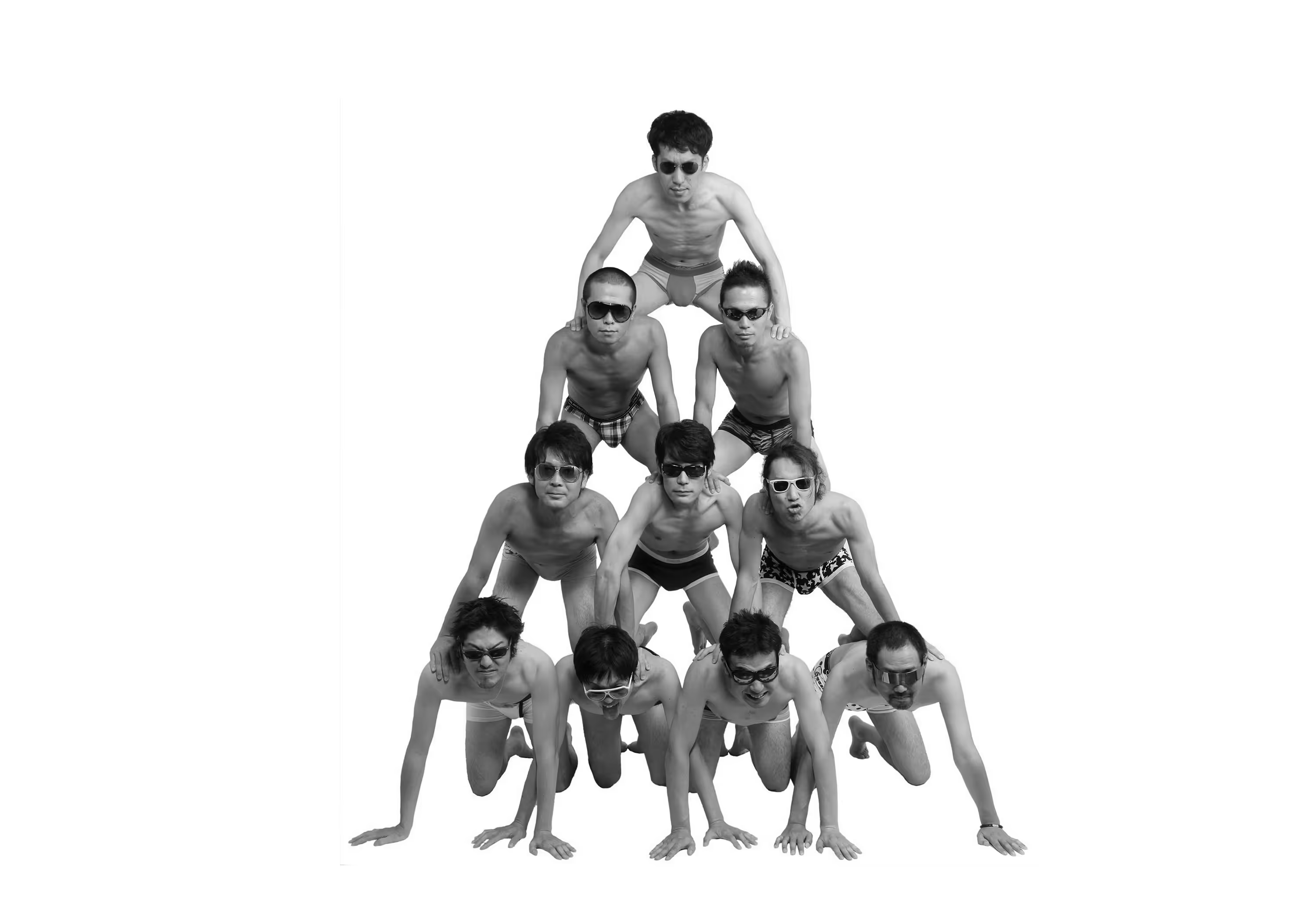
"REN" in Japanese means "to be connected." It refers to the "pattern of REN" where the shapes of Zen characters are connected. The continuity of the shapes evokes the traditional Japanese pattern "Seigaiha," which resembles waves. "Seigaiha" (pronounced "seigaiha") represents the image of gentle waves extending endlessly, symbolizing the flow of peaceful, continuous movement. It is a pattern considered to carry a positive meaning, symbolizing "forever" and "the continuation of a peaceful life." Additionally, the pattern is said to symbolize the washing away and purification of misfortune, often carrying a meaning of warding off evil.It conveys a sense of rhythm and flow within the connection.
連のパターン
“EN” merges with new technology to become “THE EN.”
「EN」は”新しい技術”と融合することで、「THE EN」となる。
“EN” merges with new technology to become “THE EN.”
「EN」は”新しい技術”と融合することで、「THE EN」となる。

Creators from various genres working in Hiroshima, Japan, came together to form the fundoshi creative group "Tomorrow Squad." We worked as fundoshi performers, using dance and group gymnastics as our weapons.
We released "FUJI" as "the most beautiful triangle in the world."
2010 「TOMORROW隊」 結成。 広島を拠点に活動する多様なジャンルのクリエイターが集い、ふんどしクリエイティブ集団「TOMORROW隊」を結成。 ダンスと組体操を武器に、ふんどしパフォーマーとして活動。
「世界で最も美しい三角形」として「富士」を発表。
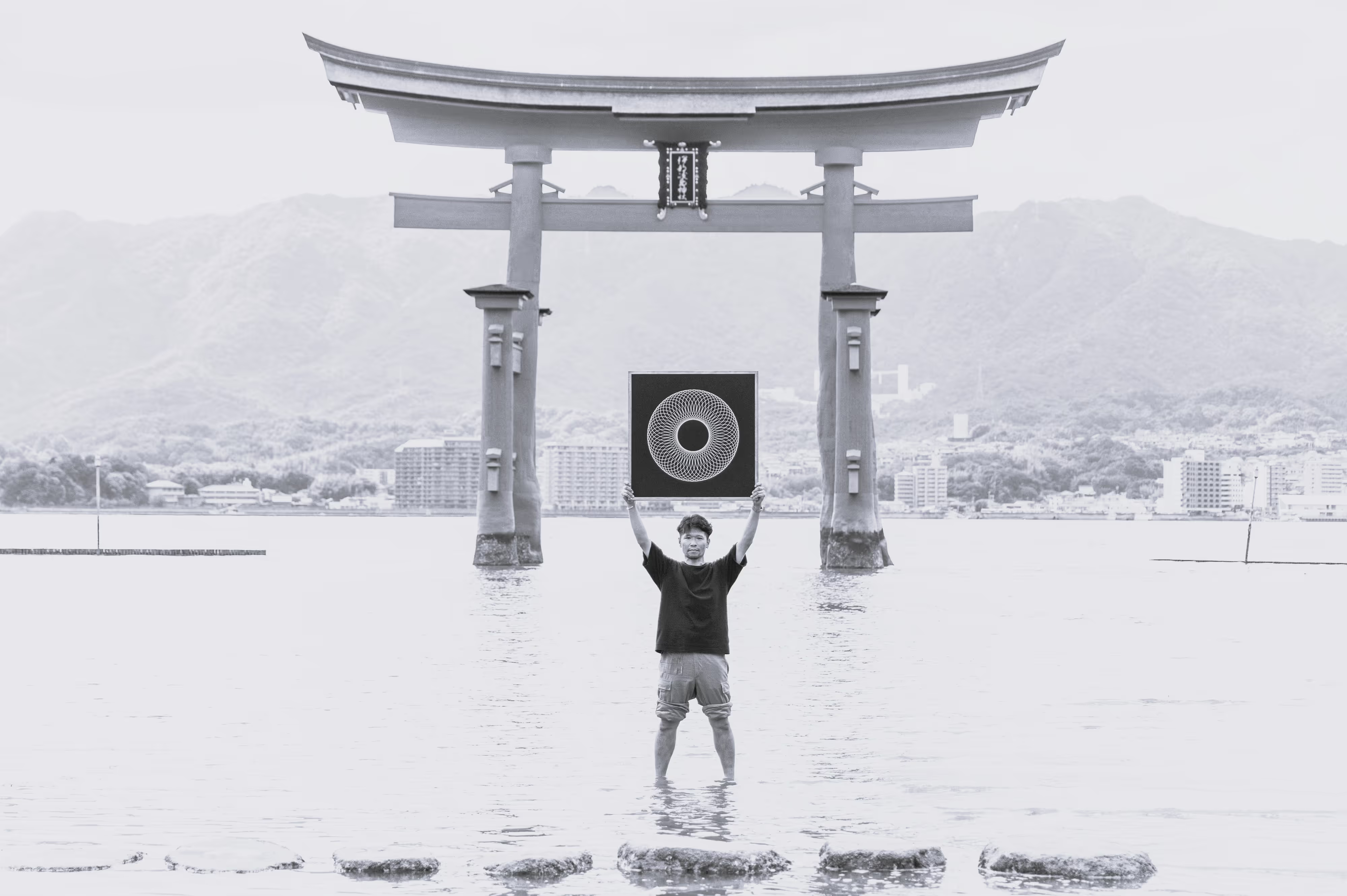
After searching for a new place to work, we resumed our activities as the art Creation group "F.C.T.R."
We released "EN" as "The most beautiful circle in the world."
2023 アートクリエイティブ集団「F.C.T.R」 新たな表現の場を求め、アートクリエイティブ集団「F.C.T.R」として活動を再開。
「世界で最も美しい円」として「EN」を発表。
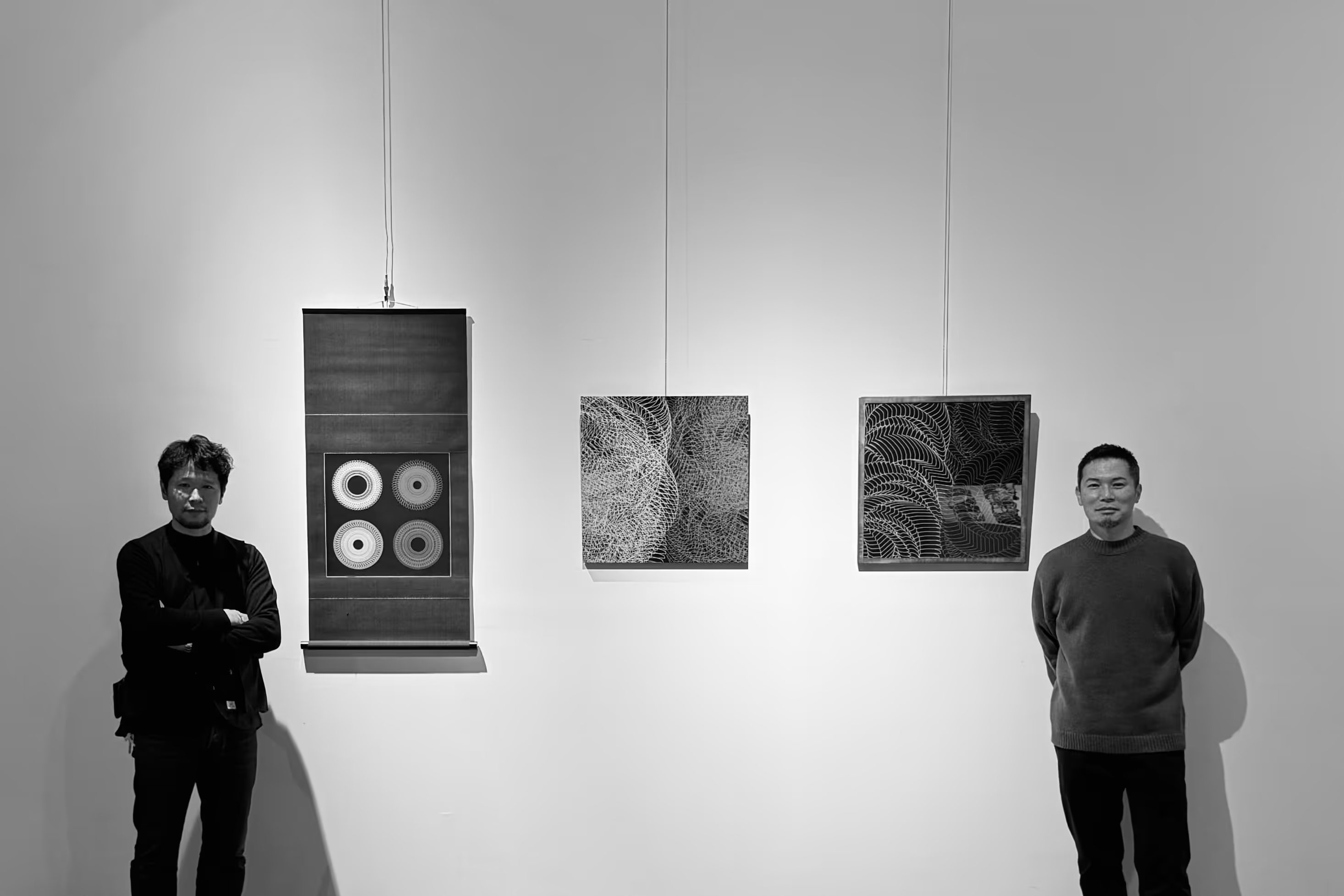
2024 Selected for the "TRADITION for TOMORROW 2024-2025" competition, organized by the Kyoto Museum of Crafts and Design, which aims to connect Japan's traditional culture and industries to the future. F.C.T.R's "KAZARU Technology" was chosen as an award-winning work.
2025 Exhibited at the "KYOTO CRAFTS and DESIGN COMPETITION" hosted by the same museum.
2024-2025 京都伝統産業ミュージアム主催 「KYOTO CRAFTS and DESIGN COMPETITION」出展。
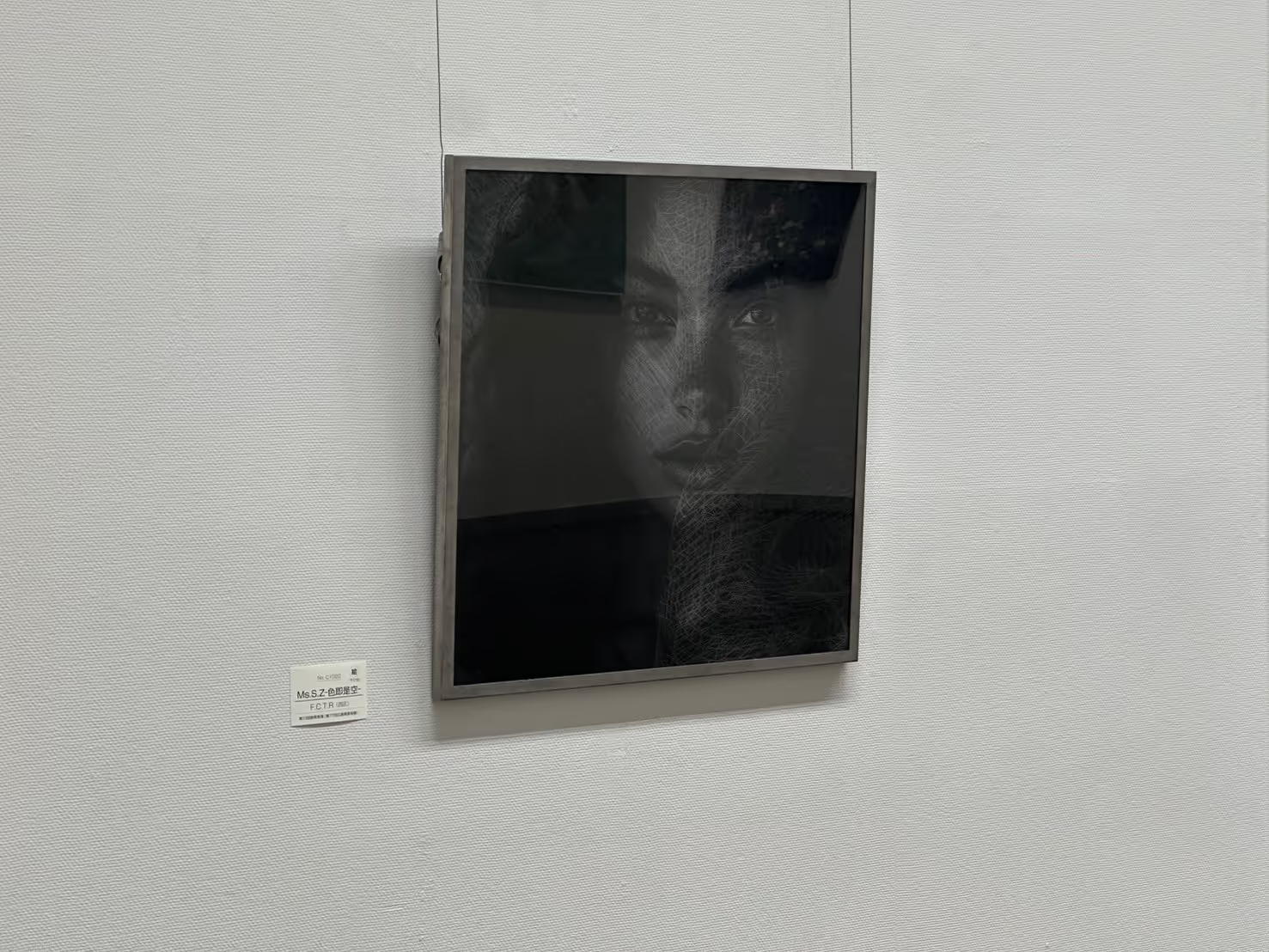
Selected for the 13th New Prefectural Art Exhibition (77th Hiroshima Prefectural Art Exhibition), hosted by Hiroshima Prefecture
2025 広島県主催の第13回新県展(第77回広島県美術展)に選出。
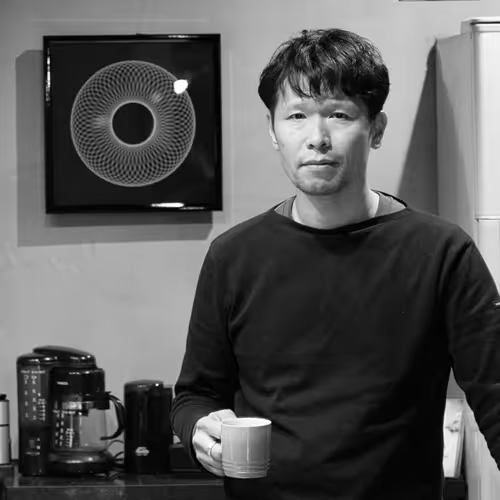
Position in Tomorrow Squad: Leader

Position in Tomorrow Squad: Captain
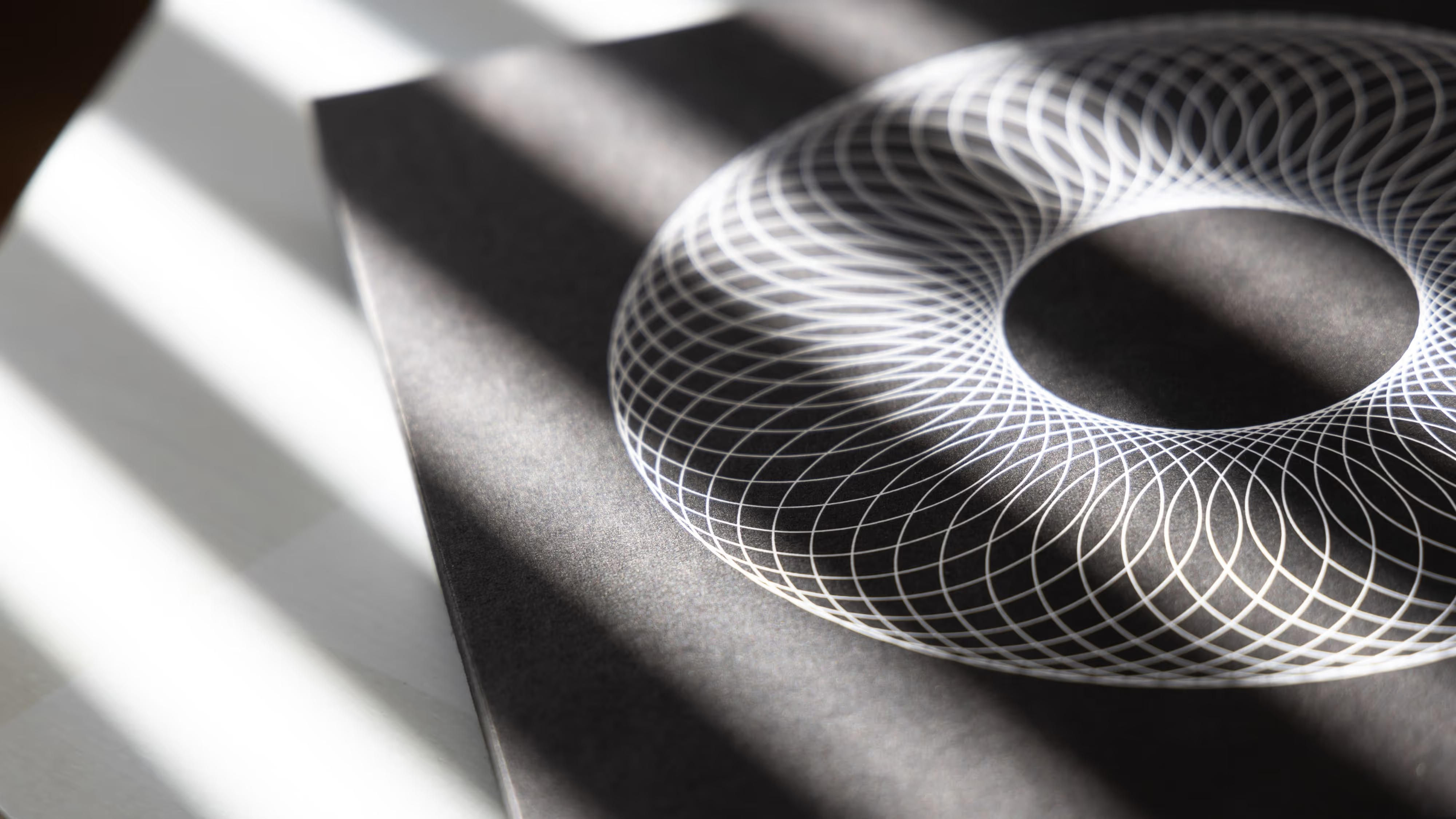
"EN" embodies the simple and quiet beauty, peaceful and pure beauty, deep and calm beauty, and refined beauty that are important to the Japanese.
Through "EN", we hope to spread the aesthetic sense and culture that is so important to the Japanese people to the world.
日本の美意識を世界へ。
"EN" embodies the simple and quiet beauty, peaceful and pure beauty, deep and calm beauty, and refined beauty that are important to the Japanese.
Through "EN", we hope to spread the aesthetic sense and culture that is so important to the Japanese people to the world.
日本の美意識を世界へ。

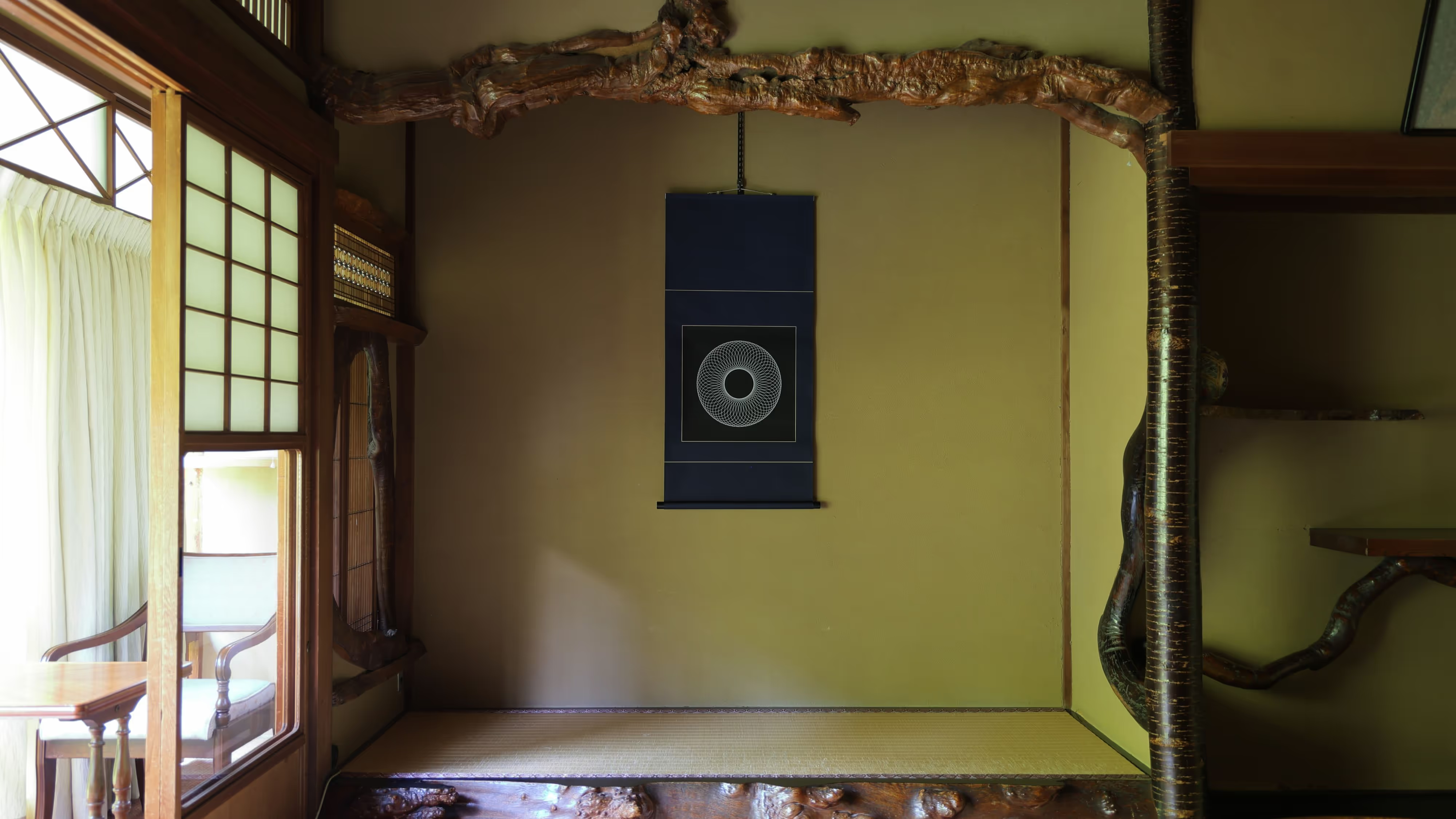
Japan's traditional culture includes a wide variety of performing arts, crafts, events, food, clothing and shelter, and reflects the aesthetic sensibilities, culture and values that Japanese people hold dear. Among these, "KAKEJIKU" is deeply connected to Japan's history and aesthetic sense, and is one of the traditions and cultures that Japan can be proud of. "KAKEJIKU" is made by integrating calligraphy and paintings (paper with letters and pictures) called honshi with a backing of woven fabric and making it into a scroll to be hung in a tokonoma alcove or other space. It has been loved throughout the ages as a uniquely Japanese traditional art appreciation style. The "KAKEJIKU" we created, called "KAKEL", is a work that expresses a new worldview by combining contemporary art and traditional Japanese art.
掛軸 KAKEL
Japan's traditional culture includes a wide variety of performing arts, crafts, events, food, clothing and shelter, and reflects the aesthetic sensibilities, culture and values that Japanese people hold dear. Among these, "KAKEJIKU" is deeply connected to Japan's history and aesthetic sense, and is one of the traditions and cultures that Japan can be proud of. "KAKEJIKU" is made by integrating calligraphy and paintings (paper with letters and pictures) called honshi with a backing of woven fabric and making it into a scroll to be hung in a tokonoma alcove or other space. It has been loved throughout the ages as a uniquely Japanese traditional art appreciation style. The "KAKEJIKU" we created, called "KAKEL", is a work that expresses a new worldview by combining contemporary art and traditional Japanese art.
掛軸 KAKEL

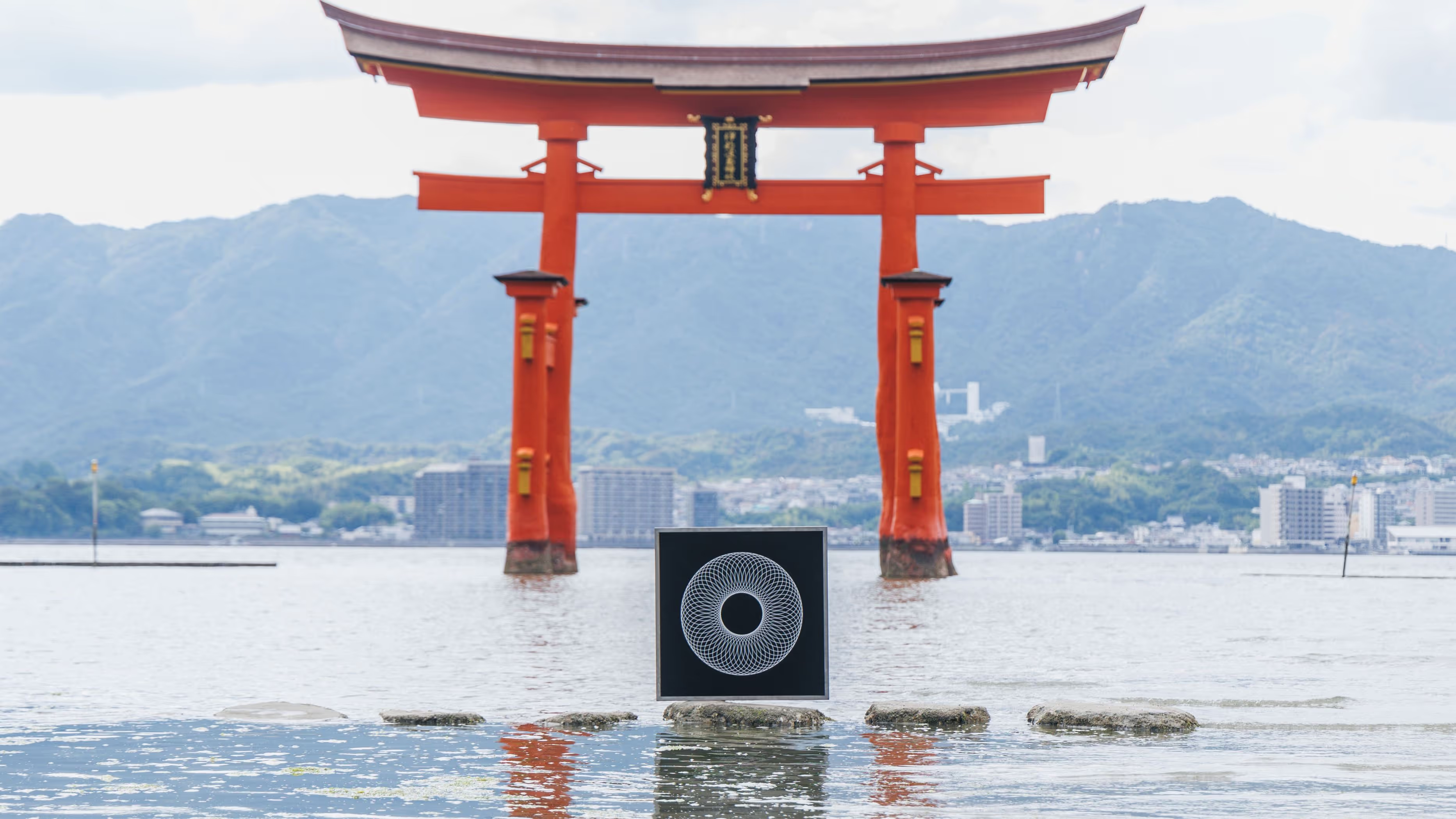
In Japan, there is a word and concept called "wabi-sabi" that expresses the unique Japanese aesthetic and values. "Wabi" refers to the aesthetic sense that finds deep spiritual richness and beauty even in simple and austere things, while "sabi" expresses the beauty that emerges over time and respect for old things. Things in this world change over time, but this is not seen negatively as deterioration; rather, the diverse beauty that changes create is called "sabi" and affirmed. In the final process of our "KAZAL" frames, the seamless, simple-looking surface is polished with a unique polishing process called "no name yet." As a result, fingerprints and hand oils that inevitably get on the frame during use give it a different texture for each owner. We believe that you can experience the essence of the traditional Japanese aesthetic sense of "wabi-sabi" through the unique beauty that emerges when you touch it and the flavor that increases with use.
フレーム KAZAL
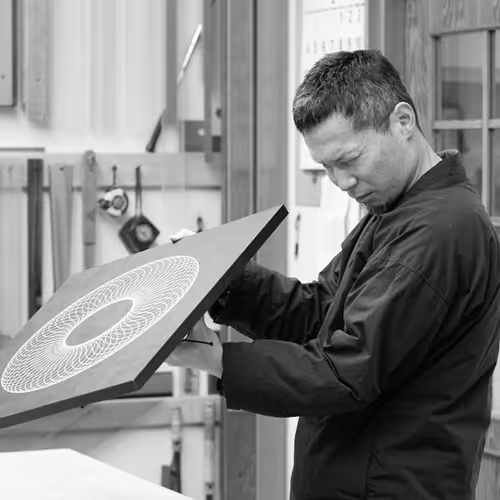
The frame is made of the overwhelmingly metal "SUS304". This is a type of stainless steel classified as austenitic stainless steel, which is made by adding chromium and nickel to an iron base (hereafter referred to as "stainless steel"). It is strong, heat-resistant, and resistant to rust and corrosion. Normally, when a frame is made, rod-shaped pieces of material are assembled into a frame, which results in seams at the four corners, but our frames are made by cutting the material out from a single sheet of stainless steel, so there are no seams. Another feature of this frame is that it is made of stainless steel, a metal that is hard to process.
革新で始まる、
The “main paper” (the artwork itself with calligraphy or painting) is printed on high-quality Awa Washi paper, then mounted on a hinoki cypress panel, a highly durable wood resistant to deformation and deterioration, and protected with a highly transparent acrylic plate that minimizes heat shrinkage and surface distortion.
The main paper itself is not expected to be damaged, but over time, the mounting may become worn or dirty. However, since our works are created using traditional Japanese mounting techniques, all components can be disassembled, cleaned, and repaired or recolored as needed, preserving their beauty.
This ensures the artwork remains in pristine condition and can be passed down to future generations.
伝統で終わる。

mounting artist
mounting artist

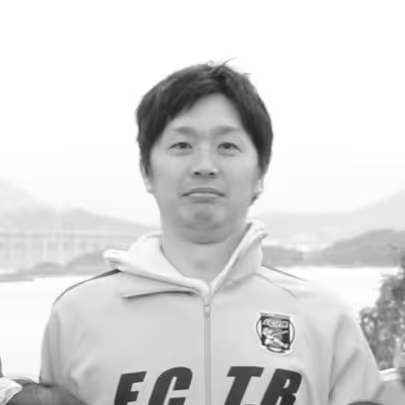
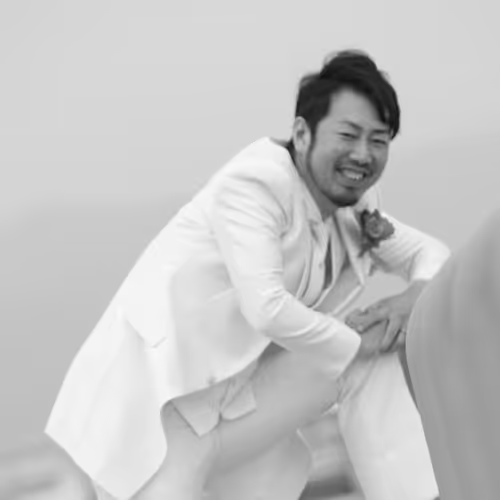
Position in Tomorrow Squad: dancer

Position in Tomorrow Squad: Foundation Manager

Position in Tomorrow Squad: Foundation

Position in Tomorrow Squad: dancer
In Japan, there is a word and concept called "wabi-sabi" that expresses the unique Japanese aesthetic and values. "Wabi" refers to the aesthetic sense that finds deep spiritual richness and beauty even in simple and austere things, while "sabi" expresses the beauty that emerges over time and respect for old things. Things in this world change over time, but this is not seen negatively as deterioration; rather, the diverse beauty that changes create is called "sabi" and affirmed. In the final process of our "KAZAL" frames, the seamless, simple-looking surface is polished with a unique polishing process called "no name yet." As a result, fingerprints and hand oils that inevitably get on the frame during use give it a different texture for each owner. We believe that you can experience the essence of the traditional Japanese aesthetic sense of "wabi-sabi" through the unique beauty that emerges when you touch it and the flavor that increases with use.
フレーム KAZAL
When lines join together, they become shapes. When shapes are layered, they become patterns. We named the pattern, arranged in a circle, "EN".
"EN" means "circle" in Japanese. "EN" also has the meaning of "en", which means "encounters and connections between people".
We hope to connect with people all over the world through "EN".
「EN」―最も美しい円
線がつながると形になる。 形が重なると模様になる。 その模様を円形に配置したものを「EN」と名づけた。
「EN」は日本語で「円」を意味する。 同時に、人と人との「縁(えん)」という意味も持つ。
この「EN」を通じて、世界中の人々とつながることを願っている。
When lines join together, they become shapes. When shapes are layered, they become patterns. We named the pattern, arranged in a circle, "EN".
"EN" means "circle" in Japanese. "EN" also has the meaning of "en", which means "encounters and connections between people".
We hope to connect with people all over the world through "EN".
「EN」―最も美しい円
線がつながると形になる。 形が重なると模様になる。 その模様を円形に配置したものを「EN」と名づけた。
「EN」は日本語で「円」を意味する。 同時に、人と人との「縁(えん)」という意味も持つ。
この「EN」を通じて、世界中の人々とつながることを願っている。
Zen is a Buddhist practice aimed at calming the mind and attaining enlightenment. Zen words are concise expressions of Zen teachings.
Our works are completed by combining Zen words with art created using new technologies.
〚ZEN―禅語から着想を得たアート〛
禅は、心を静め、悟りに至ることを目的とした仏教の修行法。 禅語は、その教えを簡潔に表現した言葉。
私たちの作品は、禅語と新しい技術によって生み出されたアートを融合させることで完成する。
Zen is a Buddhist practice aimed at calming the mind and attaining enlightenment. Zen words are concise expressions of Zen teachings.
Our works are completed by combining Zen words with art created using new technologies.
〚ZEN―禅語から着想を得たアート〛
禅は、心を静め、悟りに至ることを目的とした仏教の修行法。 禅語は、その教えを簡潔に表現した言葉。
私たちの作品は、禅語と新しい技術によって生み出されたアートを融合させることで完成する。

"EN" represents the Japanese word for "circle". This is called the "Pattern of EN" because Zen words are arranged in a circular shape. It is inspired by the "circular sand ripples" often seen in the dry landscapes (karesansui) of Japanese gardens. In the world of Zen, the circle (ensō) is an important motif symbolizing enlightenment and perfection. It represents the eternal cycles of nature, the harmony of the cosmos, and the interconnectedness of humans and nature. The circle conveys harmony and infinity, evoking a profound sense of tranquility.
円のパターン
"EN" represents the Japanese word for "circle". This is called the "Pattern of EN" because Zen words are arranged in a circular shape. It is inspired by the "circular sand ripples" often seen in the dry landscapes (karesansui) of Japanese gardens. In the world of Zen, the circle (ensō) is an important motif symbolizing enlightenment and perfection. It represents the eternal cycles of nature, the harmony of the cosmos, and the interconnectedness of humans and nature. The circle conveys harmony and infinity, evoking a profound sense of tranquility.
円のパターン

"SEN" represents the Japanese word for "line". This is called the "Pattern of SEN" because it is created solely using the lines of Zen phrases. It evokes the freedom found in nature, like ripples ("hamon") drawn by the wind on the surface of water. The flowing movements and intersections of the lines express the Zen worldview, where order and chaos are in harmony. These elements bring a sense of dynamism to the whole.
線のパターン
"SEN" represents the Japanese word for "line". This is called the "Pattern of SEN" because it is created solely using the lines of Zen phrases. It evokes the freedom found in nature, like ripples ("hamon") drawn by the wind on the surface of water. The flowing movements and intersections of the lines express the Zen worldview, where order and chaos are in harmony. These elements bring a sense of dynamism to the whole.
線のパターン

"REN" in Japanese means "to be connected." It refers to the "pattern of REN" where the shapes of Zen characters are connected. The continuity of the shapes evokes the traditional Japanese pattern "Seigaiha," which resembles waves. "Seigaiha" (pronounced "seigaiha") represents the image of gentle waves extending endlessly, symbolizing the flow of peaceful, continuous movement. It is a pattern considered to carry a positive meaning, symbolizing "forever" and "the continuation of a peaceful life." Additionally, the pattern is said to symbolize the washing away and purification of misfortune, often carrying a meaning of warding off evil.It conveys a sense of rhythm and flow within the connection.
連のパターン
"REN" in Japanese means "to be connected." It refers to the "pattern of REN" where the shapes of Zen characters are connected. The continuity of the shapes evokes the traditional Japanese pattern "Seigaiha," which resembles waves. "Seigaiha" (pronounced "seigaiha") represents the image of gentle waves extending endlessly, symbolizing the flow of peaceful, continuous movement. It is a pattern considered to carry a positive meaning, symbolizing "forever" and "the continuation of a peaceful life." Additionally, the pattern is said to symbolize the washing away and purification of misfortune, often carrying a meaning of warding off evil.It conveys a sense of rhythm and flow within the connection.
連のパターン
“EN” merges with new technology to become “THE EN.”
「EN」は”新しい技術”と融合することで、「THE EN」となる。
“EN” merges with new technology to become “THE EN.”
「EN」は”新しい技術”と融合することで、「THE EN」となる。

Creators from various genres working in Hiroshima, Japan, came together to form the fundoshi creative group "Tomorrow Squad." We worked as fundoshi performers, using dance and group gymnastics as our weapons.
We released "FUJI" as "the most beautiful triangle in the world."
2010 「TOMORROW隊」 結成。 広島を拠点に活動する多様なジャンルのクリエイターが集い、ふんどしクリエイティブ集団「TOMORROW隊」を結成。 ダンスと組体操を武器に、ふんどしパフォーマーとして活動。
「世界で最も美しい三角形」として「富士」を発表。

After searching for a new place to work, we resumed our activities as the art Creation group "F.C.T.R."
We released "EN" as "The most beautiful circle in the world."
2023 アートクリエイティブ集団「F.C.T.R」 新たな表現の場を求め、アートクリエイティブ集団「F.C.T.R」として活動を再開。
「世界で最も美しい円」として「EN」を発表。

2024 Selected for the "TRADITION for TOMORROW 2024-2025" competition, organized by the Kyoto Museum of Crafts and Design, which aims to connect Japan's traditional culture and industries to the future. F.C.T.R's "KAZARU Technology" was chosen as an award-winning work.
2025 Exhibited at the "KYOTO CRAFTS and DESIGN COMPETITION" hosted by the same museum.
2024-2025 京都伝統産業ミュージアム主催 「KYOTO CRAFTS and DESIGN COMPETITION」出展。

Selected for the 13th New Prefectural Art Exhibition (77th Hiroshima Prefectural Art Exhibition), hosted by Hiroshima Prefecture
2025 広島県主催の第13回新県展(第77回広島県美術展)に選出。

Position in Tomorrow Squad: Leader

Position in Tomorrow Squad: Captain

mounting artist
mounting artist

Position in Tomorrow Squad: dancer

Position in Tomorrow Squad: Foundation Manager

Position in Tomorrow Squad: Foundation

Position in Tomorrow Squad: dancer

"EN" embodies the simple and quiet beauty, peaceful and pure beauty, deep and calm beauty, and refined beauty that are important to the Japanese.
Through "EN", we hope to spread the aesthetic sense and culture that is so important to the Japanese people to the world.
日本の美意識を世界へ。

"EN" embodies the simple and quiet beauty, peaceful and pure beauty, deep and calm beauty, and refined beauty that are important to the Japanese.
Through "EN", we hope to spread the aesthetic sense and culture that is so important to the Japanese people to the world.
日本の美意識を世界へ。

Japan's traditional culture includes a wide variety of performing arts, crafts, events, food, clothing and shelter, and reflects the aesthetic sensibilities, culture and values that Japanese people hold dear. Among these, "KAKEJIKU" is deeply connected to Japan's history and aesthetic sense, and is one of the traditions and cultures that Japan can be proud of. "KAKEJIKU" is made by integrating calligraphy and paintings (paper with letters and pictures) called honshi with a backing of woven fabric and making it into a scroll to be hung in a tokonoma alcove or other space. It has been loved throughout the ages as a uniquely Japanese traditional art appreciation style. The "KAKEJIKU" we created, called "KAKEL", is a work that expresses a new worldview by combining contemporary art and traditional Japanese art.
掛軸 KAKEL

Japan's traditional culture includes a wide variety of performing arts, crafts, events, food, clothing and shelter, and reflects the aesthetic sensibilities, culture and values that Japanese people hold dear. Among these, "KAKEJIKU" is deeply connected to Japan's history and aesthetic sense, and is one of the traditions and cultures that Japan can be proud of. "KAKEJIKU" is made by integrating calligraphy and paintings (paper with letters and pictures) called honshi with a backing of woven fabric and making it into a scroll to be hung in a tokonoma alcove or other space. It has been loved throughout the ages as a uniquely Japanese traditional art appreciation style. The "KAKEJIKU" we created, called "KAKEL", is a work that expresses a new worldview by combining contemporary art and traditional Japanese art.
掛軸 KAKEL

In Japan, there is a word and concept called "wabi-sabi" that expresses the unique Japanese aesthetic and values. "Wabi" refers to the aesthetic sense that finds deep spiritual richness and beauty even in simple and austere things, while "sabi" expresses the beauty that emerges over time and respect for old things. Things in this world change over time, but this is not seen negatively as deterioration; rather, the diverse beauty that changes create is called "sabi" and affirmed. In the final process of our "KAZAL" frames, the seamless, simple-looking surface is polished with a unique polishing process called "no name yet." As a result, fingerprints and hand oils that inevitably get on the frame during use give it a different texture for each owner. We believe that you can experience the essence of the traditional Japanese aesthetic sense of "wabi-sabi" through the unique beauty that emerges when you touch it and the flavor that increases with use.
フレーム KAZAL
In Japan, there is a word and concept called "wabi-sabi" that expresses the unique Japanese aesthetic and values. "Wabi" refers to the aesthetic sense that finds deep spiritual richness and beauty even in simple and austere things, while "sabi" expresses the beauty that emerges over time and respect for old things. Things in this world change over time, but this is not seen negatively as deterioration; rather, the diverse beauty that changes create is called "sabi" and affirmed. In the final process of our "KAZAL" frames, the seamless, simple-looking surface is polished with a unique polishing process called "no name yet." As a result, fingerprints and hand oils that inevitably get on the frame during use give it a different texture for each owner. We believe that you can experience the essence of the traditional Japanese aesthetic sense of "wabi-sabi" through the unique beauty that emerges when you touch it and the flavor that increases with use.
フレーム KAZAL
The frame is made of the overwhelmingly metal "SUS304". This is a type of stainless steel classified as austenitic stainless steel, which is made by adding chromium and nickel to an iron base (hereafter referred to as "stainless steel"). It is strong, heat-resistant, and resistant to rust and corrosion. Normally, when a frame is made, rod-shaped pieces of material are assembled into a frame, which results in seams at the four corners, but our frames are made by cutting the material out from a single sheet of stainless steel, so there are no seams. Another feature of this frame is that it is made of stainless steel, a metal that is hard to process.
革新で始まる、
The “main paper” (the artwork itself with calligraphy or painting) is printed on high-quality Awa Washi paper, then mounted on a hinoki cypress panel, a highly durable wood resistant to deformation and deterioration, and protected with a highly transparent acrylic plate that minimizes heat shrinkage and surface distortion.
The main paper itself is not expected to be damaged, but over time, the mounting may become worn or dirty. However, since our works are created using traditional Japanese mounting techniques, all components can be disassembled, cleaned, and repaired or recolored as needed, preserving their beauty.
This ensures the artwork remains in pristine condition and can be passed down to future generations.
伝統で終わる。
When lines join together, they become shapes. When shapes are layered, they become patterns. We named the pattern, arranged in a circle, "EN".
"EN" means "circle" in Japanese. "EN" also has the meaning of "en", which means "encounters and connections between people".
We hope to connect with people all over the world through "EN".
「EN」―最も美しい円
線がつながると形になる。 形が重なると模様になる。 その模様を円形に配置したものを「EN」と名づけた。
「EN」は日本語で「円」を意味する。 同時に、人と人との「縁(えん)」という意味も持つ。
この「EN」を通じて、世界中の人々とつながることを願っている。
When lines join together, they become shapes. When shapes are layered, they become patterns. We named the pattern, arranged in a circle, "EN".
"EN" means "circle" in Japanese. "EN" also has the meaning of "en", which means "encounters and connections between people".
We hope to connect with people all over the world through "EN".
「EN」―最も美しい円
線がつながると形になる。 形が重なると模様になる。 その模様を円形に配置したものを「EN」と名づけた。
「EN」は日本語で「円」を意味する。 同時に、人と人との「縁(えん)」という意味も持つ。
この「EN」を通じて、世界中の人々とつながることを願っている。
Zen is a Buddhist practice aimed at calming the mind and attaining enlightenment. Zen words are concise expressions of Zen teachings.
Our works are completed by combining Zen words with art created using new technologies.
〚ZEN―禅語から着想を得たアート〛
禅は、心を静め、悟りに至ることを目的とした仏教の修行法。 禅語は、その教えを簡潔に表現した言葉。
私たちの作品は、禅語と新しい技術によって生み出されたアートを融合させることで完成する。
Zen is a Buddhist practice aimed at calming the mind and attaining enlightenment. Zen words are concise expressions of Zen teachings.
Our works are completed by combining Zen words with art created using new technologies.
〚ZEN―禅語から着想を得たアート〛
禅は、心を静め、悟りに至ることを目的とした仏教の修行法。 禅語は、その教えを簡潔に表現した言葉。
私たちの作品は、禅語と新しい技術によって生み出されたアートを融合させることで完成する。

"EN" represents the Japanese word for "circle". This is called the "Pattern of EN" because Zen words are arranged in a circular shape. It is inspired by the "circular sand ripples" often seen in the dry landscapes (karesansui) of Japanese gardens. In the world of Zen, the circle (ensō) is an important motif symbolizing enlightenment and perfection. It represents the eternal cycles of nature, the harmony of the cosmos, and the interconnectedness of humans and nature. The circle conveys harmony and infinity, evoking a profound sense of tranquility.
円のパターン
"EN" represents the Japanese word for "circle". This is called the "Pattern of EN" because Zen words are arranged in a circular shape. It is inspired by the "circular sand ripples" often seen in the dry landscapes (karesansui) of Japanese gardens. In the world of Zen, the circle (ensō) is an important motif symbolizing enlightenment and perfection. It represents the eternal cycles of nature, the harmony of the cosmos, and the interconnectedness of humans and nature. The circle conveys harmony and infinity, evoking a profound sense of tranquility.
円のパターン

"SEN" represents the Japanese word for "line". This is called the "Pattern of SEN" because it is created solely using the lines of Zen phrases. It evokes the freedom found in nature, like ripples ("hamon") drawn by the wind on the surface of water. The flowing movements and intersections of the lines express the Zen worldview, where order and chaos are in harmony. These elements bring a sense of dynamism to the whole.
線のパターン
"SEN" represents the Japanese word for "line". This is called the "Pattern of SEN" because it is created solely using the lines of Zen phrases. It evokes the freedom found in nature, like ripples ("hamon") drawn by the wind on the surface of water. The flowing movements and intersections of the lines express the Zen worldview, where order and chaos are in harmony. These elements bring a sense of dynamism to the whole.
線のパターン

"REN" in Japanese means "to be connected." It refers to the "pattern of REN" where the shapes of Zen characters are connected. The continuity of the shapes evokes the traditional Japanese pattern "Seigaiha," which resembles waves. "Seigaiha" (pronounced "seigaiha") represents the image of gentle waves extending endlessly, symbolizing the flow of peaceful, continuous movement. It is a pattern considered to carry a positive meaning, symbolizing "forever" and "the continuation of a peaceful life." Additionally, the pattern is said to symbolize the washing away and purification of misfortune, often carrying a meaning of warding off evil.It conveys a sense of rhythm and flow within the connection.
連のパターン
"REN" in Japanese means "to be connected." It refers to the "pattern of REN" where the shapes of Zen characters are connected. The continuity of the shapes evokes the traditional Japanese pattern "Seigaiha," which resembles waves. "Seigaiha" (pronounced "seigaiha") represents the image of gentle waves extending endlessly, symbolizing the flow of peaceful, continuous movement. It is a pattern considered to carry a positive meaning, symbolizing "forever" and "the continuation of a peaceful life." Additionally, the pattern is said to symbolize the washing away and purification of misfortune, often carrying a meaning of warding off evil.It conveys a sense of rhythm and flow within the connection.
連のパターン
“EN” merges with new technology to become “THE EN.”
「EN」は”新しい技術”と融合することで、「THE EN」となる。
“EN” merges with new technology to become “THE EN.”
「EN」は”新しい技術”と融合することで、「THE EN」となる。

Creators from various genres working in Hiroshima, Japan, came together to form the fundoshi creative group "Tomorrow Squad." We worked as fundoshi performers, using dance and group gymnastics as our weapons.
We released "FUJI" as "the most beautiful triangle in the world."
2010 「TOMORROW隊」 結成。 広島を拠点に活動する多様なジャンルのクリエイターが集い、ふんどしクリエイティブ集団「TOMORROW隊」を結成。 ダンスと組体操を武器に、ふんどしパフォーマーとして活動。
「世界で最も美しい三角形」として「富士」を発表。

After searching for a new place to work, we resumed our activities as the art Creation group "F.C.T.R."
We released "EN" as "The most beautiful circle in the world."
2023 アートクリエイティブ集団「F.C.T.R」 新たな表現の場を求め、アートクリエイティブ集団「F.C.T.R」として活動を再開。
「世界で最も美しい円」として「EN」を発表。

2024 Selected for the "TRADITION for TOMORROW 2024-2025" competition, organized by the Kyoto Museum of Crafts and Design, which aims to connect Japan's traditional culture and industries to the future. F.C.T.R's "KAZARU Technology" was chosen as an award-winning work.
2025 Exhibited at the "KYOTO CRAFTS and DESIGN COMPETITION" hosted by the same museum.
2024-2025 京都伝統産業ミュージアム主催 「KYOTO CRAFTS and DESIGN COMPETITION」出展。

Selected for the 13th New Prefectural Art Exhibition (77th Hiroshima Prefectural Art Exhibition), hosted by Hiroshima Prefecture
2025 広島県主催の第13回新県展(第77回広島県美術展)に選出。

Position in Tomorrow Squad: Leader

Position in Tomorrow Squad: Captain

mounting artist
mounting artist

Position in Tomorrow Squad: dancer

Position in Tomorrow Squad: Foundation Manager

Position in Tomorrow Squad: Foundation

Position in Tomorrow Squad: dancer

"EN" embodies the simple and quiet beauty, peaceful and pure beauty, deep and calm beauty, and refined beauty that are important to the Japanese.
Through "EN", we hope to spread the aesthetic sense and culture that is so important to the Japanese people to the world.
日本の美意識を世界へ。

"EN" embodies the simple and quiet beauty, peaceful and pure beauty, deep and calm beauty, and refined beauty that are important to the Japanese.
Through "EN", we hope to spread the aesthetic sense and culture that is so important to the Japanese people to the world.
日本の美意識を世界へ。

Japan's traditional culture includes a wide variety of performing arts, crafts, events, food, clothing and shelter, and reflects the aesthetic sensibilities, culture and values that Japanese people hold dear. Among these, "KAKEJIKU" is deeply connected to Japan's history and aesthetic sense, and is one of the traditions and cultures that Japan can be proud of. "KAKEJIKU" is made by integrating calligraphy and paintings (paper with letters and pictures) called honshi with a backing of woven fabric and making it into a scroll to be hung in a tokonoma alcove or other space. It has been loved throughout the ages as a uniquely Japanese traditional art appreciation style. The "KAKEJIKU" we created, called "KAKEL", is a work that expresses a new worldview by combining contemporary art and traditional Japanese art.
掛軸 KAKEL

Japan's traditional culture includes a wide variety of performing arts, crafts, events, food, clothing and shelter, and reflects the aesthetic sensibilities, culture and values that Japanese people hold dear. Among these, "KAKEJIKU" is deeply connected to Japan's history and aesthetic sense, and is one of the traditions and cultures that Japan can be proud of. "KAKEJIKU" is made by integrating calligraphy and paintings (paper with letters and pictures) called honshi with a backing of woven fabric and making it into a scroll to be hung in a tokonoma alcove or other space. It has been loved throughout the ages as a uniquely Japanese traditional art appreciation style. The "KAKEJIKU" we created, called "KAKEL", is a work that expresses a new worldview by combining contemporary art and traditional Japanese art.
掛軸 KAKEL

In Japan, there is a word and concept called "wabi-sabi" that expresses the unique Japanese aesthetic and values. "Wabi" refers to the aesthetic sense that finds deep spiritual richness and beauty even in simple and austere things, while "sabi" expresses the beauty that emerges over time and respect for old things. Things in this world change over time, but this is not seen negatively as deterioration; rather, the diverse beauty that changes create is called "sabi" and affirmed. In the final process of our "KAZAL" frames, the seamless, simple-looking surface is polished with a unique polishing process called "no name yet." As a result, fingerprints and hand oils that inevitably get on the frame during use give it a different texture for each owner. We believe that you can experience the essence of the traditional Japanese aesthetic sense of "wabi-sabi" through the unique beauty that emerges when you touch it and the flavor that increases with use.
フレーム KAZAL

In Japan, there is a word and concept called "wabi-sabi" that expresses the unique Japanese aesthetic and values. "Wabi" refers to the aesthetic sense that finds deep spiritual richness and beauty even in simple and austere things, while "sabi" expresses the beauty that emerges over time and respect for old things. Things in this world change over time, but this is not seen negatively as deterioration; rather, the diverse beauty that changes create is called "sabi" and affirmed. In the final process of our "KAZAL" frames, the seamless, simple-looking surface is polished with a unique polishing process called "no name yet." As a result, fingerprints and hand oils that inevitably get on the frame during use give it a different texture for each owner. We believe that you can experience the essence of the traditional Japanese aesthetic sense of "wabi-sabi" through the unique beauty that emerges when you touch it and the flavor that increases with use.
フレーム KAZAL

The frame is made of the overwhelmingly metal "SUS304". This is a type of stainless steel classified as austenitic stainless steel, which is made by adding chromium and nickel to an iron base (hereafter referred to as "stainless steel"). It is strong, heat-resistant, and resistant to rust and corrosion. Normally, when a frame is made, rod-shaped pieces of material are assembled into a frame, which results in seams at the four corners, but our frames are made by cutting the material out from a single sheet of stainless steel, so there are no seams. Another feature of this frame is that it is made of stainless steel, a metal that is hard to process.
革新で始まる、
The “main paper” (the artwork itself with calligraphy or painting) is printed on high-quality Awa Washi paper, then mounted on a hinoki cypress panel, a highly durable wood resistant to deformation and deterioration, and protected with a highly transparent acrylic plate that minimizes heat shrinkage and surface distortion.
The main paper itself is not expected to be damaged, but over time, the mounting may become worn or dirty. However, since our works are created using traditional Japanese mounting techniques, all components can be disassembled, cleaned, and repaired or recolored as needed, preserving their beauty.
This ensures the artwork remains in pristine condition and can be passed down to future generations.
伝統で終わる。
