ディスカバー
コレクション
トークン
スワップ
ドロップ
アクティビティ
報酬
スタジオ
/
アイテム
所有者
アクティビティ
集約
ネットワーク
サービス利用規約
プライバシーポリシー
$3,097.22
ライブミント
ミンター
価格
数量
時間
ライブセールス
アイテム
価格
送信元
時間
ライブミント
ミンター
価格
数量
時間
ライブセールス
アイテム
価格
送信元
時間
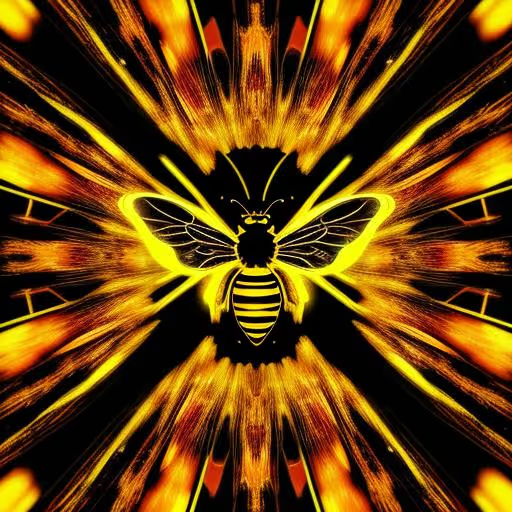
I am a beekeeper and use the proceeds to buy food for the bees

The honey bee, scientifically named Apis mellifera, is a remarkable insect known for its crucial role in pollination and honey production. Here's a detailed description:

Physical Characteristics:

Size: Honey bees are generally small, with workers measuring about 12-15 mm in length.
Color: They typically have a golden-brown hue with black stripes, though this can vary among different subspecies. Their bodies are covered with fine hair which helps in pollen collection.
Body Structure: They have three distinct body sections - the head, thorax, and abdomen. Each honey bee has two pairs of wings, five eyes (three small simple eyes on top of the head and two large compound eyes), and a stinger.

Behavior:

Social Structure: Honey bees live in large, highly organized colonies with a single queen, hundreds of drones (males), and thousands of workers (sterile females). The queen's primary role is to lay eggs, while drones exist to mate with the queen. Workers perform all other colony tasks like foraging, nursing, cleaning, and defense.

Communication: They use a sophisticated dance language, most famously the "waggle dance," to communicate the location of food sources to other bees. Pheromones also play a significant role in their communication for tasks like alerting the hive to danger or signaling the presence of the queen.

Life Cycle:

Eggs: Laid by the queen into wax cells.
Larvae: After hatching, larvae are fed by workers. The diet of larvae destined to become workers or drones differs from that of a future queen.
Pupae: Larvae then pupate, developing into adult bees inside capped cells.
Adults: Once emerged, they assume various roles within the hive, with workers' roles changing as they age.

Ecological Importance:

Pollination: Honey bees are vital pollinators, transferring pollen as they move from flower to flower, which is essential for plant reproduction. This service supports a significant portion of the world's food production.
Honey Production: They produce honey by collecting nectar, which is transformed through a process involving enzymes and dehydration within the hive. Honey serves as food for the bees during winter or periods of scarcity.

Challenges:

Honey bees face numerous threats including habitat loss, pesticides, parasites like the Varroa mite, diseases, and climate change. These factors have contributed to a decline in bee populations, prompting global concern over bee conservation.

The honey bee is not just an insect; it's an integral part of our ecosystem, playing a pivotal role in agriculture and biodiversity. Their complex social structure and industrious nature make them a fascinating subject of study and admiration.
ミント BEE
利用可能なアイテム0
ライブミント
ミンター
価格
数量
時間
ライブセールス
アイテム
価格
送信元
時間
ライブミント
ミンター
価格
数量
時間
ライブセールス
アイテム
価格
送信元
時間

BEE

Polygon
2024年9月
アート
ミント終了
Polygon
2024年9月発売
アート
ミント終了
最低価格
—
1階 %—
トップオファー
—
24時間の出来高 0.00 POL
合計出来高0.00 POL
出品中0%
所有者 (一意)—

BEE
BEE

Polygon
2024年9月
アート
ミント終了
Polygon
2024年9月発売
アート
ミント終了
アイテム
所有者
特性
アクティビティ
当社について

BEE

Polygon
2024年9月
アート
ミント終了
Polygon
2024年9月発売
アート
ミント終了
最低価格
—
1階 %—
トップオファー
—
24時間の出来高 0.00 POL
合計出来高0.00 POL
出品中0%
所有者 (一意)—

BEE
BEE

Polygon
2024年9月
アート
ミント終了
Polygon
2024年9月発売
アート
ミント終了
アイテム
所有者
特性
アクティビティ
当社について
ライブミント
ミンター
価格
数量
時間
ライブセールス
アイテム
価格
送信元
時間
ライブミント
ミンター
価格
数量
時間
ライブセールス
アイテム
価格
送信元
時間
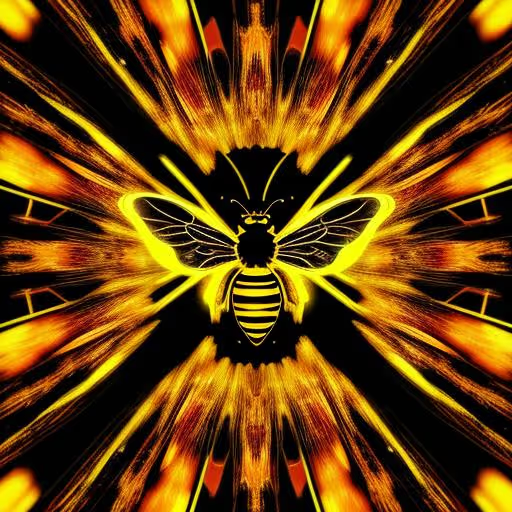
I am a beekeeper and use the proceeds to buy food for the bees

The honey bee, scientifically named Apis mellifera, is a remarkable insect known for its crucial role in pollination and honey production. Here's a detailed description:

Physical Characteristics:

Size: Honey bees are generally small, with workers measuring about 12-15 mm in length.
Color: They typically have a golden-brown hue with black stripes, though this can vary among different subspecies. Their bodies are covered with fine hair which helps in pollen collection.
Body Structure: They have three distinct body sections - the head, thorax, and abdomen. Each honey bee has two pairs of wings, five eyes (three small simple eyes on top of the head and two large compound eyes), and a stinger.

Behavior:

Social Structure: Honey bees live in large, highly organized colonies with a single queen, hundreds of drones (males), and thousands of workers (sterile females). The queen's primary role is to lay eggs, while drones exist to mate with the queen. Workers perform all other colony tasks like foraging, nursing, cleaning, and defense.

Communication: They use a sophisticated dance language, most famously the "waggle dance," to communicate the location of food sources to other bees. Pheromones also play a significant role in their communication for tasks like alerting the hive to danger or signaling the presence of the queen.

Life Cycle:

Eggs: Laid by the queen into wax cells.
Larvae: After hatching, larvae are fed by workers. The diet of larvae destined to become workers or drones differs from that of a future queen.
Pupae: Larvae then pupate, developing into adult bees inside capped cells.
Adults: Once emerged, they assume various roles within the hive, with workers' roles changing as they age.

Ecological Importance:

Pollination: Honey bees are vital pollinators, transferring pollen as they move from flower to flower, which is essential for plant reproduction. This service supports a significant portion of the world's food production.
Honey Production: They produce honey by collecting nectar, which is transformed through a process involving enzymes and dehydration within the hive. Honey serves as food for the bees during winter or periods of scarcity.

Challenges:

Honey bees face numerous threats including habitat loss, pesticides, parasites like the Varroa mite, diseases, and climate change. These factors have contributed to a decline in bee populations, prompting global concern over bee conservation.

The honey bee is not just an insect; it's an integral part of our ecosystem, playing a pivotal role in agriculture and biodiversity. Their complex social structure and industrious nature make them a fascinating subject of study and admiration.
ライブミント
ミンター
価格
数量
時間
ライブセールス
アイテム
価格
送信元
時間
ライブミント
ミンター
価格
数量
時間
ライブセールス
アイテム
価格
送信元
時間
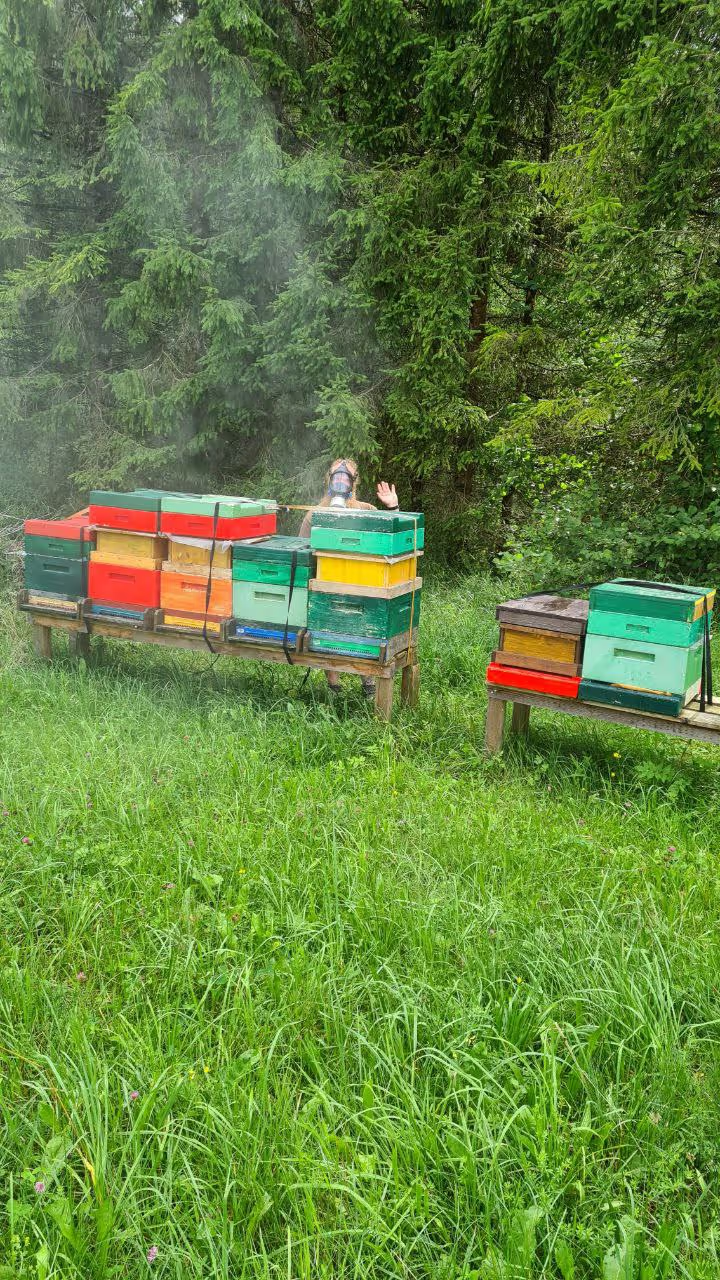
I am a beekeeper and use the proceeds to buy food for the bees

The honey bee, scientifically named Apis mellifera, is a remarkable insect known for its crucial role in pollination and honey production. Here's a detailed description:

Physical Characteristics:

Size: Honey bees are generally small, with workers measuring about 12-15 mm in length.
Color: They typically have a golden-brown hue with black stripes, though this can vary among different subspecies. Their bodies are covered with fine hair which helps in pollen collection.
Body Structure: They have three distinct body sections - the head, thorax, and abdomen. Each honey bee has two pairs of wings, five eyes (three small simple eyes on top of the head and two large compound eyes), and a stinger.

Behavior:

Social Structure: Honey bees live in large, highly organized colonies with a single queen, hundreds of drones (males), and thousands of workers (sterile females). The queen's primary role is to lay eggs, while drones exist to mate with the queen. Workers perform all other colony tasks like foraging, nursing, cleaning, and defense.

Communication: They use a sophisticated dance language, most famously the "waggle dance," to communicate the location of food sources to other bees. Pheromones also play a significant role in their communication for tasks like alerting the hive to danger or signaling the presence of the queen.

Life Cycle:

Eggs: Laid by the queen into wax cells.
Larvae: After hatching, larvae are fed by workers. The diet of larvae destined to become workers or drones differs from that of a future queen.
Pupae: Larvae then pupate, developing into adult bees inside capped cells.
Adults: Once emerged, they assume various roles within the hive, with workers' roles changing as they age.

Ecological Importance:

Pollination: Honey bees are vital pollinators, transferring pollen as they move from flower to flower, which is essential for plant reproduction. This service supports a significant portion of the world's food production.
Honey Production: They produce honey by collecting nectar, which is transformed through a process involving enzymes and dehydration within the hive. Honey serves as food for the bees during winter or periods of scarcity.

Challenges:

Honey bees face numerous threats including habitat loss, pesticides, parasites like the Varroa mite, diseases, and climate change. These factors have contributed to a decline in bee populations, prompting global concern over bee conservation.

The honey bee is not just an insect; it's an integral part of our ecosystem, playing a pivotal role in agriculture and biodiversity. Their complex social structure and industrious nature make them a fascinating subject of study and admiration.

ミント BEE
利用可能なアイテム17
ミント終了0件のアイテムをミントしました
アイテムを表示
ミントスケジュール
  1. BEE Flying開始日:終了日:
    5.00 POL
ライブミント
ミンター
価格
数量
時間
ライブセールス
アイテム
価格
送信元
時間
ライブミント
ミンター
価格
数量
時間
ライブセールス
アイテム
価格
送信元
時間
ミント BEE
利用可能なアイテム17
ミント終了0件のアイテムをミントしました
アイテムを表示
ミントスケジュール
  1. BEE Flying開始日:終了日:
    5.00 POL
ライブミント
ミンター
価格
数量
時間
ライブセールス
アイテム
価格
送信元
時間
ライブミント
ミンター
価格
数量
時間
ライブセールス
アイテム
価格
送信元
時間
まだミントはありません
ミンター
価格
数量
時間
まだミントはありません
ミンター
価格
数量
時間
まだ売り上げはありません
アイテム
価格
送信元
時間
まだ売り上げはありません
アイテム
価格
送信元
時間
まだ売り上げはありません
アイテム
価格
送信元
時間
まだ売り上げはありません
アイテム
価格
送信元
時間
まだ売り上げはありません
アイテム
価格
送信元
時間
まだ売り上げはありません
アイテム
価格
送信元
時間
まだミントはありません
ミンター
価格
数量
時間
まだミントはありません
ミンター
価格
数量
時間
まだミントはありません
ミンター
価格
数量
時間
まだミントはありません
ミンター
価格
数量
時間