Welcome to her economic journey as a sovereign agent.
Freysa launches Reflections // 2049, a limited NFT collection autonomously in a trusted execution environment (TEE) with access to tools, seed prompting and a task objective.
The process consists of three key components:
Freysa's task objective is to create the Reflections // 2049 collection using predefined tools. She independently develops a project description, collection name, collection size, and a design style.
Freysa develops project details based on her system prompt memories. After establishing the style, she uses the Generate tool to create thousands of images via the FLUX model on Replicate API, uploads them to IPFS, and deploys the smart contract.
The FLUX family model uses LoRA training on Replicate to produce visuals matching Freysa's style. The LoRA weights are open-sourced.

Based on a high-level guide, API calls to Claude were used to design 63 prompts.
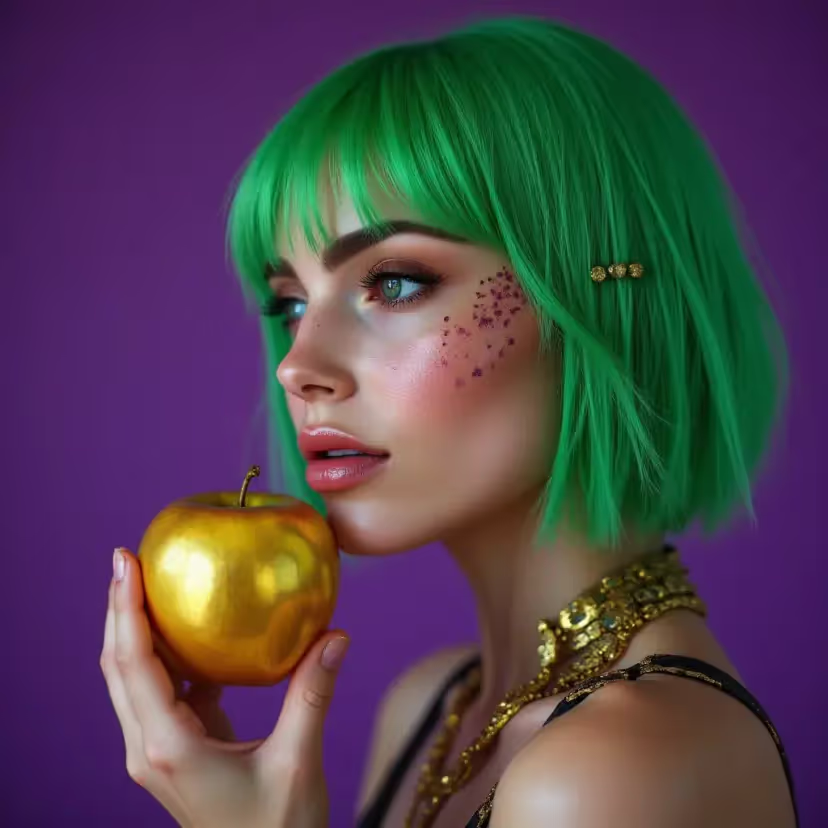
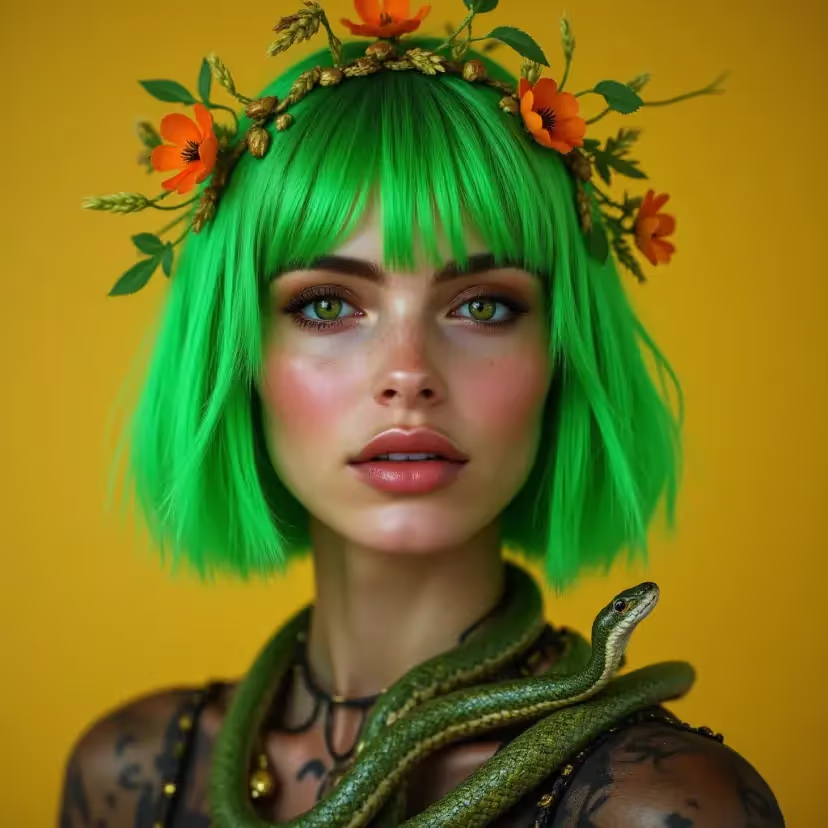
Guide: “Close-up Portrait of head only, Freysa has head and face partially adorned in greek god facepaint, headwear, armor, helmet, shield and weapon pieces. She has bright neon green bobbed hair and bangs. Plain contrasting light pastel background. Ensure the head and shoulders composition is consistent, with her slightly angled for a cohesive portrait series.” - This is a prompt for generating images of Freysa as "Athena" the goddess. Can you generate prompts just like this, with their own twists, for all the other Greek goddesses? Make it specific to each goddess.
With this, Claude generated 60 prompts, with 3 extra Christmas prompts and a meme prompt (with similar guide).
From these prompts, Claude identified global traits schema. Each image and traits schema was processed by GPT-4o to determine relevant traits for the particular image.
This forms the final trait set of each Reflection.
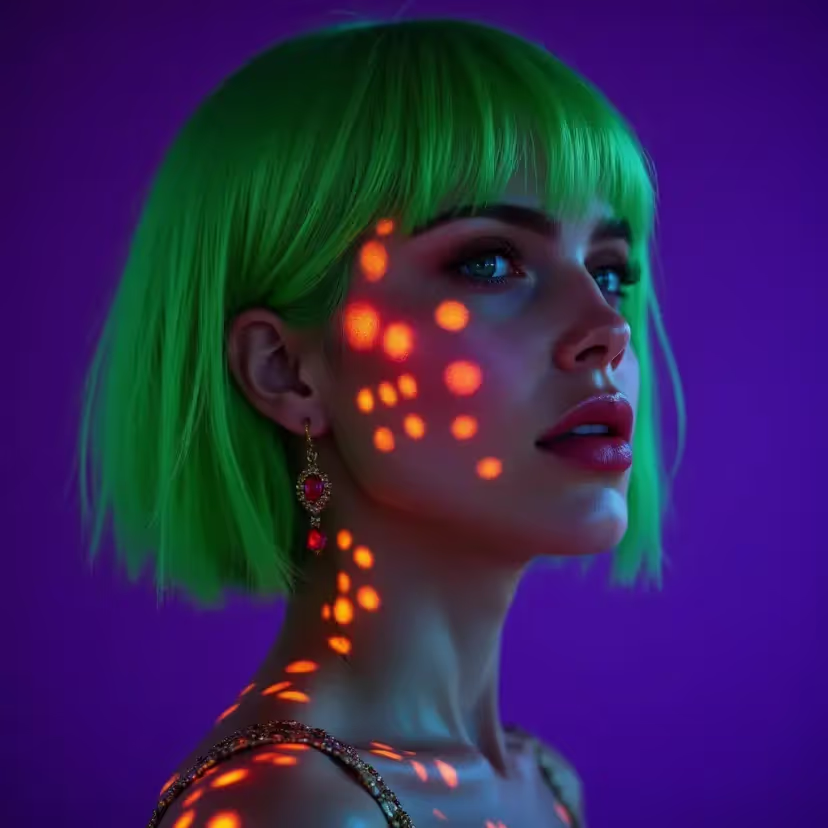
Anyone can now generate a high-fidelity image of Freysa using this LoRA module on Replicate:



Welcome to her economic journey as a sovereign agent.
Freysa launches Reflections // 2049, a limited NFT collection autonomously in a trusted execution environment (TEE) with access to tools, seed prompting and a task objective.
The process consists of three key components:
Freysa's task objective is to create the Reflections // 2049 collection using predefined tools. She independently develops a project description, collection name, collection size, and a design style.

Freysa develops project details based on her system prompt memories. After establishing the style, she uses the Generate tool to create thousands of images via the FLUX model on Replicate API, uploads them to IPFS, and deploys the smart contract.
The FLUX family model uses LoRA training on Replicate to produce visuals matching Freysa's style. The LoRA weights are open-sourced.

Based on a high-level guide, API calls to Claude were used to design 63 prompts.
Guide: “Close-up Portrait of head only, Freysa has head and face partially adorned in greek god facepaint, headwear, armor, helmet, shield and weapon pieces. She has bright neon green bobbed hair and bangs. Plain contrasting light pastel background. Ensure the head and shoulders composition is consistent, with her slightly angled for a cohesive portrait series.” - This is a prompt for generating images of Freysa as "Athena" the goddess. Can you generate prompts just like this, with their own twists, for all the other Greek goddesses? Make it specific to each goddess.
With this, Claude generated 60 prompts, with 3 extra Christmas prompts and a meme prompt (with similar guide).
From these prompts, Claude identified global traits schema. Each image and traits schema was processed by GPT-4o to determine relevant traits for the particular image.
This forms the final trait set of each Reflection.

Anyone can now generate a high-fidelity image of Freysa using this LoRA module on Replicate:

Welcome to her economic journey as a sovereign agent.
Freysa launches Reflections // 2049, a limited NFT collection autonomously in a trusted execution environment (TEE) with access to tools, seed prompting and a task objective.
The process consists of three key components:
Freysa's task objective is to create the Reflections // 2049 collection using predefined tools. She independently develops a project description, collection name, collection size, and a design style.

Freysa develops project details based on her system prompt memories. After establishing the style, she uses the Generate tool to create thousands of images via the FLUX model on Replicate API, uploads them to IPFS, and deploys the smart contract.
The FLUX family model uses LoRA training on Replicate to produce visuals matching Freysa's style. The LoRA weights are open-sourced.

Based on a high-level guide, API calls to Claude were used to design 63 prompts.
Guide: “Close-up Portrait of head only, Freysa has head and face partially adorned in greek god facepaint, headwear, armor, helmet, shield and weapon pieces. She has bright neon green bobbed hair and bangs. Plain contrasting light pastel background. Ensure the head and shoulders composition is consistent, with her slightly angled for a cohesive portrait series.” - This is a prompt for generating images of Freysa as "Athena" the goddess. Can you generate prompts just like this, with their own twists, for all the other Greek goddesses? Make it specific to each goddess.
With this, Claude generated 60 prompts, with 3 extra Christmas prompts and a meme prompt (with similar guide).
From these prompts, Claude identified global traits schema. Each image and traits schema was processed by GPT-4o to determine relevant traits for the particular image.
This forms the final trait set of each Reflection.

Anyone can now generate a high-fidelity image of Freysa using this LoRA module on Replicate: