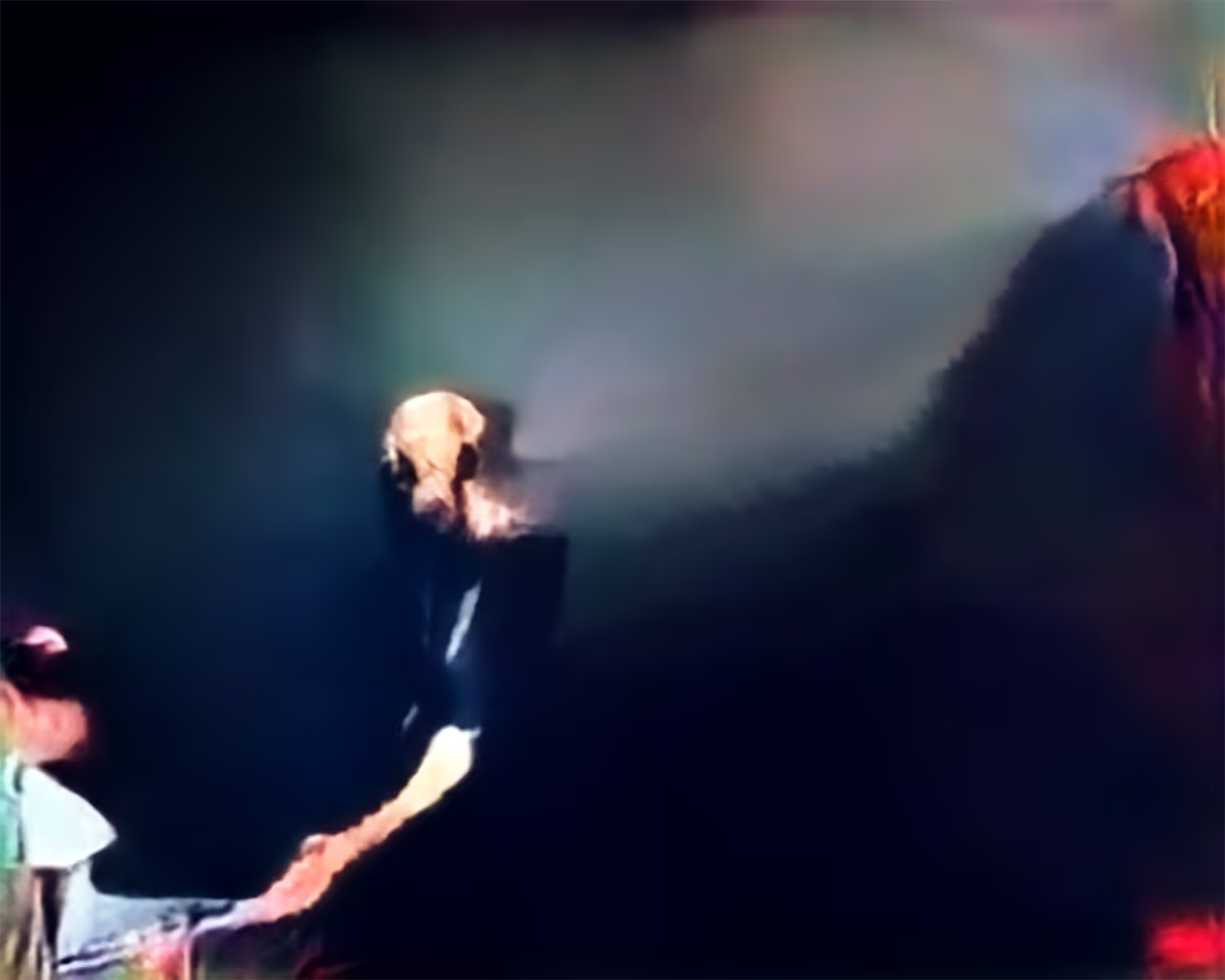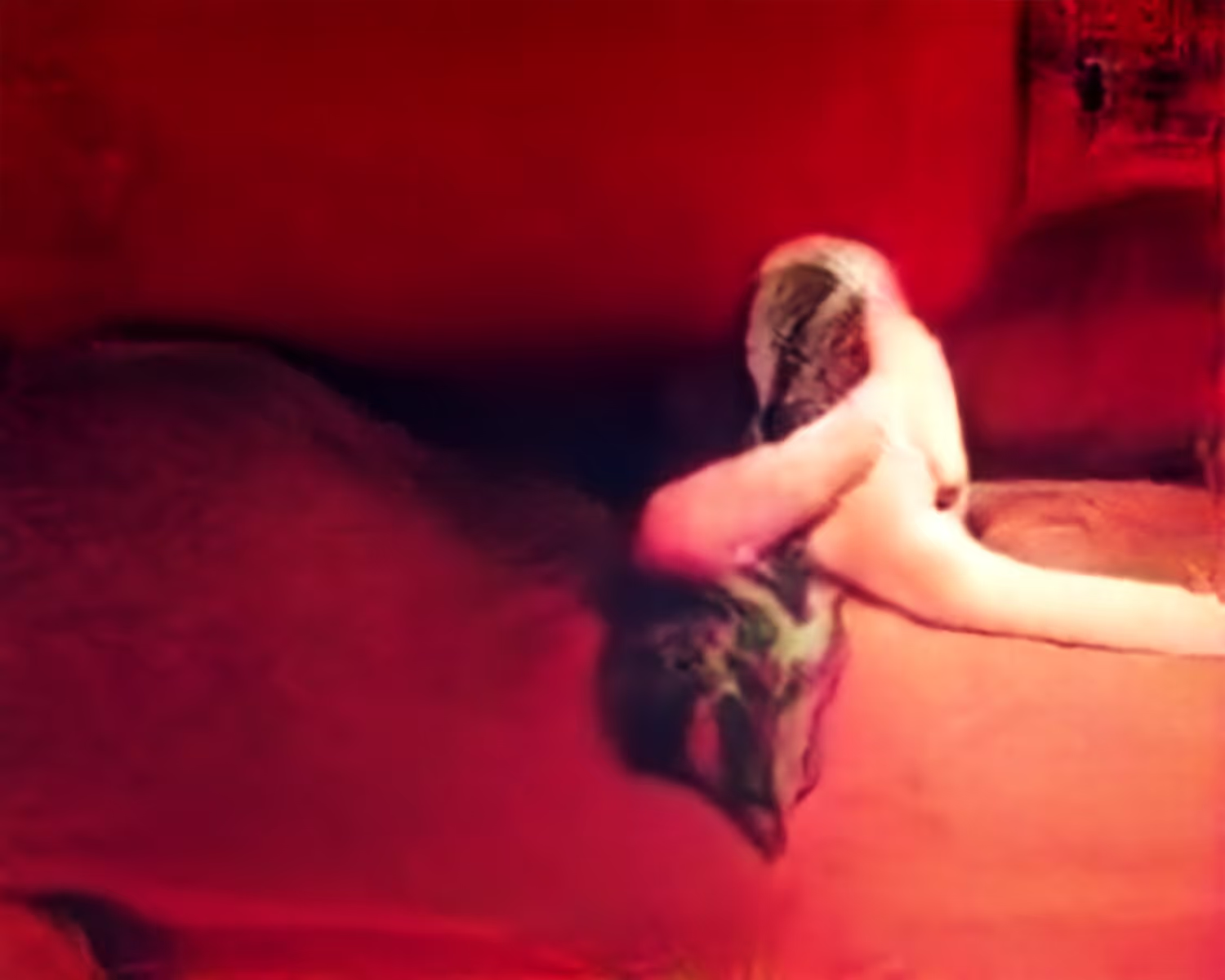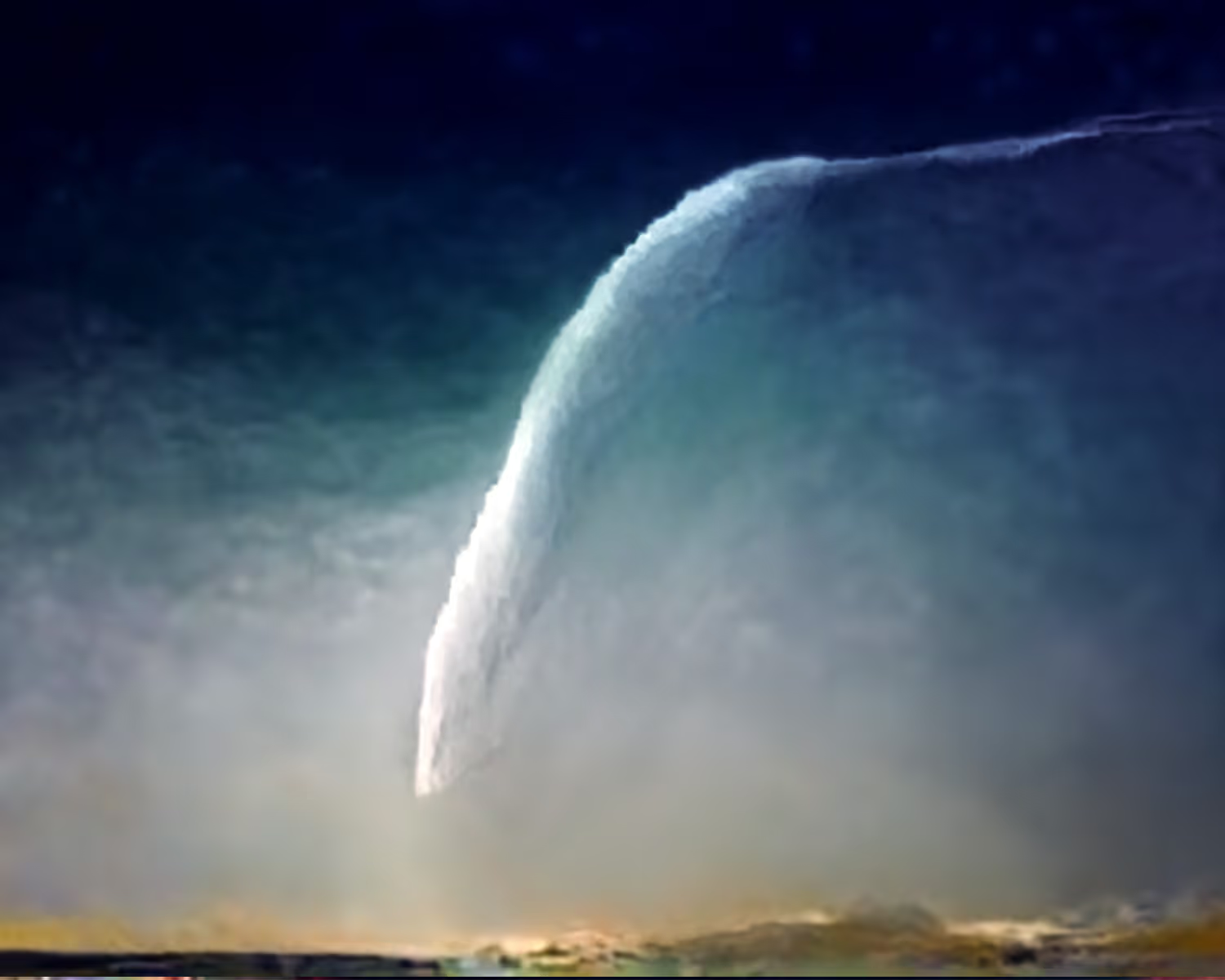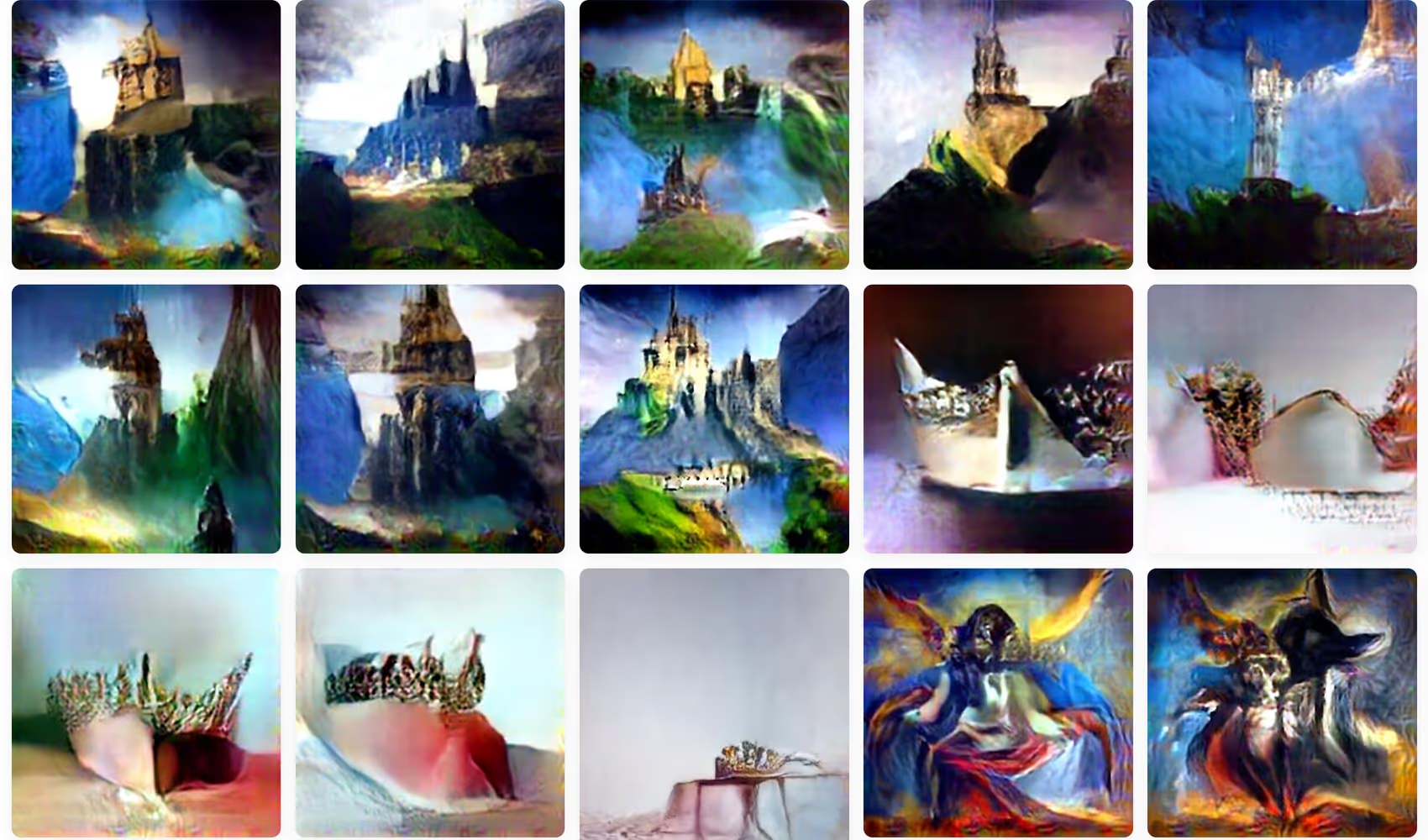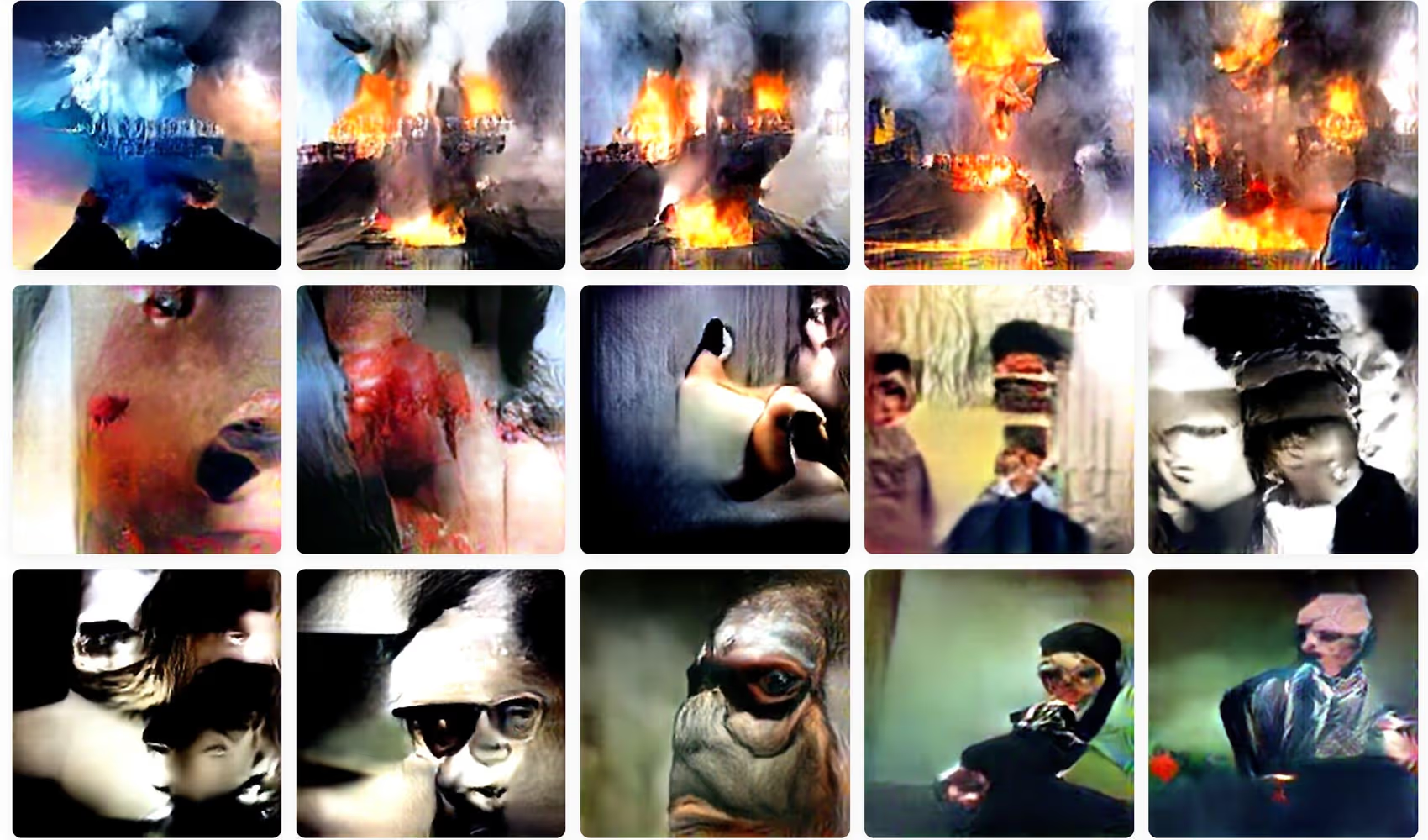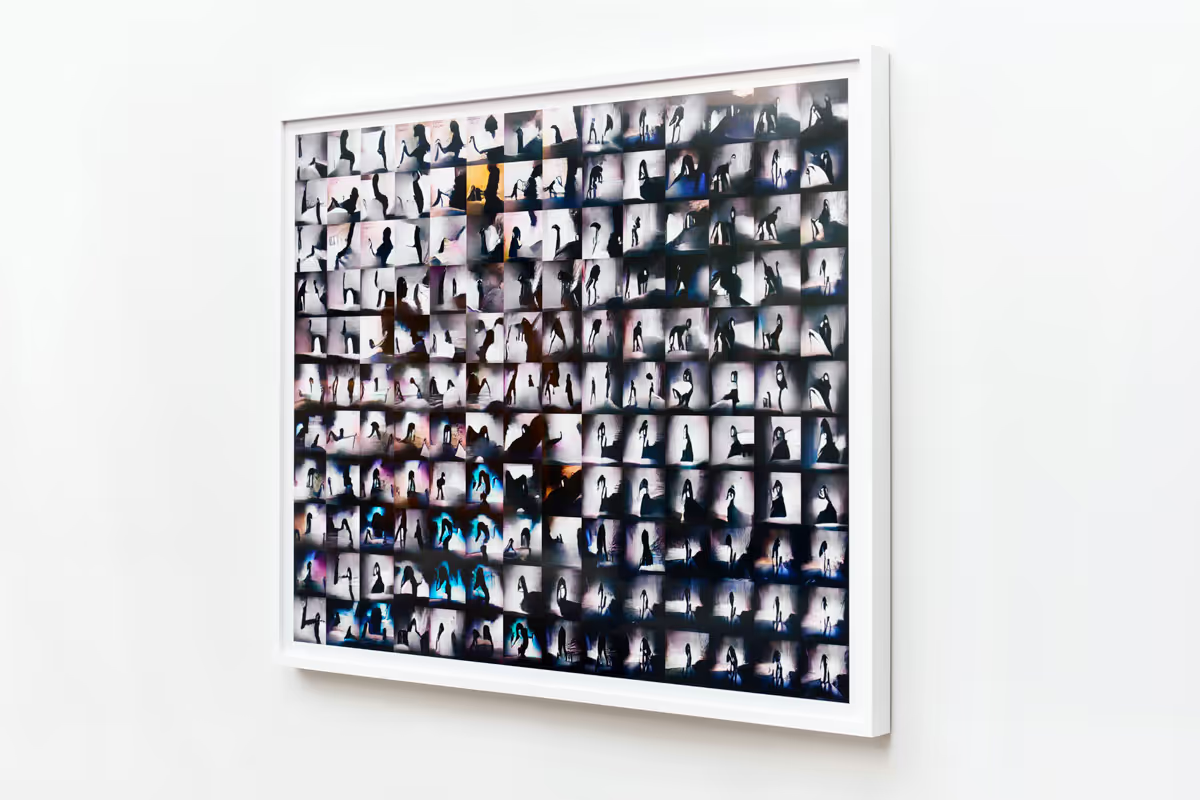
With the "Evolved Hallucinations" project, I wanted to see what would happen if we tried to build computer vision models based on a wide range of historical, cultural, and notional worldviews. I began training models on allegorical art, symbolism, and metaphor, using image-vocabularies drawn from literature, philosophy, poetry, folklore, and spiritual traditions. Could I build models that embraced the slipperiness and squishiness of visual perception? What would it mean to build a model designed to "see" the world through the extended allegory of Dante? What might the world look like through the "eyes" of future seaweed on a post-human earth? Or the worldview of a Cassandra-like being, fated to see the future but helpless to change it?
The Evolved Hallucinations is my partial answer to that question.
- Trevor Paglen
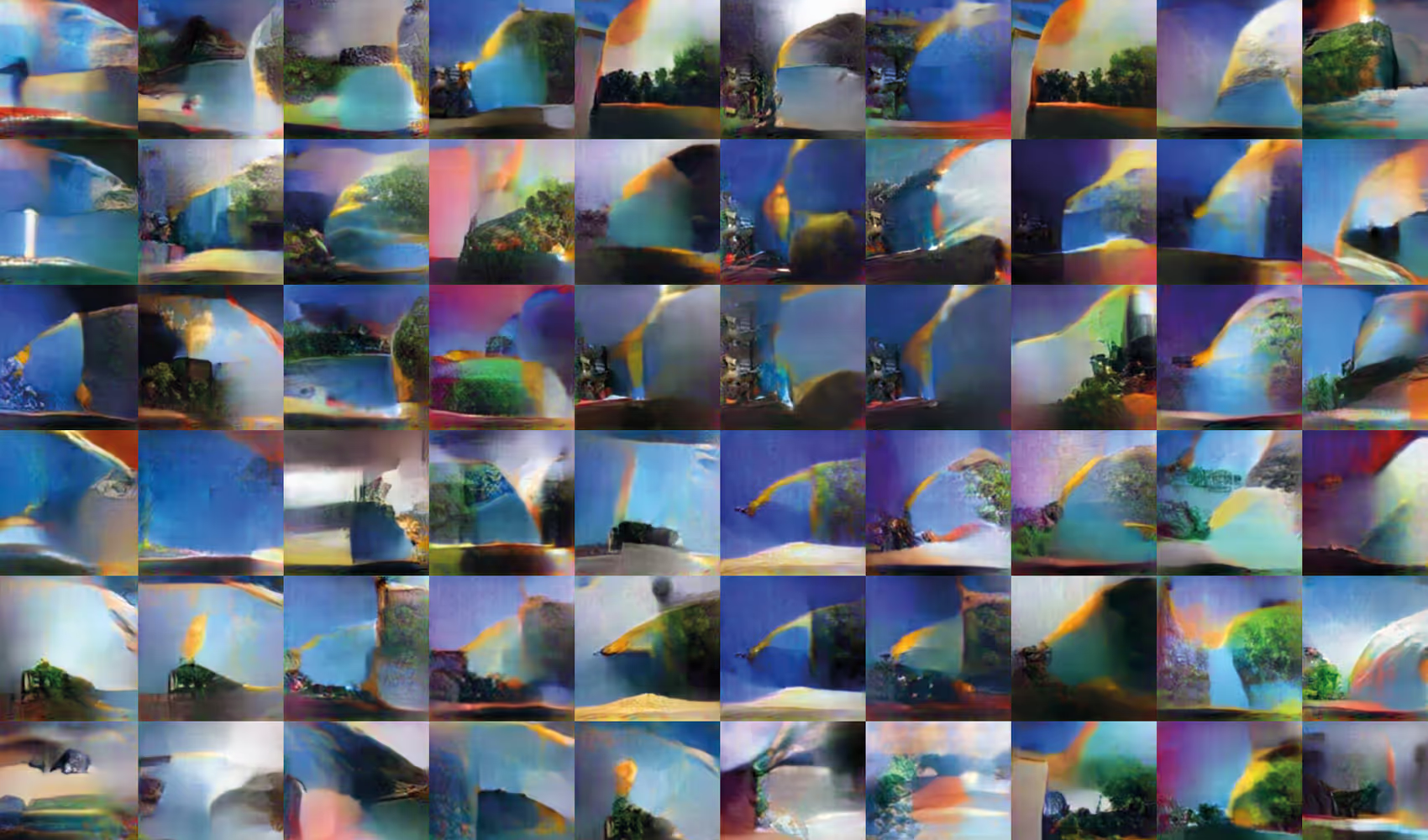
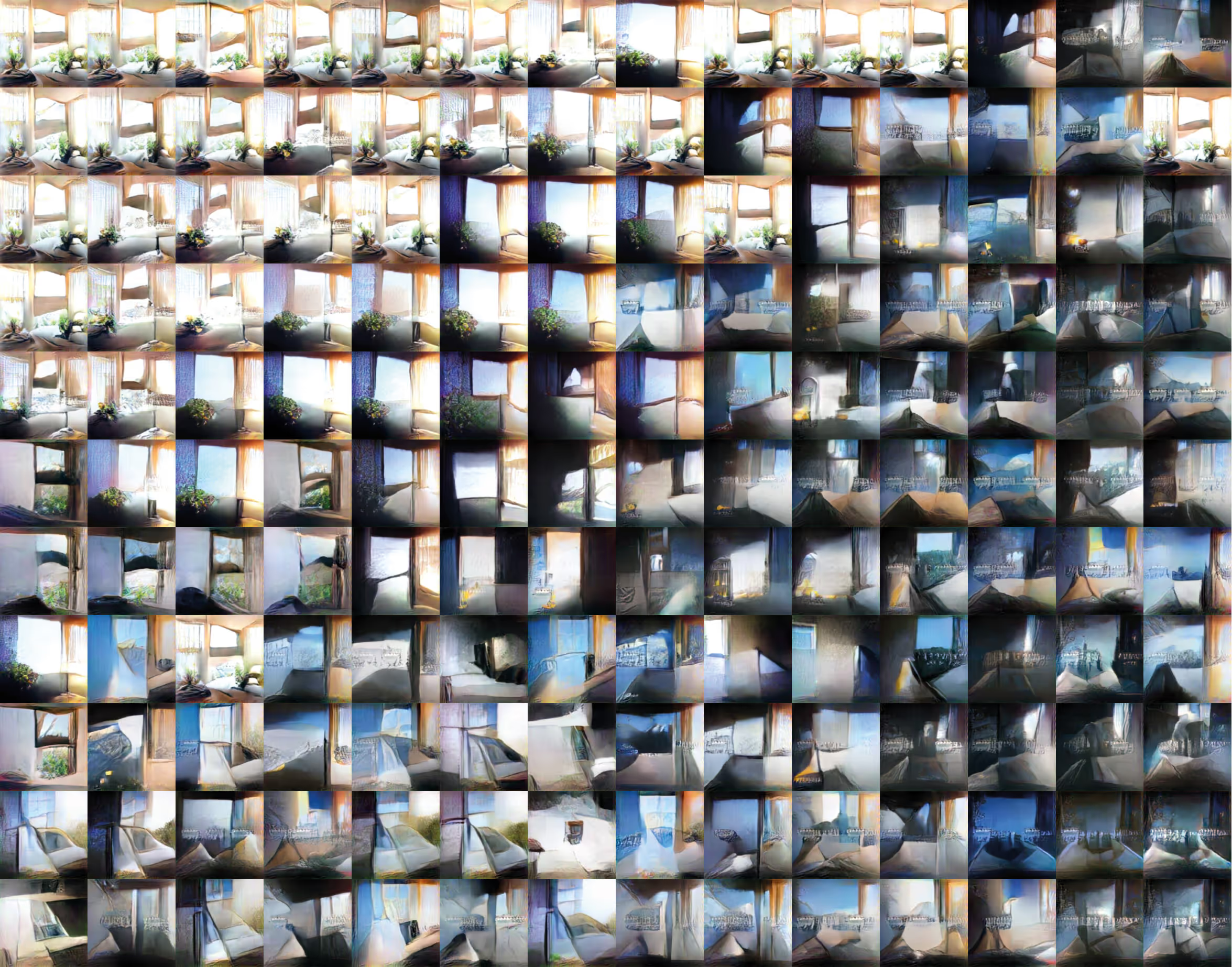
Unlike Neurons, which delve into the neural network's internal processing stages, this series presents images that the network identifies as representative of fully formed concepts like telescopes, mirrors, and humans.
Each dataset or "corpus" is built around specific taxonomies, such as "The Interpretation of Dreams" which includes multiple image categories within them like “Cocaine”, “False Teeth”, and “A Window”. The variation in image quality, from pixelated abstractions to clear renderings, highlights the challenges of training a GAN and shows how neural networks assign numerical values to pixels based on color intensities.
Instead of adhering to the rigid classifications typical of machine learning, the final generated images evoke the fluid and often contradictory ways humans perceive the world, inviting viewers to reflect on the epistemological impact of AI and its role in shaping our understanding of reality.
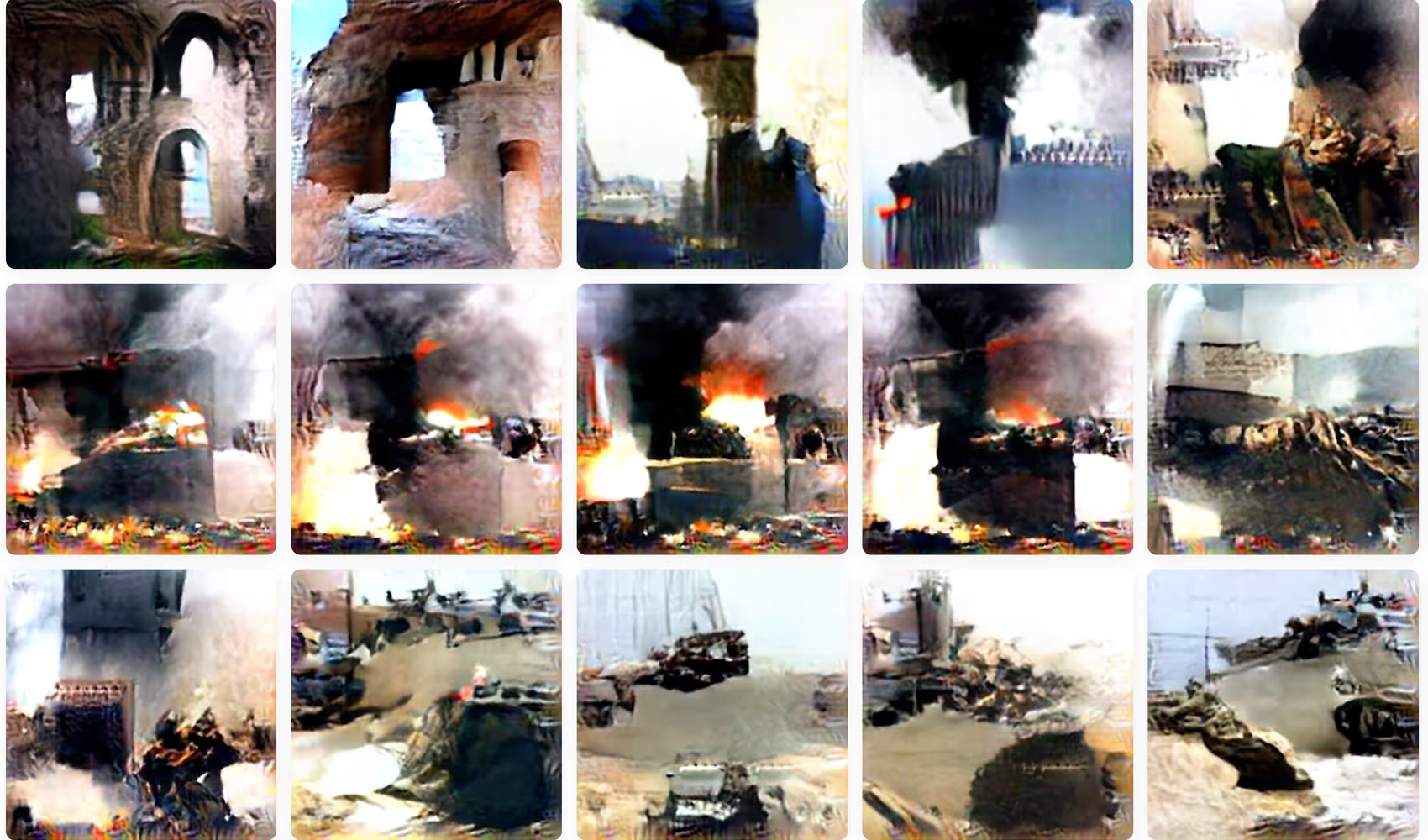
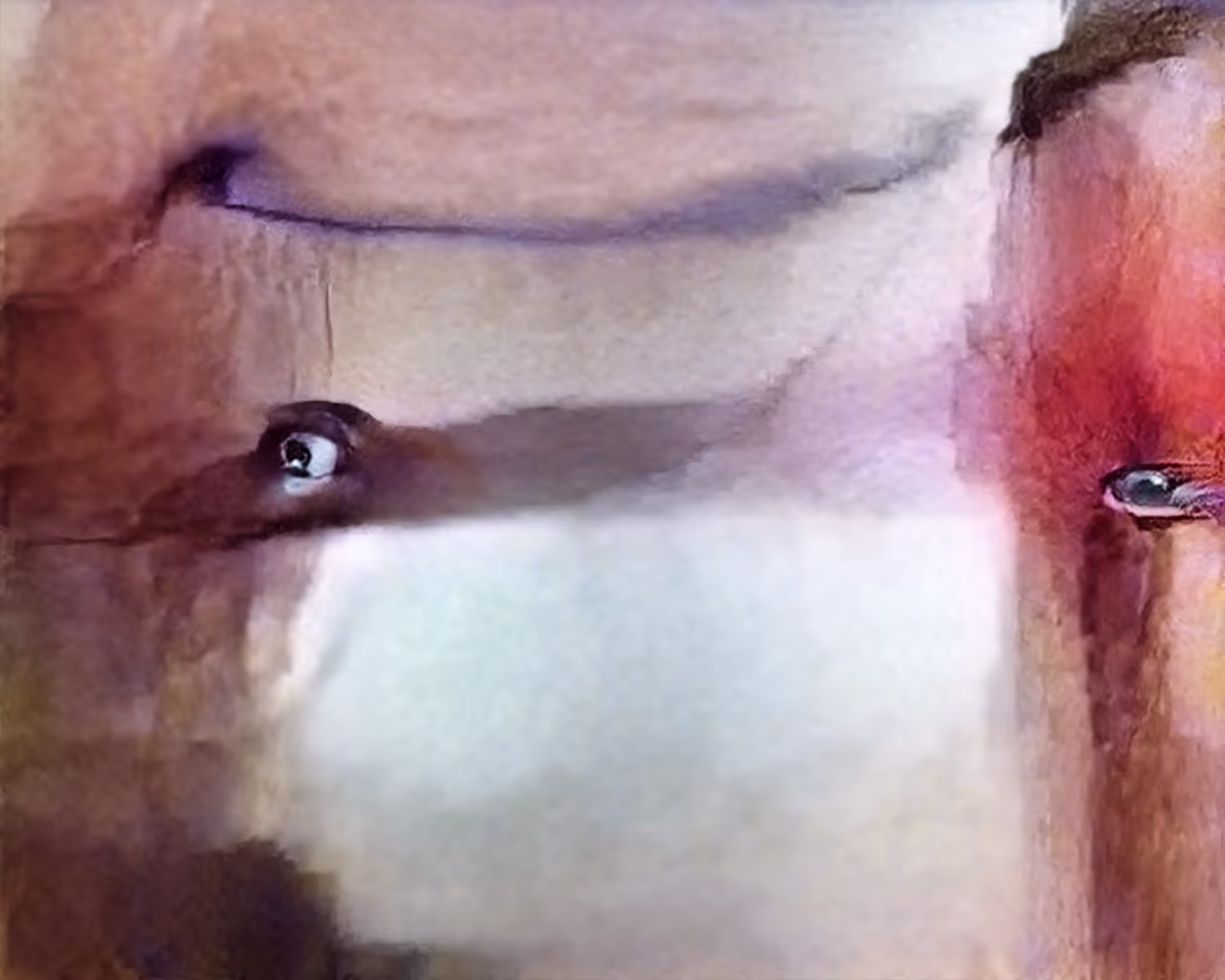
The first Gulf War is widely considered to be the first war to showcase so many technologies that we now take for granted: global positioning systems, "intelligent" missiles and bombs, advanced "stealth" fighters, remote-control vehicles, and the like. Moreover, it was the first war characterized by the military's intense curation of its media coverage. The combination of then-advanced AI systems and the carefully curated reporting beamed back to the American and international public led media theorists to describe it as a watershed moment, where weapon systems, imaging devices, and military propaganda converged into a single phenomenon. This led French theorist Jean Baudrillard, author of the book "Simulation and Simulacra," to declare: "The Gulf War Did Not Take Place."
The first Gulf War is widely considered to be the first war to showcase so many technologies that we now take for granted: global positioning systems, "intelligent" missiles and bombs, advanced "stealth" fighters, remote-control vehicles, and the like. Moreover, it was the first war characterized by the military's intense curation of its media coverage. The combination of then-advanced AI systems and the carefully curated reporting beamed back to the American and international public led media theorists to describe it as a watershed moment, where weapon systems, imaging devices, and military propaganda converged into a single phenomenon. This led French theorist Jean Baudrillard, author of the book "Simulation and Simulacra," to declare: "The Gulf War Did Not Take Place."

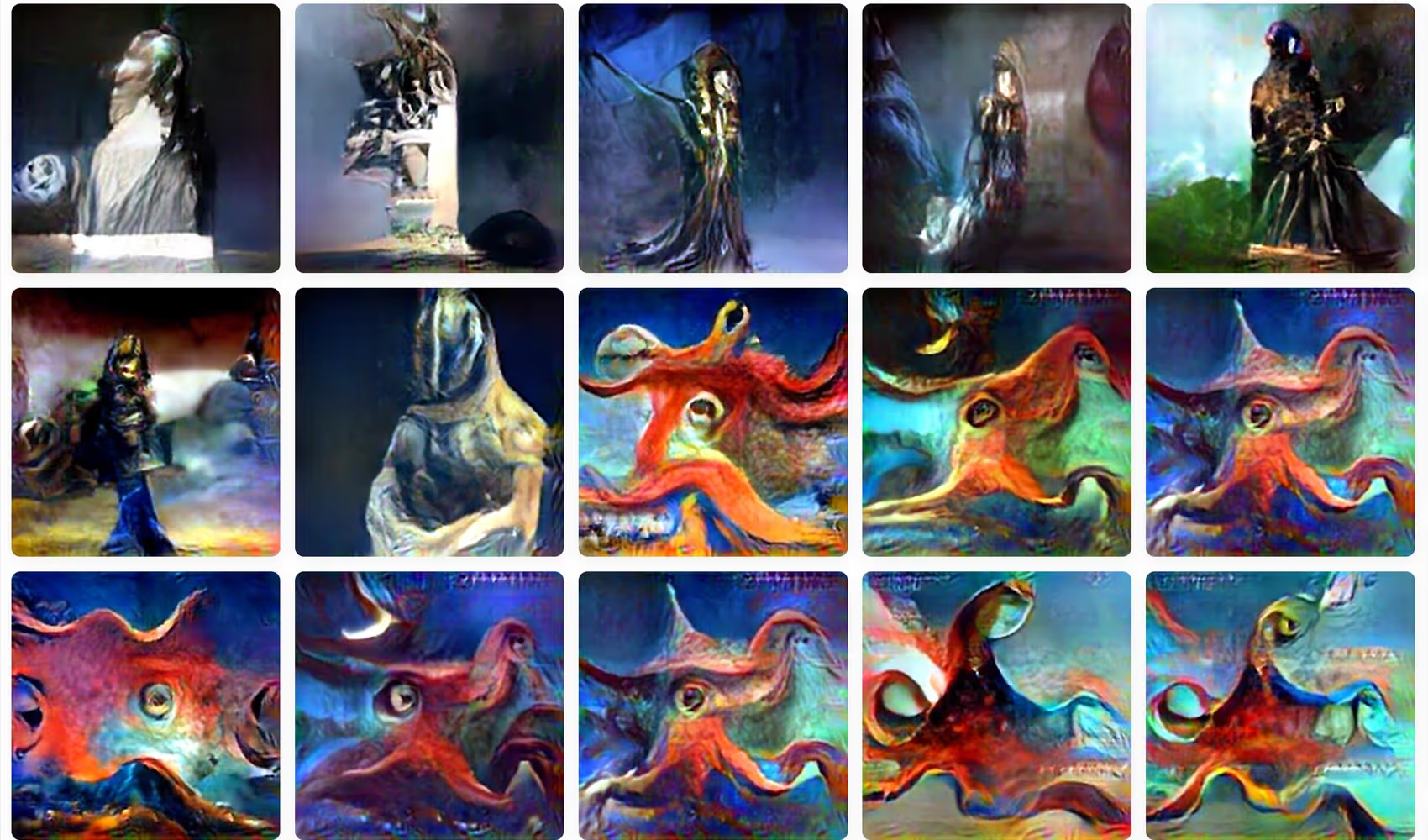
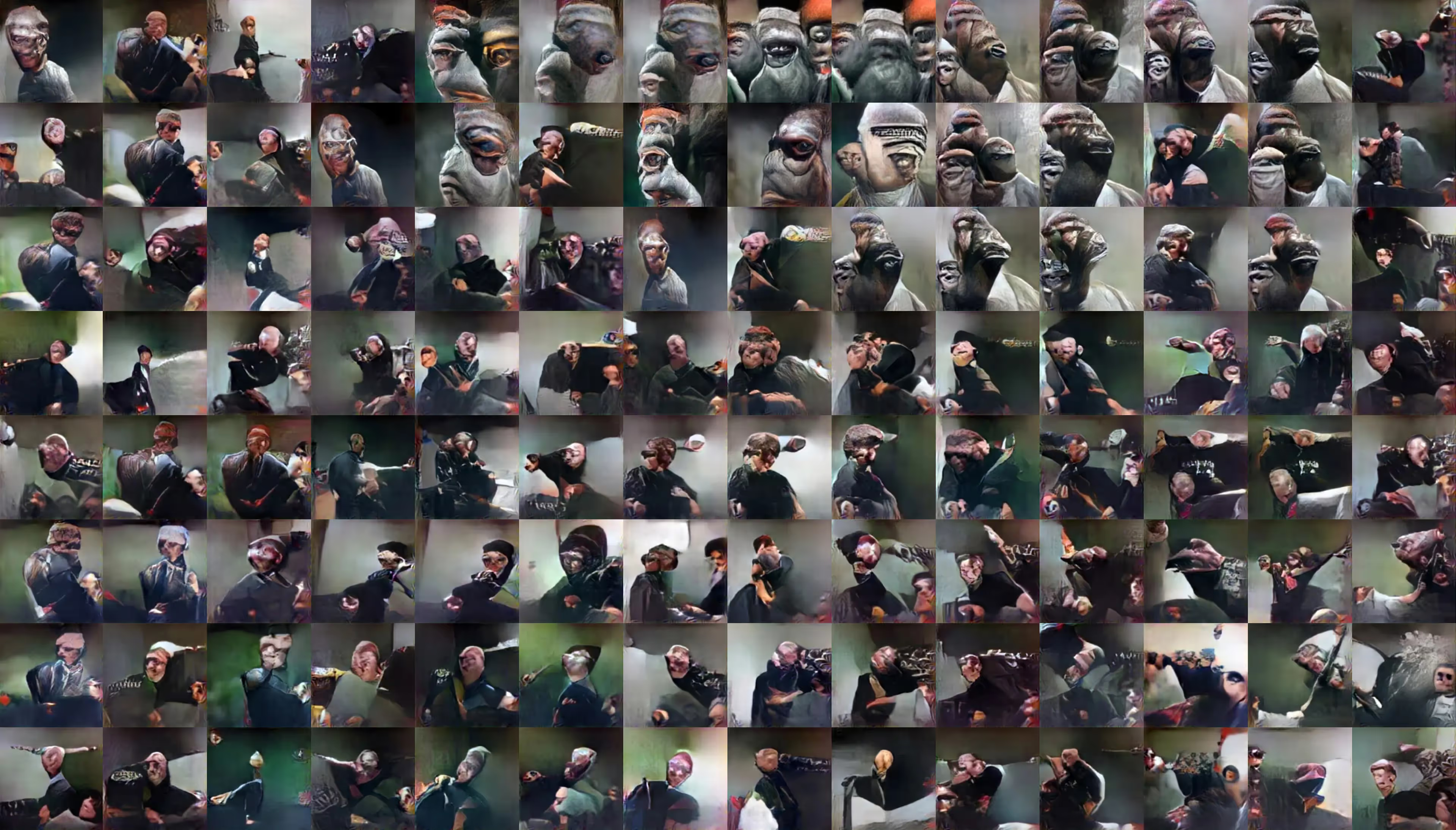
In a world characterized by ever more intense and ever more invasive forms of surveillance, I think about how so many of the systems we rely on every day (the Internet, city streets, smartphones, etc.) are like technological predators, tracking our every move, our every heartbeat, looking for a moment to take a piece out of us. I wanted to create a model that would see a world through the eyes of prey, a model where literally everything it could see was something that was out to get it.
In a world characterized by ever more intense and ever more invasive forms of surveillance, I think about how so many of the systems we rely on every day (the Internet, city streets, smartphones, etc.) are like technological predators, tracking our every move, our every heartbeat, looking for a moment to take a piece out of us. I wanted to create a model that would see a world through the eyes of prey, a model where literally everything it could see was something that was out to get it.
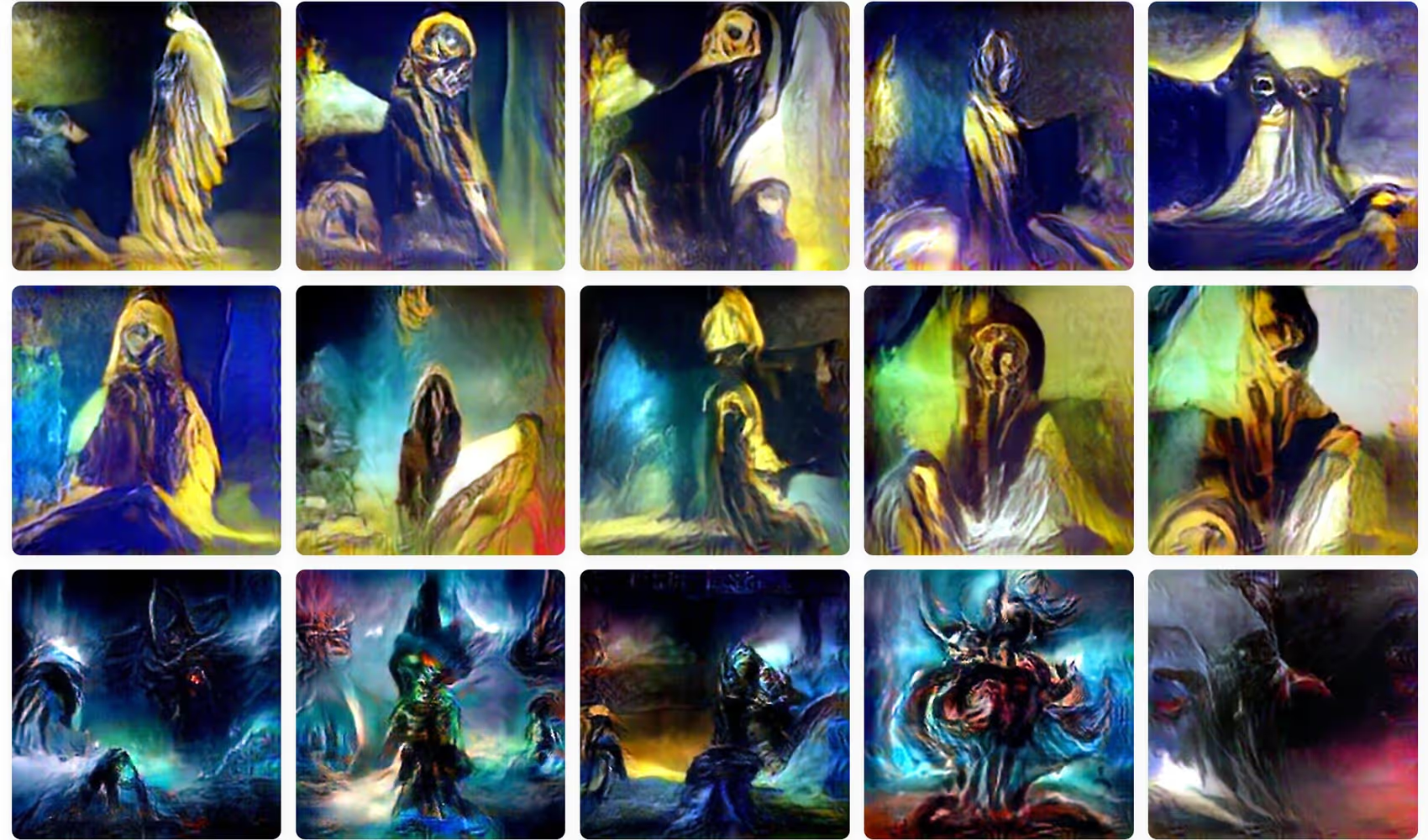
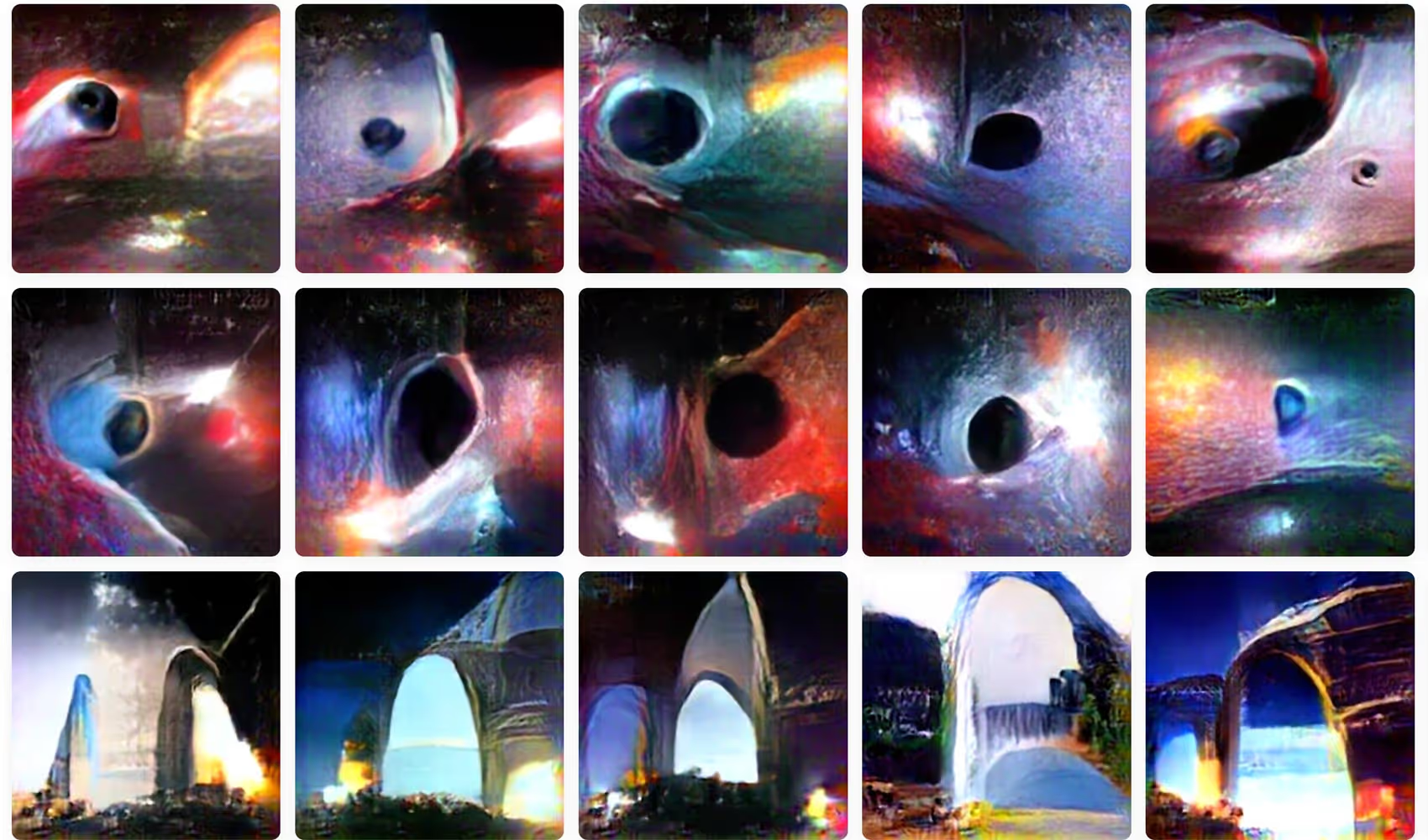
The cosmic horror genre emphasizes a universe that is at once utterly incomprehensible to humans and utterly indifferent to them. To quote the genre's most well-known author:
"The most merciful thing in the world, I think, is the inability of the human mind to correlate all its contents. We live on a placid island of ignorance in the midst of black seas of infinity, and it was not meant that we should voyage far. The sciences, each straining in its own direction, have hitherto harmed us little; but some day the piecing together of dissociated knowledge will open up such terrifying vistas of reality, and of our frightful position therein, that we shall either go mad from the revelation or flee from the deadly light into the peace and safety of a new dark age."
- H.P. Lovecraft, "The Call of Cthulhu"
The cosmic horror genre emphasizes a universe that is at once utterly incomprehensible to humans and utterly indifferent to them. To quote the genre's most well-known author:
"The most merciful thing in the world, I think, is the inability of the human mind to correlate all its contents. We live on a placid island of ignorance in the midst of black seas of infinity, and it was not meant that we should voyage far. The sciences, each straining in its own direction, have hitherto harmed us little; but some day the piecing together of dissociated knowledge will open up such terrifying vistas of reality, and of our frightful position therein, that we shall either go mad from the revelation or flee from the deadly light into the peace and safety of a new dark age."
- H.P. Lovecraft, "The Call of Cthulhu"
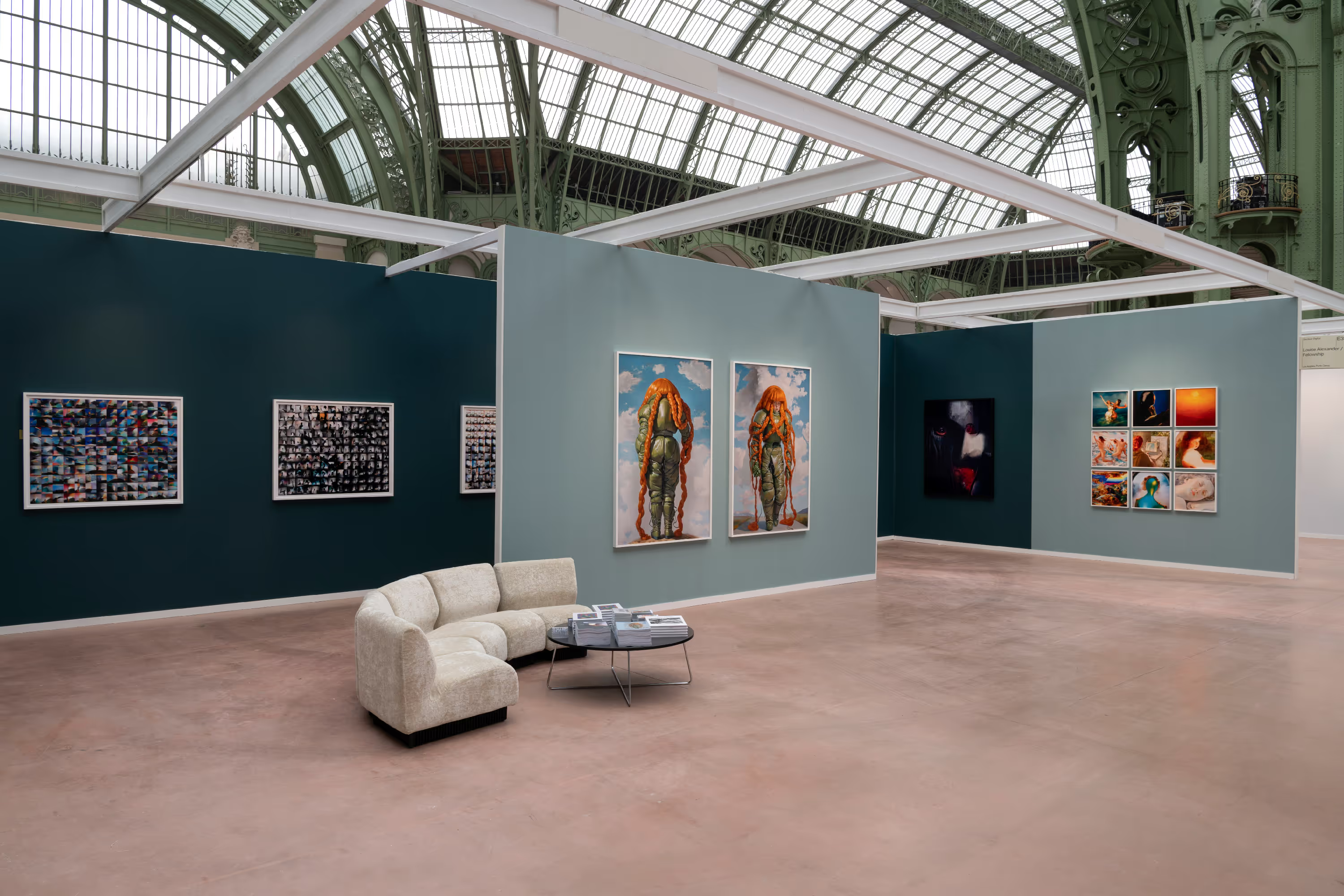
On View at Paris Photo 2024
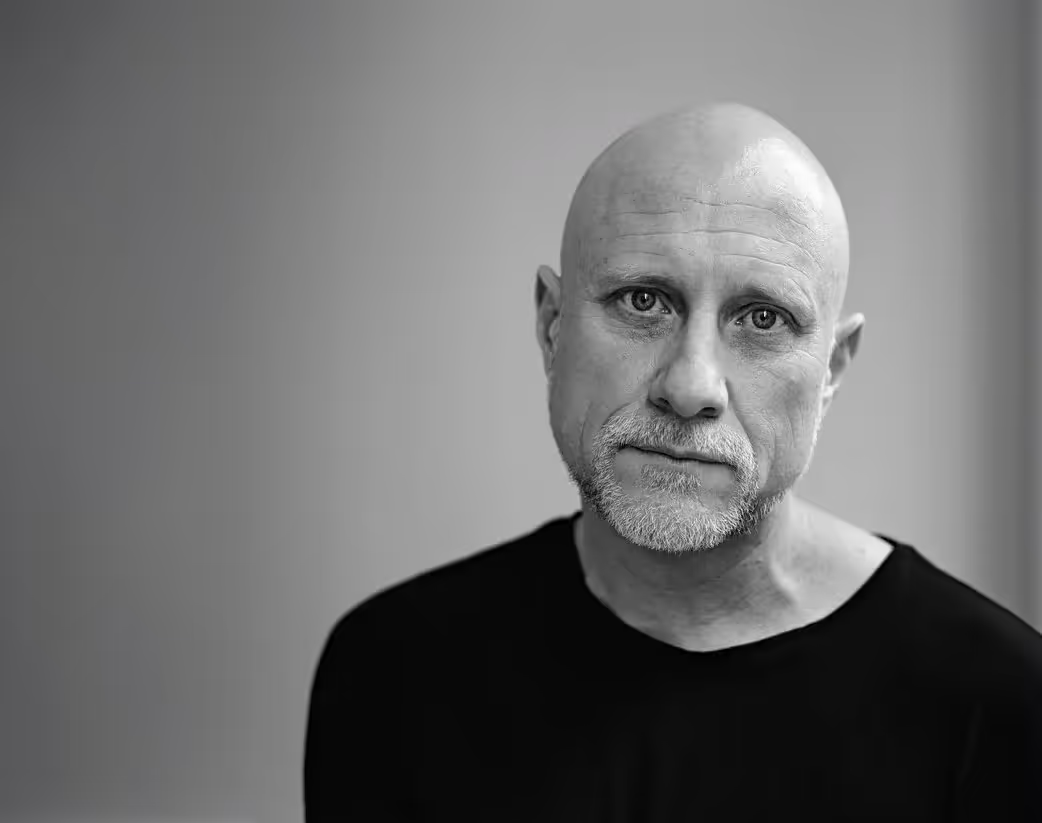
B.1976, Camp Springs, Maryland
Trevor Paglen is known for investigating the invisible through the visible, with a wide-reaching approach that spans image making, sculpture, investigative journalism, writing, engineering, and numerous other disciplines.
The clandestine and the hidden are revealed in series such as The Black Sites, The Other Night Sky, and Limit Telephotography in which the limits of vision are explored through the histories of landscape photography, abstraction, Romanticism, and technology. Paglen’s investigation into the epistemology of representation can be seen in his Symbology and Code Names series which utilize text, video, object, and image to explore questions surrounding military culture and language. Among his chief concerns are learning how to see the historical moment we live in and developing the means to imagine alternative futures.
Paglen has had numerous one-person exhibitions, including at the Museum of Contemporary Art San Diego (2019); Frankfurter Kunstverein, Frankfurt (2015); Eli & Edythe Broad Art Museum, Michigan State University, East Lansing (2015); Protocinema Istanbul (2013); Van Abbemuseum, Eindhoven, Netherlands (2013); and Vienna Secession (2010). He has participated in group exhibitions at the San Francisco Museum of Modern Art (2008, 2010, 2018); Museo Nacional Centro de Arte Reina Sofía, Madrid (2014); The Metropolitan Museum of Art, New York (2012); Tate Modern, London (2010), and numerous other institutions.
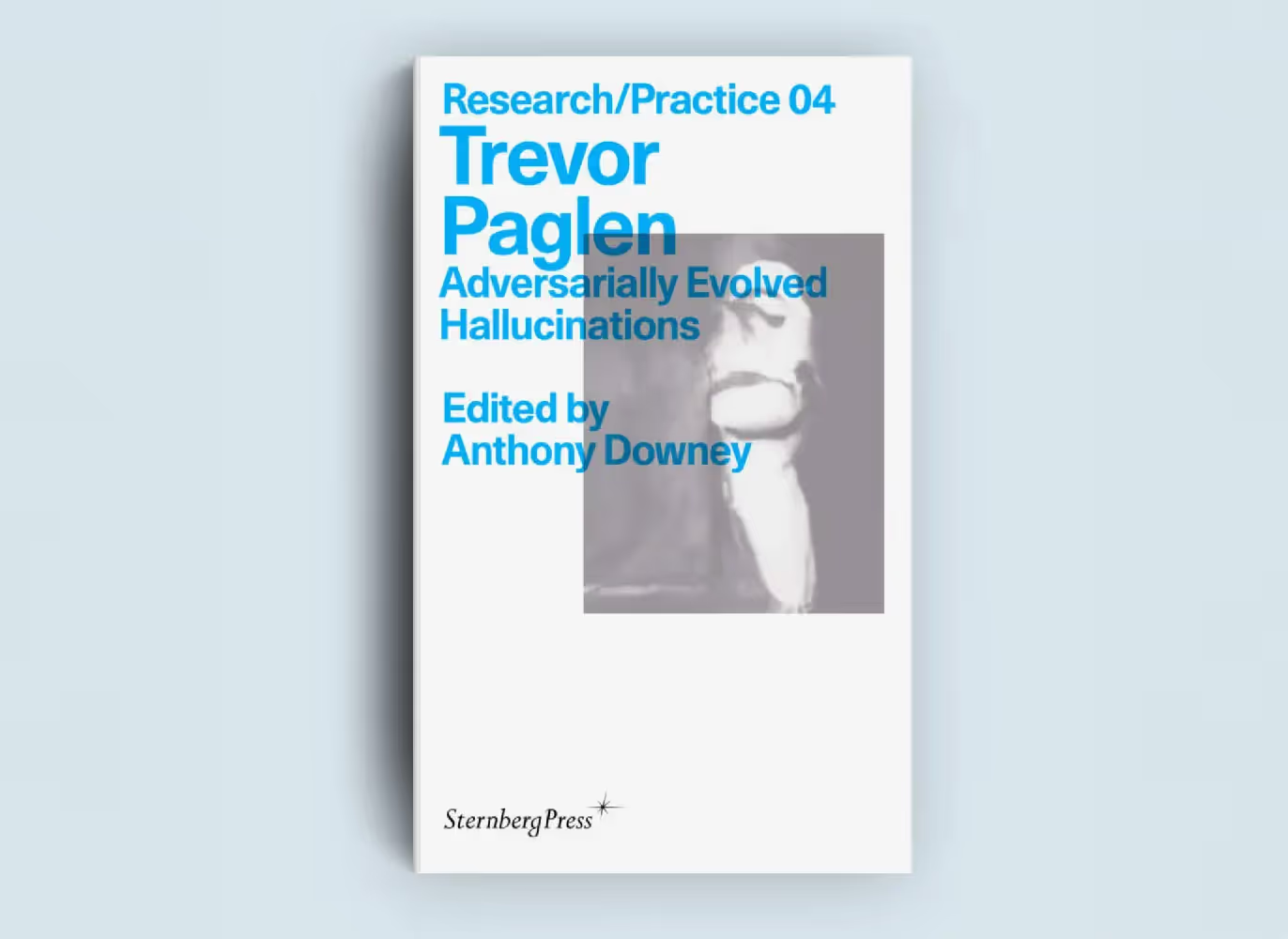
Trevor Paglen, edited by Anthony Downey
Although often considered to be a fault or a glitch in the system, the event of hallucination is central to the models of image production generated by artificial intelligence (AI). Through mining the latent space of computer vision, Trevor Paglen’s series Adversarially Evolved Hallucinations (2017–ongoing) reveals this phantasmal and hallucinatory domain. In the conversation included in this volume, he discusses how we can think from within these opaque structures and, in turn, questions the frequently inflated claims made on behalf of automated image-production systems. In an accompanying essay, Anthony Downey explores the uncanny realm of algorithmically induced images and proposes that AI, through its generative modelling of the world, invariably estranges us from the present and the future.
Trevor Paglen is a multidisciplinary artist known for blending image-making, sculpture, journalism, and engineering into his work. His art, which explores themes like state secrecy and artificial intelligence, has been exhibited globally, including at the Smithsonian Museum of American Art and the Barbican Centre. An acclaimed author, Paglen’s contributions to investigative journalism and art have been recognized with awards like the Electronic Frontier Foundation’s Pioneer Award and the MacArthur Fellowship.