
Hypnagogic is a series of curated outputs exploring the theme of Hypnagogia; the state between being awake and asleep. This dream state, where the mind translates real world input into abstract perception, is the inspiration behind each selected output.
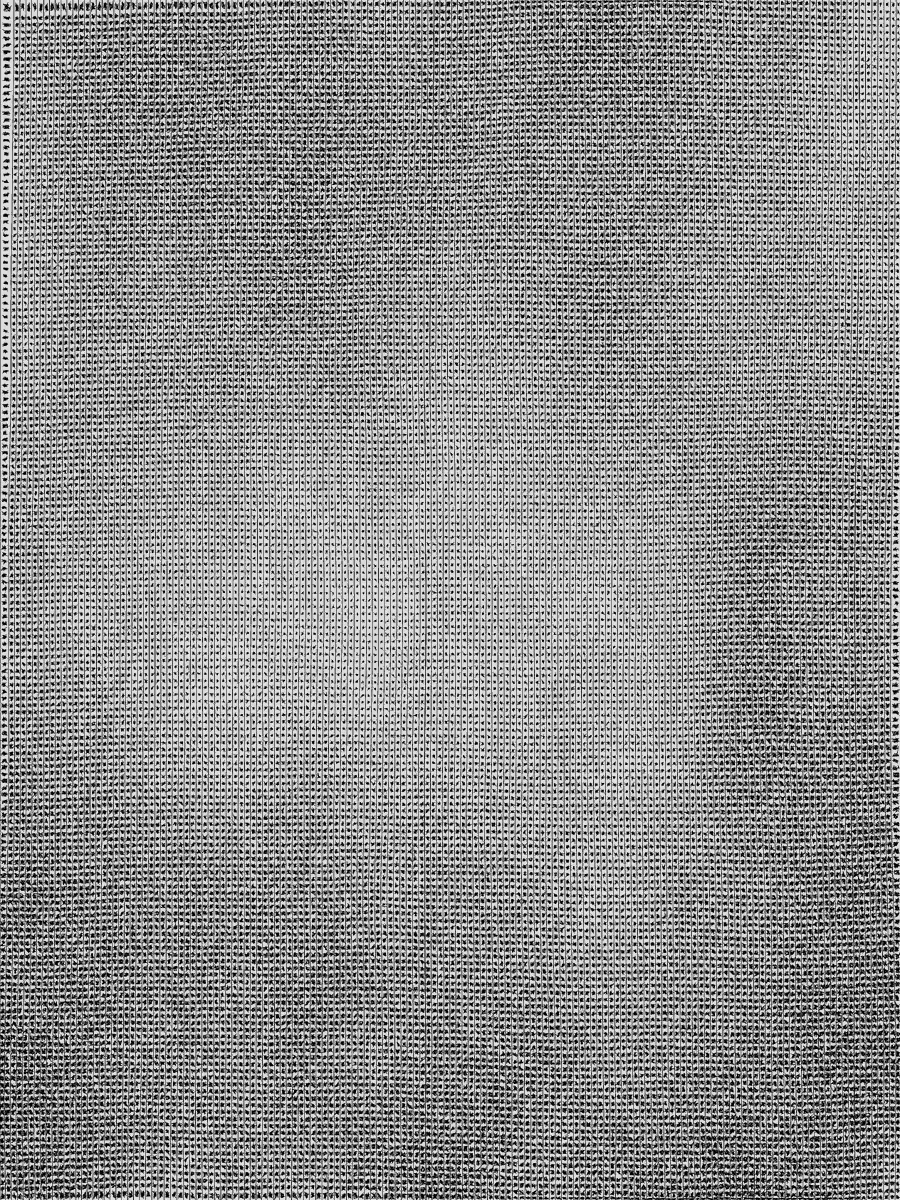
The series is inspired by Hypnagogia; the transition between wakefulness and sleep. In this state people can experience hallucinations and artists have been known to induce hypnagogia to stimulate their creativity. This state has always interested me, since in this state the brain gets ready to process the day. The series plays around this at different levels; up-close the piece is built out of a large grid of small doodles, each representing a small time frame within a day with its own emotions and events, while adding up to the larger picture. Some moments are denser, more chaotic, while other moments have been forgotten or have a minimal impact upon reflecting.

Hypnagogic is a series of curated outputs exploring the theme of Hypnagogia; the state between being awake and asleep. This dream state, where the mind translates real world input into abstract perception, is the inspiration behind each selected output.
The series is inspired by Hypnagogia; the transition between wakefulness and sleep. In this state people can experience hallucinations and artists have been known to induce hypnagogia to stimulate their creativity. This state has always interested me, since in this state the brain gets ready to process the day. The series plays around this at different levels; up-close the piece is built out of a large grid of small doodles, each representing a small time frame within a day with its own emotions and events, while adding up to the larger picture. Some moments are denser, more chaotic, while other moments have been forgotten or have a minimal impact upon reflecting.

"Scribbles, doodles and scrawling represents a beautiful combination of disorder and order to me. While the scribbles itself are not a direct representation of something, the underlying complexity of a scribble can show a lot about the process itself. Each scribble is a pure translation of emotion from the creator and a more pure representation of someone’s mind state to me. Playing around with these subtle nuances can make a huge difference to the final output of a piece and I think it’s a very interesting subject to play with."
Mimi Nguyen: Tych was an attempt to "bring personality to a generative system." Can we make machines more human?
rudxane: I think it all depends on what do we see as “more human”. We’ve seen huge steps being made in terms of conversational dialogue and understanding of less generic input, but personally the output still feels like a summary to me; a generic person. The most interesting aspect about humanizing machines to me would be to introduce personality and have a machine react to, experience and develop its own emotions. Tych was an attempt to bring both aspects together; while a machine is really good at executing a lot of repetitive actions in a structured way, the same thing done by a human would introduce a lot of “mistakes” that we would call personality.
Mimi Nguyen: The works for this exhibition are strictly curated by you. When should the artist pre-select the outputs and when shall we let them self-generate in a long-form?
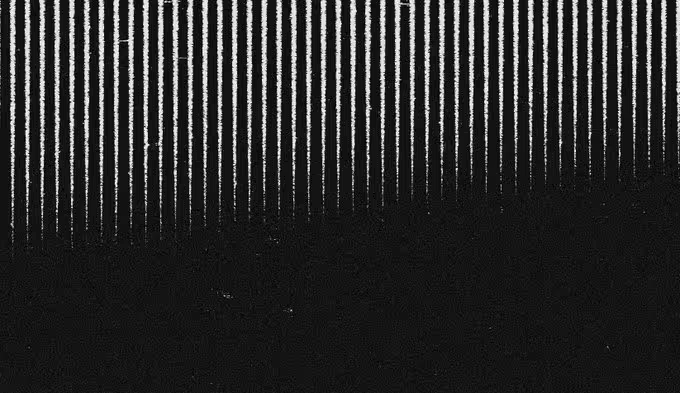
rudxane: For this series I wanted to manually select the specific outputs from the algorithm that resonated with me on a personal level. While I could’ve made the algorithm long-form and have it pick outputs on a random basis, it felt right to make the selection process for this series intentional.
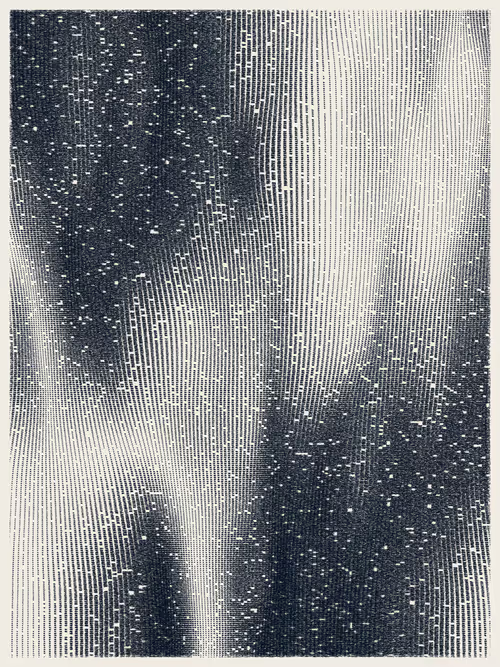
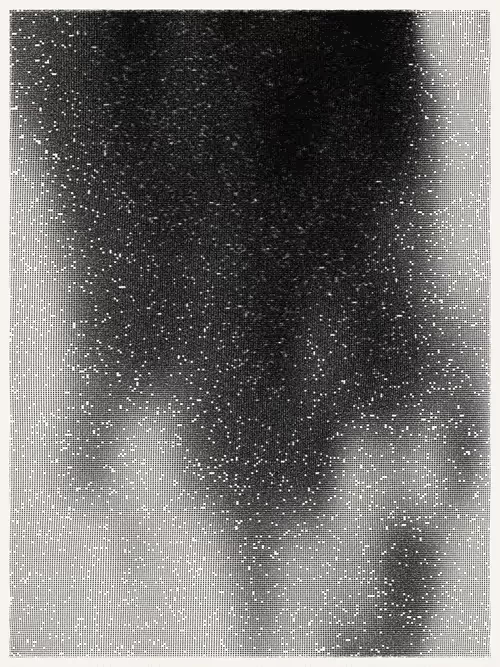
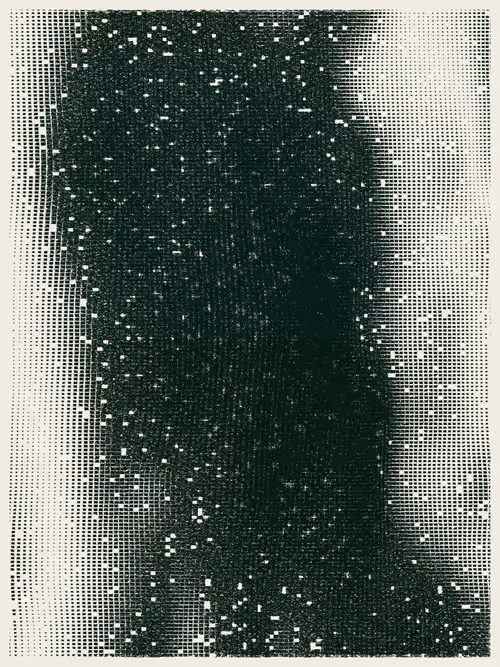
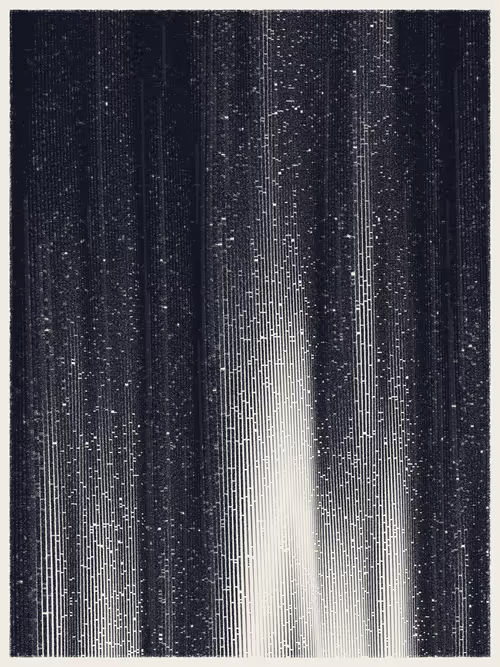
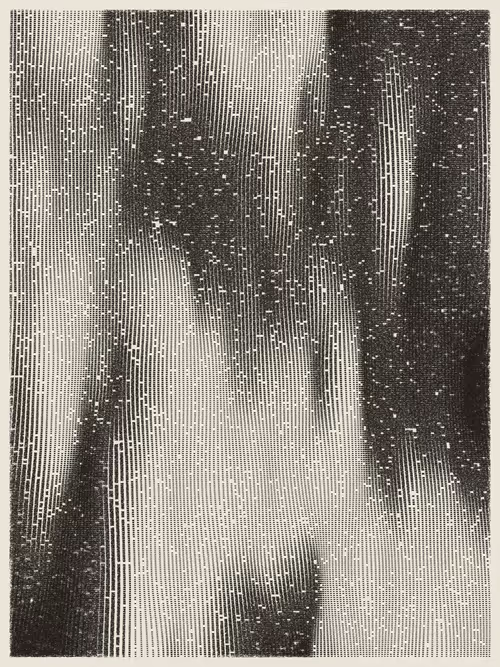


Hypnagogic is a series of curated outputs exploring the theme of Hypnagogia; the state between being awake and asleep. This dream state, where the mind translates real world input into abstract perception, is the inspiration behind each selected output.
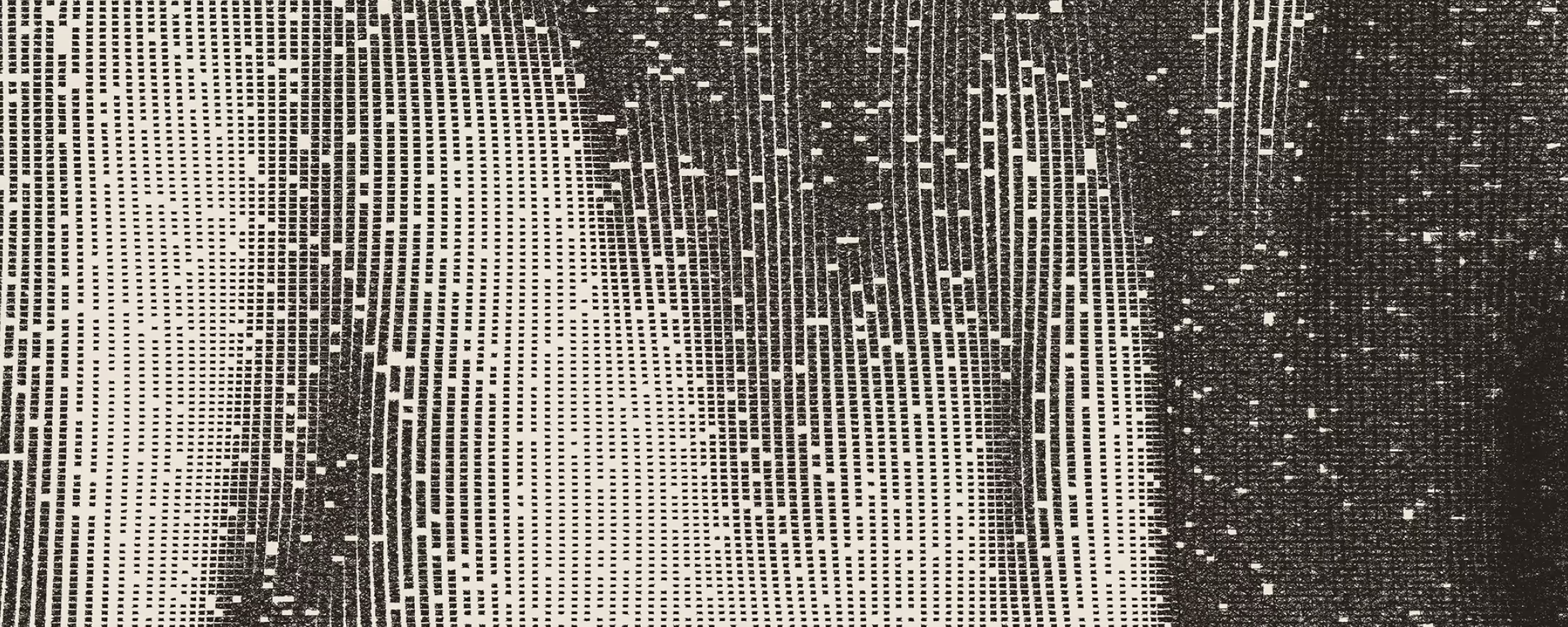
The series is inspired by Hypnagogia; the transition between wakefulness and sleep. In this state people can experience hallucinations and artists have been known to induce hypnagogia to stimulate their creativity. This state has always interested me, since in this state the brain gets ready to process the day. The series plays around this at different levels; up-close the piece is built out of a large grid of small doodles, each representing a small time frame within a day with its own emotions and events, while adding up to the larger picture. Some moments are denser, more chaotic, while other moments have been forgotten or have a minimal impact upon reflecting.

Hypnagogic is a series of curated outputs exploring the theme of Hypnagogia; the state between being awake and asleep. This dream state, where the mind translates real world input into abstract perception, is the inspiration behind each selected output.
The series is inspired by Hypnagogia; the transition between wakefulness and sleep. In this state people can experience hallucinations and artists have been known to induce hypnagogia to stimulate their creativity. This state has always interested me, since in this state the brain gets ready to process the day. The series plays around this at different levels; up-close the piece is built out of a large grid of small doodles, each representing a small time frame within a day with its own emotions and events, while adding up to the larger picture. Some moments are denser, more chaotic, while other moments have been forgotten or have a minimal impact upon reflecting.

"Scribbles, doodles and scrawling represents a beautiful combination of disorder and order to me. While the scribbles itself are not a direct representation of something, the underlying complexity of a scribble can show a lot about the process itself. Each scribble is a pure translation of emotion from the creator and a more pure representation of someone’s mind state to me. Playing around with these subtle nuances can make a huge difference to the final output of a piece and I think it’s a very interesting subject to play with."

Mimi Nguyen: Tych was an attempt to "bring personality to a generative system." Can we make machines more human?
rudxane: I think it all depends on what do we see as “more human”. We’ve seen huge steps being made in terms of conversational dialogue and understanding of less generic input, but personally the output still feels like a summary to me; a generic person. The most interesting aspect about humanizing machines to me would be to introduce personality and have a machine react to, experience and develop its own emotions. Tych was an attempt to bring both aspects together; while a machine is really good at executing a lot of repetitive actions in a structured way, the same thing done by a human would introduce a lot of “mistakes” that we would call personality.

Mimi Nguyen: The works for this exhibition are strictly curated by you. When should the artist pre-select the outputs and when shall we let them self-generate in a long-form?
rudxane: For this series I wanted to manually select the specific outputs from the algorithm that resonated with me on a personal level. While I could’ve made the algorithm long-form and have it pick outputs on a random basis, it felt right to make the selection process for this series intentional.

Hypnagogic is a series of curated outputs exploring the theme of Hypnagogia; the state between being awake and asleep. This dream state, where the mind translates real world input into abstract perception, is the inspiration behind each selected output.
The series is inspired by Hypnagogia; the transition between wakefulness and sleep. In this state people can experience hallucinations and artists have been known to induce hypnagogia to stimulate their creativity. This state has always interested me, since in this state the brain gets ready to process the day. The series plays around this at different levels; up-close the piece is built out of a large grid of small doodles, each representing a small time frame within a day with its own emotions and events, while adding up to the larger picture. Some moments are denser, more chaotic, while other moments have been forgotten or have a minimal impact upon reflecting.

Hypnagogic is a series of curated outputs exploring the theme of Hypnagogia; the state between being awake and asleep. This dream state, where the mind translates real world input into abstract perception, is the inspiration behind each selected output.
The series is inspired by Hypnagogia; the transition between wakefulness and sleep. In this state people can experience hallucinations and artists have been known to induce hypnagogia to stimulate their creativity. This state has always interested me, since in this state the brain gets ready to process the day. The series plays around this at different levels; up-close the piece is built out of a large grid of small doodles, each representing a small time frame within a day with its own emotions and events, while adding up to the larger picture. Some moments are denser, more chaotic, while other moments have been forgotten or have a minimal impact upon reflecting.

"Scribbles, doodles and scrawling represents a beautiful combination of disorder and order to me. While the scribbles itself are not a direct representation of something, the underlying complexity of a scribble can show a lot about the process itself. Each scribble is a pure translation of emotion from the creator and a more pure representation of someone’s mind state to me. Playing around with these subtle nuances can make a huge difference to the final output of a piece and I think it’s a very interesting subject to play with."

Mimi Nguyen: Tych was an attempt to "bring personality to a generative system." Can we make machines more human?
rudxane: I think it all depends on what do we see as “more human”. We’ve seen huge steps being made in terms of conversational dialogue and understanding of less generic input, but personally the output still feels like a summary to me; a generic person. The most interesting aspect about humanizing machines to me would be to introduce personality and have a machine react to, experience and develop its own emotions. Tych was an attempt to bring both aspects together; while a machine is really good at executing a lot of repetitive actions in a structured way, the same thing done by a human would introduce a lot of “mistakes” that we would call personality.

Mimi Nguyen: The works for this exhibition are strictly curated by you. When should the artist pre-select the outputs and when shall we let them self-generate in a long-form?
rudxane: For this series I wanted to manually select the specific outputs from the algorithm that resonated with me on a personal level. While I could’ve made the algorithm long-form and have it pick outputs on a random basis, it felt right to make the selection process for this series intentional.


