Descubrir
Colecciones
Tokens
Cambiar
Lanzamientos
Actividad
Recompensas
Estudio
/
Artículos
Titulares
Actividad
Agregando
Redes
Condiciones de servicio
Política de privacidad
3148,21 $
Project Overview

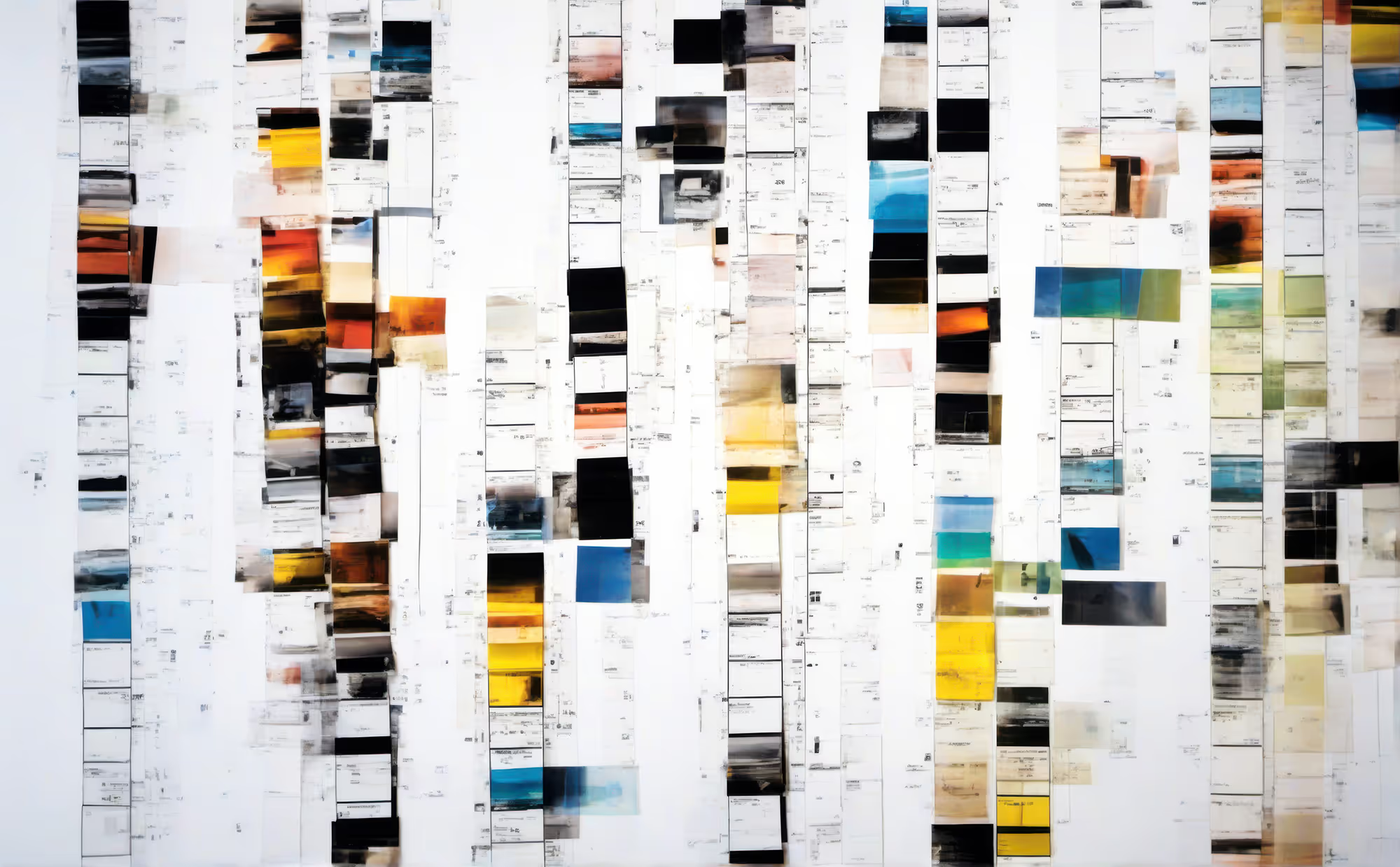
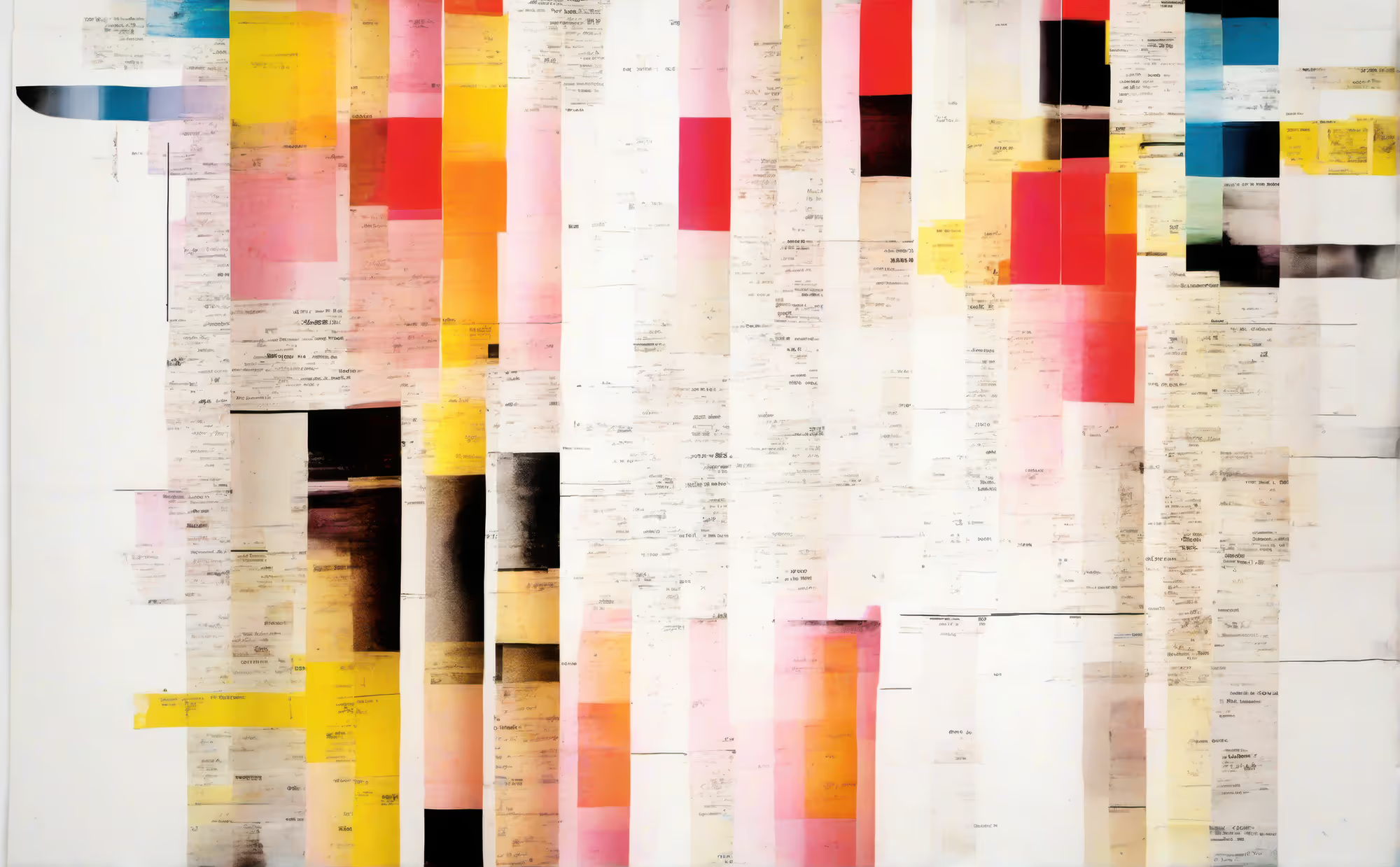
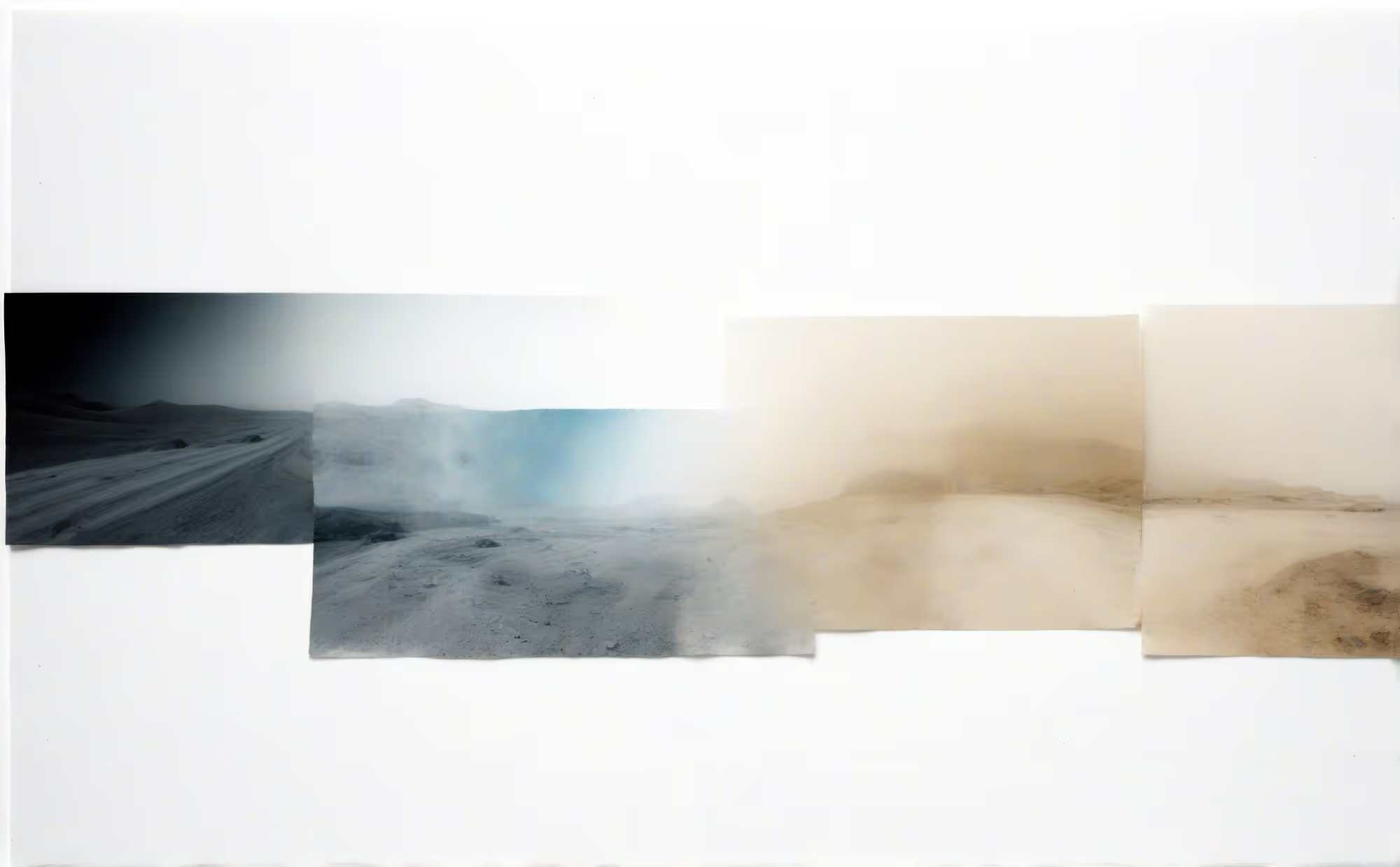
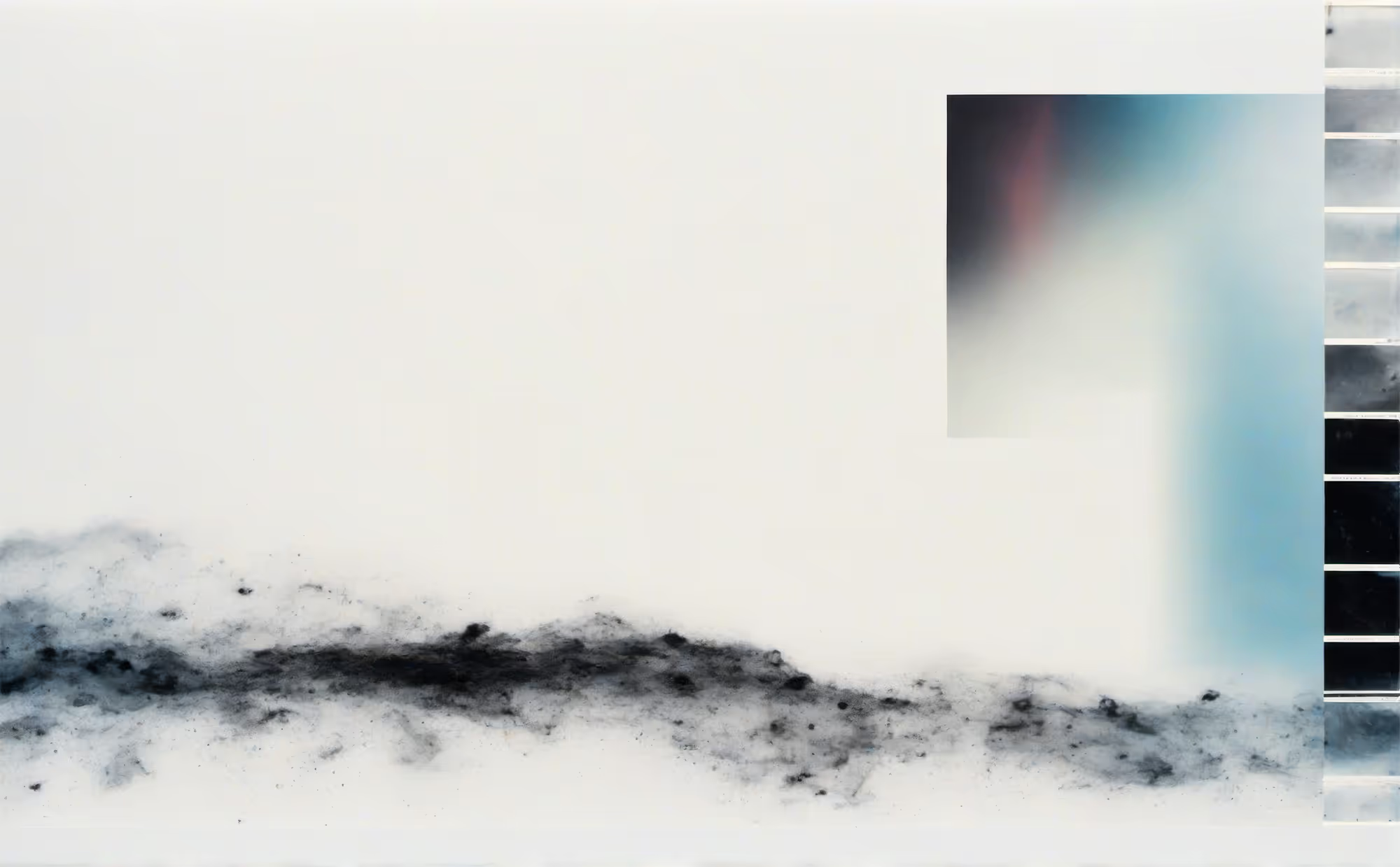
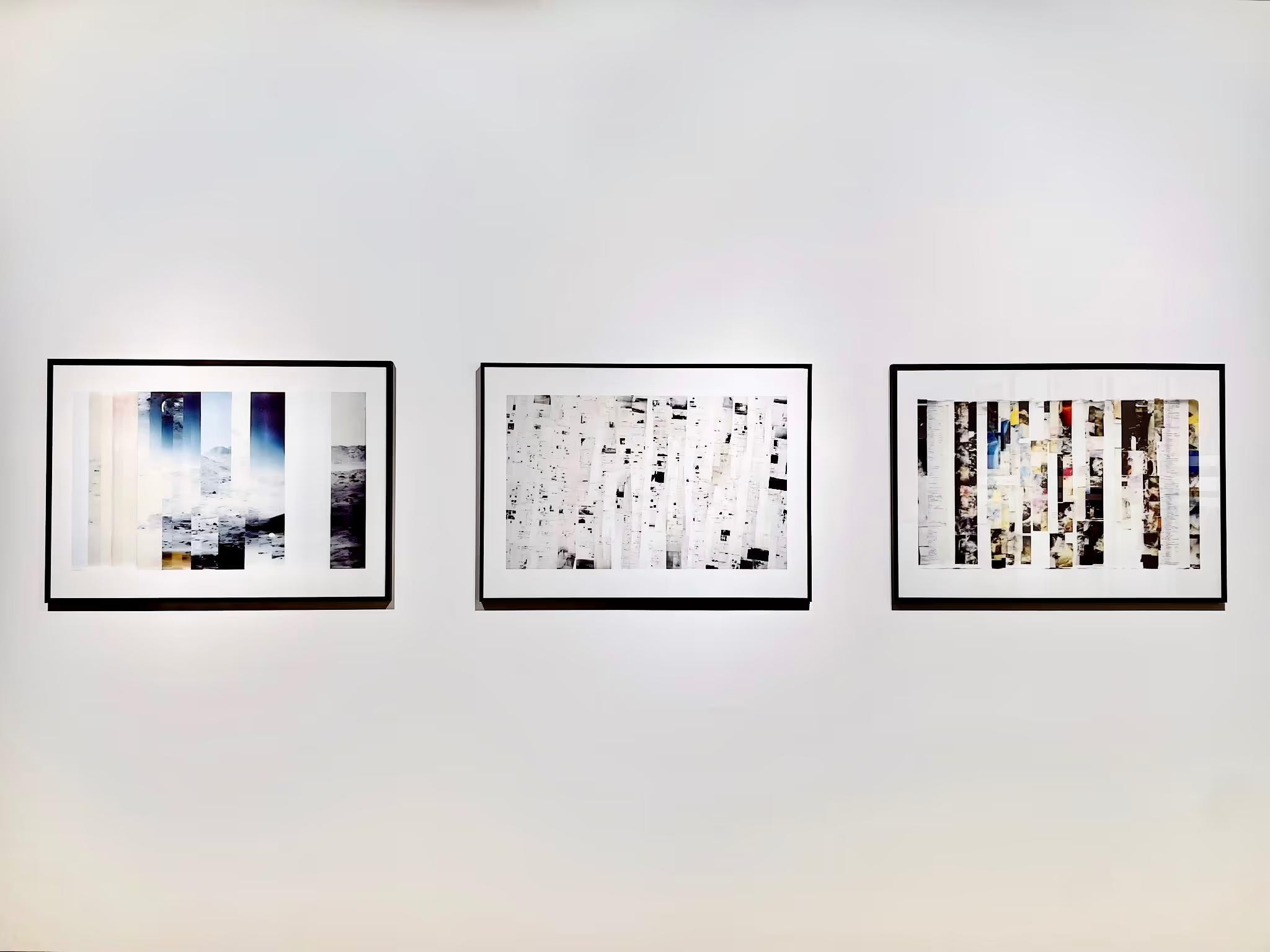
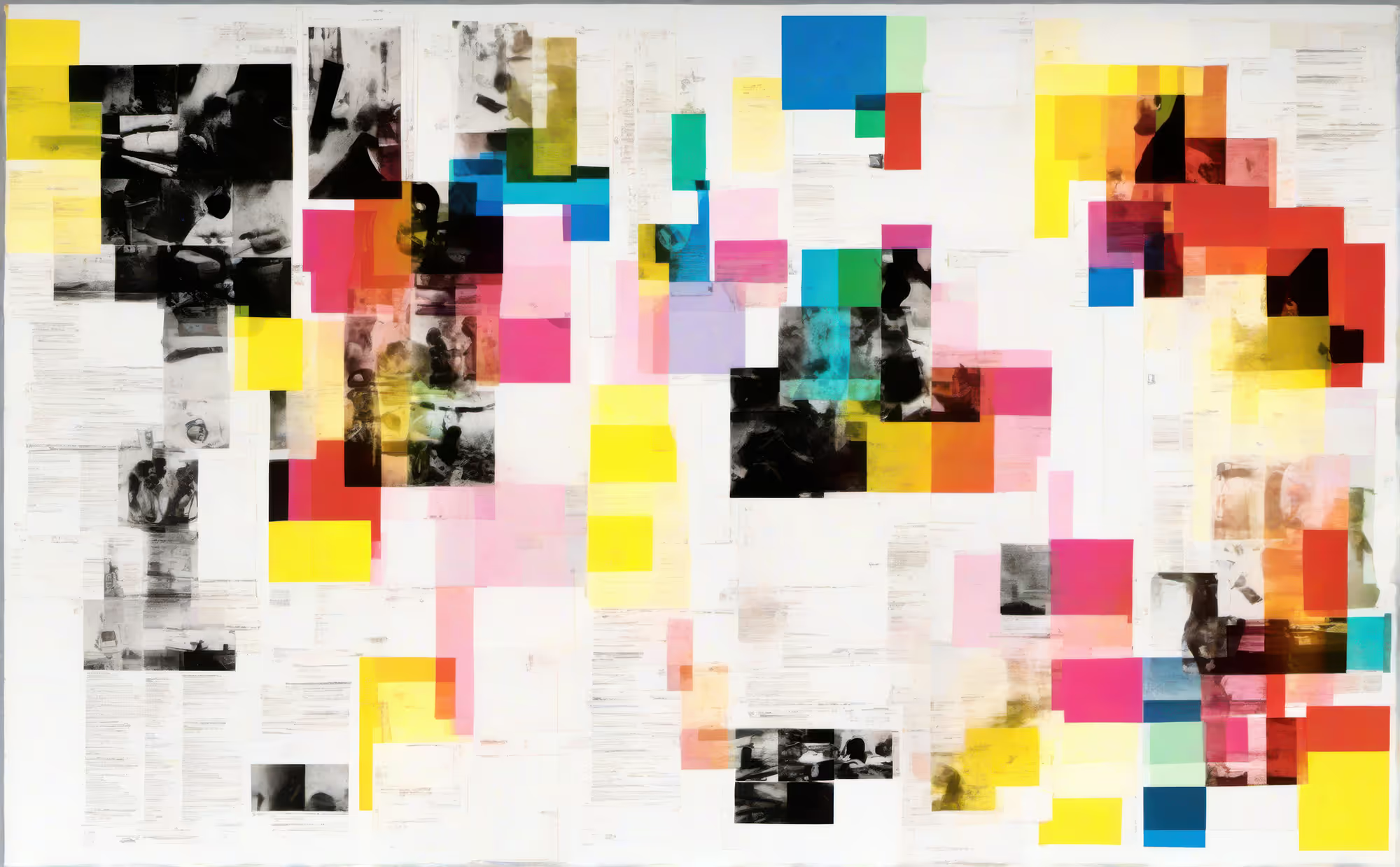
EVIDENCE by artist Barry Sutton represents an exploration of creative consciousness using advanced machine learning technologies to document and analyze the fundamental patterns underlying the creative process.

“The project started as an exploration to visually chart the emotions, visual references, intuitive leaps, and subconscious impulses that inform each decision in the making of a work of art. Using AI diffusion models running custom scripts and advanced image analyzation tools, I developed a methodology for prompting, creating and analyzing a body of work that was forged by asking how and why, not what.” The resulting images are the product of that inquiry– data visualizations embodying the strata, themes, and structures that have shaped art across millennia. Each piece may be viewed as a work of art in its own right—a visual artifact of this expansive investigation.
Methodologies

Analyzing the images focuses on several techniques:

Object Detection: Using deep learning models to identify and locate all objects and other elements present in the images

Semantic Segmentation: Segmenting the images into semantic regions, classifying each pixel into categories such as film, chemicals, paint, drawings, handwriting script, etc.

Sentiment Analysis: Assessing the emotional tone and sentiment expressed in the images, looking for cues related to mood, emotion, and human perception

Anomaly Detection: Scanning the images for any unusual or out-of-place elements that may be of interest

Trend Analysis: Looking for patterns, themes, and trends across the entire set of images
Categories & Traits

Each piece undergoes rigorous analysis across five primary categories:

Temporal Evidence

Like seeing multiple moments happening at once - think of a photograph that captures past, present and future simultaneously. These pieces preserve different stages of the creative process, revealing how artistic ideas evolve and transform over time, similar to seeing both the initial sketch and final painting within a single work.

Material Analysis

Examines the basic building blocks that make up each piece, like studying both the physical paint on a canvas and the digital code behind a screen. These works document how creative energy takes form, whether through traditional artistic materials or digital processes, capturing the essence of how ideas become visible.

Structural Analysis

Maps the hidden frameworks that hold each piece together - imagine being able to see the architectural blueprints beneath a building's surface. These works reveal the underlying systems that guide artistic decisions, showing how creative choices follow natural patterns and organizing principles.

Emergent Phenomena

Like watching clouds form shapes in the sky - patterns and forms that appear naturally without being deliberately designed. These pieces capture unexpected elements that emerge from the creative process, similar to how a painter might discover unplanned patterns while working, revealing surprising connections that arise spontaneously.

Fibonacci Sequence

Found throughout nature - from seashells to galaxy spirals - these mathematical patterns reflect natural harmony and balance. These works document how creative decisions often unconsciously follow these universal proportions, revealing an innate sense of harmony in artistic composition.
Conclusions

Looking deeply at these 36 pieces (a very small subset of the initial several thousand in the initial corpus) has shown me something fascinating about how creativity works. Each piece combines different elements - time, material, structure, and emergence - in its own unique way, but there's also something universal happening here. It's like watching a dance between careful planning and pure intuition, between the structured and the spontaneous. Some patterns, like the Fibonacci sequence, keep showing up across different pieces, suggesting there might be hidden rhythms that connect all creative work.

What's really striking is how each piece tells its own story while being part of something bigger. As an artist using AI to explore creativity, I've found myself documenting not just individual moments of creation, but something more profound - a kind of bridge between personal expression and universal truth. EVIDENCE has become more than just a collection of artworks; it's a window into the mystery of creativity itself, showing us how the creative process remains both deeply personal and universally connected.

Evidence

Por BarrySutton-StudioWorks
Ethereum
13
dic 2024
Arte
Por BarrySutton-StudioWorks
Ethereum
13
Lanzado dic 2024
Arte
Precio suelo
—
1d suelo %—
Oferta Top
—
Volumen 24h0,00 ETH
Volumen total0,00 ETH
anunciado0 %
Propietarios (únicos)9 (69,2 %)

Evidence
Evidence

Por BarrySutton-StudioWorks
Ethereum
13
dic 2024
Arte
Por BarrySutton-StudioWorks
Ethereum
13
Lanzado dic 2024
Arte
Artículos
Ofertas
Titulares
Atributos
Actividad
Acerca de

Evidence

Por BarrySutton-StudioWorks
Ethereum
13
dic 2024
Arte
Por BarrySutton-StudioWorks
Ethereum
13
Lanzado dic 2024
Arte
Precio suelo
—
1d suelo %—
Oferta Top
—
Volumen 24h0,00 ETH
Volumen total0,00 ETH
anunciado0 %
Propietarios (únicos)9 (69,2 %)

Evidence
Evidence

Por BarrySutton-StudioWorks
Ethereum
13
dic 2024
Arte
Por BarrySutton-StudioWorks
Ethereum
13
Lanzado dic 2024
Arte
Artículos
Ofertas
Titulares
Atributos
Actividad
Acerca de
Project Overview

EVIDENCE by artist Barry Sutton represents an exploration of creative consciousness using advanced machine learning technologies to document and analyze the fundamental patterns underlying the creative process.

“The project started as an exploration to visually chart the emotions, visual references, intuitive leaps, and subconscious impulses that inform each decision in the making of a work of art. Using AI diffusion models running custom scripts and advanced image analyzation tools, I developed a methodology for prompting, creating and analyzing a body of work that was forged by asking how and why, not what.” The resulting images are the product of that inquiry– data visualizations embodying the strata, themes, and structures that have shaped art across millennia. Each piece may be viewed as a work of art in its own right—a visual artifact of this expansive investigation.

Methodologies

Analyzing the images focuses on several techniques:

Object Detection: Using deep learning models to identify and locate all objects and other elements present in the images

Semantic Segmentation: Segmenting the images into semantic regions, classifying each pixel into categories such as film, chemicals, paint, drawings, handwriting script, etc.

Sentiment Analysis: Assessing the emotional tone and sentiment expressed in the images, looking for cues related to mood, emotion, and human perception

Anomaly Detection: Scanning the images for any unusual or out-of-place elements that may be of interest

Trend Analysis: Looking for patterns, themes, and trends across the entire set of images

Categories & Traits

Each piece undergoes rigorous analysis across five primary categories:

Temporal Evidence

Like seeing multiple moments happening at once - think of a photograph that captures past, present and future simultaneously. These pieces preserve different stages of the creative process, revealing how artistic ideas evolve and transform over time, similar to seeing both the initial sketch and final painting within a single work.

Material Analysis

Examines the basic building blocks that make up each piece, like studying both the physical paint on a canvas and the digital code behind a screen. These works document how creative energy takes form, whether through traditional artistic materials or digital processes, capturing the essence of how ideas become visible.

Structural Analysis

Maps the hidden frameworks that hold each piece together - imagine being able to see the architectural blueprints beneath a building's surface. These works reveal the underlying systems that guide artistic decisions, showing how creative choices follow natural patterns and organizing principles.

Emergent Phenomena

Like watching clouds form shapes in the sky - patterns and forms that appear naturally without being deliberately designed. These pieces capture unexpected elements that emerge from the creative process, similar to how a painter might discover unplanned patterns while working, revealing surprising connections that arise spontaneously.

Fibonacci Sequence

Found throughout nature - from seashells to galaxy spirals - these mathematical patterns reflect natural harmony and balance. These works document how creative decisions often unconsciously follow these universal proportions, revealing an innate sense of harmony in artistic composition.

Conclusions

Looking deeply at these 36 pieces (a very small subset of the initial several thousand in the initial corpus) has shown me something fascinating about how creativity works. Each piece combines different elements - time, material, structure, and emergence - in its own unique way, but there's also something universal happening here. It's like watching a dance between careful planning and pure intuition, between the structured and the spontaneous. Some patterns, like the Fibonacci sequence, keep showing up across different pieces, suggesting there might be hidden rhythms that connect all creative work.

What's really striking is how each piece tells its own story while being part of something bigger. As an artist using AI to explore creativity, I've found myself documenting not just individual moments of creation, but something more profound - a kind of bridge between personal expression and universal truth. EVIDENCE has become more than just a collection of artworks; it's a window into the mystery of creativity itself, showing us how the creative process remains both deeply personal and universally connected.

Project Overview

EVIDENCE by artist Barry Sutton represents an exploration of creative consciousness using advanced machine learning technologies to document and analyze the fundamental patterns underlying the creative process.

“The project started as an exploration to visually chart the emotions, visual references, intuitive leaps, and subconscious impulses that inform each decision in the making of a work of art. Using AI diffusion models running custom scripts and advanced image analyzation tools, I developed a methodology for prompting, creating and analyzing a body of work that was forged by asking how and why, not what.” The resulting images are the product of that inquiry– data visualizations embodying the strata, themes, and structures that have shaped art across millennia. Each piece may be viewed as a work of art in its own right—a visual artifact of this expansive investigation.

Methodologies

Analyzing the images focuses on several techniques:

Object Detection: Using deep learning models to identify and locate all objects and other elements present in the images

Semantic Segmentation: Segmenting the images into semantic regions, classifying each pixel into categories such as film, chemicals, paint, drawings, handwriting script, etc.

Sentiment Analysis: Assessing the emotional tone and sentiment expressed in the images, looking for cues related to mood, emotion, and human perception

Anomaly Detection: Scanning the images for any unusual or out-of-place elements that may be of interest

Trend Analysis: Looking for patterns, themes, and trends across the entire set of images

Categories & Traits

Each piece undergoes rigorous analysis across five primary categories:

Temporal Evidence

Like seeing multiple moments happening at once - think of a photograph that captures past, present and future simultaneously. These pieces preserve different stages of the creative process, revealing how artistic ideas evolve and transform over time, similar to seeing both the initial sketch and final painting within a single work.

Material Analysis

Examines the basic building blocks that make up each piece, like studying both the physical paint on a canvas and the digital code behind a screen. These works document how creative energy takes form, whether through traditional artistic materials or digital processes, capturing the essence of how ideas become visible.

Structural Analysis

Maps the hidden frameworks that hold each piece together - imagine being able to see the architectural blueprints beneath a building's surface. These works reveal the underlying systems that guide artistic decisions, showing how creative choices follow natural patterns and organizing principles.

Emergent Phenomena

Like watching clouds form shapes in the sky - patterns and forms that appear naturally without being deliberately designed. These pieces capture unexpected elements that emerge from the creative process, similar to how a painter might discover unplanned patterns while working, revealing surprising connections that arise spontaneously.

Fibonacci Sequence

Found throughout nature - from seashells to galaxy spirals - these mathematical patterns reflect natural harmony and balance. These works document how creative decisions often unconsciously follow these universal proportions, revealing an innate sense of harmony in artistic composition.

Conclusions

Looking deeply at these 36 pieces (a very small subset of the initial several thousand in the initial corpus) has shown me something fascinating about how creativity works. Each piece combines different elements - time, material, structure, and emergence - in its own unique way, but there's also something universal happening here. It's like watching a dance between careful planning and pure intuition, between the structured and the spontaneous. Some patterns, like the Fibonacci sequence, keep showing up across different pieces, suggesting there might be hidden rhythms that connect all creative work.

What's really striking is how each piece tells its own story while being part of something bigger. As an artist using AI to explore creativity, I've found myself documenting not just individual moments of creation, but something more profound - a kind of bridge between personal expression and universal truth. EVIDENCE has become more than just a collection of artworks; it's a window into the mystery of creativity itself, showing us how the creative process remains both deeply personal and universally connected.