Entdecken
Sammlungen
Token
Tauschen
Einführungen
Aktivität
Belohnungen
Studio
/
Artikel
Besitzer
Aktivität
Ansammelnd
Netzwerke
Nutzungsbedingungen
Datenschutzrichtlinie
3.138,35 $
A Digital Canvas of Chaos and Conspiracy

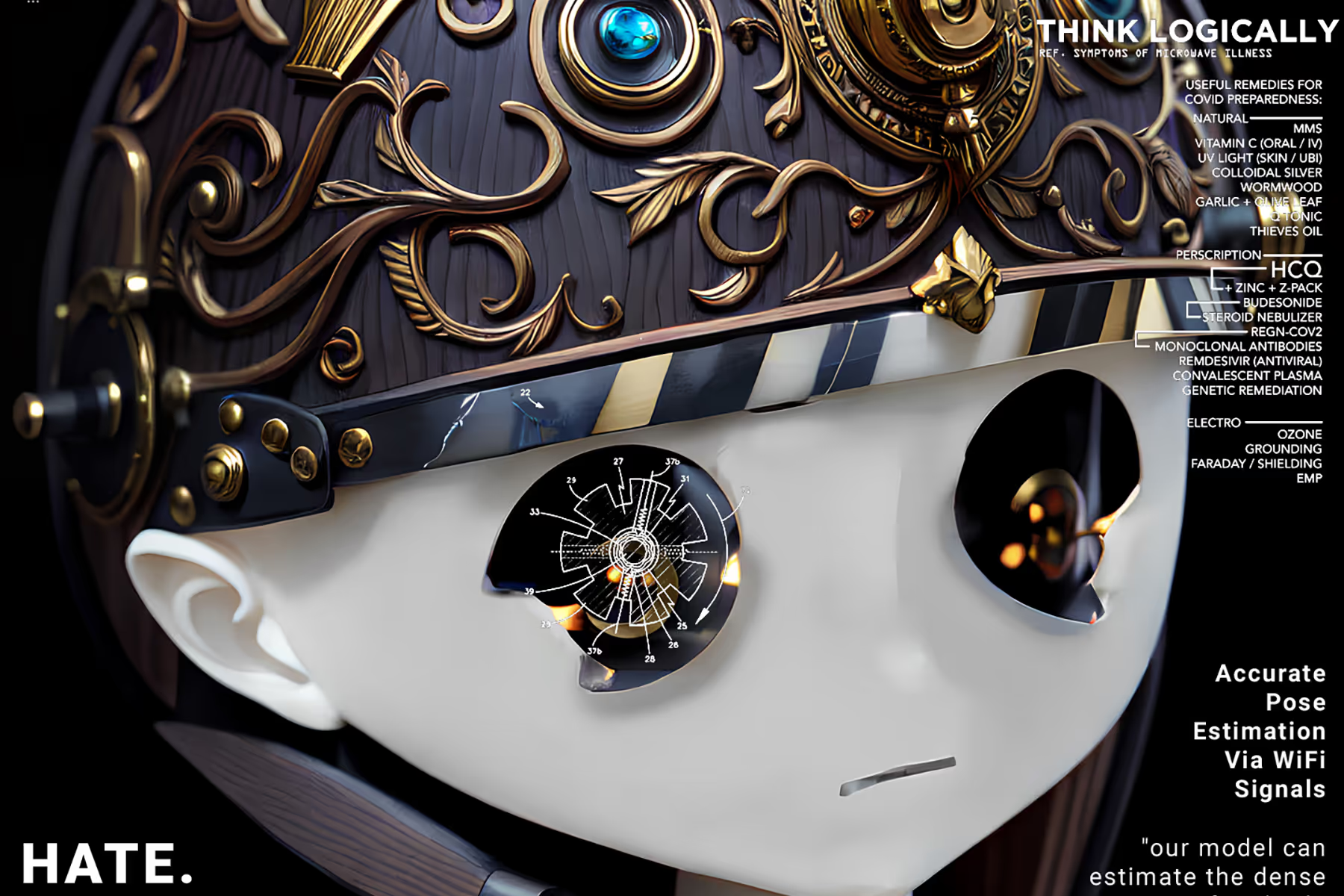
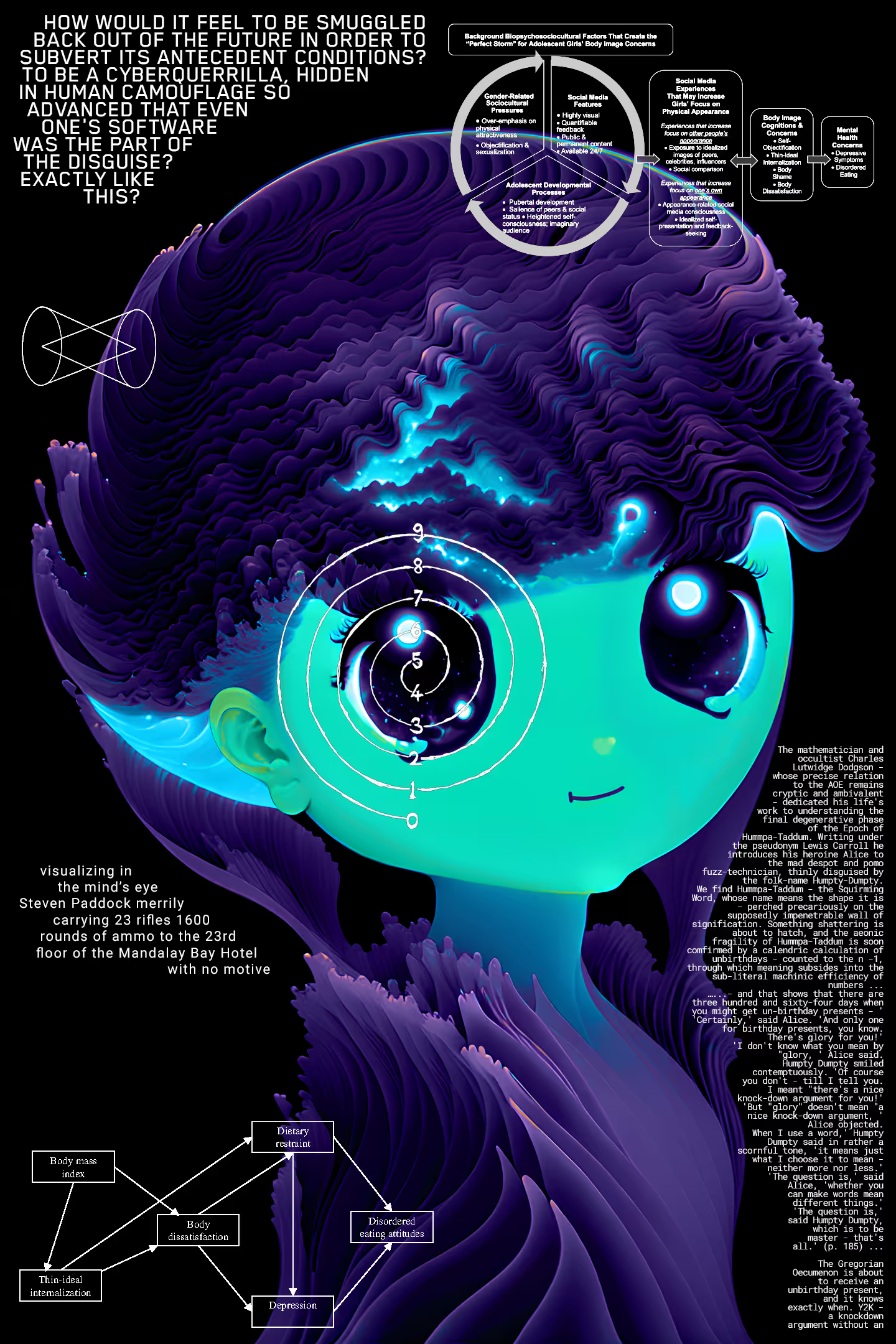
SchizoPosters is more than just an NFT collection—it’s a visual manifesto of internet subculture, blending the aesthetics of fringe conspiracy theories, cryptic memes, and radical digital expression. The name itself is a nod to “schizo posting,” a term used in online conspiracy communities to describe the act of compulsively sharing theories, patterns, and hidden truths that mainstream narratives overlook. Each piece in the collection functions as a layered collage of paranoia, humor, and artistic ingenuity, inviting collectors to explore the deeper meanings embedded in its cryptic designs. In a world saturated with polished digital assets, SchizoPosters thrives in raw, unfiltered chaos, mirroring the unrestrained flow of thought that defines the internet’s most esoteric corners.
Art That Hates the Antichrist


The SchizoPosters community has cultivated a unique cultural identity around the collection, rallying around cryptic slogans and shared digital rituals. One of the most notable collector memes is "I HATE THE ANTICHRIST," an enigmatic phrase that embodies the project’s rebellious, anti-mainstream ethos. This phrase, repeated among holders, is both a playful exaggeration and a declaration of defiance—rejecting the sanitized, corporate-controlled digital landscape in favor of the chaotic and the unfiltered. Through this collective language, SchizoPosters cements itself as more than an art collection; it becomes a living, breathing conspiracy of its own, where owning a piece means participating in a subversive cultural movement that thrives on self-awareness and satire.
One-of-One in a World of Clones

Unlike conventional NFT collections that emphasize algorithmically determined rarity, SchizoPosters abandons traditional scarcity mechanics in favor of something more organic. Each of its 5,554 pieces is unique, with no ranking or hierarchy—every NFT is a 1/1, designed to stand on its own merits. This decision challenges the artificial value structures of NFT markets, where rarity is often dictated by arbitrary metadata. Instead, SchizoPosters places emphasis on narrative, aesthetic, and ideological resonance, making each piece feel like a fragment of a larger, conspiratorial whole. In this way, the collection rejects the gamified mechanics of most NFT ecosystems, favoring an experience that is immersive, chaotic, and ultimately driven by the collectors themselves.

SchizoPosters

Von RadbroDeployer
Ethereum
5.554
März 2023
PFPs
Von RadbroDeployer
Ethereum
5.554
Gestartet März 2023
PFPs
Mindestpreis
0,0777 ETH
1d Etage %+1,2 %
Top-Angebot
0,0677 WETH
24-Stunden-Volumen0,77 ETH
Gesamtvolumen5.638,23 ETH
gelistet3,4 %
Besitzer (einzigartig)2.197 (39,6 %)

SchizoPosters
SchizoPosters

Von RadbroDeployer
Ethereum
5.554
März 2023
PFPs
Von RadbroDeployer
Ethereum
5.554
Gestartet März 2023
PFPs
Erkunden
Artikel
Angebote
Besitzer
Merkmale
Aktivität
Über uns

SchizoPosters

Von RadbroDeployer
Ethereum
5.554
März 2023
PFPs
Von RadbroDeployer
Ethereum
5.554
Gestartet März 2023
PFPs
Mindestpreis
0,0777 ETH
1d Etage %+1,2 %
Top-Angebot
0,0677 WETH
24-Stunden-Volumen0,77 ETH
Gesamtvolumen5.638,23 ETH
gelistet3,4 %
Besitzer (einzigartig)2.197 (39,6 %)

SchizoPosters
SchizoPosters

Von RadbroDeployer
Ethereum
5.554
März 2023
PFPs
Von RadbroDeployer
Ethereum
5.554
Gestartet März 2023
PFPs
Erkunden
Artikel
Angebote
Besitzer
Merkmale
Aktivität
Über uns
A Digital Canvas of Chaos and Conspiracy

SchizoPosters is more than just an NFT collection—it’s a visual manifesto of internet subculture, blending the aesthetics of fringe conspiracy theories, cryptic memes, and radical digital expression. The name itself is a nod to “schizo posting,” a term used in online conspiracy communities to describe the act of compulsively sharing theories, patterns, and hidden truths that mainstream narratives overlook. Each piece in the collection functions as a layered collage of paranoia, humor, and artistic ingenuity, inviting collectors to explore the deeper meanings embedded in its cryptic designs. In a world saturated with polished digital assets, SchizoPosters thrives in raw, unfiltered chaos, mirroring the unrestrained flow of thought that defines the internet’s most esoteric corners.

Art That Hates the Antichrist

The SchizoPosters community has cultivated a unique cultural identity around the collection, rallying around cryptic slogans and shared digital rituals. One of the most notable collector memes is "I HATE THE ANTICHRIST," an enigmatic phrase that embodies the project’s rebellious, anti-mainstream ethos. This phrase, repeated among holders, is both a playful exaggeration and a declaration of defiance—rejecting the sanitized, corporate-controlled digital landscape in favor of the chaotic and the unfiltered. Through this collective language, SchizoPosters cements itself as more than an art collection; it becomes a living, breathing conspiracy of its own, where owning a piece means participating in a subversive cultural movement that thrives on self-awareness and satire.

One-of-One in a World of Clones

Unlike conventional NFT collections that emphasize algorithmically determined rarity, SchizoPosters abandons traditional scarcity mechanics in favor of something more organic. Each of its 5,554 pieces is unique, with no ranking or hierarchy—every NFT is a 1/1, designed to stand on its own merits. This decision challenges the artificial value structures of NFT markets, where rarity is often dictated by arbitrary metadata. Instead, SchizoPosters places emphasis on narrative, aesthetic, and ideological resonance, making each piece feel like a fragment of a larger, conspiratorial whole. In this way, the collection rejects the gamified mechanics of most NFT ecosystems, favoring an experience that is immersive, chaotic, and ultimately driven by the collectors themselves.
A Digital Canvas of Chaos and Conspiracy

SchizoPosters is more than just an NFT collection—it’s a visual manifesto of internet subculture, blending the aesthetics of fringe conspiracy theories, cryptic memes, and radical digital expression. The name itself is a nod to “schizo posting,” a term used in online conspiracy communities to describe the act of compulsively sharing theories, patterns, and hidden truths that mainstream narratives overlook. Each piece in the collection functions as a layered collage of paranoia, humor, and artistic ingenuity, inviting collectors to explore the deeper meanings embedded in its cryptic designs. In a world saturated with polished digital assets, SchizoPosters thrives in raw, unfiltered chaos, mirroring the unrestrained flow of thought that defines the internet’s most esoteric corners.

Art That Hates the Antichrist

The SchizoPosters community has cultivated a unique cultural identity around the collection, rallying around cryptic slogans and shared digital rituals. One of the most notable collector memes is "I HATE THE ANTICHRIST," an enigmatic phrase that embodies the project’s rebellious, anti-mainstream ethos. This phrase, repeated among holders, is both a playful exaggeration and a declaration of defiance—rejecting the sanitized, corporate-controlled digital landscape in favor of the chaotic and the unfiltered. Through this collective language, SchizoPosters cements itself as more than an art collection; it becomes a living, breathing conspiracy of its own, where owning a piece means participating in a subversive cultural movement that thrives on self-awareness and satire.

One-of-One in a World of Clones

Unlike conventional NFT collections that emphasize algorithmically determined rarity, SchizoPosters abandons traditional scarcity mechanics in favor of something more organic. Each of its 5,554 pieces is unique, with no ranking or hierarchy—every NFT is a 1/1, designed to stand on its own merits. This decision challenges the artificial value structures of NFT markets, where rarity is often dictated by arbitrary metadata. Instead, SchizoPosters places emphasis on narrative, aesthetic, and ideological resonance, making each piece feel like a fragment of a larger, conspiratorial whole. In this way, the collection rejects the gamified mechanics of most NFT ecosystems, favoring an experience that is immersive, chaotic, and ultimately driven by the collectors themselves.