Descubrir
Colecciones
Tokens
Cambiar
Lanzamientos
Actividad
Recompensas
Estudio
/
Artículos
Titulares
Actividad
Agregando
Redes
Condiciones de servicio
Política de privacidad
3120,57 $
Petrus Wandrey - Pioneer of DIGITALISM

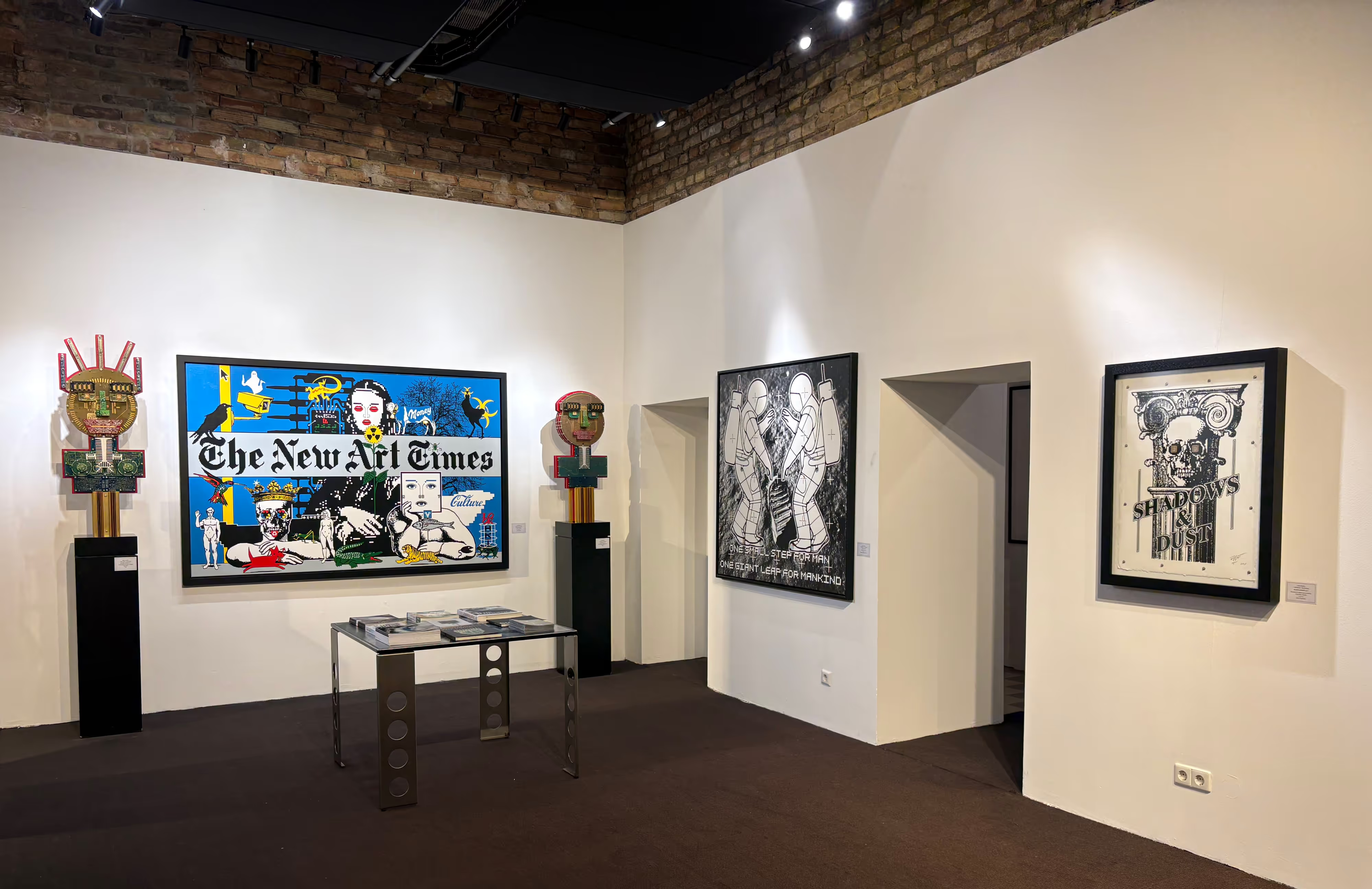
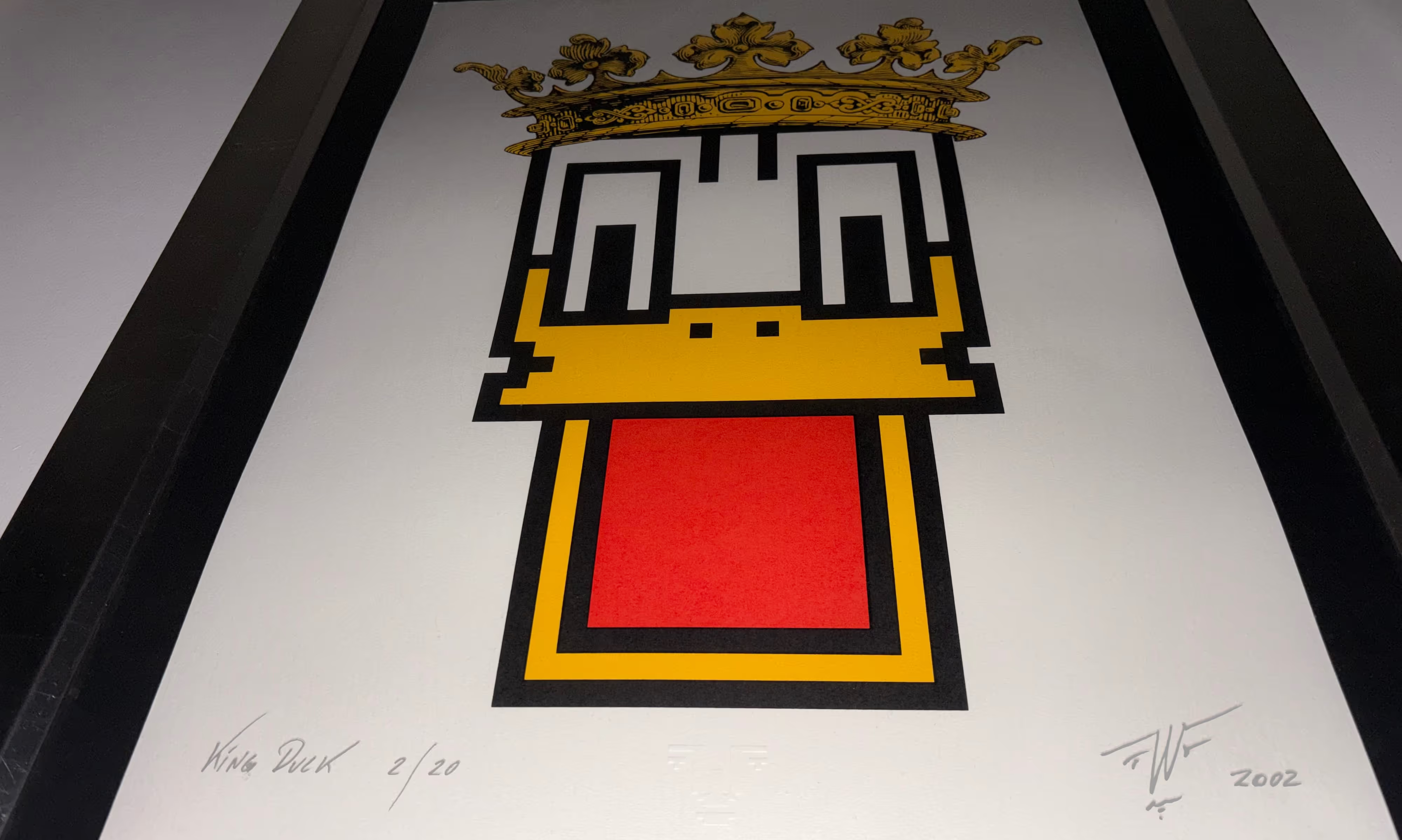
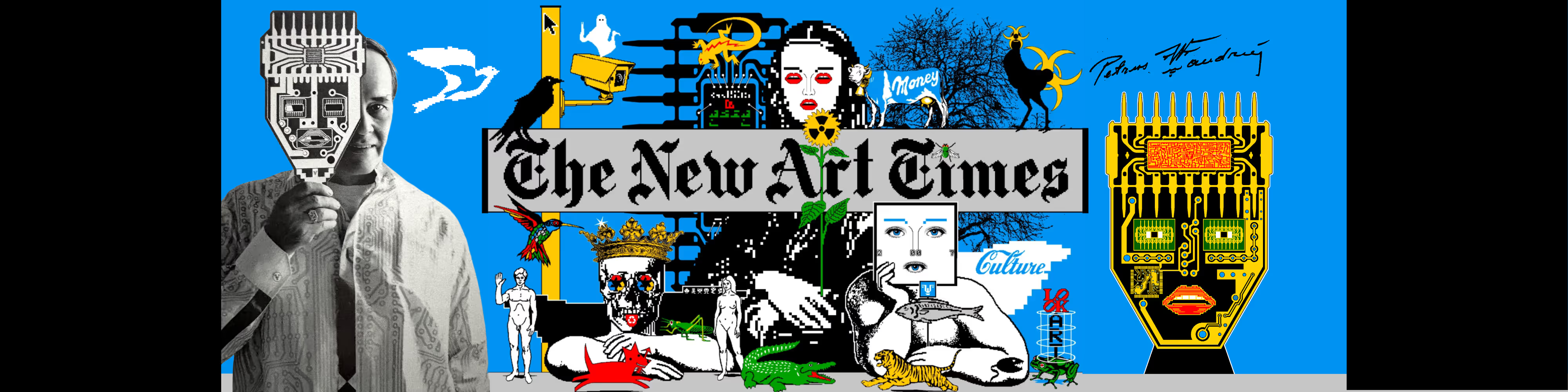
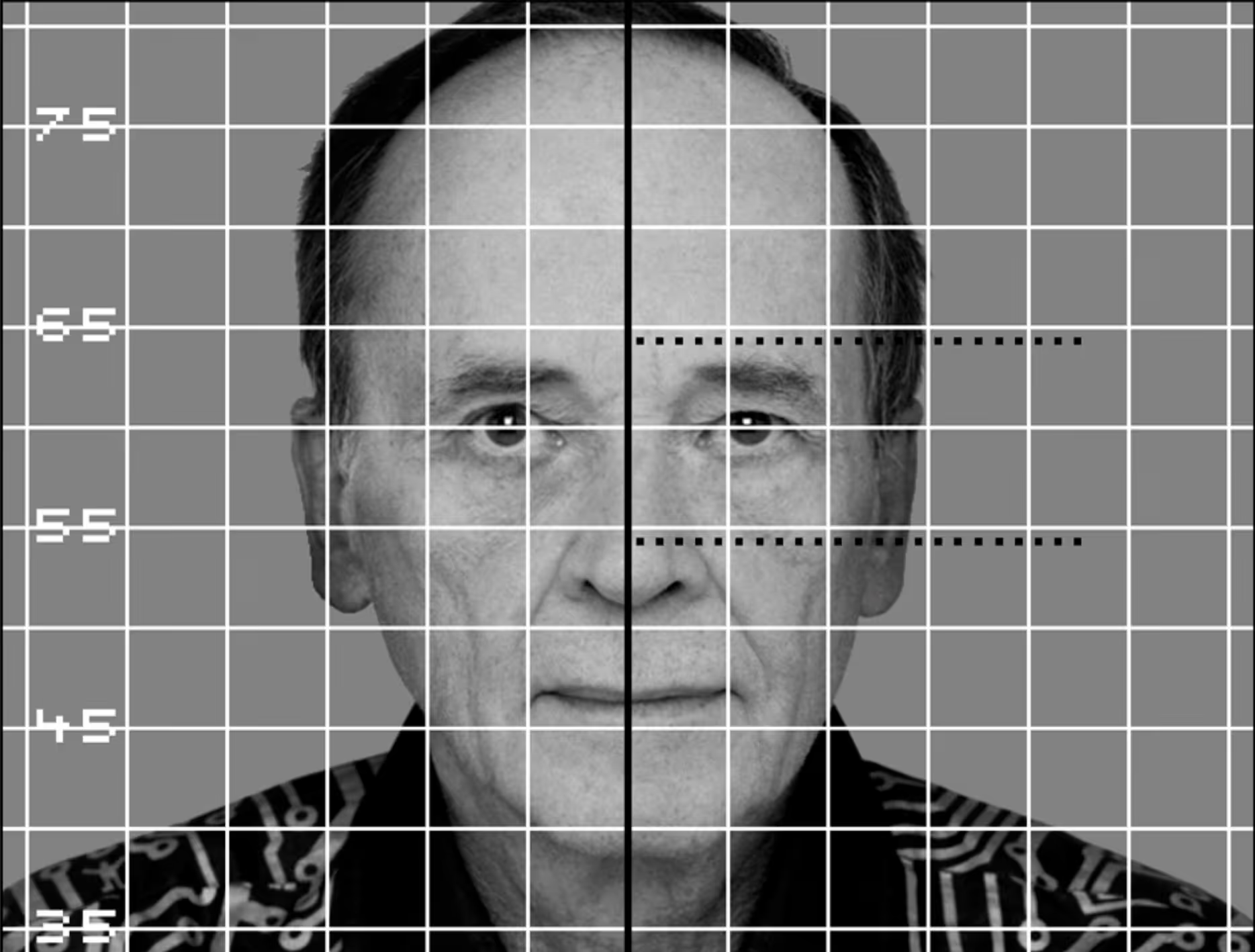
Petrus Wandrey (1939–2012) is the pioneer of Digitalism, a radical visual language that anticipated the aesthetics of the screen long before “digital culture” became a daily condition. From Hamburg he forged an unmistakable iconography of pixels, circuits, and coded surfaces, turning technology’s grammar into a new kind of mythmaking. His work moves with rare authority across painting, object, and print, where Pop’s sharpness meets Surrealism’s charge and a designer’s precision becomes art-historical argument. Collected internationally and anchored by key institutional references, Wandrey stands as one of the clearest artistic witnesses to the moment when culture crossed the threshold into the digital age.
Petrus Wandrey - Pioneer of DIGITALISM

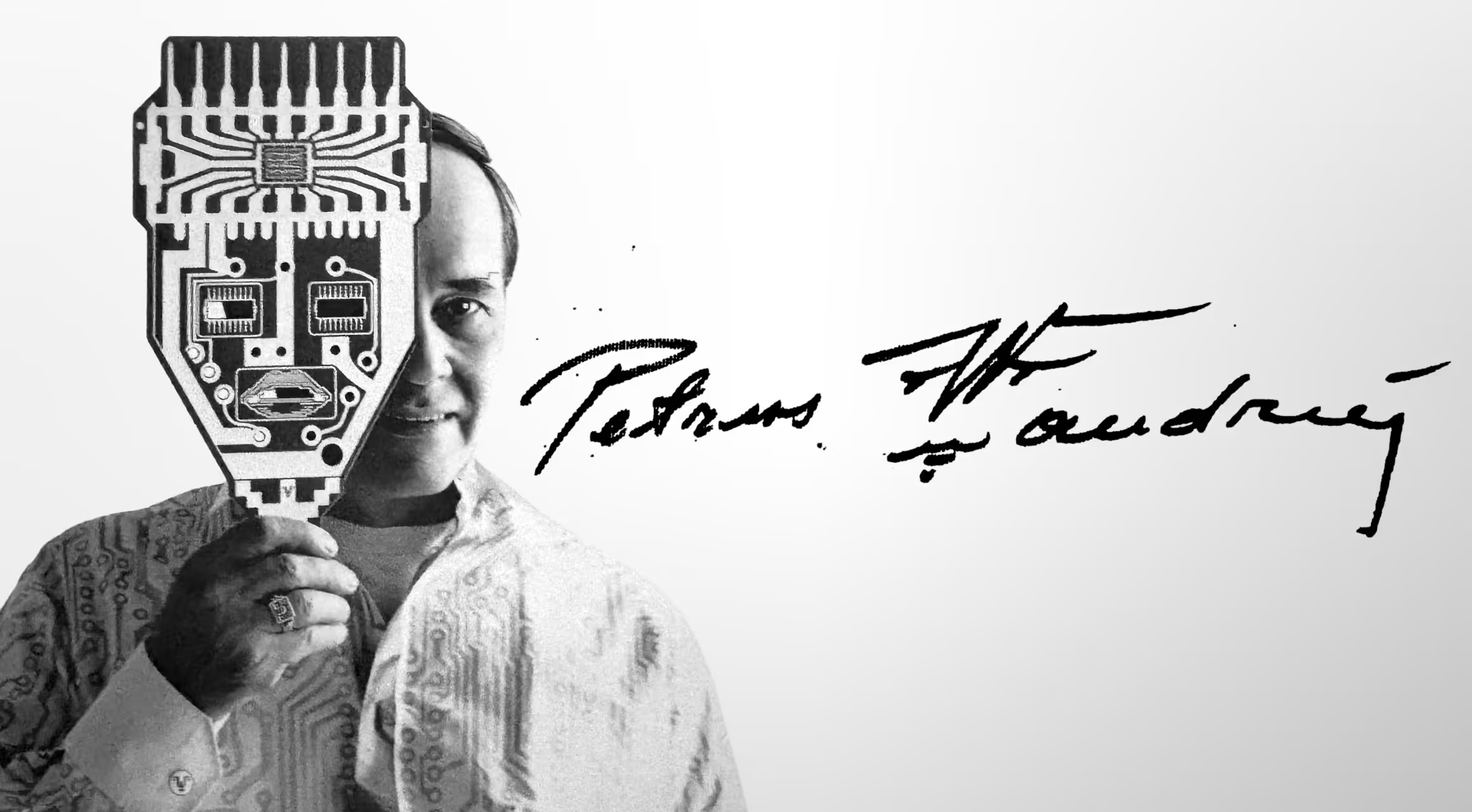
Petrus Wandrey (1939–2012) is the pioneer of Digitalism, a radical visual language that anticipated the aesthetics of the screen long before “digital culture” became a daily condition. From Hamburg he forged an unmistakable iconography of pixels, circuits, and coded surfaces, turning technology’s grammar into a new kind of mythmaking. His work moves with rare authority across painting, object, and print, where Pop’s sharpness meets Surrealism’s charge and a designer’s precision becomes art-historical argument. Collected internationally and anchored by key institutional references, Wandrey stands as one of the clearest artistic witnesses to the moment when culture crossed the threshold into the digital age.
“Machines will never be able to generate a work of art using software, because an artwork is a result of feelings - something a computer will never accomplish. For me, the computer is more like a paint box, a tool allowing me to choose from several options.“ ⁓ Petrus Wandrey, 2006

Early years and training

Petrus Wandrey, born in Dresden in 1939 and artistically rooted in Hamburg, formed his practice through rigorous study in applied and fine arts. From the outset he treated painting, printmaking, and object work as a single language rather than separate genres. Early works test surreal dislocations and staged pictorial space, yet already reveal a lasting aim: to translate lived reality into signs, and to build images that function as time diagnosis as much as aesthetic proposition.

From design practice to artist

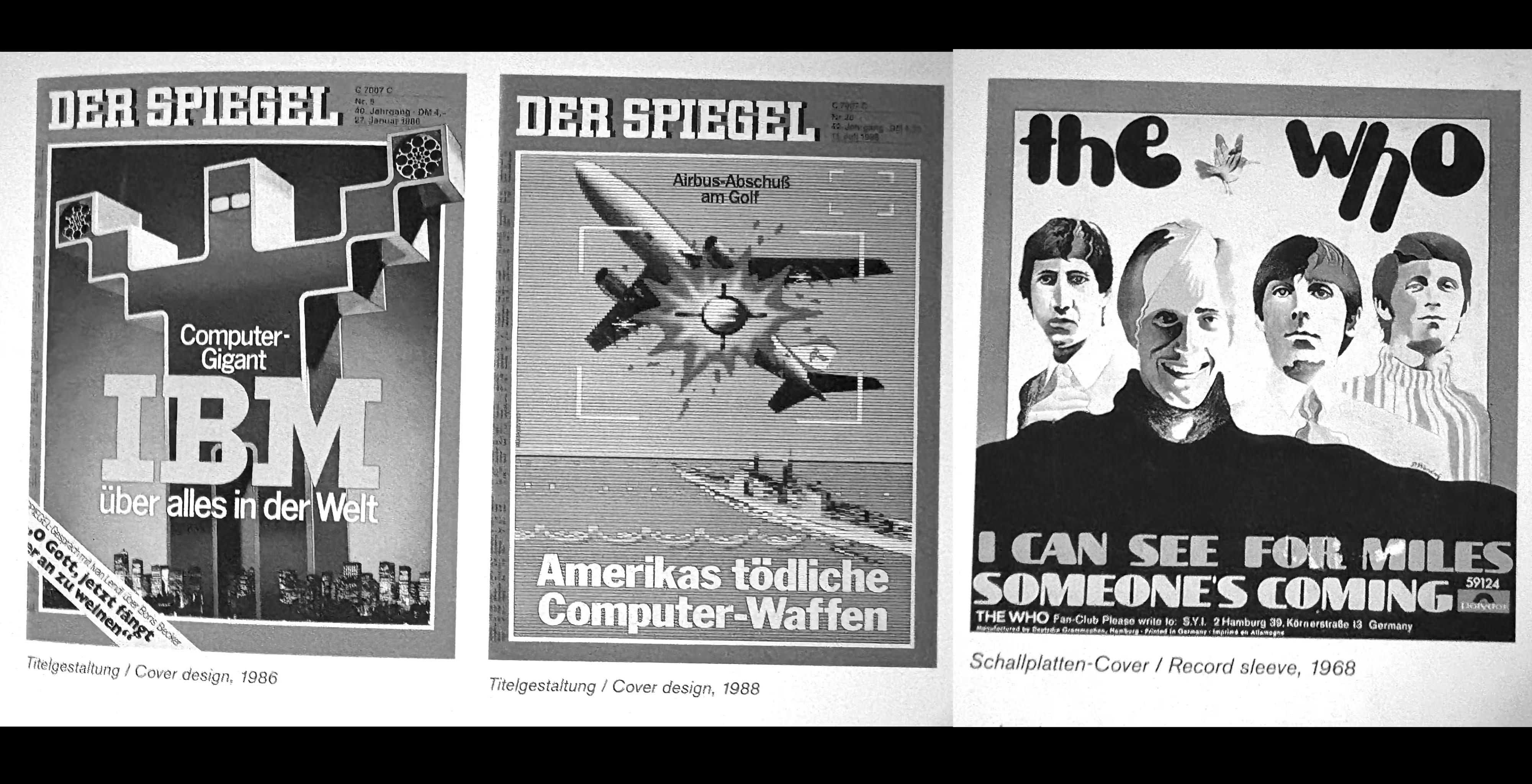
Before consolidating his mature idiom, Wandrey worked as a designer and illustrator, shaping record covers, editorial imagery, and posters. This proximity to mass circulation sharpened his sense for iconic condensation, serial order, and visual impact. The applied field became his laboratory: he observed how images travel, how they persuade, and how popular graphics and high art continually exchange methods. That experience gave him a rare freedom to move between picture, object, and space while retaining the precision and discipline of graphic construction.

Salvador Dalí

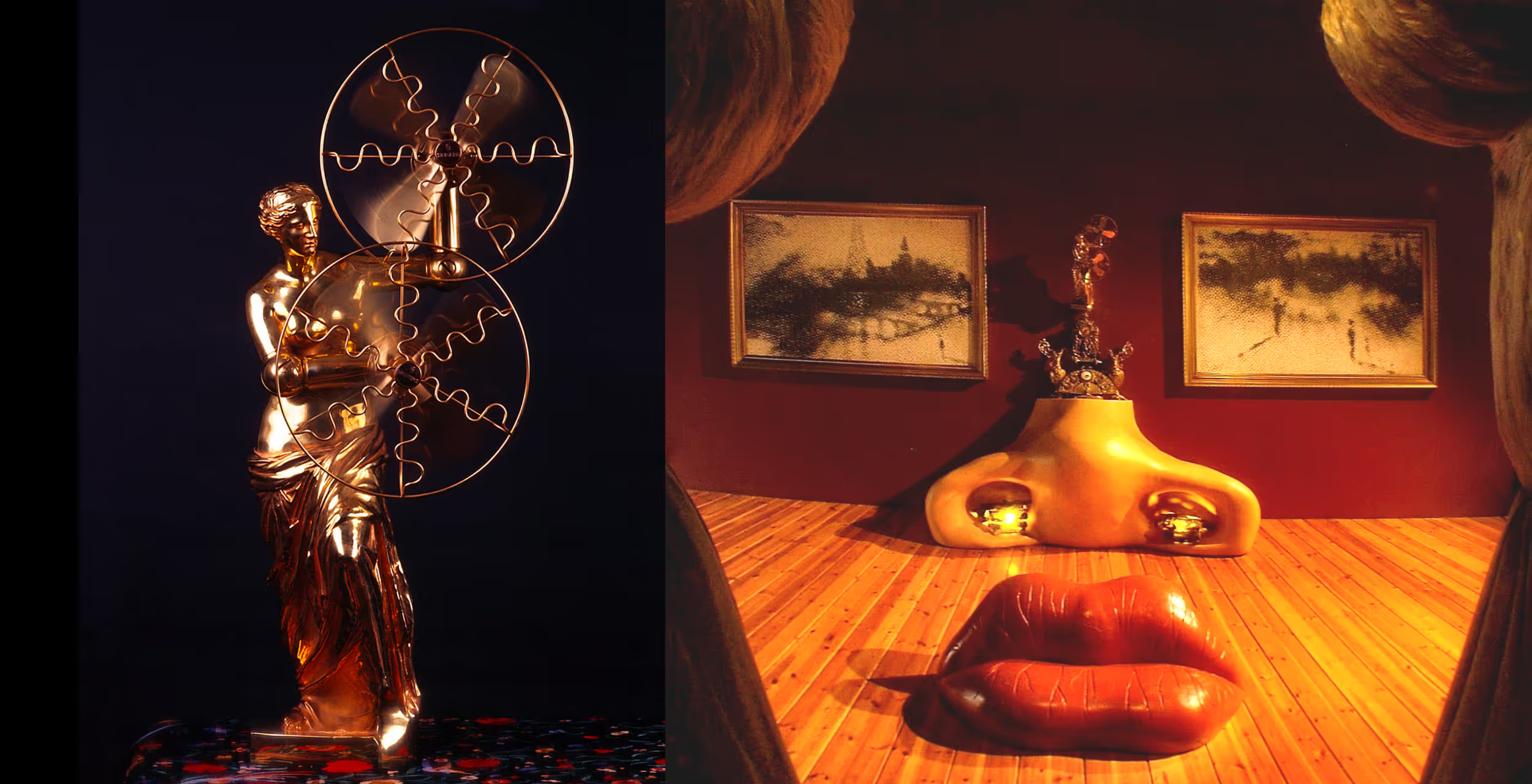
In 1975 Wandrey traveled to Portlligat to meet Salvador Dalí and presented Venus’ Wind as a birthday gift. Dalí accepted the work and placed it in the Mae West Room of the Teatre Museu Dalí in Figueres, where it remained as a visible marker of artistic exchange. More decisive than the gesture was Dalí’s counsel: Surrealism had been the language of his generation, and Wandrey should find a new, very own stylistic answer for his era. The encounter crystallized into an aesthetic mandate.

Journey to New York and the turn toward the digital

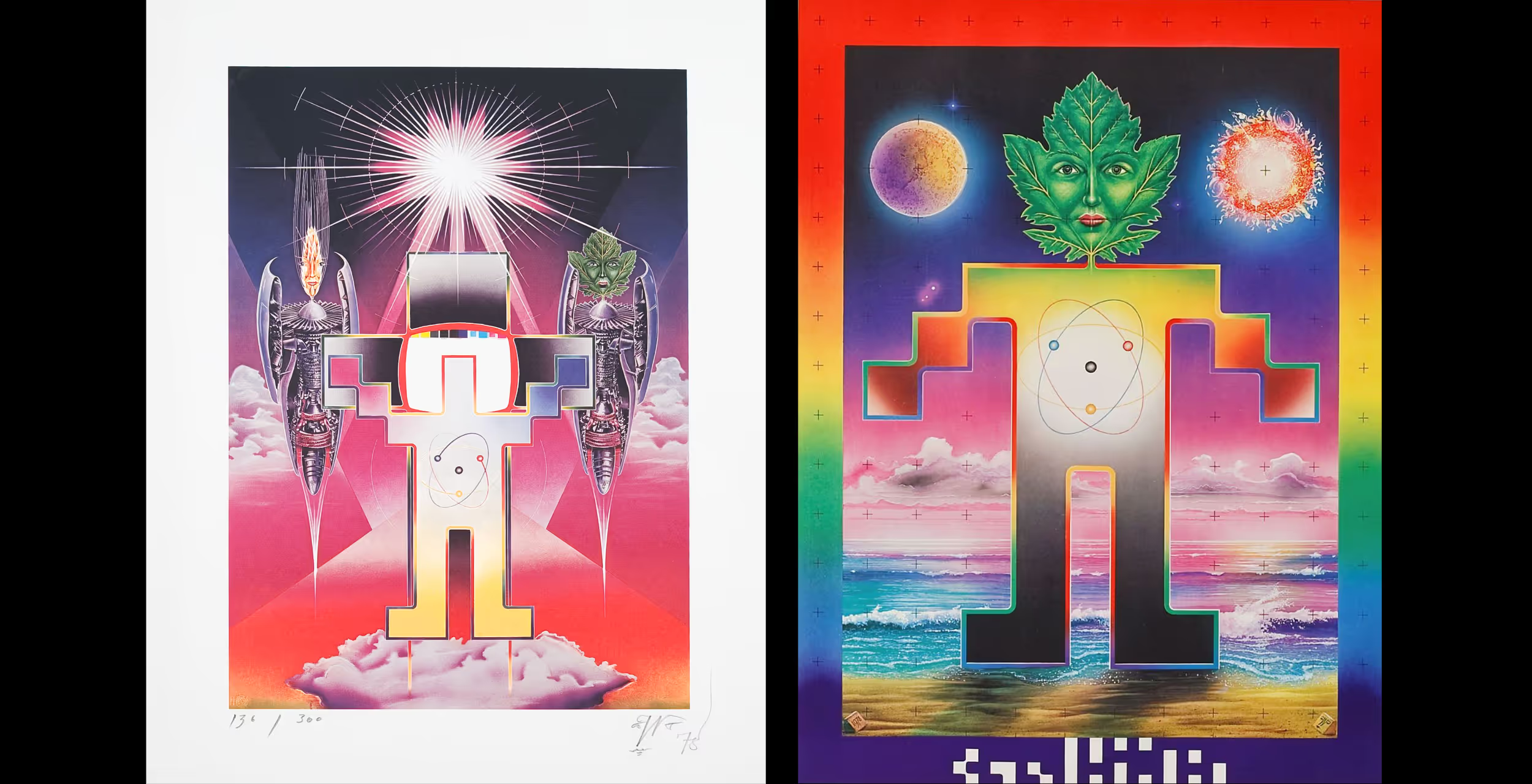
In the late 1970s Wandrey oriented his work toward the visual grammar of the computer age. In New York in 1978 he articulated Digitalism, pairing it with a forward looking program often summarized as Science and Beyond. Grid, module, and pixel like units became structuring principles, while hard contours and luminous clarity turned into hallmarks. Early screen aesthetics, game imagery, and informational codes did not remain references but were transformed into a coherent pictorial syntax. What looks like technical order becomes cultural statement.

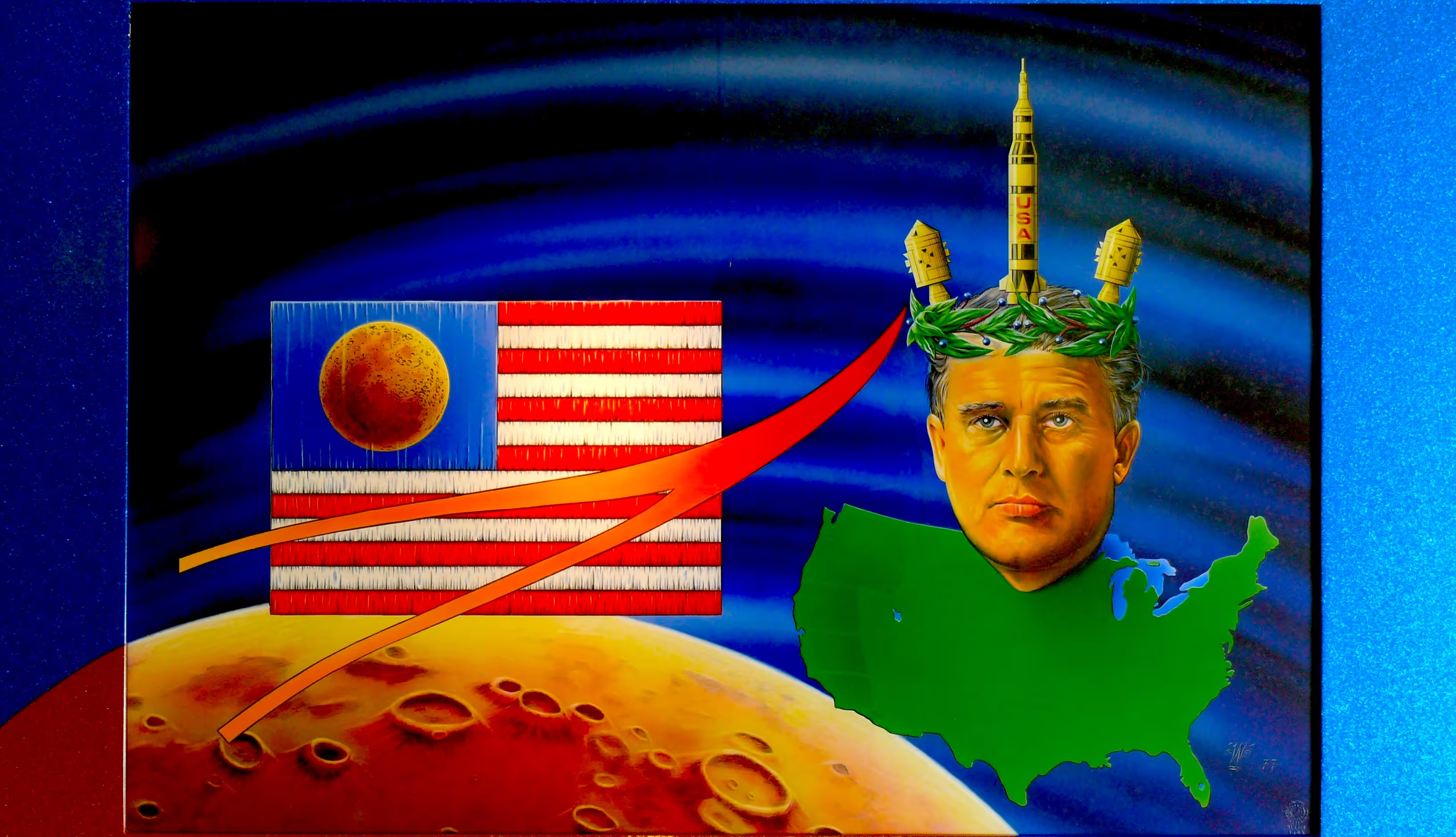
Portrait: Wernher von Braun - Mars Mission (1977)

Portrait: Wernher von Braun - Mars Mission (1977)

Maturation

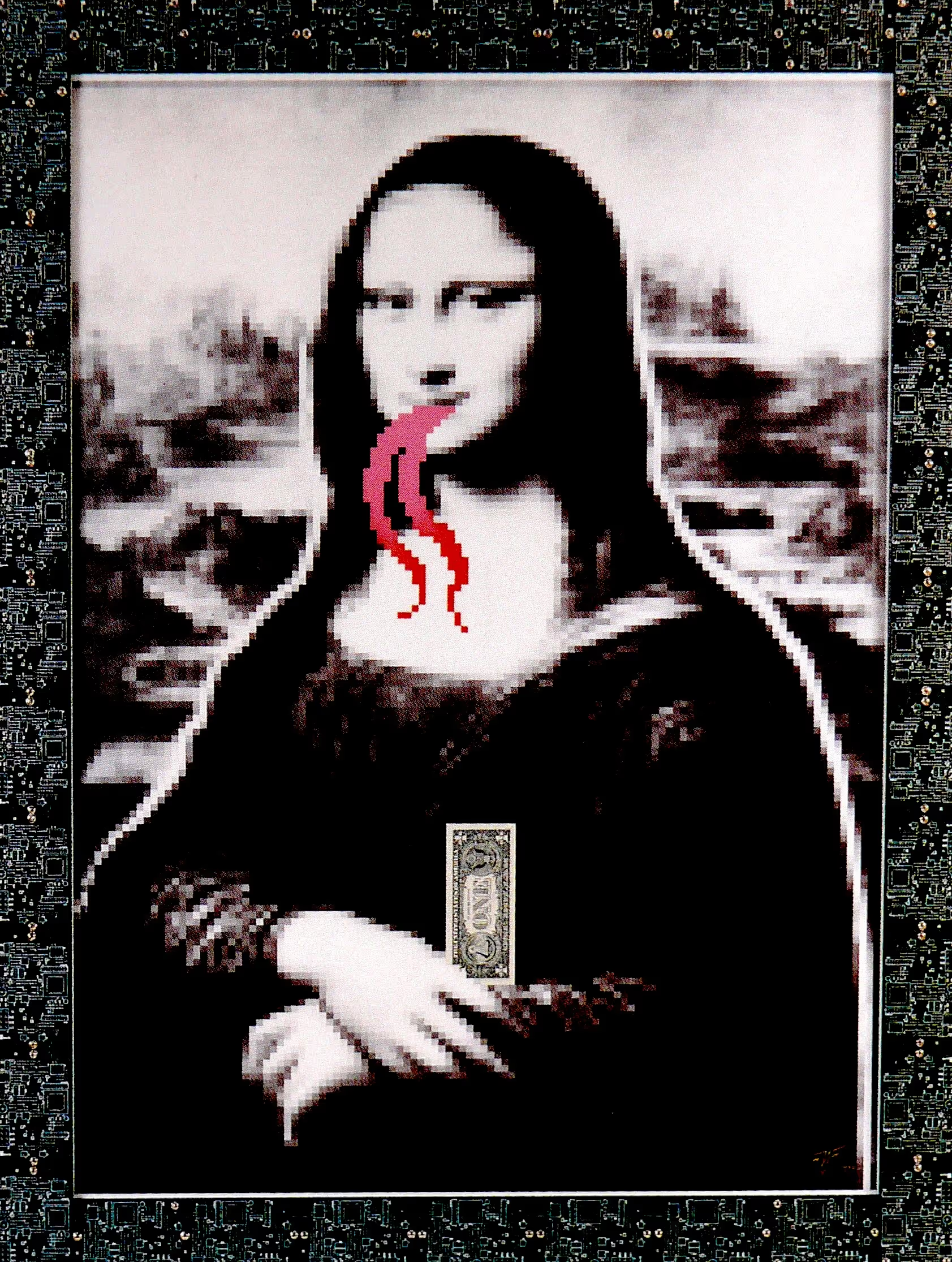
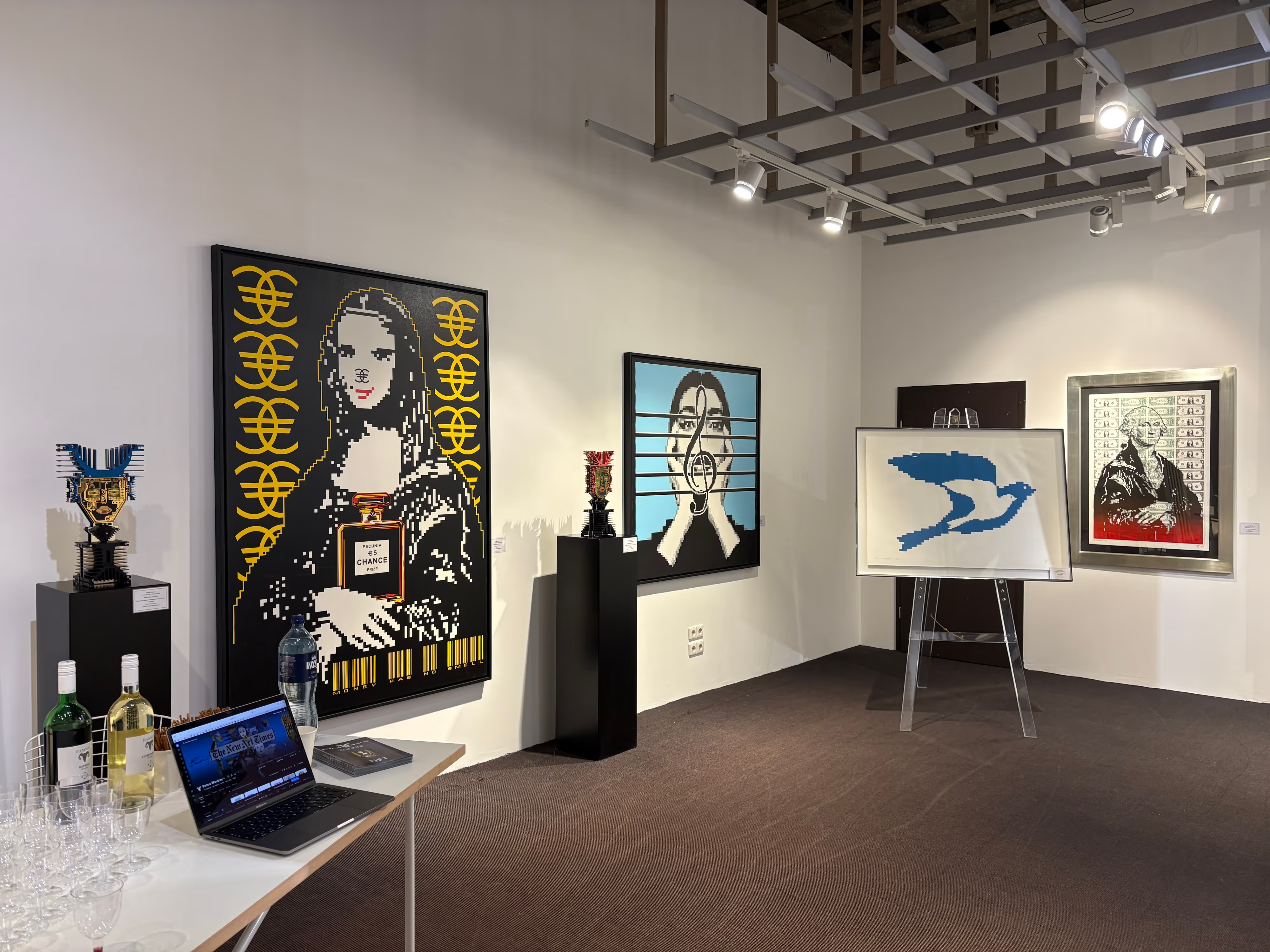
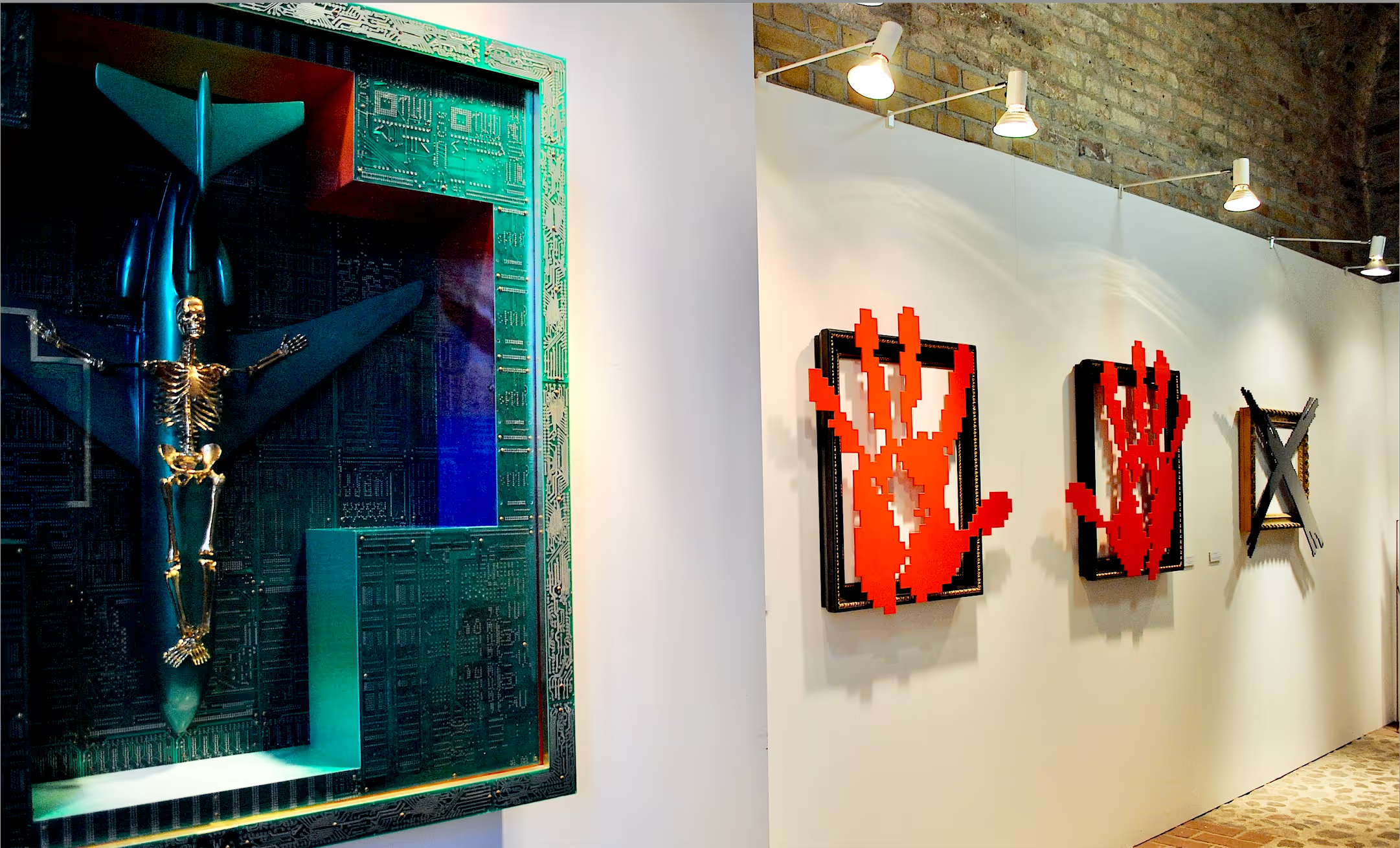
Wandrey expanded the picture plane by introducing a material iconography of technology. Circuit boards, cables, microcomponents, light elements, and plotter derived drawing enter the work not as decoration but as semantic carriers. Hardware becomes hieroglyph, a sign system of a society that produces myths through devices and interfaces. At the same time, canonical figures from art history are not merely quoted but re-coded through his digital grammar, staging a controlled metamorphosis between tradition and technological present.

Material as meaning

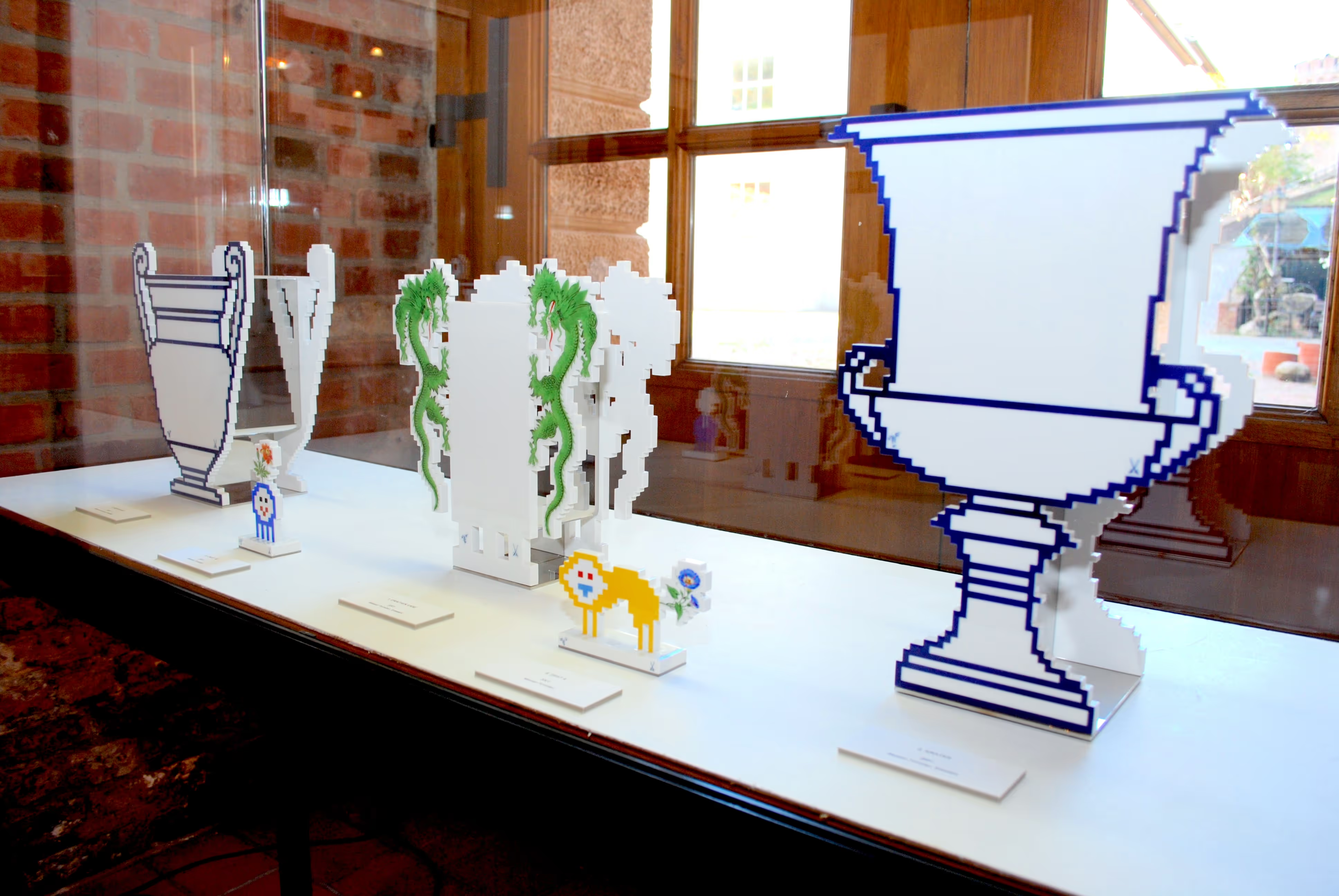
Wandrey did not confine Digitalism to canvas and circuitry. He translated its pixel-based grammar into porcelain through works produced with the Meissen State Porcelain Manufactory, bringing the cool logic of the screen into a medium synonymous with European court tradition and artisanal prestige. Crucially, this was not limited to vessel forms: editions of his celebrated Dancer figures also exist in Meissen porcelain, where the “digital body” is re-cast as a collectible object and given the permanence of fired material.

Pop culture

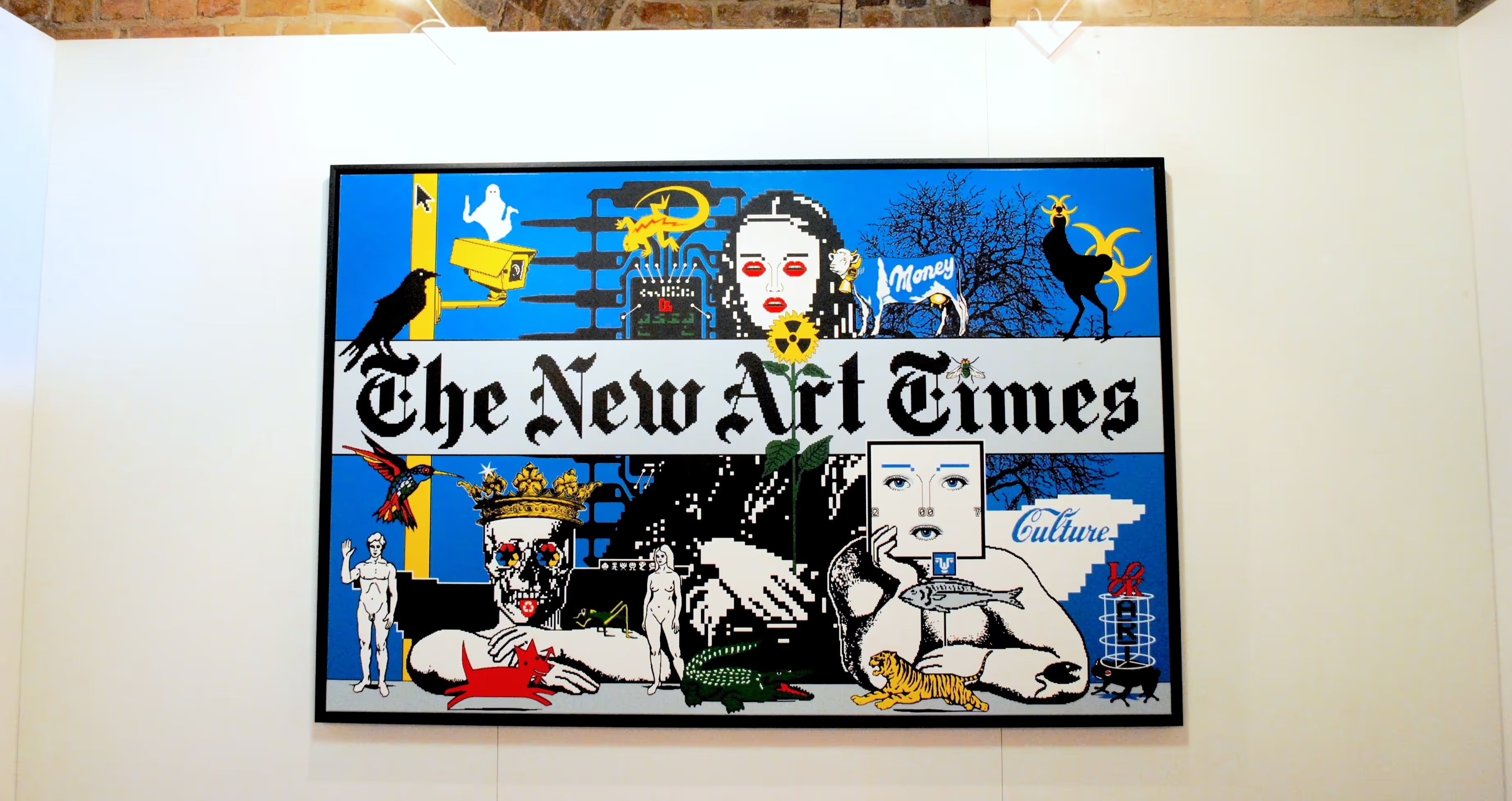
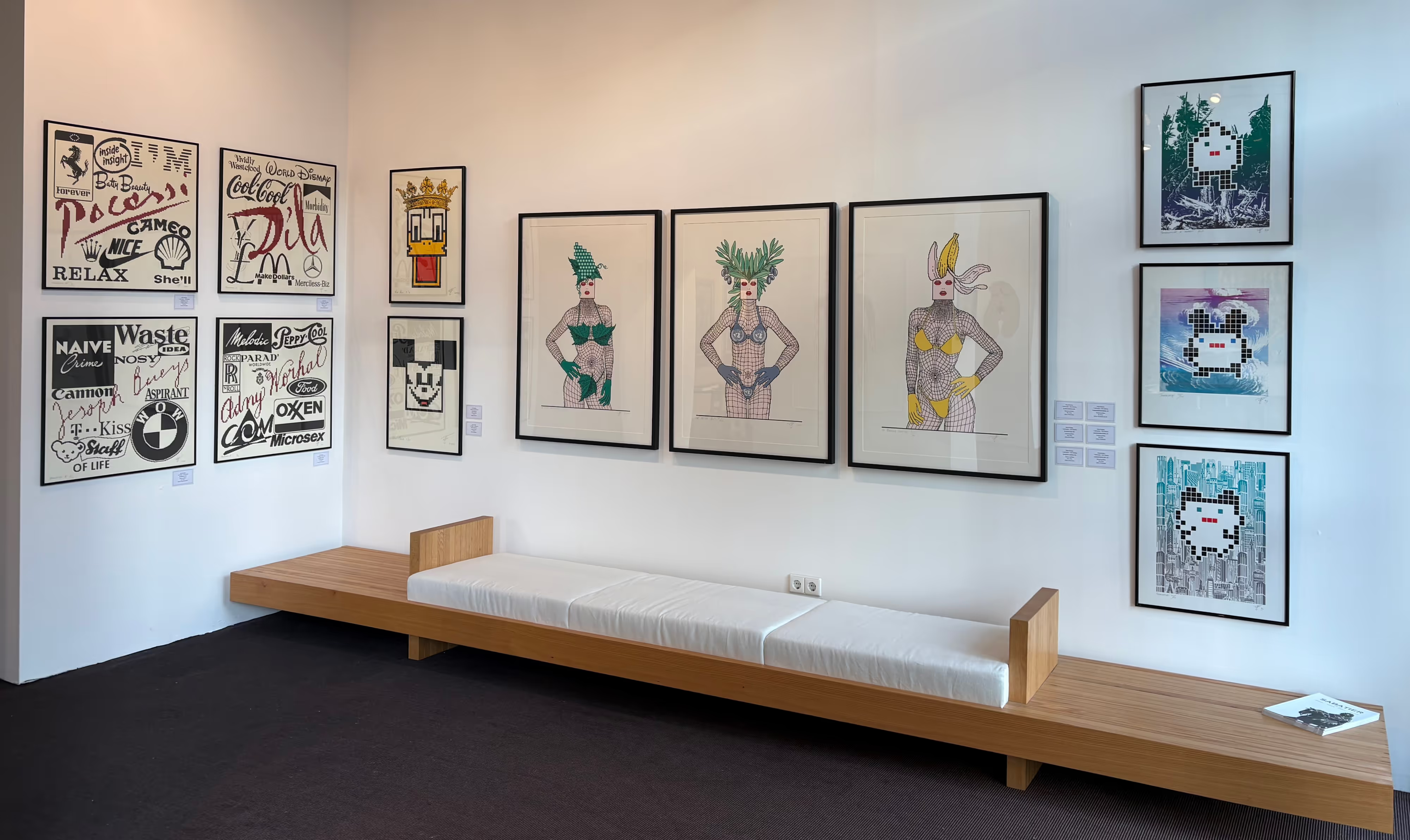
Pop appears in Wandrey not as surface, but as a tool of critique and observation. Advertising logic, consumer emblems, and the mechanics of reproduction become lenses through which collective desire and cultural programming are made visible. Motifs function like tests in a laboratory of signs: recognizable, repeatable, and therefore revealing. In this sense, his work aligns the wit of Dada and the displacements of Surrealism with the compositional decisiveness of graphic culture, producing images that are both seductive and diagnostically sharp.

Casa Digitalis

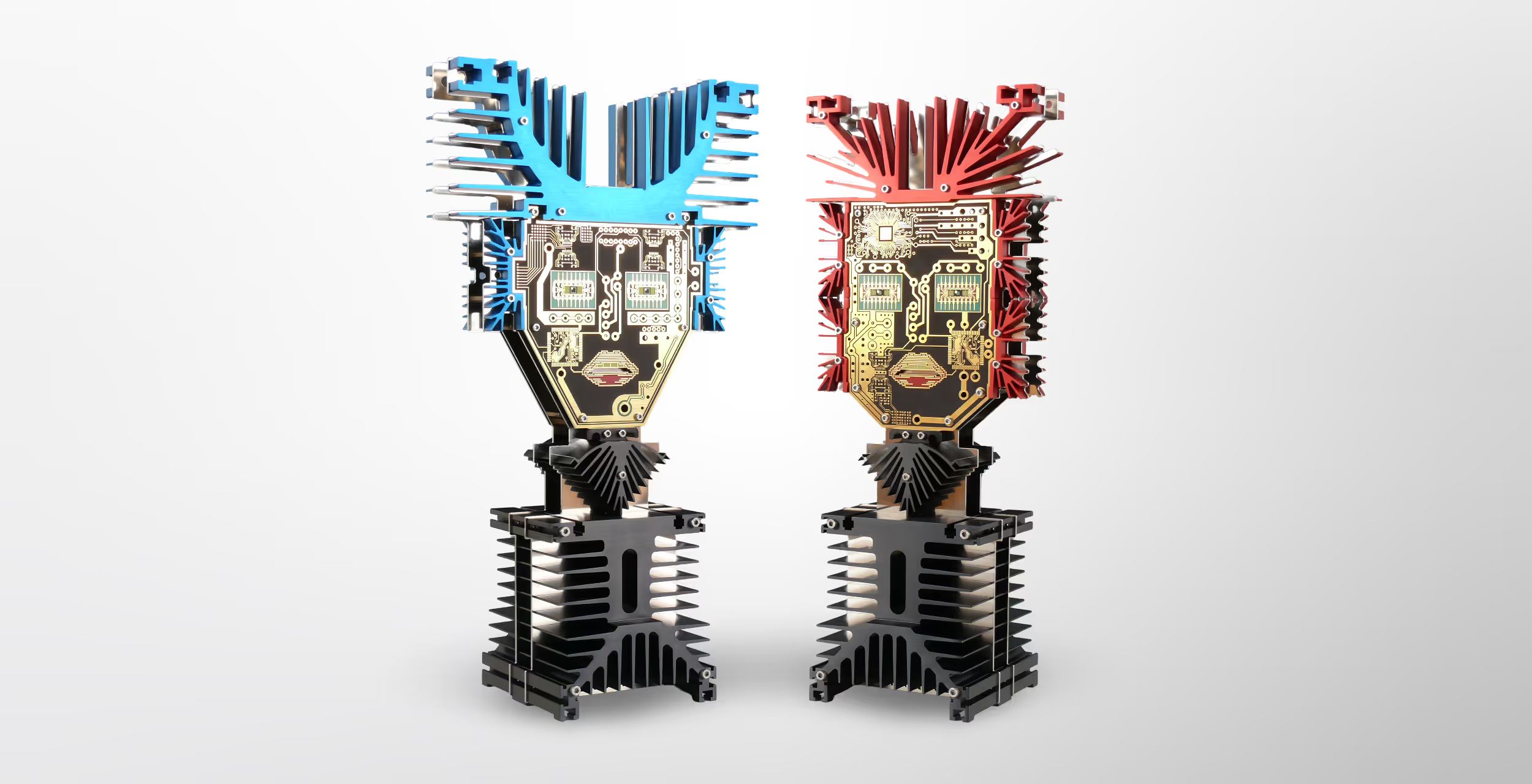
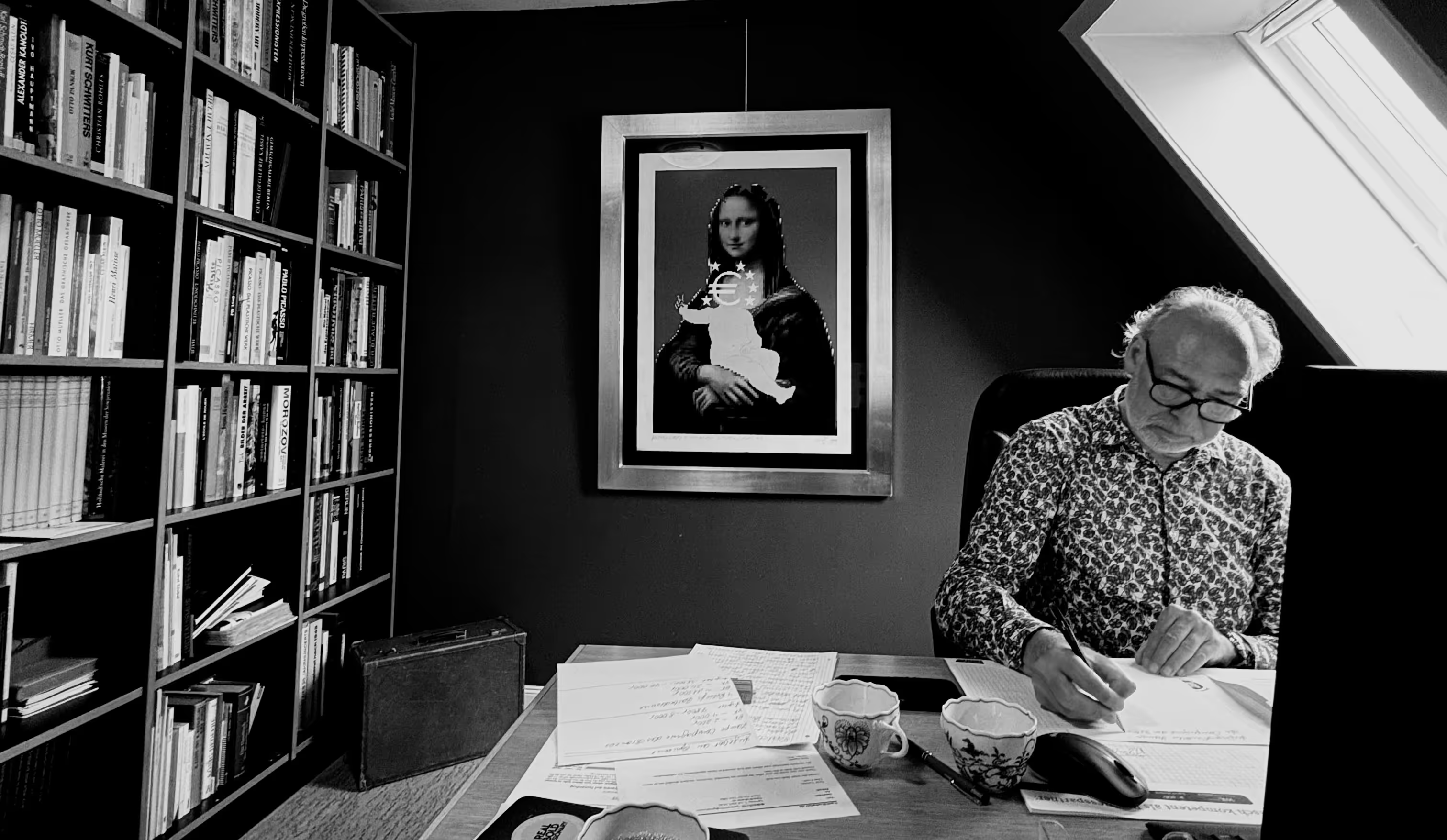
Wandrey is often read as a pioneer of an analog Digitalism, positioned between art, design, and media history. His oeuvre anticipates questions that now define the present: how images are generated under technical standards, how bodies and identities migrate into code, how devices become cultural symbols. Curatorially, his achievement can be framed as an act of translation, binding Surrealist imagination, Pop strategies, and technological thinking into an autonomous iconography. The tension lies in the balance of cool precision and intellectual play. In Hamburg he called his atelier Casa Digitalis, yet he meant more than a workplace: it was also his inner world, the mental architecture from which the work’s images and systems arise.

King & Queen Cool (2006)

King & Queen Cool (2006)

Zeitgeist Vision

Petrus Wandrey died in Hamburg in 2012. His work, however, reads less as a closed chapter than as a set of propositions whose relevance intensifies with each acceleration of the digital present. What he formulated in analog materials as vision and warning now meets a world that has caught up with his premises. In that sense, the oeuvre does not recede into history; it continues to expand in meaning, reception, and cultural urgency.

The NFT collection as digital extension

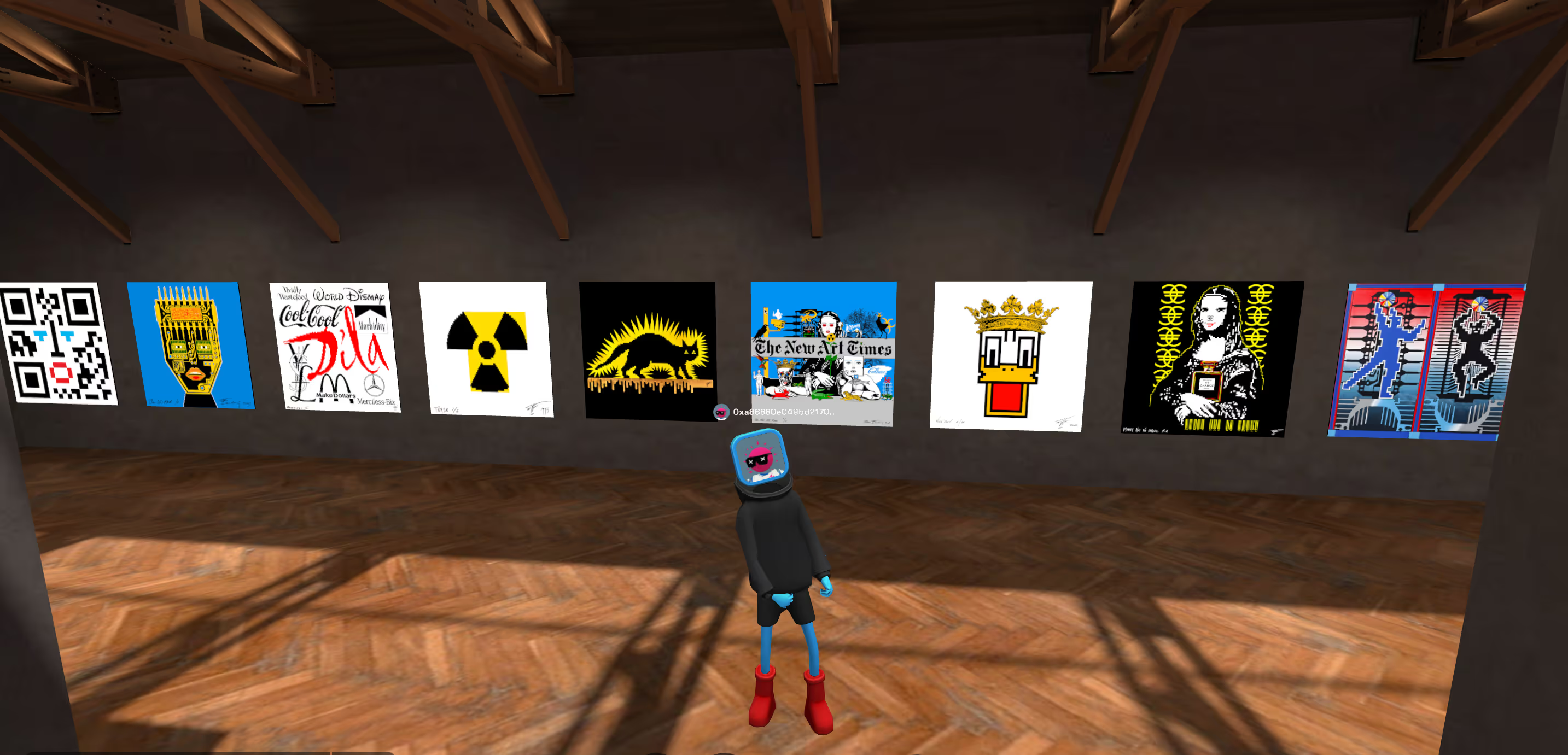
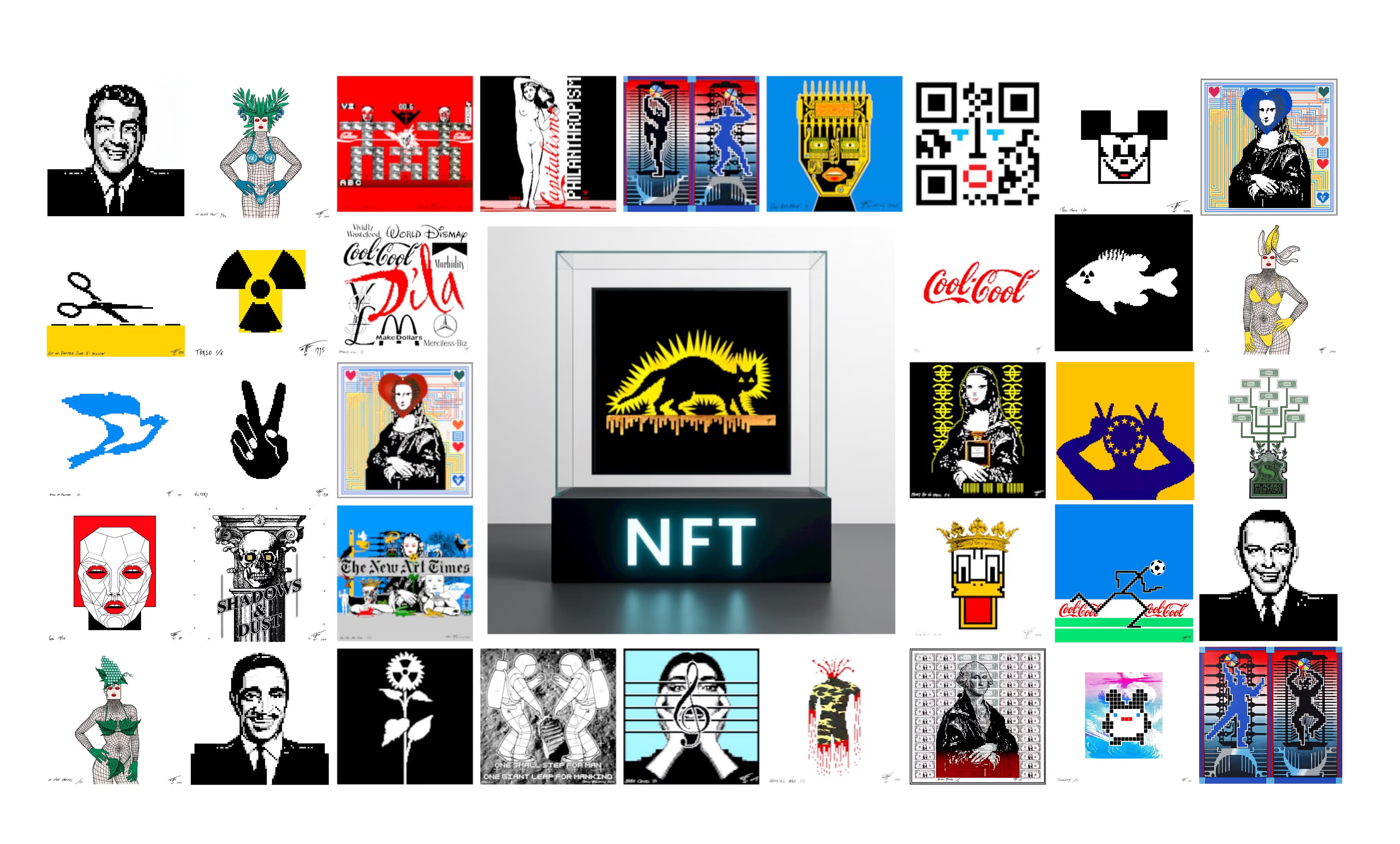
This collection is the digital extension of Petrus Wandrey’s physical work and a key to a carefully curated circle around his legacy. It is issued on behalf of the beneficial owners, the Sabatier family, German art dealers who collaborated with Wandrey repeatedly from the late 1990s onward, in close cooperation with Wandrey's widow, Ute Janssen. The aim is straightforward: to carry Wandrey’s vision into the digital present, secured on the Etherium Blockchain, without detaching it from the standards of serious art stewardship.

How it works

The on chain structure follows the logic of the physical works. Unique pieces correspond to singular originals and are issued as true 1/1 tokens. Graphics, lithographs, and other multiples are issued as editions, with fixed maximum supplies that match the analogue edition sizes. Each work is clearly labeled so collectors can read, at a glance, whether they are looking at a unique masterwork or an edition, exactly as they would in the print tradition.

Unique artworks and low editions are issued as single tokens per edition number. Graphics and lithographs are issued as multi-edition tokens with a fixed supply. All on-chain supplies mirror the total quantities of the corresponding physical works.

Unique artworks and low editions are issued as single tokens per edition number. Graphics and lithographs are issued as multi-edition tokens with a fixed supply. All on-chain supplies mirror the total quantities of the corresponding physical works.

Enter the Inner Circle

Wandrey’s physical estate is handled with strict selectivity, and genuine access to primary works is rare. Holding an NFT does not grant ownership of any physical piece, but it does place you inside a restricted circle with privileged proximity to the estate. This can include earlier visibility into selected releases, access to materials not shared publicly, and invitations to discrete previews where works are discussed before they reach the market.

Scarcity here is not a marketing device. It follows from a finite body of work and a deliberately controlled approach to its stewardship. Subject to availability and allocation, NFT holders may be offered the opportunity to acquire selected physical works under defined conditions, making the NFT a credible key into a tightly managed legacy.

Torsten Eduard Martin Sabatier - Official Expert and Collector of Petrus Wandrey. For more information, get in touch: www.sabatier-art.com or www.sabatier-art.mc

Torsten Eduard Martin Sabatier - Official Expert and Collector of Petrus Wandrey. For more information, get in touch: www.sabatier-art.com or www.sabatier-art.mc

Petrus Wandrey

Ethereum
106 unique
1000
ago 2025
Arte
Ethereum
106 artículos únicos
1000
Lanzado ago 2025
Arte
Precio suelo
0,50 ETH
1d suelo %0 %
Oferta Top
—
Volumen 24h0,00 ETH
Volumen total0,00 ETH
anunciado2,8 %
Propietarios (únicos)1 (0,1 %)

Petrus Wandrey
Petrus Wandrey

Ethereum
106 unique
1000
ago 2025
Arte
Ethereum
106 artículos únicos
1000
Lanzado ago 2025
Arte
Artículos
Ofertas
Titulares
Atributos
Actividad
Acerca de

Petrus Wandrey

Ethereum
106 unique
1000
ago 2025
Arte
Ethereum
106 artículos únicos
1000
Lanzado ago 2025
Arte
Precio suelo
0,50 ETH
1d suelo %0 %
Oferta Top
—
Volumen 24h0,00 ETH
Volumen total0,00 ETH
anunciado2,8 %
Propietarios (únicos)1 (0,1 %)

Petrus Wandrey
Petrus Wandrey

Ethereum
106 unique
1000
ago 2025
Arte
Ethereum
106 artículos únicos
1000
Lanzado ago 2025
Arte
Artículos
Ofertas
Titulares
Atributos
Actividad
Acerca de
Petrus Wandrey - Pioneer of DIGITALISM

Petrus Wandrey (1939–2012) is the pioneer of Digitalism, a radical visual language that anticipated the aesthetics of the screen long before “digital culture” became a daily condition. From Hamburg he forged an unmistakable iconography of pixels, circuits, and coded surfaces, turning technology’s grammar into a new kind of mythmaking. His work moves with rare authority across painting, object, and print, where Pop’s sharpness meets Surrealism’s charge and a designer’s precision becomes art-historical argument. Collected internationally and anchored by key institutional references, Wandrey stands as one of the clearest artistic witnesses to the moment when culture crossed the threshold into the digital age.
Petrus Wandrey - Pioneer of DIGITALISM

Petrus Wandrey (1939–2012) is the pioneer of Digitalism, a radical visual language that anticipated the aesthetics of the screen long before “digital culture” became a daily condition. From Hamburg he forged an unmistakable iconography of pixels, circuits, and coded surfaces, turning technology’s grammar into a new kind of mythmaking. His work moves with rare authority across painting, object, and print, where Pop’s sharpness meets Surrealism’s charge and a designer’s precision becomes art-historical argument. Collected internationally and anchored by key institutional references, Wandrey stands as one of the clearest artistic witnesses to the moment when culture crossed the threshold into the digital age.
“Machines will never be able to generate a work of art using software, because an artwork is a result of feelings - something a computer will never accomplish. For me, the computer is more like a paint box, a tool allowing me to choose from several options.“ ⁓ Petrus Wandrey, 2006

Early years and training

Petrus Wandrey, born in Dresden in 1939 and artistically rooted in Hamburg, formed his practice through rigorous study in applied and fine arts. From the outset he treated painting, printmaking, and object work as a single language rather than separate genres. Early works test surreal dislocations and staged pictorial space, yet already reveal a lasting aim: to translate lived reality into signs, and to build images that function as time diagnosis as much as aesthetic proposition.

From design practice to artist

Before consolidating his mature idiom, Wandrey worked as a designer and illustrator, shaping record covers, editorial imagery, and posters. This proximity to mass circulation sharpened his sense for iconic condensation, serial order, and visual impact. The applied field became his laboratory: he observed how images travel, how they persuade, and how popular graphics and high art continually exchange methods. That experience gave him a rare freedom to move between picture, object, and space while retaining the precision and discipline of graphic construction.

Salvador Dalí

In 1975 Wandrey traveled to Portlligat to meet Salvador Dalí and presented Venus’ Wind as a birthday gift. Dalí accepted the work and placed it in the Mae West Room of the Teatre Museu Dalí in Figueres, where it remained as a visible marker of artistic exchange. More decisive than the gesture was Dalí’s counsel: Surrealism had been the language of his generation, and Wandrey should find a new, very own stylistic answer for his era. The encounter crystallized into an aesthetic mandate.

Journey to New York and the turn toward the digital

In the late 1970s Wandrey oriented his work toward the visual grammar of the computer age. In New York in 1978 he articulated Digitalism, pairing it with a forward looking program often summarized as Science and Beyond. Grid, module, and pixel like units became structuring principles, while hard contours and luminous clarity turned into hallmarks. Early screen aesthetics, game imagery, and informational codes did not remain references but were transformed into a coherent pictorial syntax. What looks like technical order becomes cultural statement.

Portrait: Wernher von Braun - Mars Mission (1977)

Portrait: Wernher von Braun - Mars Mission (1977)

Maturation

Wandrey expanded the picture plane by introducing a material iconography of technology. Circuit boards, cables, microcomponents, light elements, and plotter derived drawing enter the work not as decoration but as semantic carriers. Hardware becomes hieroglyph, a sign system of a society that produces myths through devices and interfaces. At the same time, canonical figures from art history are not merely quoted but re-coded through his digital grammar, staging a controlled metamorphosis between tradition and technological present.

Material as meaning

Wandrey did not confine Digitalism to canvas and circuitry. He translated its pixel-based grammar into porcelain through works produced with the Meissen State Porcelain Manufactory, bringing the cool logic of the screen into a medium synonymous with European court tradition and artisanal prestige. Crucially, this was not limited to vessel forms: editions of his celebrated Dancer figures also exist in Meissen porcelain, where the “digital body” is re-cast as a collectible object and given the permanence of fired material.

Pop culture

Pop appears in Wandrey not as surface, but as a tool of critique and observation. Advertising logic, consumer emblems, and the mechanics of reproduction become lenses through which collective desire and cultural programming are made visible. Motifs function like tests in a laboratory of signs: recognizable, repeatable, and therefore revealing. In this sense, his work aligns the wit of Dada and the displacements of Surrealism with the compositional decisiveness of graphic culture, producing images that are both seductive and diagnostically sharp.

Casa Digitalis

Wandrey is often read as a pioneer of an analog Digitalism, positioned between art, design, and media history. His oeuvre anticipates questions that now define the present: how images are generated under technical standards, how bodies and identities migrate into code, how devices become cultural symbols. Curatorially, his achievement can be framed as an act of translation, binding Surrealist imagination, Pop strategies, and technological thinking into an autonomous iconography. The tension lies in the balance of cool precision and intellectual play. In Hamburg he called his atelier Casa Digitalis, yet he meant more than a workplace: it was also his inner world, the mental architecture from which the work’s images and systems arise.

King & Queen Cool (2006)

King & Queen Cool (2006)

Zeitgeist Vision

Petrus Wandrey died in Hamburg in 2012. His work, however, reads less as a closed chapter than as a set of propositions whose relevance intensifies with each acceleration of the digital present. What he formulated in analog materials as vision and warning now meets a world that has caught up with his premises. In that sense, the oeuvre does not recede into history; it continues to expand in meaning, reception, and cultural urgency.

The NFT collection as digital extension

This collection is the digital extension of Petrus Wandrey’s physical work and a key to a carefully curated circle around his legacy. It is issued on behalf of the beneficial owners, the Sabatier family, German art dealers who collaborated with Wandrey repeatedly from the late 1990s onward, in close cooperation with Wandrey's widow, Ute Janssen. The aim is straightforward: to carry Wandrey’s vision into the digital present, secured on the Etherium Blockchain, without detaching it from the standards of serious art stewardship.

How it works

The on chain structure follows the logic of the physical works. Unique pieces correspond to singular originals and are issued as true 1/1 tokens. Graphics, lithographs, and other multiples are issued as editions, with fixed maximum supplies that match the analogue edition sizes. Each work is clearly labeled so collectors can read, at a glance, whether they are looking at a unique masterwork or an edition, exactly as they would in the print tradition.

Unique artworks and low editions are issued as single tokens per edition number. Graphics and lithographs are issued as multi-edition tokens with a fixed supply. All on-chain supplies mirror the total quantities of the corresponding physical works.

Unique artworks and low editions are issued as single tokens per edition number. Graphics and lithographs are issued as multi-edition tokens with a fixed supply. All on-chain supplies mirror the total quantities of the corresponding physical works.

Enter the Inner Circle

Wandrey’s physical estate is handled with strict selectivity, and genuine access to primary works is rare. Holding an NFT does not grant ownership of any physical piece, but it does place you inside a restricted circle with privileged proximity to the estate. This can include earlier visibility into selected releases, access to materials not shared publicly, and invitations to discrete previews where works are discussed before they reach the market.

Scarcity here is not a marketing device. It follows from a finite body of work and a deliberately controlled approach to its stewardship. Subject to availability and allocation, NFT holders may be offered the opportunity to acquire selected physical works under defined conditions, making the NFT a credible key into a tightly managed legacy.

Torsten Eduard Martin Sabatier - Official Expert and Collector of Petrus Wandrey. For more information, get in touch: www.sabatier-art.com or www.sabatier-art.mc

Torsten Eduard Martin Sabatier - Official Expert and Collector of Petrus Wandrey. For more information, get in touch: www.sabatier-art.com or www.sabatier-art.mc

Petrus Wandrey - Pioneer of DIGITALISM

Petrus Wandrey (1939–2012) is the pioneer of Digitalism, a radical visual language that anticipated the aesthetics of the screen long before “digital culture” became a daily condition. From Hamburg he forged an unmistakable iconography of pixels, circuits, and coded surfaces, turning technology’s grammar into a new kind of mythmaking. His work moves with rare authority across painting, object, and print, where Pop’s sharpness meets Surrealism’s charge and a designer’s precision becomes art-historical argument. Collected internationally and anchored by key institutional references, Wandrey stands as one of the clearest artistic witnesses to the moment when culture crossed the threshold into the digital age.
Petrus Wandrey - Pioneer of DIGITALISM

Petrus Wandrey (1939–2012) is the pioneer of Digitalism, a radical visual language that anticipated the aesthetics of the screen long before “digital culture” became a daily condition. From Hamburg he forged an unmistakable iconography of pixels, circuits, and coded surfaces, turning technology’s grammar into a new kind of mythmaking. His work moves with rare authority across painting, object, and print, where Pop’s sharpness meets Surrealism’s charge and a designer’s precision becomes art-historical argument. Collected internationally and anchored by key institutional references, Wandrey stands as one of the clearest artistic witnesses to the moment when culture crossed the threshold into the digital age.
“Machines will never be able to generate a work of art using software, because an artwork is a result of feelings - something a computer will never accomplish. For me, the computer is more like a paint box, a tool allowing me to choose from several options.“ ⁓ Petrus Wandrey, 2006

Early years and training

Petrus Wandrey, born in Dresden in 1939 and artistically rooted in Hamburg, formed his practice through rigorous study in applied and fine arts. From the outset he treated painting, printmaking, and object work as a single language rather than separate genres. Early works test surreal dislocations and staged pictorial space, yet already reveal a lasting aim: to translate lived reality into signs, and to build images that function as time diagnosis as much as aesthetic proposition.

From design practice to artist

Before consolidating his mature idiom, Wandrey worked as a designer and illustrator, shaping record covers, editorial imagery, and posters. This proximity to mass circulation sharpened his sense for iconic condensation, serial order, and visual impact. The applied field became his laboratory: he observed how images travel, how they persuade, and how popular graphics and high art continually exchange methods. That experience gave him a rare freedom to move between picture, object, and space while retaining the precision and discipline of graphic construction.

Salvador Dalí

In 1975 Wandrey traveled to Portlligat to meet Salvador Dalí and presented Venus’ Wind as a birthday gift. Dalí accepted the work and placed it in the Mae West Room of the Teatre Museu Dalí in Figueres, where it remained as a visible marker of artistic exchange. More decisive than the gesture was Dalí’s counsel: Surrealism had been the language of his generation, and Wandrey should find a new, very own stylistic answer for his era. The encounter crystallized into an aesthetic mandate.

Journey to New York and the turn toward the digital

In the late 1970s Wandrey oriented his work toward the visual grammar of the computer age. In New York in 1978 he articulated Digitalism, pairing it with a forward looking program often summarized as Science and Beyond. Grid, module, and pixel like units became structuring principles, while hard contours and luminous clarity turned into hallmarks. Early screen aesthetics, game imagery, and informational codes did not remain references but were transformed into a coherent pictorial syntax. What looks like technical order becomes cultural statement.

Portrait: Wernher von Braun - Mars Mission (1977)

Portrait: Wernher von Braun - Mars Mission (1977)

Maturation

Wandrey expanded the picture plane by introducing a material iconography of technology. Circuit boards, cables, microcomponents, light elements, and plotter derived drawing enter the work not as decoration but as semantic carriers. Hardware becomes hieroglyph, a sign system of a society that produces myths through devices and interfaces. At the same time, canonical figures from art history are not merely quoted but re-coded through his digital grammar, staging a controlled metamorphosis between tradition and technological present.

Material as meaning

Wandrey did not confine Digitalism to canvas and circuitry. He translated its pixel-based grammar into porcelain through works produced with the Meissen State Porcelain Manufactory, bringing the cool logic of the screen into a medium synonymous with European court tradition and artisanal prestige. Crucially, this was not limited to vessel forms: editions of his celebrated Dancer figures also exist in Meissen porcelain, where the “digital body” is re-cast as a collectible object and given the permanence of fired material.

Pop culture

Pop appears in Wandrey not as surface, but as a tool of critique and observation. Advertising logic, consumer emblems, and the mechanics of reproduction become lenses through which collective desire and cultural programming are made visible. Motifs function like tests in a laboratory of signs: recognizable, repeatable, and therefore revealing. In this sense, his work aligns the wit of Dada and the displacements of Surrealism with the compositional decisiveness of graphic culture, producing images that are both seductive and diagnostically sharp.

Casa Digitalis

Wandrey is often read as a pioneer of an analog Digitalism, positioned between art, design, and media history. His oeuvre anticipates questions that now define the present: how images are generated under technical standards, how bodies and identities migrate into code, how devices become cultural symbols. Curatorially, his achievement can be framed as an act of translation, binding Surrealist imagination, Pop strategies, and technological thinking into an autonomous iconography. The tension lies in the balance of cool precision and intellectual play. In Hamburg he called his atelier Casa Digitalis, yet he meant more than a workplace: it was also his inner world, the mental architecture from which the work’s images and systems arise.

King & Queen Cool (2006)

King & Queen Cool (2006)

Zeitgeist Vision

Petrus Wandrey died in Hamburg in 2012. His work, however, reads less as a closed chapter than as a set of propositions whose relevance intensifies with each acceleration of the digital present. What he formulated in analog materials as vision and warning now meets a world that has caught up with his premises. In that sense, the oeuvre does not recede into history; it continues to expand in meaning, reception, and cultural urgency.

The NFT collection as digital extension

This collection is the digital extension of Petrus Wandrey’s physical work and a key to a carefully curated circle around his legacy. It is issued on behalf of the beneficial owners, the Sabatier family, German art dealers who collaborated with Wandrey repeatedly from the late 1990s onward, in close cooperation with Wandrey's widow, Ute Janssen. The aim is straightforward: to carry Wandrey’s vision into the digital present, secured on the Etherium Blockchain, without detaching it from the standards of serious art stewardship.

How it works

The on chain structure follows the logic of the physical works. Unique pieces correspond to singular originals and are issued as true 1/1 tokens. Graphics, lithographs, and other multiples are issued as editions, with fixed maximum supplies that match the analogue edition sizes. Each work is clearly labeled so collectors can read, at a glance, whether they are looking at a unique masterwork or an edition, exactly as they would in the print tradition.

Unique artworks and low editions are issued as single tokens per edition number. Graphics and lithographs are issued as multi-edition tokens with a fixed supply. All on-chain supplies mirror the total quantities of the corresponding physical works.

Unique artworks and low editions are issued as single tokens per edition number. Graphics and lithographs are issued as multi-edition tokens with a fixed supply. All on-chain supplies mirror the total quantities of the corresponding physical works.

Enter the Inner Circle

Wandrey’s physical estate is handled with strict selectivity, and genuine access to primary works is rare. Holding an NFT does not grant ownership of any physical piece, but it does place you inside a restricted circle with privileged proximity to the estate. This can include earlier visibility into selected releases, access to materials not shared publicly, and invitations to discrete previews where works are discussed before they reach the market.

Scarcity here is not a marketing device. It follows from a finite body of work and a deliberately controlled approach to its stewardship. Subject to availability and allocation, NFT holders may be offered the opportunity to acquire selected physical works under defined conditions, making the NFT a credible key into a tightly managed legacy.

Torsten Eduard Martin Sabatier - Official Expert and Collector of Petrus Wandrey. For more information, get in touch: www.sabatier-art.com or www.sabatier-art.mc

Torsten Eduard Martin Sabatier - Official Expert and Collector of Petrus Wandrey. For more information, get in touch: www.sabatier-art.com or www.sabatier-art.mc