
Launched in 2015 by Vitalik Buterin and a group of early contributors, Ethereum was designed as more than just "money." It introduced the idea of a world computer – a decentralized platform where anyone could deploy code in the form of smart contracts. This programmable layer redefined what blockchains could do, transforming crypto from a financial experiment into a platform for permissionless innovation. The Ethereum Foundation was born to steward its development, but the protocol has always been shaped by its open-source community.
Launched in 2015 by Vitalik Buterin and a group of early contributors, Ethereum was designed as more than just "money." It introduced the idea of a world computer – a decentralized platform where anyone could deploy code in the form of smart contracts. This programmable layer redefined what blockchains could do, transforming crypto from a financial experiment into a platform for permissionless innovation. The Ethereum Foundation was born to steward its development, but the protocol has always been shaped by its open-source community.

Ethereum’s introduction of smart contracts enabled developers to create decentralized applications (dApps) for everything from finance to art. This led to entire sectors of Web3: DeFi, NFTs, DAOs, and more. It became the foundation for protocols like Uniswap, OpenSea, and MakerDAO – each leveraging Ethereum’s secure and censorship-resistant infrastructure. With Solidity as its core language, Ethereum became the sandbox for building the new internet.
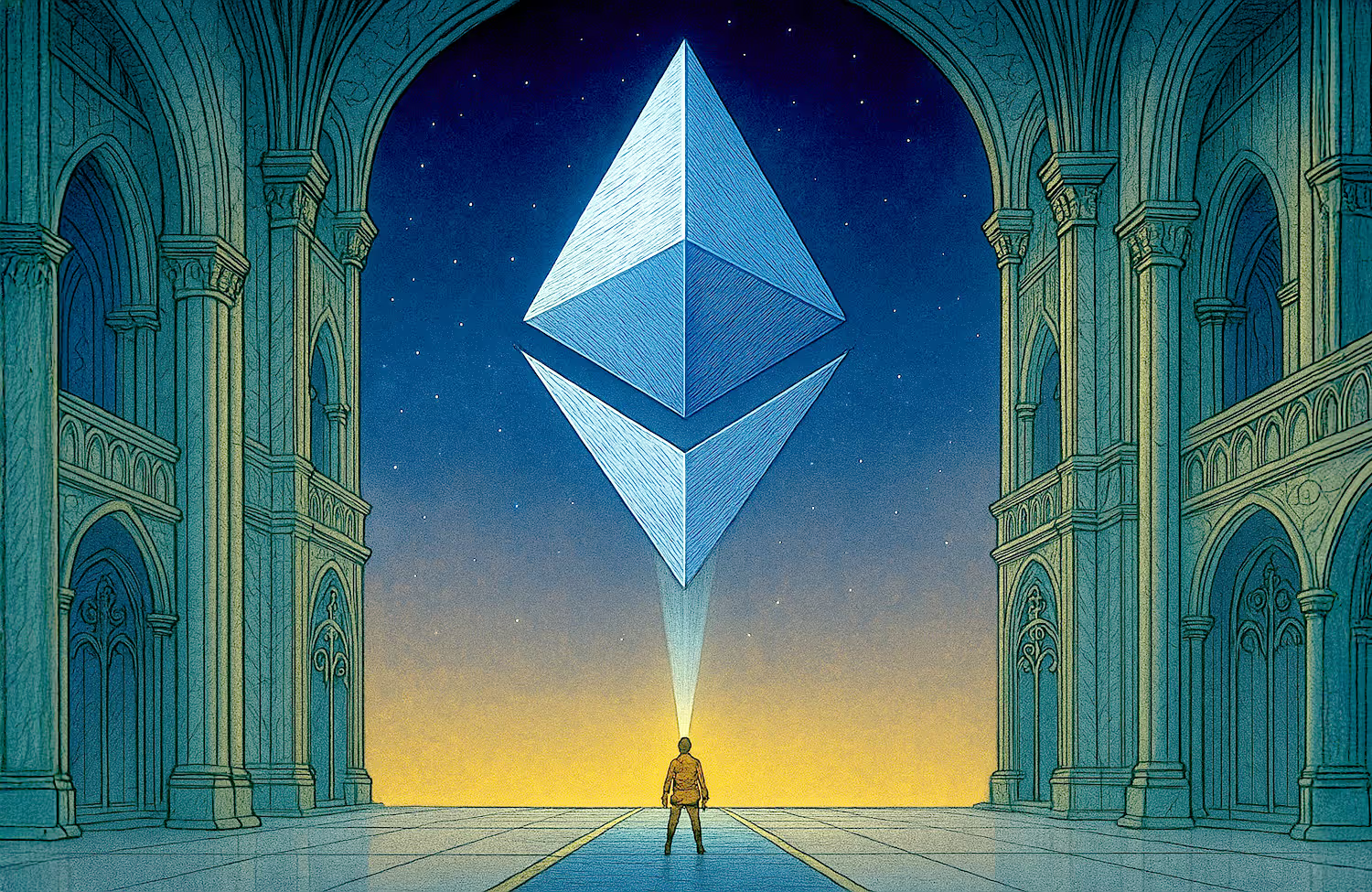
The Ethereum Virtual Machine (EVM) is Ethereum’s greatest export. It’s the shared execution environment that runs smart contracts and over time, it’s become the standard runtime across the entire Web3 ecosystem. From Polygon to Avalanche, BNB Chain to Fantom, dozens of networks now run EVM-compatible environments. This means apps built for Ethereum can easily deploy to other chains, creating a powerful network effect for developers and users alike. Ethereum is no longer just a blockchain – it’s the operating system for an entire multi-chain world.

Ethereum goes live in July 2015 with the Frontier release. Introduces smart contracts and the ERC-20 token standard, laying the foundation for dApps and tokenized assets.
Ethereum goes live in July 2015 with the Frontier release. Introduces smart contracts and the ERC-20 token standard, laying the foundation for dApps and tokenized assets.

Ethereum undergoes a controversial hard fork, resulting in two chains: Ethereum (ETH) and Ethereum Classic (ETC).
Ethereum undergoes a controversial hard fork, resulting in two chains: Ethereum (ETH) and Ethereum Classic (ETC).
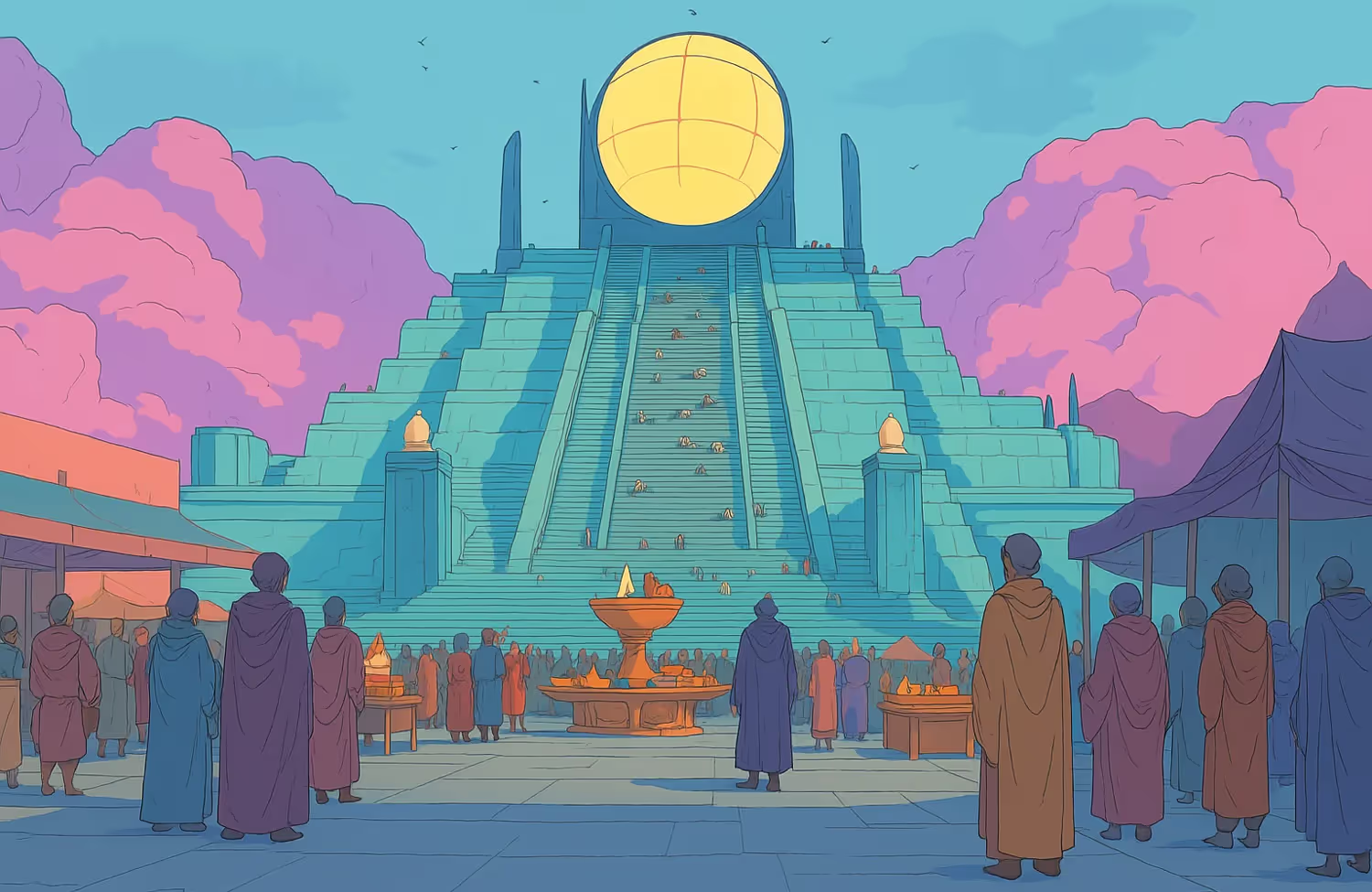
Ethereum becomes the platform of choice for initial coin offerings (ICOs), fueling a wave of token launches and fundraising. This leads to rapid network growth, but also congestion and regulatory scrutiny.
Ethereum becomes the platform of choice for initial coin offerings (ICOs), fueling a wave of token launches and fundraising. This leads to rapid network growth, but also congestion and regulatory scrutiny.

After the ICO frenzy cools, focus shifts to scalability, usability, and infrastructure. Ethereum hits scalability limits, prompting early Layer 2 research and experimentation.
After the ICO frenzy cools, focus shifts to scalability, usability, and infrastructure. Ethereum hits scalability limits, prompting early Layer 2 research and experimentation.

Decentralized finance (DeFi) protocols like Uniswap, Compound, and Aave explode in popularity. ETH is widely used as collateral; total value locked (TVL) surges past $10 billion. Gas fees spike, reinforcing the need for Layer 2 scaling solutions.
Decentralized finance (DeFi) protocols like Uniswap, Compound, and Aave explode in popularity. ETH is widely used as collateral; total value locked (TVL) surges past $10 billion. Gas fees spike, reinforcing the need for Layer 2 scaling solutions.
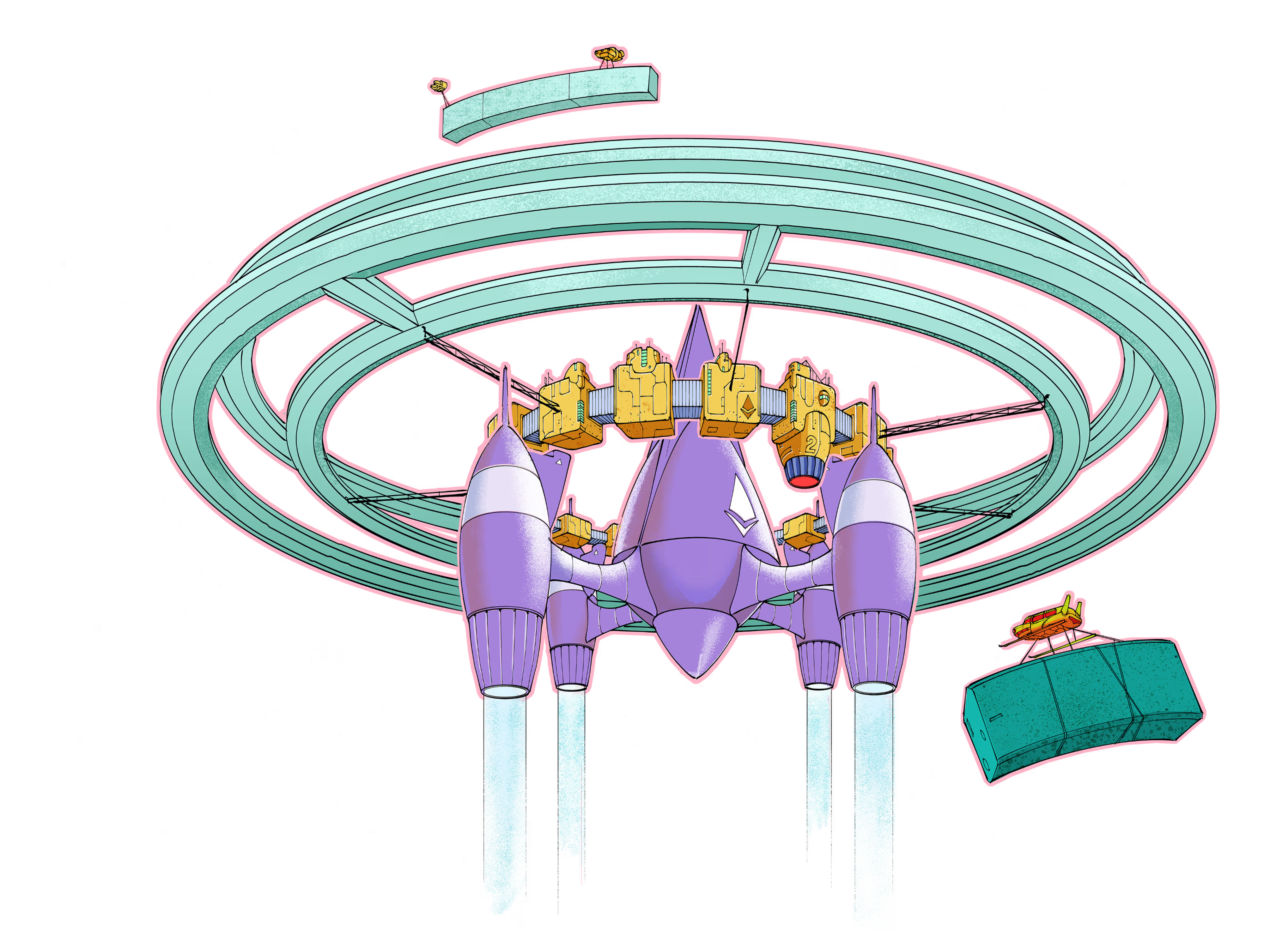
NFTs go mainstream with projects like CryptoPunks, Bored Ape Yacht Club, and platforms like OpenSea. Ethereum is the dominant chain for NFT activity, though gas fees once again become a bottleneck.
NFTs go mainstream with projects like CryptoPunks, Bored Ape Yacht Club, and platforms like OpenSea. Ethereum is the dominant chain for NFT activity, though gas fees once again become a bottleneck.
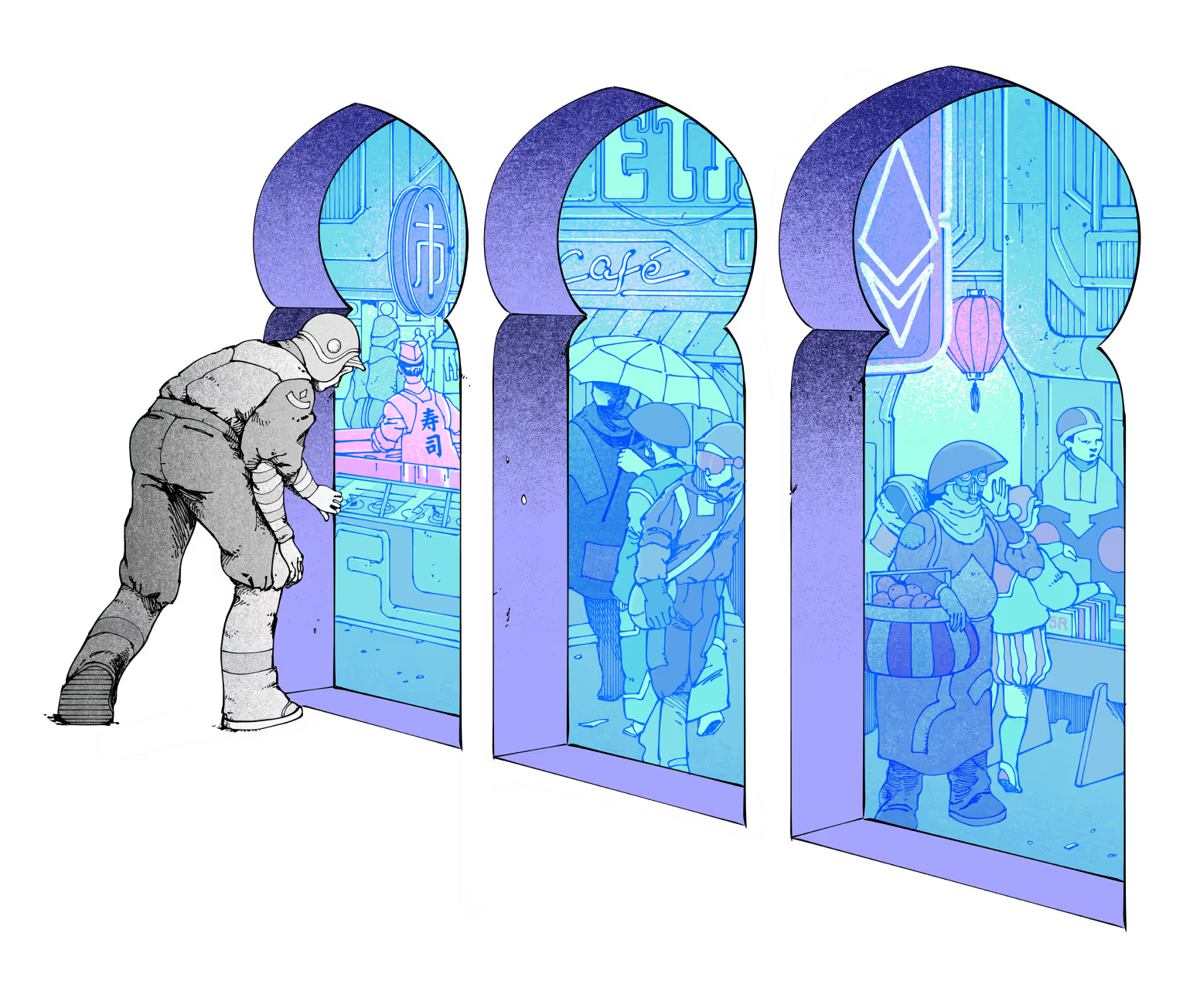
Rollup-based Layer 2 solutions like Arbitrum, Optimism, and zkSync begin launching. These networks offer lower fees and faster transactions while settling back to Ethereum for security.
Rollup-based Layer 2 solutions like Arbitrum, Optimism, and zkSync begin launching. These networks offer lower fees and faster transactions while settling back to Ethereum for security.
Ethereum transitions from Proof-of-Work (PoW) to Proof-of-Stake (PoS) in a landmark upgrade known as The Merge. Energy usage drops by ~99.95%, and ETH becomes a deflationary asset under EIP-1559 and PoS dynamics.
Ethereum transitions from Proof-of-Work (PoW) to Proof-of-Stake (PoS) in a landmark upgrade known as The Merge. Energy usage drops by ~99.95%, and ETH becomes a deflationary asset under EIP-1559 and PoS dynamics.

Layer 2s gain traction with more users, apps, and liquidity. Ethereum core devs begin preparing for “The Surge” — sharding and scalability improvements.
Layer 2s gain traction with more users, apps, and liquidity. Ethereum core devs begin preparing for “The Surge” — sharding and scalability improvements.

In 2022, Ethereum underwent The Merge, transitioning from Proof of Work (PoW) to Proof of Stake (PoS) – a historic technical milestone that reduced Ethereum’s energy usage by over 99%. This was not just a climate win, but a signal of Ethereum’s capacity for self-evolution. With sharding and rollup-centric scaling on the roadmap, Ethereum is aligning for a modular future – prioritizing security, decentralization, and scalability at every layer.
In 2022, Ethereum underwent The Merge, transitioning from Proof of Work (PoW) to Proof of Stake (PoS) – a historic technical milestone that reduced Ethereum’s energy usage by over 99%. This was not just a climate win, but a signal of Ethereum’s capacity for self-evolution. With sharding and rollup-centric scaling on the roadmap, Ethereum is aligning for a modular future – prioritizing security, decentralization, and scalability at every layer.

Ethereum’s scaling strategy isn’t about increasing block size or throughput on Layer 1. Instead, it’s embracing a modular architecture where rollups—Layer 2 solutions – handle the heavy lifting. Rollups like Arbitrum, Optimism, Base, and zkSync execute transactions off-chain and post compressed proofs back to Ethereum, massively reducing fees and congestion. This approach maintains Ethereum’s core strengths: decentralization, security, and neutrality – while expanding capacity to support millions of users and new applications. Rollups represent the future: Ethereum as a secure base layer, and a thriving ecosystem built on top of it.

As Ethereum grows from a single network into a vast, modular ecosystem, the Ethereum Foundation (EF) continues to evolve—from core protocol builder to long-term steward of decentralization. The EF is now focused on empowering independent research, funding public goods, and supporting the next generation of contributors. With initiatives like support for zero-knowledge research, and broader developer education, the foundation is helping Ethereum scale.
Rather than control, the EF is emphasizing coordination—enabling an ecosystem where progress is community-driven, credibly neutral, and globally inclusive. Ethereum’s future isn’t owned by any single group—it’s an open protocol, powered by the people building on it.
As Ethereum grows from a single network into a vast, modular ecosystem, the Ethereum Foundation (EF) continues to evolve—from core protocol builder to long-term steward of decentralization. The EF is now focused on empowering independent research, funding public goods, and supporting the next generation of contributors. With initiatives like support for zero-knowledge research, and broader developer education, the foundation is helping Ethereum scale.
Rather than control, the EF is emphasizing coordination—enabling an ecosystem where progress is community-driven, credibly neutral, and globally inclusive. Ethereum’s future isn’t owned by any single group—it’s an open protocol, powered by the people building on it.