This post was contributed by Michael Hirsch, Co-Founder of Facet and Indelible Labs. The views expressed are their own.
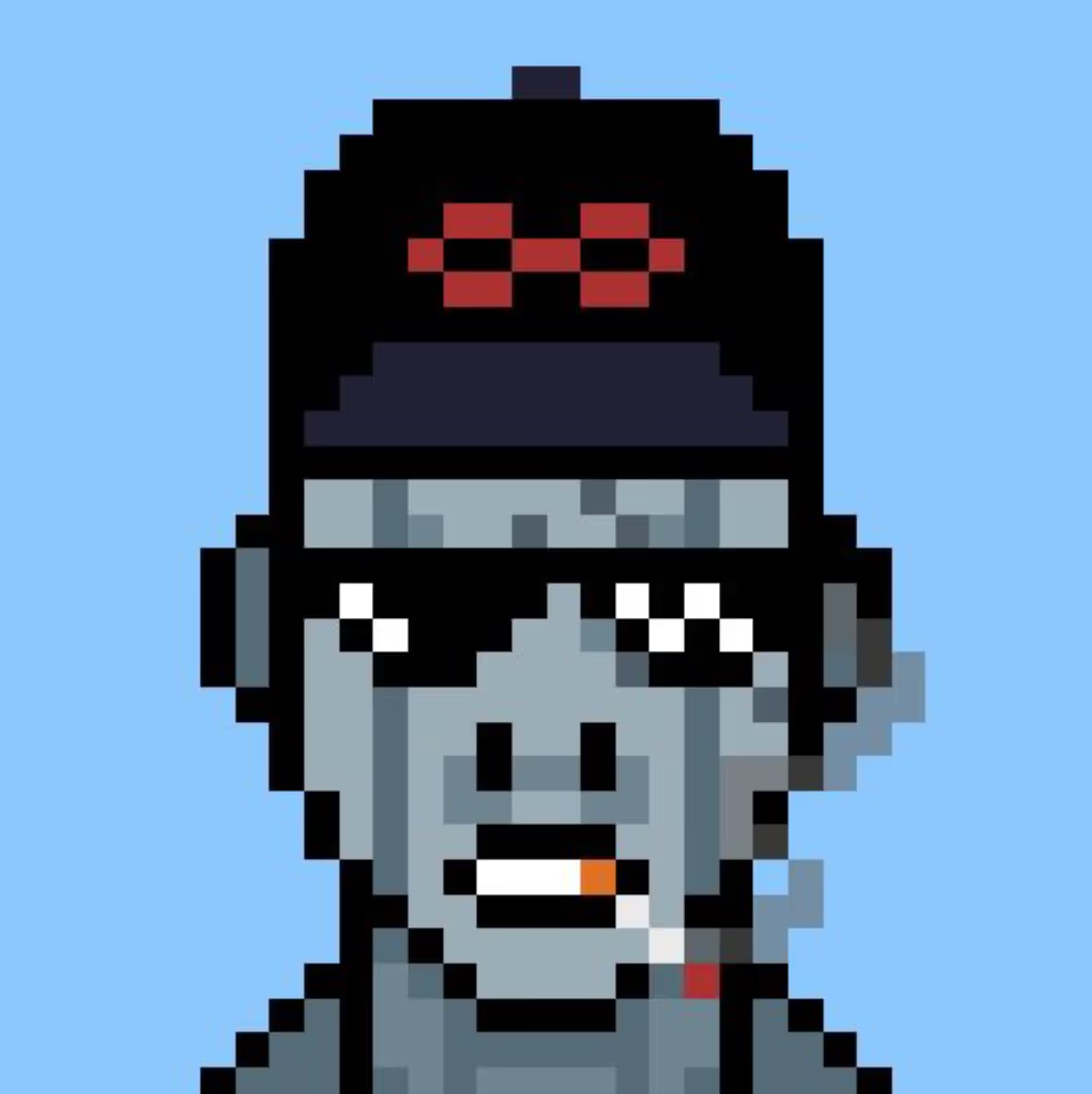
In November 2021, I bought my first NFT: a Chain Runner. My friend Rob Pando had told me about the project, and I picked one up soon after it launched. At the time, I had no idea that this single decision would radically change the course of my creative and professional life.
What started as curiosity turned into obsession. Not just with NFTs, but with what it means for something to be fully onchain. That Chain Runner wasn’t just a JPEG. It was a piece of generative art that lived permanently on Ethereum. No IPFS links. No centralized servers. Just raw, pixelated identity embedded in the blockchain itself.
This was my entry point into blockchain technology, onchain art, and the emerging ethos of open, permissionless creation. And it all started with Chain Runners.
Chain Runners: More Than Just Pixels
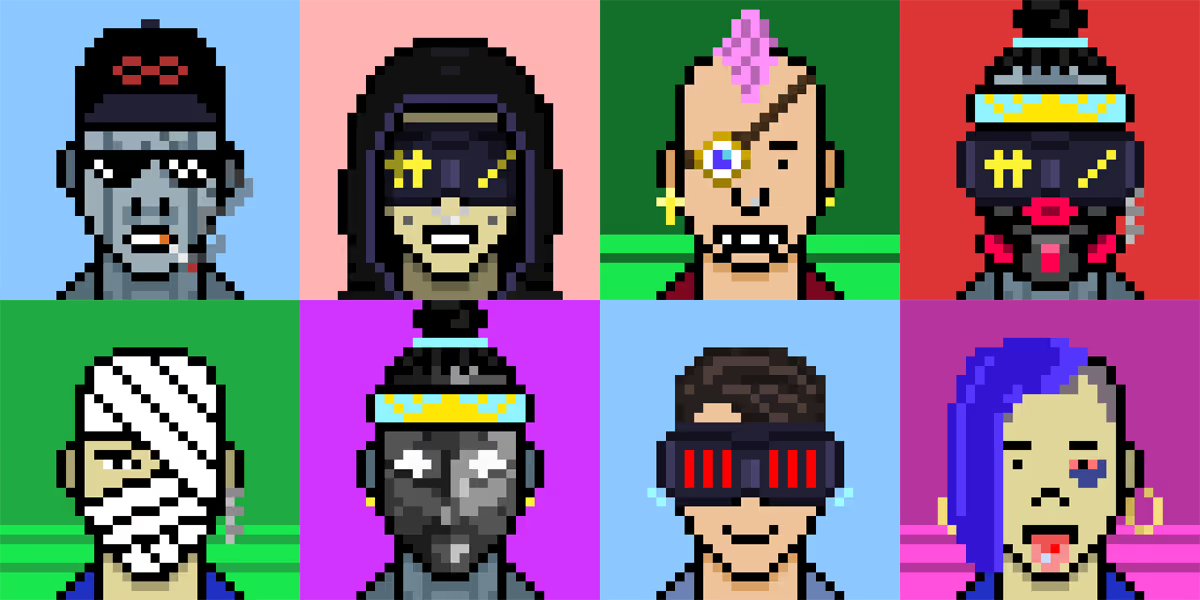
Chain Runners wasn’t just another PFP project. It was a blueprint. It was fully open source. The art was released under CC0 (Creative Commons Zero), meaning anyone could reuse, remix, and build on top of it without asking permission. And importantly, it was fully onchain. All of the digital items and metadata were stored directly in the Ethereum contract.
This combination of CC0 art, open code, and onchain permanence made Chain Runners something special. It wasn’t just a collectible. It was infrastructure. It was a toolkit for other artists, builders, and weird internet experimenters.
For many of us, it became the foundation we built our ideas on.
My First Build: OnChainKevin
I spent the next few months deep in Solidity tutorials, reading smart contracts line by line, and asking questions in the Chain Runners Discord. The community was incredibly supportive. The core devs, knav, mid, and dozer, were responsive, thoughtful, and genuinely excited to see others remix their work.
By March 2022, I launched OnChainKevin, my first onchain NFT collection. It was a parody derivative that mashed up the infamous “Kevin” from the Pixelmon disaster with the style and tech stack of Chain Runners.
It was tongue-in-cheek, but it was also my first real technical contribution to the onchain art movement.
While building the collection, I ran into a major challenge: how to make layered trait images work onchain without bloating the contract or running into rendering issues. I started experimenting with embedding PNGs inside SVG containers. A few collections had tried this before, but the approach wasn’t widely adopted. Rendering issues on browsers like Safari made it too unreliable.
Eventually, I figured out a way to layer PNGs as background images inside SVGs, rather than using image tags. This allowed me to apply pixel-perfect rendering styles and nest multiple layers without distortion. I sent it to knav, who replied, “That’s a great find if that works. Casually revolutionizing onchain PNGs.”
It did work. And it opened the door to something much bigger.
From a Hack to a Platform
After OnChainKevin launched, I realized I had stumbled into something powerful. At the time, creating fully onchain NFTs wasn’t just technically difficult. It was also expensive. Artists who wanted to launch onchain collections often needed to hire Solidity developers, commission bespoke contracts, and spend thousands of dollars just to get started.
There were no tools designed specifically for them. No simple interface for uploading traits. No easy way to structure layers, preview outputs, and handle all the onchain storage and contract deployment in one place.
At the time, I was running a software agency with my friend Rob Pando, the same friend who first introduced me to Chain Runners. We had both fallen in love with the idea of onchain art, and after seeing what was possible with OnChainKevin, we decided to build something much bigger. Together, we co-founded Indelible Labs to make onchain creation accessible to everyone.
Indelible is a no-code platform where creators can drag and drop PNG traits, organize them into layers, and launch a fully onchain NFT collection with just a few clicks. What used to cost thousands of dollars and weeks of coordination can now be done in minutes for a fraction of the cost.
Under the hood, it uses the same image-layering technique I developed for OnChainKevin. But for users, the experience is seamless. They don’t need to know anything about Solidity or image encoding. They just need their art.
With Indelible, what was once limited to a handful of developers is now accessible to any artist with a vision.
Why CC0 and Open Source Matter
None of this would have happened without Chain Runners being CC0. That decision, to give away the rights to the art, unlocked the entire creative chain reaction.
In traditional art and media, derivative works are legally complex or outright restricted. But CC0 flips that on its head. It turns artwork into building blocks. It encourages remix culture. It allows new artists to express themselves through shared visual language, and in the process, create something new.
Chain Runners' choice to go open source and CC0 created a permissionless art movement. People didn’t just collect the art. They built with it.
We’re seeing this philosophy reflected across other projects that have helped define the onchain art movement. Collections like Blitmap, Nouns, and Terraforms have embraced CC0 and composability as core values, showing that open-source, permissionless creation can lead to entirely new forms of storytelling and collaboration. These projects treat the blockchain not just as a place to store art, but as a medium for building culture that anyone can extend.
The Movement Grows
Today, thanks to Indelible Labs, more than 300 fully onchain NFT collections have launched. Many of these were created by artists who had never written a line of Solidity. These collections range from original generative projects to cultural derivatives and experimental works that push the boundaries of what is possible onchain.
One standout is 1337 Skulls, a collection that launched through Indelible and continues to build within the Chain Runners universe. It draws from the original art and story, expanding the world with its own characters, lore, and technical creativity. Projects like 1337 Skulls demonstrate that CC0 and onchain tools are not just about replication. They are catalysts for storytelling, remixing, and creating entirely new cultural layers.
Even as the ecosystem grows, many of these projects still trace their roots back to a common starting point: Chain Runners.
That collection proved that open source can drive innovation. That CC0 can fuel creativity instead of limiting it. That the blockchain is more than a ledger. It is a platform for building worlds, sharing ideas, and telling stories that last.
What’s Next
We’re still early in the onchain art movement. Storage is getting cheaper. Tooling is getting better. Platforms like Indelible are removing barriers that once made onchain NFTs feel out of reach.
But as we move forward, we shouldn’t forget where it all started. With a community of builders, an open source repo, a pixelated cyberpunk aesthetic, and the belief that art should live forever onchain.
Chain Runners didn’t just mint a collection. They minted a movement.
Today, I continue working full time on advancing onchain infrastructure through my role at Facet, an unstoppable Layer 2 that is fully decentralized and built to last. Onchain isn't enough if the chain itself can disappear next week. That’s why we’re building Facet, to create a place where onchain NFTs and applications can truly live forever. The mission that started with a Chain Runner hasn’t stopped. It has simply evolved.


.avif)
.png)
.png)
.png)
.png)
.png)